
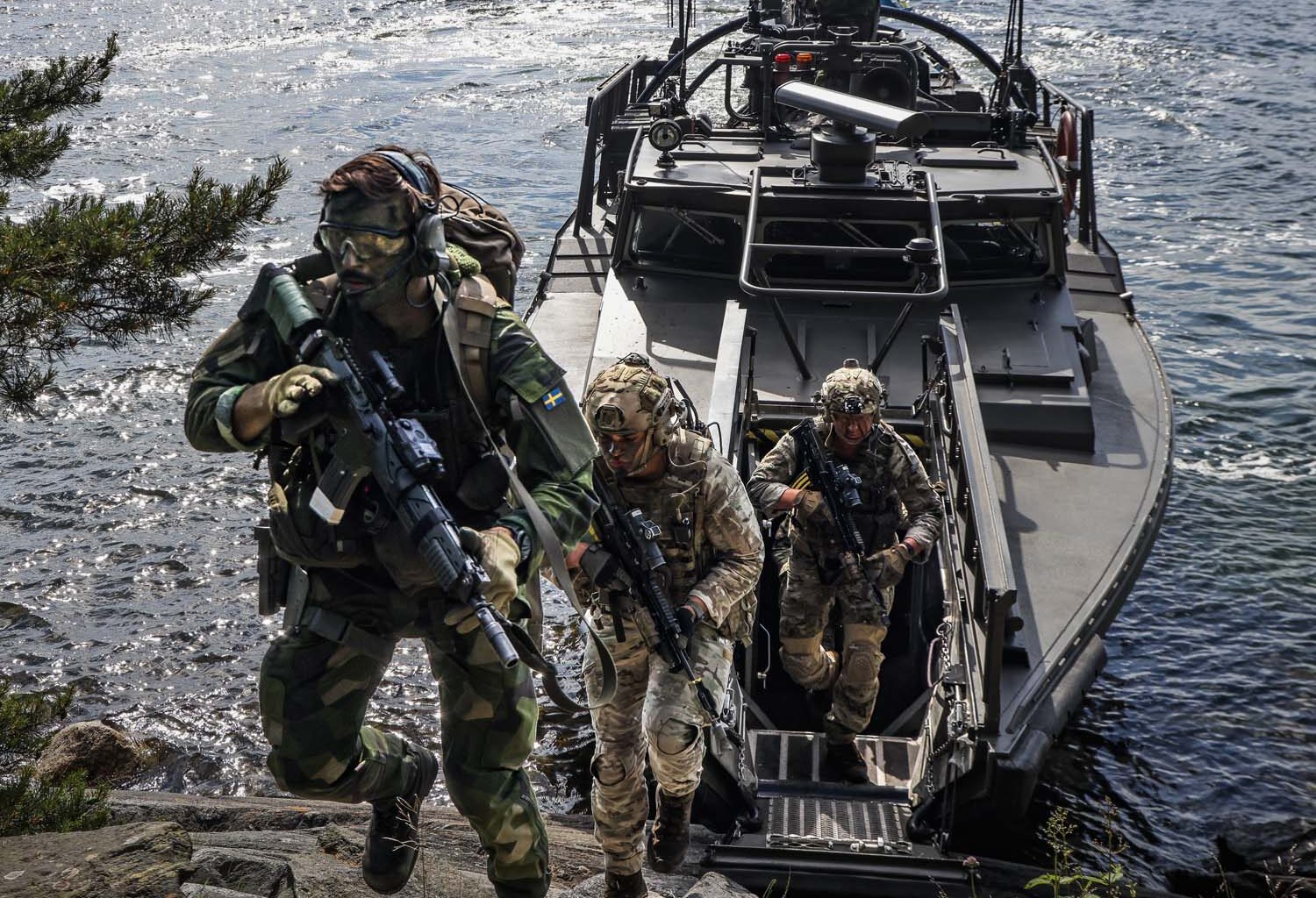
The United Kingdom and Sweden are set to intensify defence cooperation in the Baltic and High North as both countries respond to what the UK Defence Secretary described as a rapidly deteriorating security environment driven by renewed Russian military activity.
Speaking in Sweden on Tuesday, Defence Secretary John Healey said the two countries face shared threats and must respond collectively, pointing to Russia’s growing presence in the region, including the reopening of former Cold War military bases.
“Sweden is a critical ally of the United Kingdom. We have your back, you have ours,” Healey said, adding that both nations “share the same values” and now face “the same threats.”
Healey said the UK’s Strategic Defence Review had already identified Baltic and High North security as areas of increasing importance, warning that Russia is “re-establishing, rapidly, its military presence and activities in the region.” He argued that the scale of the challenge required a fundamental shift in how European nations approach defence.
“This new era of threat demands a new era for Defence,” he said.
Central to that response, Healey argued, was stronger European solidarity and closer operational integration. He said the UK and Sweden were aligned on the need to step up coordinated action, particularly to disrupt Russia’s so-called shadow shipping fleet, which he said was helping to fund Moscow’s war effort.
“The best way for European nations to step up our European security is to step up our European solidarity,” Healey said, adding that both countries want to do more together “to choke off the funds that fuel their war in Ukraine and help pressure Putin to come to the negotiating table.”
Healey linked Baltic and Arctic security directly to the outcome of the war in Ukraine, warning that a Russian victory would have wider consequences for European stability.
“For us, a secure Europe requires a strong Ukraine. And if Putin prevails in Ukraine, he won’t stop in Ukraine,” he said.
The Defence Secretary highlighted the role of the UK-led Joint Expeditionary Force in strengthening deterrence and improving crisis response across northern Europe. He confirmed that new planning work was underway and that the UK would chair a meeting of JEF Chiefs of Defence Staff the following day.
“We train together now so that, if we must, we know that we can fight together tomorrow,” Healey said, pointing to a programme of joint exercises planned across the Baltic and High North.
Healey also praised Sweden’s role in supporting Ukraine and its rapid integration into NATO following accession less than two years ago. He said Sweden had already become “an active, integral, important part of the NATO security operation,” citing joint UK-Swedish air policing missions on NATO’s eastern flank.
Beyond operations, Healey said defence industrial cooperation would form an increasingly important part of the bilateral relationship, with both countries looking to strengthen partnerships on innovation and production.
“Just as we deter together, we build together,” he said, describing industrial collaboration as an area he wanted to expand further.
Healey concluded by framing the UK-Sweden relationship as part of a broader shift in European security thinking.
“We are in the age now of hard power, strong alliances, and sure diplomacy,” he said, adding that he looked forward to closer cooperation between the two nations in the months ahead.