
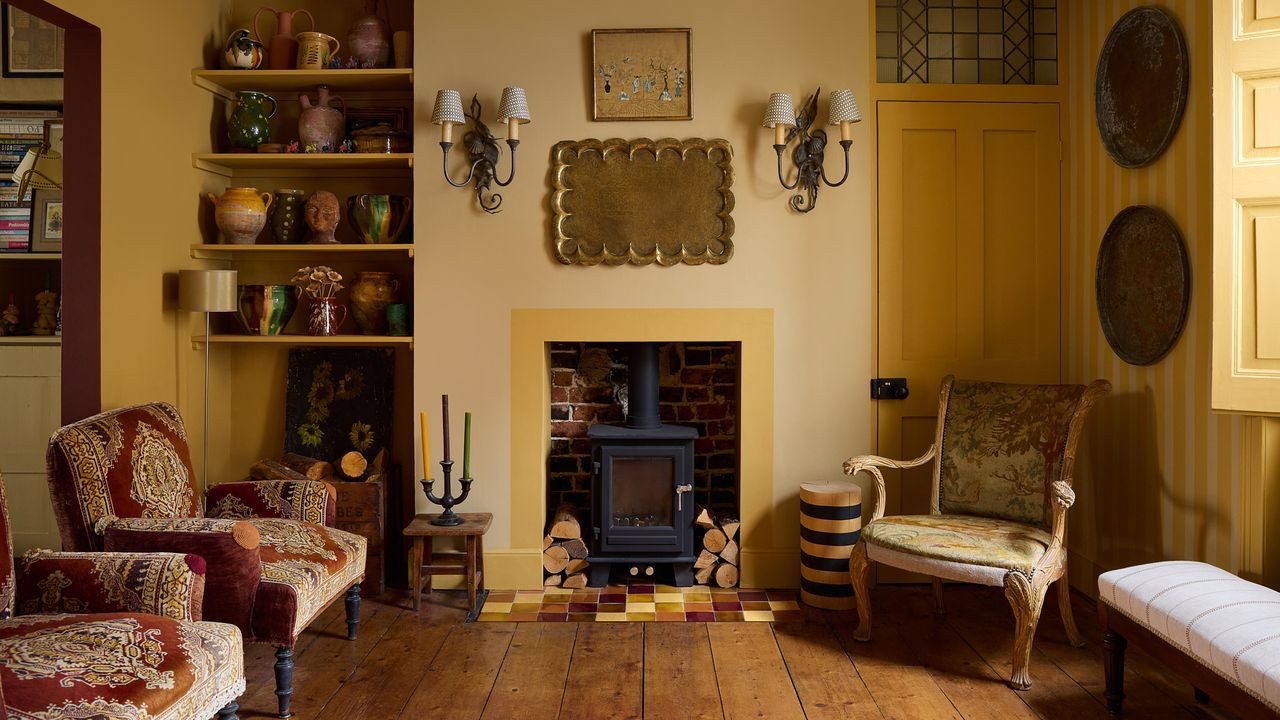
‘My previous house had broken me emotionally and financially,’ says Russell Loughlan, the interior designer and colour-expert behind the popular Instagram account @thehouseondolphinst. ‘It was built in 1768 and we were making good progress with the renovation when the builders found live woodworm in the rafters. We ended up having to replace every single floor and ceiling. Our budget was blown and a project that was supposed to take four months took over a year to complete. I swore off Georgian houses after that.’
Once the works were complete, Russell lived in the house for a while but soon found he was itching to move. ‘Once it was finished I realised I wasn’t making the most of the space. I was living alone in a four storey sort of dolls’ house.’ It was time for a new project and a new home.
‘I stepped a few streets back from the seafront and found this whitewashed box with plastic windows built in 1840. It was the perfect blank canvas–and importantly not Georgian.’ The fireplaces had been boarded up and the original floorboards were highly polished in an orange 1980s varnish. For Russell, it was a Goldilocks project. The cottage was sturdy, but needed coaxing back to life. He made an offer almost immediately.
Having spent two decades living and renovating in Deal, Russell knew the person he was buying the house from and, because their aunt had owned the house before them, they were still in possession of all of the original paperwork. ‘When they came over to give me the deeds, certificates and plans, that’s when I saw it. The house had actually been built in 1706. The cottage was Georgian.’ Russell spent four sleepless months, terrified of what he might uncover in the renovation: would the house have more live woodworm? Would it have more wobbly floors? Thankfully the house was solid and Russell could breathe again.
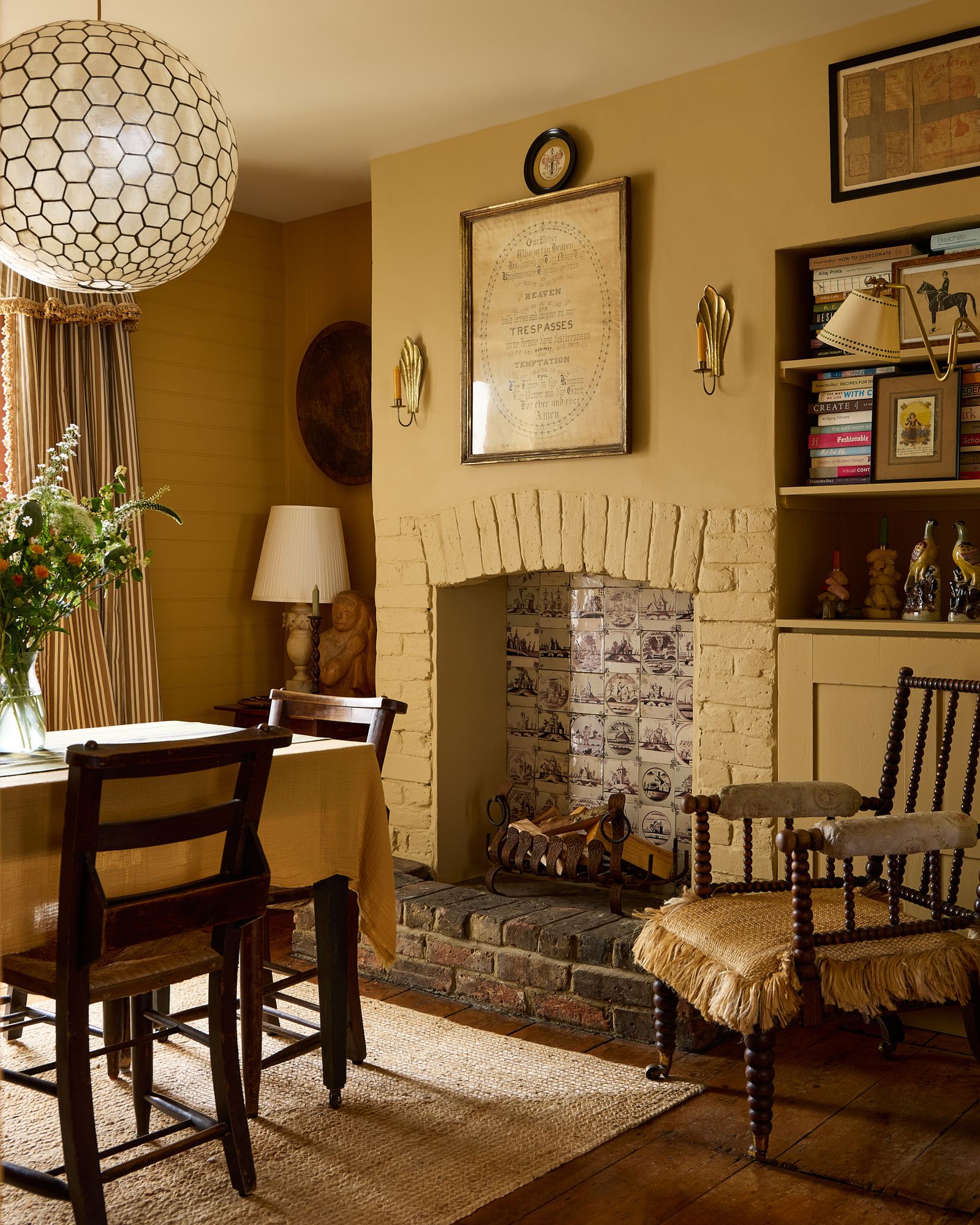
Boz Gagovski
‘The previous tenant had smashed through the house, leaving an open plan footprint and plenty of light which really opened things up for me design-wise,’ Russell explains. In his previous house, he ‘embraced its Dickensian pub feeling,’ leaning into the gloom with rich, moody hues. ‘Now,’ he says, ‘I’m in this big, bright space that can handle bold colours without burning a hole in your retina.’
Russell’s approach to colour is a refreshing one and he has made a name for himself thanks to his flair for unexpected combinations. Much of the house is rendered in Farrow and Ball’s Dead Flat paint, which Russell favours for its ability to hold tone. ‘The light on the coast is very variable and it changes throughout the day. Depth of colour is very important to me and the dead flat finish absorbs light so you always get a true colour.’