
Judging by some healthy crowds at the recent festive derbies, many Welsh rugby folk do still care about the game, but, unfortunately, mostly in the tribal and parochial way that is both the country’s strength and weakness. On Boxing Day there were 12,125 people at Cardiff Arms Park for the visit of the Dragons, and down at Parc y Scarlets later in the day there were 12,105 in attendance for what might be the last of those west Wales tussles at that time of year, with the Welsh Rugby Union having made it pretty clear that only one of Scarlets and Ospreys will survive its plans to reduce the number of professional teams from four to three.
Whether those proposals will come to fruition is anyone’s guess, with the WRU having ridiculously stated its hope of a “consensus” being reached on the reduction before the end of last year and now facing the call for an extraordinary general meeting from member clubs of the Central Glamorgan Rugby Union district — which is in the region apparently most likely to be culled, the Ospreys.
That the WRU has responded to that call by describing it as “short-sighted” and an “irresponsible first nuclear option” that will cause “significant damage” to Welsh rugby (which is ironic given that so many feel the same way about the WRU’s ideas) tells you all you need to know about the mess in which the game finds itself with the Six Nations fast approaching.
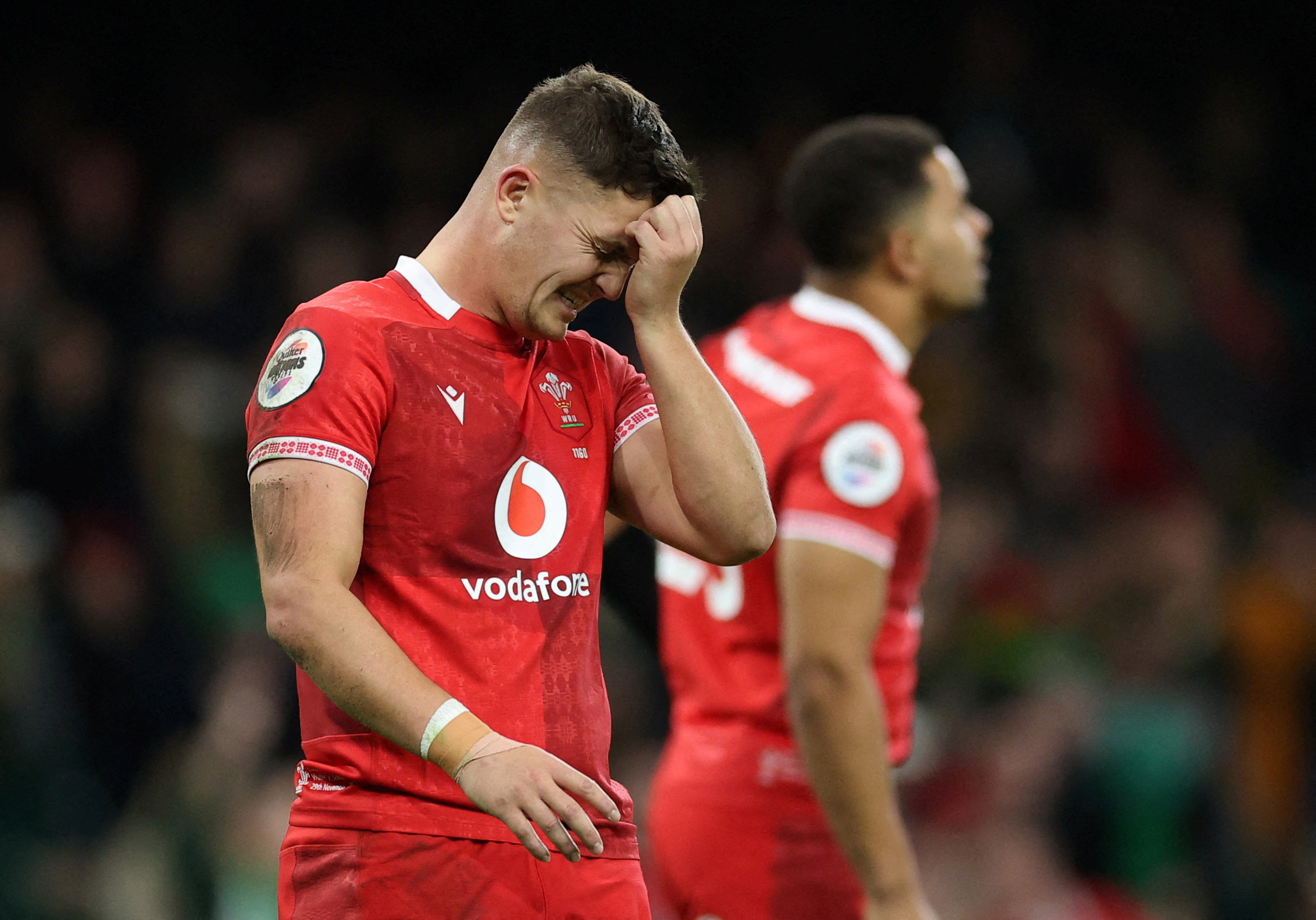
The 73-0 thumping by South Africa in the autumn felt very raw for Callum Sheedy and Wales
ANDREW BOYERS/REUTERS
Just for good measure the WRU is also attempting to decide to whom it should sell Cardiff, which it owns at present after the region went into administration, as well as there being announcements in recent weeks of three key national players, Jac Morgan, Dewi Lake and Aaron Wainwright, leaving Wales next season, with Morgan and Lake heading to Gloucester from Ospreys, and Wainwright going to Leicester Tigers from the Dragons.
At some point soon, 11 of Wales’s starting side — Louis Rees-Zammit, Max Llewellyn, Tomos Williams, Nicky Smith (or Rhys Carré), Lake, Archie Griffin (or Tomas Francis), Dafydd Jenkins, Adam Beard, Christ Tshiunza (or Kane James or Freddie Thomas), Morgan (or Tommy Reffell) and Wainwright (or Olly Cracknell) — could be based outside Wales.
That figure could have risen further if the fly half Dan Edwards had not rejected Leicester to remain with Ospreys. But there may be no Ospreys for much longer. Talk about uncertainty.
Wales entertain the blue shirts of France, Scotland and Italy at home in this Six Nations and, without the glamour draws of England and Ireland, ticket sales are sluggish, with more than 20,000 in the 72,500-seat stadium still available for the match against France on February 15. It is no surprise, and an excellent interview before Christmas with Gareth Davies, the former Wales and British & Irish Lions fly half and former top-class rugby administrator, really hit home on the severity of the situation.

Gareth Davies, right — with Roger Lewis and Rhodri Talfan Davies — says Wales games have become a turn-off for even former internationals
REX FEATURES
“I am just very sad,” he told WalesOnline. “I am saddened because of what all my mates are saying. They are not interested in the game. The guys I play golf with probably haven’t been to a Test match for ten years. People have turned their back on it all because they are so disappointed.
“I have a 13-year-old grandson who is mad on sport, a very good rugby player. But when Wales were playing South Africa last month (they lost 73-0), he went off to play golf. One guy told me he was at the game and he was ashamed to be there and that’s an ex-Lion. That’s quite sad. It’s a real pity.”
Indeed it is, and the even greater sadness is that Davies, who was WRU chairman for six years, is not there sorting it out, having been ousted in 2020 by the community clubs who resented his designs for change. It is as ludicrous now that junior clubs can force an EGM as it was then that they could force out a man of Davies’s standing (he was also a hugely respected member of World Rugby’s executive committee).
“Community people should have no involvement in the running of the pro game whatsoever,” Davies said. “Looking back, I tried to do too much too quickly. I paid the price for trying to shake things up and change Welsh rugby.”
But how Welsh rugby could do with someone of Davies’s nous and gravitas now rather than the bungling efforts of the out-of-their-depth Richard Collier-Keywood (chairman), Abi Tierney (chief executive) and Dave Reddin (director of rugby and elite performance). Many of their intentions are admirable — some of the plans around player pathways and academies, which have been neglected for too long, are good — but they lack sufficient credibility and personality to implement them.
So it is against this chaotic backdrop that on Tuesday the national head coach, Steve Tandy, will announce his squad for his first Six Nations in the job. Wales, winners in 2021, have won only two matches (against Italy and Scotland) in the four competitions since then, with whitewashes in the past two seasons. First up are England at Twickenham, after the humiliation of a record 68-14 defeat in Cardiff by the same opponents in the last round of matches last year.
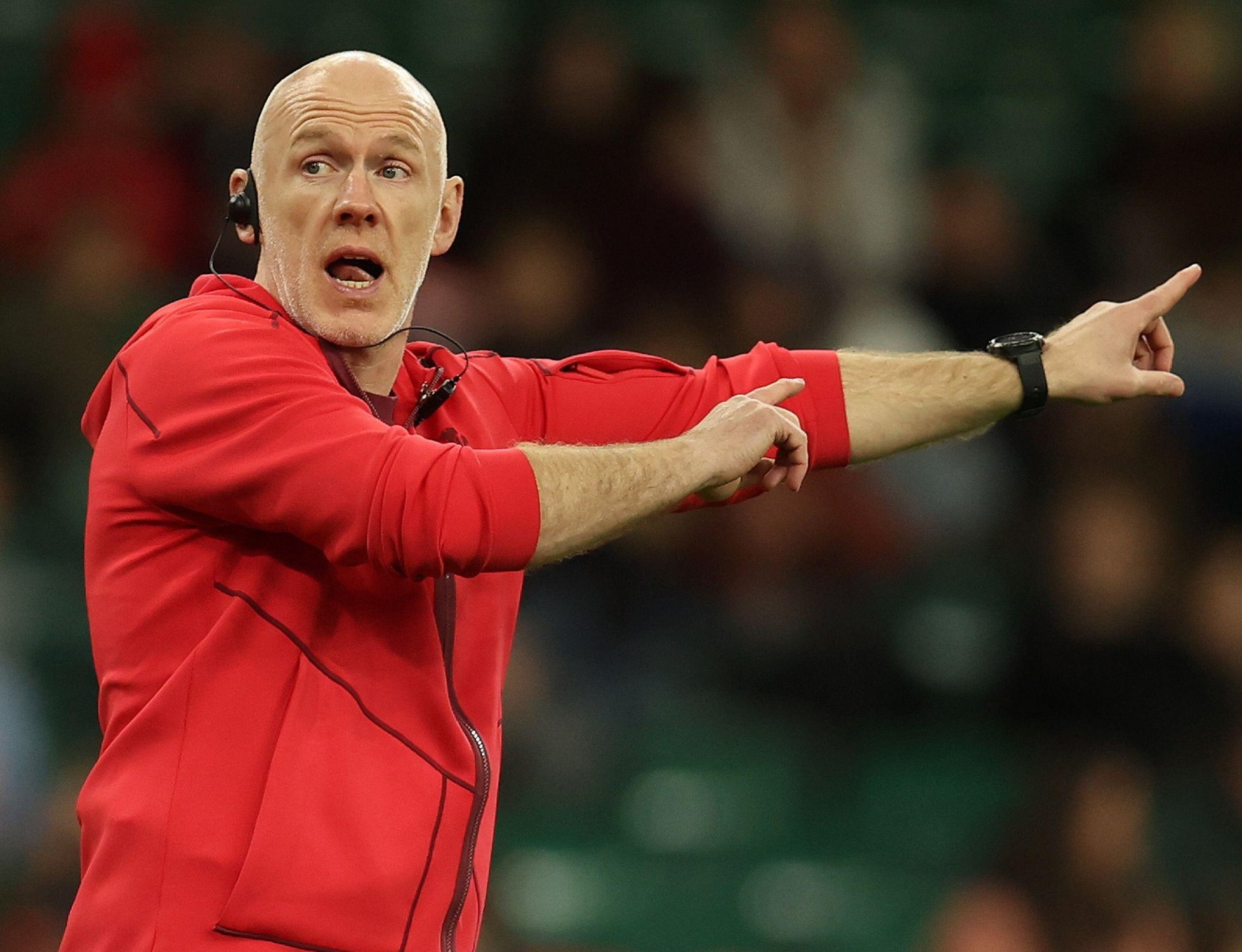
A spate of injuries makes Tandy’s task even more daunting
ANDREW ORCHARD/ALAMY
Tandy will be positive and optimistic, because that is his nature, and good on him for that, but you have to fear for him and his team, especially with injuries to Morgan, Llewellyn and Taulupe Faletau hampering his selections. At the time of writing, the coaching team, beyond the full-timers Tandy, Matt Sherratt and Danny Wilson, has not even been confirmed.
In terms of personnel it is surely time to give Rees-Zammit the No15 shirt, as Pat Lam has done at Bristol Bears. With the new laws forbidding escort runners, the smaller men like Blair Murray, who struggled so badly in the autumn, will always suffer in the aerial battle, so perhaps Murray’s darting feet that lit up last year’s competition at times might be better deployed on the wing.
An obvious replacement for Llewellyn at outside centre is not out there. Joe Roberts, Eddie James, Nick Tompkins, Owen Watkin or Jacob Beetham? Nothing obvious, as I said. There is a physical, dominant player of the sort Wales need wearing 13 in the regions, and that is Cardiff’s Cornel Smit, but he is, of course, South African. Summoning Bath’s Louie Hennessey would be a brave call.
The centre situation is not helped by Scarlets’ Joe Hawkins, who impressed at 12 last autumn, having needed to play at fly half recently because of injuries. Cardiff’s Ben Thomas, man of the match against Racing 92 in the Challenge Cup, still has his proponents at 12, not least attack coach Sherratt, but he was ineffective last autumn.
Edwards and Williams are shoo-ins at half back, as are Lake at hooker and Jenkins, whose game has kicked on after his finest performance yet for Wales against New Zealand last autumn, at lock, as well as Wainwright at No8, but otherwise there are question marks everywhere, and Tandy will surely be concerned about Wales’s lack of physicality last autumn.
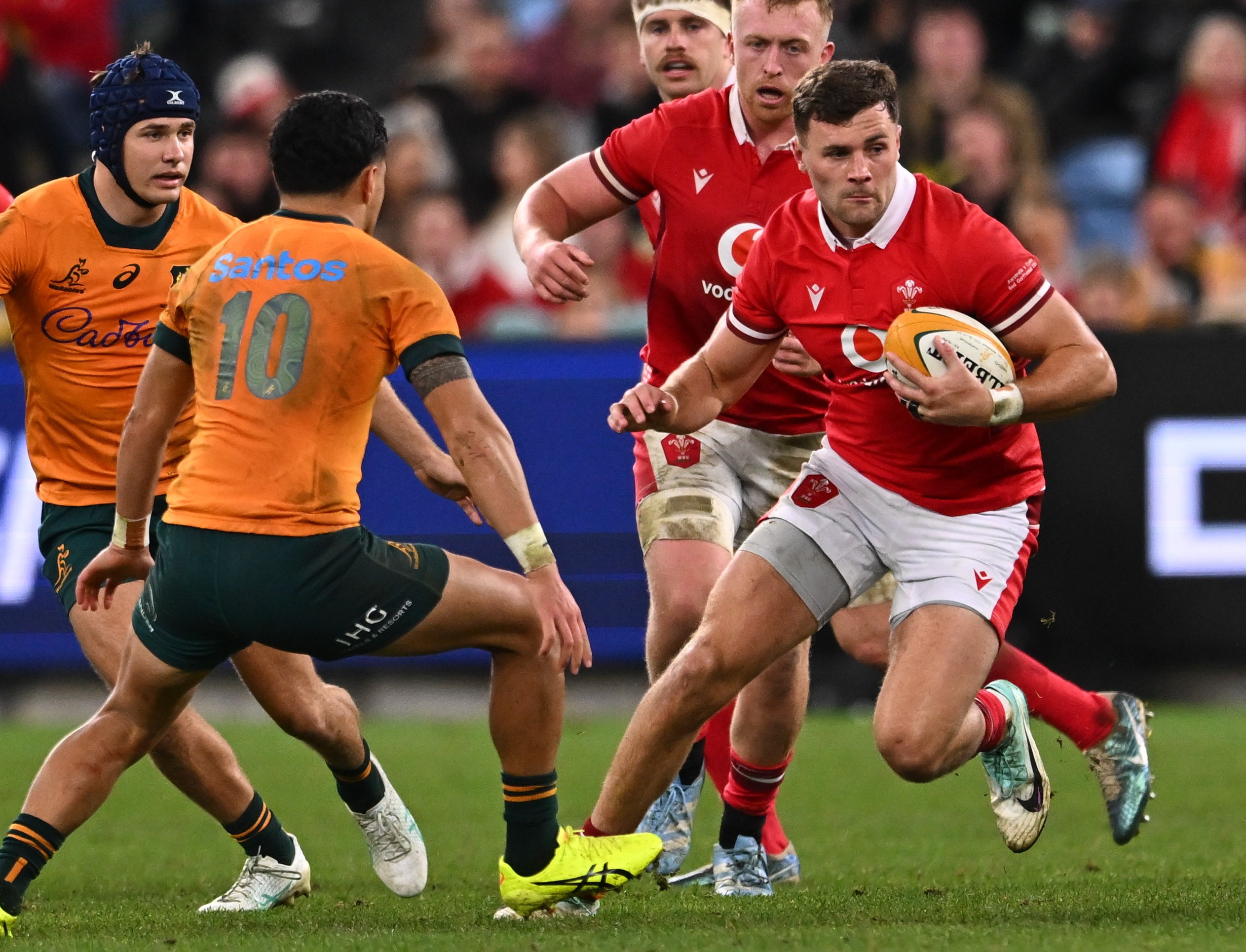
The possible return of Grady should at least add some oomph to the Wales attack
JAMES GOURLEY EPA
In the back line, Mason Grady’s name must come into the equation, whether it is at outside centre or wing. The Cardiff player missed the autumn Tests through injury but is a huge physical specimen, and while many bemoan his innate skills, as they once did Alex Cuthbert’s, he is not someone Wales can afford to ignore easily.
Tandy really likes Cardiff’s Alex Mann, whether at six or seven, but he is not really big enough for a six and not a genuine fetcher at seven, so could experienced options Ross Moriarty and Reffell be considered? Could 34-year-old Jake Ball, once retired but now back at Scarlets, be a left-field option at lock?
Other names to keep an eye on are the Exeter Chiefs 20-year-old back-rower Kane James, who has yet to decide whether to opt for England or Wales, the Dragons scrum half Che Hope, who has been in fine form, Bristol’s inside centre James Williams and the 19-year-old Cardiff wing Tom Bowen, who is small but extremely lively.
Wales will target Scotland and Italy for victories, and beating both would make the campaign an undoubted success, while even one victory could be celebrated as a vast improvement. As Davies said, it is sad. How the mighty have fallen.
Wales’ Six Nations scheduleSat, Feb 7 England (away), 4.40pmSun, Feb 15 France (home), 3.10pmSat, Feb 21 Scotland (home), 4.40pmFri, Mar 6 Ireland (away), 8.10pmSat, Mar 14 Italy (home) 4.40pm