
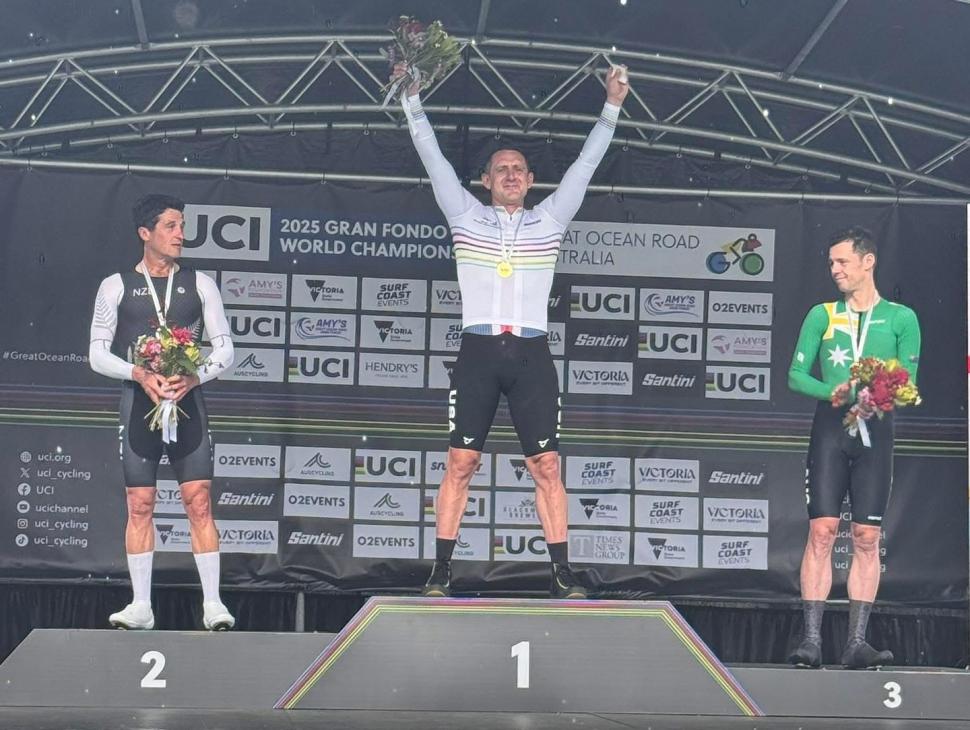
The sometimes-murky world of amateur bike racing has produced its latest doping case, the UCI provisionally suspending a 41-year-old Gran Fondo Masters world champion this week following an alleged positive test for anabolic steroids.
According to the governing body’s published list of anti-doping rule violations, American rider Matthew Clark returned a positive sample for an unspecified anabolic androgenic steroid on 16 October 2025.
Clark’s positive test came immediately after his win in the men’s 40–44 age group at the UCI Gran Fondo world time trial championships in Lorne, Australia. Clark covered the 22.9km course along Australia’s Great Ocean Road in 30.20, averaging 44.9kph, beating New Zealander Kyle Gray by 30 seconds to win the rainbow jersey. He finished third overall, out of 255 riders across all age categories.
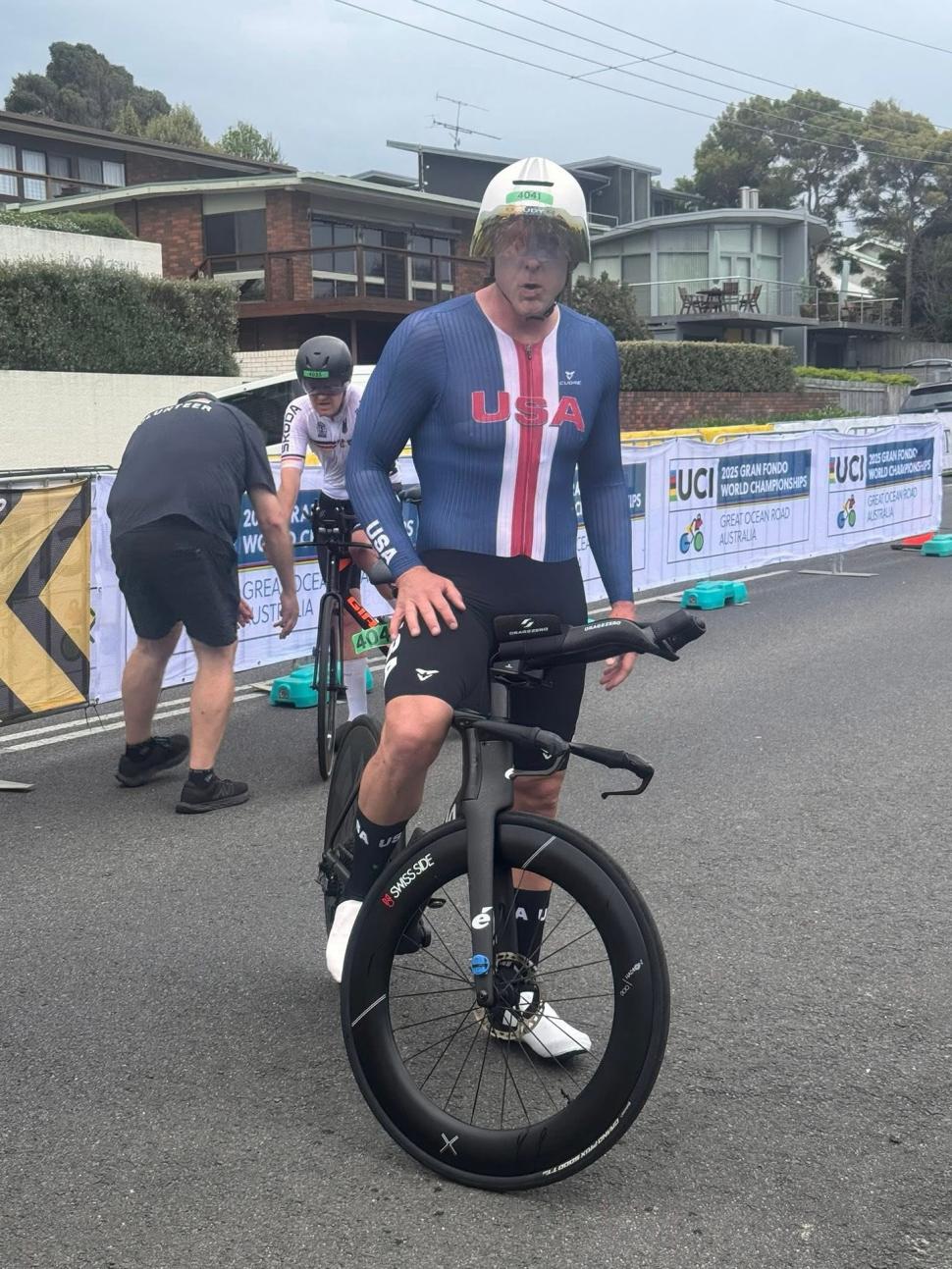 Matt Clark wins 40-44 Gran Fondo world title in 2025, before positive doping test (credit: Hive Bicycle Shop)
The 41-year-old, from North Salt Lake City, Utah, also won the US national road race in the same category earlier in the summer, and secured silver in the time trial, while representing the Ascent Cycling p/b Guthrie Bicycle team.
His results in 2025 earned him a place for this season on the Kanberra p/b Five & 20 squad, a Masters team which races nationally across the US, after racing for the outfit as a guest during a stage race in August.
Clark’s suspension, as with any doping case, is currently provisional, and according to the Utah Cycling Association, it appears that the 41-year-old is set to challenge the decision before the UCI’s Anti-Doping Tribunal and possibly the Court of Arbitration for Sport.
If the positive test is upheld, Clark could face a ban of at least two years from cycling and be stripped of his world title.
> Italian amateur accused of motor doping after winning iconic gran fondo
“We are aware of allegations and the pending court case regarding this athlete,” the Utah Cycling Association said in a statement.
“Obviously the Utah Cycling Association does not condone doping, and we remain committed to all USA Cycling rules and regulations.”
In a statement provided to Gran Fondo Daily, Kanberra p/b Five & 20 said it supports the UCI’s decision to provisionally suspend their new recruit, pending the outcome of Clark’s legal challenge, and reiterated its “no tolerance doping policy”.
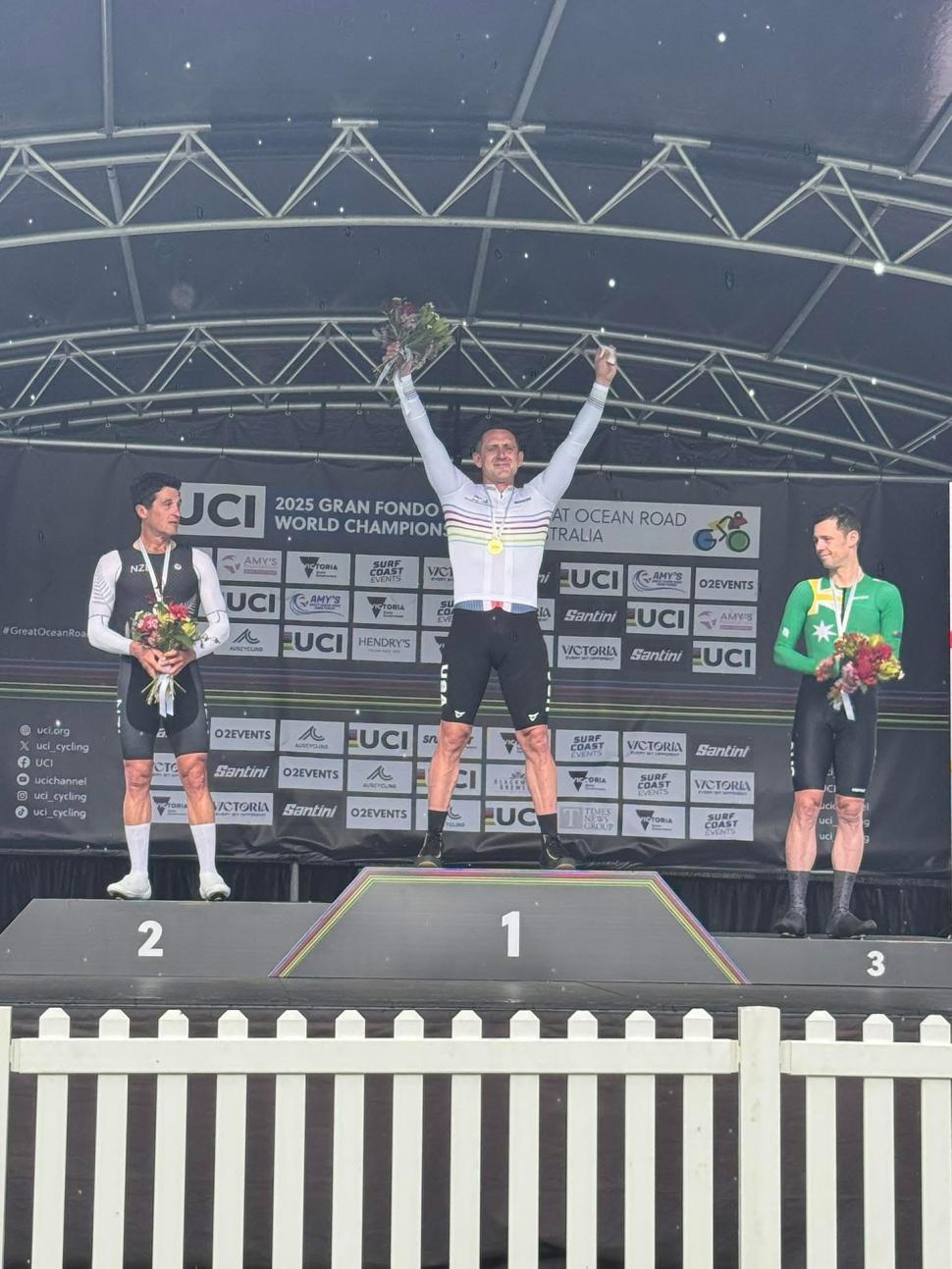 Matt Clark wins 40-44 Gran Fondo world title in 2025, before positive doping test (credit: Hive Bicycle Shop)
“In 2025, Matt Clark was a guest racer for our team at one event, 2 Days of Buffalo Stage Race, August 2-3. Matt did not represent our team at USAC Masters Nationals or at the UCI Fondo World Championships,” the squad said.
“We extended Matt an invitation to join our team for 2026. On January 13, 2026, Matt informed our team of his suspension. Our team supports the UCI’s decision and has a no tolerance doping policy for our racers. We wish Matt and his family all the best during this difficult time.”
> Former pro cyclist tests positive for EPO after Gran Fondo wins
Clark, of course, isn’t the first Gran Fondo racer to fall foul of the anti-doping authorities, in a world of amateur racing where testing is sporadic and confined mainly to the biggest events, and where its participants, unlike in the professional peloton, are not required to be part of registered testing pools or subject to out-of-competition testing, whereabouts requirements, or biological passport markers.
In May 2024, former professional cyclist Nicola Genovese was suspended after testing positive for EPO, following a series of emphatic victories at several Italian Gran Fondos.
Genovese rode at UCI Continental level during his career, competing at races in 2016 and 2017 alongside more illustrious names such as Tom Boonen, Dani Martínez and Davide Rebellin. Such was the level of his gran fondo performances, Italian website TuttobiciWeb described one of his victories as “spectacular” and evidence that “Nicola Genovese is reborn with determination from his ashes and does so by returning stronger than before”.
Away from the Gran Fondo world, in 2017, a 55-year-old amateur cyclist from Burnley was handed a two-year doping ban after testing positive for banned substances that he said were contained in medication given to him by a friend before a race to treat his mouth ulcers.
Michael Ellerton tested positive for the glucocorticoids prednisone and prednisolone following an in-competition test at the Port Talbot Wheelers Cycling Club’s 25 Mile Time Trial on 11 September 2016, organised under Cycling Time Trials (CTT) rules.
A year earlier, a Nottingham man who claimed he has never raced a bike competitively was banned from all sport for four years after the UK Border Force intercepted nandrolone and testosterone that he had ordered online from India.
Ian Edmonds claimed steroids ordered online were for personal use and said he was unaware that as British Cycling member he was subject to anti-doping rules.
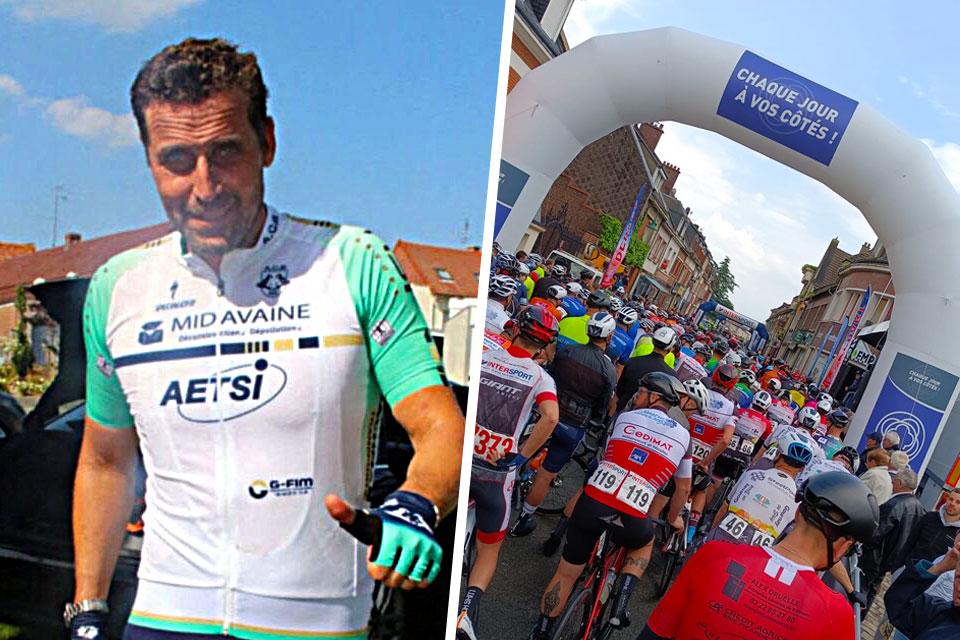 Giovambattista Iera and Routes de l’Oise (original image credits Giovambattista Iera on Instagram and Routes de l’Oise (credit: road.cc)
And it’s not just good old-fashioned doping that’s reared its head in the amateur cycling world.
In 2024, we reported on the surreal story concerning a former cycling film actor, who counts Mark Cavendish among his Instagram followers, who was accused of motor doping at a French stage race, before dramatically fleeing as his teammate in their van knocked down a race director.