

At the conclusion of an unusually animated cabinet meeting on Tuesday, Sir Keir Starmer told colleagues how much he had enjoyed the opportunity for a lengthy political discussion.
The prime minister has long believed that Labour’s tendency towards introspection and internal debate is self-indulgent and self-defeating. But this week he had reason to be grateful that his party’s divisions had burst into the open.
One by one, cabinet ministers railed against those in Westminster — some of whom were sitting among them — suspected of plotting against the prime minister.
Heidi Alexander, the transport secretary, urged colleagues to form a “praetorian guard” around their leader and denounced those who put “personal ambition” before party unity.
Emma Reynolds, the environment secretary, was said to be similarly critical of the dangers of infighting and briefing against colleagues. Lisa Nandy, the culture secretary, said that ministers should focus on the prospect of a “fascist government” led by Nigel Farage, the Reform UK leader.
With his leadership still the subject of open and feverish debate among Labour MPs, Starmer’s closest allies concluded that it was time to stand up and be counted.
Will Keir Starmer hold on to power in 2026?
Nick Thomas-Symonds, the Brexit minister, warned colleagues not to “waste the opportunity” of the biggest parliamentary majority any government has won in a quarter of a century. Two other friends of the prime minister — Baroness Chapman, the development minister, and Lord Hermer, the attorney-general — leapt to his defence and spoke supportively, too.
• Wes Streeting criticises Labour’s ‘practical’ approach to government
One despairing minister said afterwards: “These people wouldn’t have been out of place on the bridge of the Titanic.”
The prevailing wind, however, seemed to be with Starmer. “Most people spoke about how, having worked extremely hard to be here, we seem determined to blow it up,” one of those around the table said. “The message was that it’s time to get behind the PM, and stop detracting from all the announcements we’re trying to make. As a cabinet, we need to be more collegiate, more confident, and instil the rest of the party with the sense we can win the next election.”
Streeting v Starmer
The subtext of every supportive speech was not especially difficult to decode. It was time for ministers criticising the government — namely Wes Streeting, the health secretary widely believed to be readying his own tilt for the premiership — to shut up.
In private, some of his cabinet colleagues have had enough of Streeting. “He [Starmer] needs to sack him,” one cabinet minister told The Times. “We can learn from Kemi Badenoch. What he’s doing is so obvious, he is repeatedly breaching collective responsibility, he is attacking No 10, he is undermining all of us. The PLP [Parliamentary Labour Party] don’t like what he is doing, they would back him [the prime minister] if he acted.”
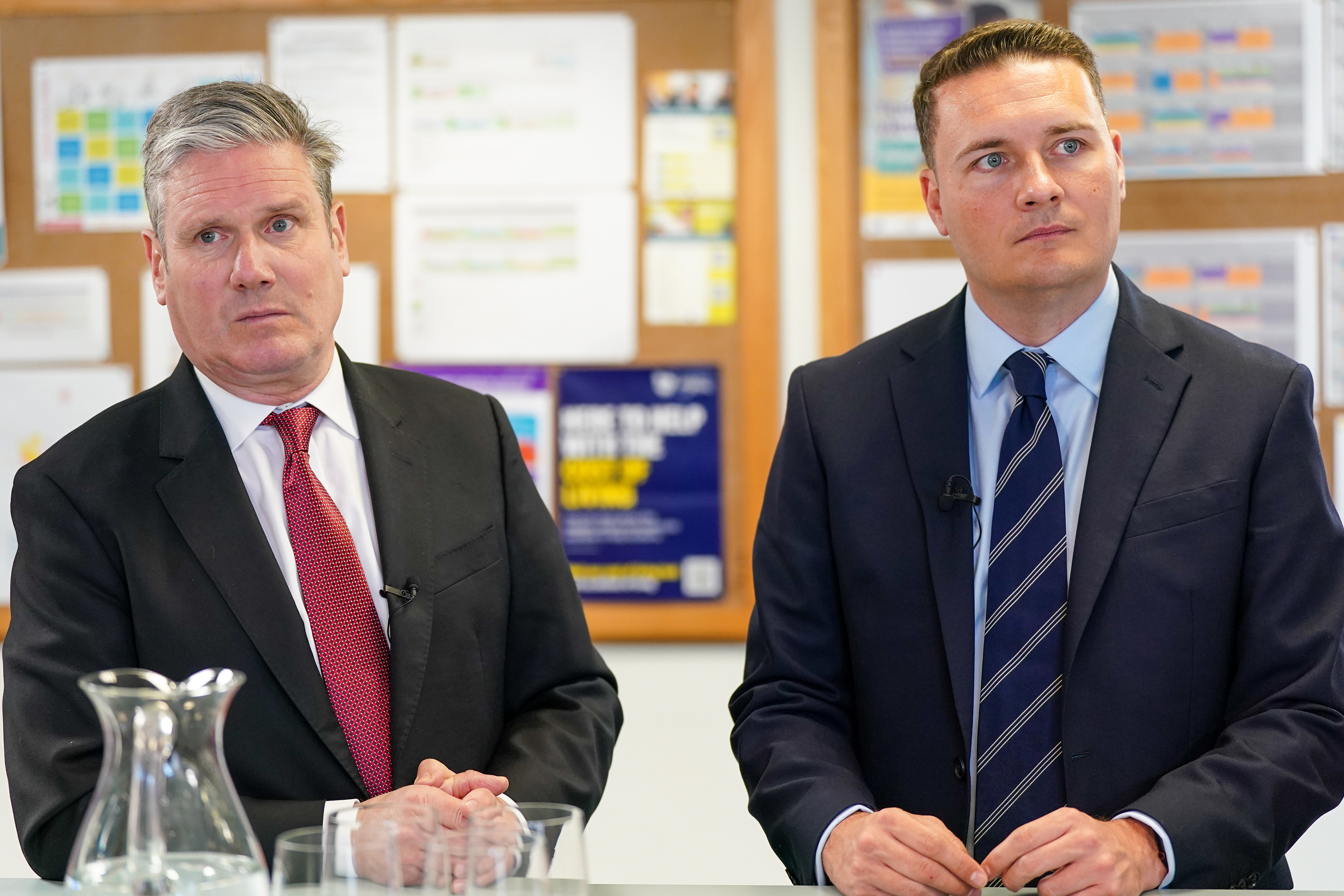
Starmer and Streeting
IAN FORSYTH/GETTY IMAGES
Another cabinet minister said: “Wes is exactly the same as he was when he was 18 … if he doesn’t become Labour prime minister he will tell himself his entire life has been a failure. Everything he’s doing now is in pursuit of that aim. Has he been pushing the boundary of what’s acceptable? Yes.”
A third cabinet minister said that Streeting’s alleged disloyalty had become an open secret in No 10 and made fresh claims that he was canvassing support for a leadership bid.
“Everyone knows he has MPs from the 2024 intake telling anyone who’ll listen that it’s time to get rid of Keir and make Wes PM instead,” they said. “It’s wild behaviour. If he doesn’t bring it to a head, he’ll have to be brought to heel.”
Cabinet ministers opposed to a change of leadership described Streeting as “looking diminished” by this long outbreak of performative loyalty during political cabinet, which culminated in a spontaneous round of applause for Starmer. Ignoring prepared remarks written by aides, the prime minister gave a spontaneous and emotional speech on his moral mission.
A team in three camps
There are indications, however, that Streeting is not alone in his concerns. Cabinet ministers speak of a top team divided into three camps as Labour approaches a set of local and devolved elections that could yet blow up Starmer’s leadership: those who believe that only a change of leadership can save the government, the prime minister’s loyalists, and a minority keeping their cards close to their chest.
Everyone acknowledges that something has gone badly wrong. At one point Sir Alan Campbell, the Commons leader and former chief whip who usually keeps his counsel in cabinet meetings, was moved to slap down several ministers who blamed last year’s turbulence on Labour MPs who were “inexperienced and naive”, “lacking nerve”, and “making things worse”.
Campbell broke his habitual silence to point out that if MPs and the wider party were distracted and complaining about the government and its communications strategy, ministers ought to ask themselves whether they had set a clear enough direction.
Ed Miliband, the energy secretary, also spoke of the need for Labour to offer a much clearer diagnosis of why Britain faces the problems Starmer still struggles to solve.
‘Working class cabinet’ is not enough
Starmer spoke, as he did at a Chequers away day in July, of his ministers as “the most working class cabinet in history”. But he then warned that distinction was “absolute bollocks” unless their government served the people who had not been lucky enough to join them at the cabinet table: people like his own siblings. The cabinet were in power, Starmer stressed, to help those whose poor and difficult lives resembled that of his late brother, who “died with five pounds to his name” in 2024, or his sister, a single mother and carer who has struggled in the cost of living crisis.
After enduring so many years of frustration with Starmer’s strait-laced public persona, the cabinet were buoyed by his unexpected flash of passion. Arms aloft, Miliband let out a cheer and told him: “Now you need to say that on TV!” Even Streeting, who is top of Downing Street’s most-wanted list as it moves to stamp out dissent, encouraged Starmer to show the same clarity of purpose in public.
The unity may be short-lived, and few ministers — on either side of the equation — think that the apparent animus between Streeting and Starmer is sustainable in the long term
In November the rift between the pair exploded into public view after the prime minister’s allies briefed against the health secretary. Streeting hit back the following morning, accusing Starmer of overseeing a “toxic” culture in No 10.
He confronted Morgan McSweeney, the prime minister’s chief of staff, during a “sweary” phone call. The New Statesman this week claimed that during the conversation, Streeting confirmed to McSweeney that he, along with several other cabinet ministers, was making plans for a leadership election. He wasn’t plotting to challenge Starmer, Streeting is purported to have said, but simply planning for a leadership election “as any self-respecting cabinet minister would”.
Matters have not improved since. In December, Streeting went public again, this time warning that the government risked presenting itself as “the maintenance department for the country” by taking a “technocratic approach to government”. Later in the week he hit out at ministers for reading out “big, long shopping lists” of their achievements which failed to resonate with voters.
Streeting on manoeuvres?
Streeting had a relatively quiet start to the New Year — until this week. On Tuesday morning he took aim at ministers who blamed the civil service and quangos for failing to get things done. “If we tell the public that we can’t make anything work, then why on earth would they vote to keep us in charge?” he asked
He also took a swipe at recent government U-turns — provocatively suggesting that he would do better. “In the NHS, we have an initiative called GIRFT — ‘get it right first time’,” he said. That should be our new year’s resolution for 2026 — let’s try and get it right first time.
His speech was interpreted by colleagues as another attack on Starmer — a claim rejected by allies of Streeting. It also baffled ministers who had heard him tell last week’s cabinet meeting that he had successfully taken on bureaucracy and blockers inside the NHS. Either way, No 10 were blindsided by the critical comments.
Then, on Wednesday evening, he used a speech to a 30th anniversary dinner for the Blairite pressure group Progress — attended by several other cabinet ministers and many of Labour’s great and good — to defend the Corbynite left so loathed by the likes of McSweeney.
Though he also described himself as part of the party’s “modernising, revisionist tradition” and a “militant moderate”, some in the audience immediately suspected that his vow to “always defend” Socialist Campaign Group’s place in Labour was an attempt to rehabilitate himself in the eyes of the left ahead of a leadership contest.
In the middle of it all Streeting made a forthright statement on banning social media for under-16s. At a time when the government was attempting to strike a delicate balance, Streeting said he was “certainly in favour of action in this area”. Some colleagues said he had gone further than the official line, a claim rejected by the health secretary’s allies.
On Thursday, Starmer was relishing the chaos on the right of British politics after Kemi Badenoch sacked Robert Jenrick.
“My question is, why did it take so long?” he said. “Robert Jenrick has been making toxic comments to try and divide our country for months and months and months … so that’s weakness on her part.”
Given what is to come and Starmer’s fight for political survival, some colleagues are asking whether they are comments he might end up regretting.