
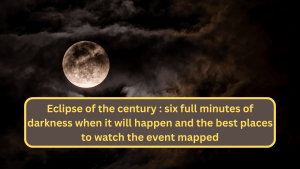
As March 2026 arrives, skywatchers around the world will be treated to one of the most dramatic celestial events of the year. The first lunar eclipse of 2026, widely known as a Blood Moon, will turn the Moon a deep copper-red as Earth’s shadow passes across its surface.
Unlike solar eclipses, this event requires no special equipment and poses no danger to the eyes. If skies are clear, millions of people will be able to step outside and watch the transformation unfold in real time.
Here’s when it will happen, who will see it best, and why this eclipse is drawing so much attention.

When the Blood Moon Will Occur
The lunar eclipse will take place in March 2026, reaching its peak during the late-night to early-morning hours depending on location.
Astronomers confirm this will be a total lunar eclipse, meaning the Moon will pass completely into Earth’s shadow. At maximum eclipse, the Moon will glow red for more than an hour.
According to scientists at NASA, this will be the first total lunar eclipse visible in 2026, making it a highly anticipated event for both amateur stargazers and professional astronomers.

Why the Moon Turns Red During a Lunar Eclipse
The “Blood Moon” effect is caused by Earth’s atmosphere.
As sunlight passes through the atmosphere, blue light scatters while red and orange wavelengths bend and reach the Moon. This filtered light bathes the lunar surface in a reddish glow.
The exact colour can vary depending on:
Atmospheric dust and pollution
Volcanic activity
Cloud cover along Earth’s edge
Some eclipses appear bright orange, while others take on a deep crimson tone.
Where the Eclipse Will Be Visible
Visibility depends on your location and the timing of moonrise and moonset.
Regions expected to see all or part of the eclipse include:
North America
South America
Parts of Europe
Africa
Portions of Asia
Observers in the Americas are expected to have particularly good views, with the eclipse occurring high in the night sky.
Eclipse Timeline: What to Expect
A total lunar eclipse unfolds gradually over several hours.
Key stages include:

Penumbral eclipse begins — subtle shading appears
Partial eclipse — Earth’s shadow darkens part of the Moon
Totality — the Moon turns red (the Blood Moon phase)
Partial eclipse ends
Penumbral eclipse ends
Totality alone can last over an hour, giving viewers plenty of time to observe and photograph the event.
Why This Eclipse Matters in 2026
Lunar eclipses are more common than solar eclipses, but total lunar eclipses remain special — especially those well positioned for large populations.
Astronomy educators note that this eclipse is:

Conveniently timed for evening viewing in many regions
Long-lasting compared to average eclipses
Part of a limited number of total lunar eclipses in the mid-2020s
For many people, it may be the only Blood Moon they see this year.
Real Reactions From Skywatchers
Amateur astronomer Daniel Reyes from Texas says lunar eclipses never lose their magic.
“You don’t need a telescope. You just look up, and suddenly the Moon feels alive and dynamic.”
Families, photographers, and casual observers often turn lunar eclipses into shared events, gathering outdoors or following the eclipse together online.

How to Watch the Blood Moon Safely
No eye protection is required.
Best viewing tips:
Find a dark location away from city lights
Use binoculars for extra detail, if available
Dress warmly if watching late at night
Allow your eyes time to adjust to darkness
Check local weather forecasts
Even smartphone cameras can capture the red Moon with steady hands and low-light settings.

Lunar Eclipse vs Solar Eclipse
FeatureLunar EclipseSolar EclipseEye safetySafe to viewEye protection requiredDurationSeveral hoursMinutesVisibilityEntire night side of EarthNarrow pathFrequencyMore commonLess common
This accessibility is why lunar eclipses are often called “the people’s eclipse.”
Q&A: Blood Moon Eclipse Explained
1. What is a Blood Moon?
A total lunar eclipse where the Moon appears red.
2. Is this the first eclipse of 2026?
Yes, the first lunar eclipse of the year.
3. Is it dangerous to watch?
No, it’s completely safe.
4. Why does the Moon turn red?
Earth’s atmosphere filters sunlight onto the Moon.
5. Do I need special equipment?
No.
6. How long will totality last?
Over an hour.
7. Can clouds block it?
Yes, clear skies are needed.
8. Will it look the same everywhere?
Colour and brightness may vary slightly.
9. Can children watch it?
Yes, it’s family-friendly.
10. When is the next Blood Moon after this?
Later eclipses are expected, but timing varies by region.
A Night Worth Stepping Outside For
In a world full of notifications and screens, a lunar eclipse offers something rare: a shared, quiet moment under the same sky. The March 2026 Blood Moon will unfold slowly, visibly, and without fanfare — reminding viewers that the universe is always in motion above us.
For anyone with a clear sky and a few spare minutes, this is one celestial event worth watching.