
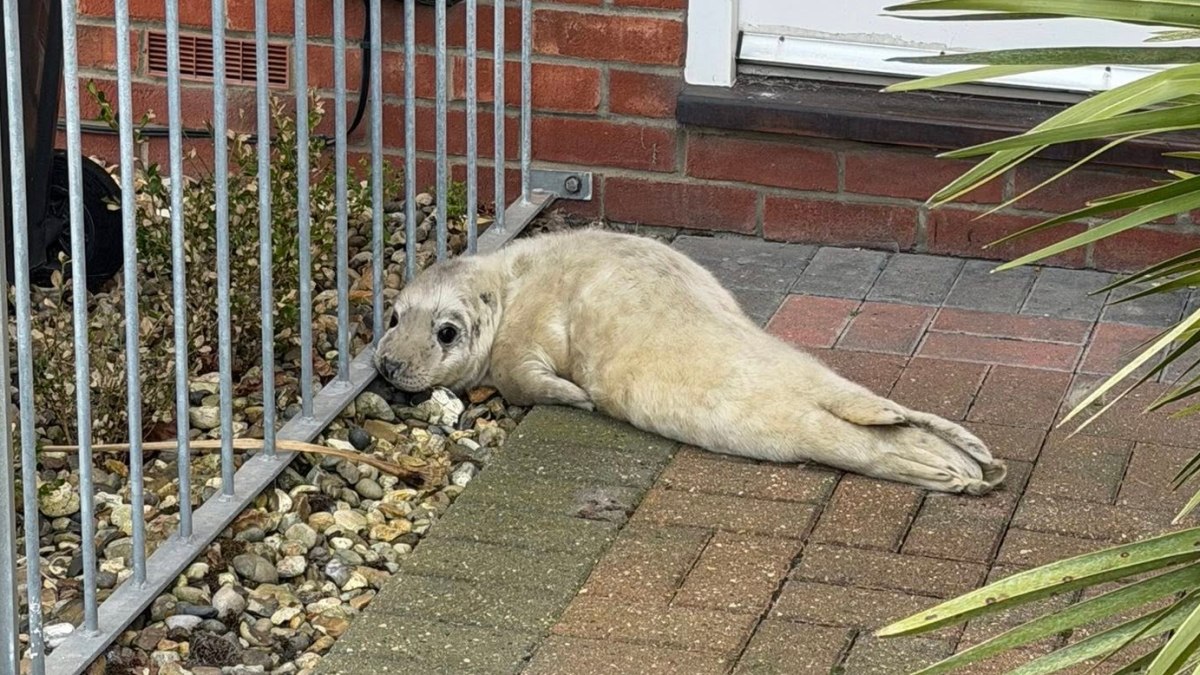
The grey seal pup looks warily out of her cubicle at the East Winch Wildlife Centre, near King’s Lynn. Just two weeks ago she was lying on a beach on the Norfolk coast when she was swept away and found herself miles from her mother.
On New Year’s Day passersby spotted the lone pup, now affectionately known as Cold Call, hiding under a car near the beach in Gorleston-on-Sea. They called Dan Goldsmith from Marine and Wildlife Rescue but by the time he arrived she had vanished.
“I had a good search under every car,” he said. “But I didn’t find her and nothing was reported for the rest of the day, which was odd.”
The vanishing act was solved the next morning when a postman delivering a parcel spotted the pup hiding under a prickly bush in the front garden. This time Goldsmith arrived on time to retrieve the seal, which was just a couple of weeks old and weighed 11.8kg.
• Pinkafo: Freedom at last for seal caught in frisbee
Goldsmith said: “Although she was fairly bright and alert, there was not a chance she could be returned to a local beach; she was significantly underweight for her age, especially as she had started to moult the whitecoat.”
When grey seal pups are born, they are covered in fluffy white fur which keeps them warm until they develop a layer of blubber. After about 16 days, their white coat will have moulted completely leaving a grey, smooth coat behind.
The pup was transferred to the nearby RSPCA centre, where she now lives in a cubicle alongside Fireworks, another rescued grey seal. The centre is currently caring for about 40 seal pups, with three more expected on Friday.
• Seal pups born early due to hot summer face struggle to find food
Many of them were separated from their mothers and displaced during storms and high tides, while others needed attention after dog attacks or because they were abandoned.
The seal pups, whose names include Burnt Toast, Insomnia, Mould Spores, Vape, Migraine, Fossil Fuel, Trip Hazard and Talcum Powder, need constant care to regain their strength and learn how to fish for themselves, a process that can take up to five months.
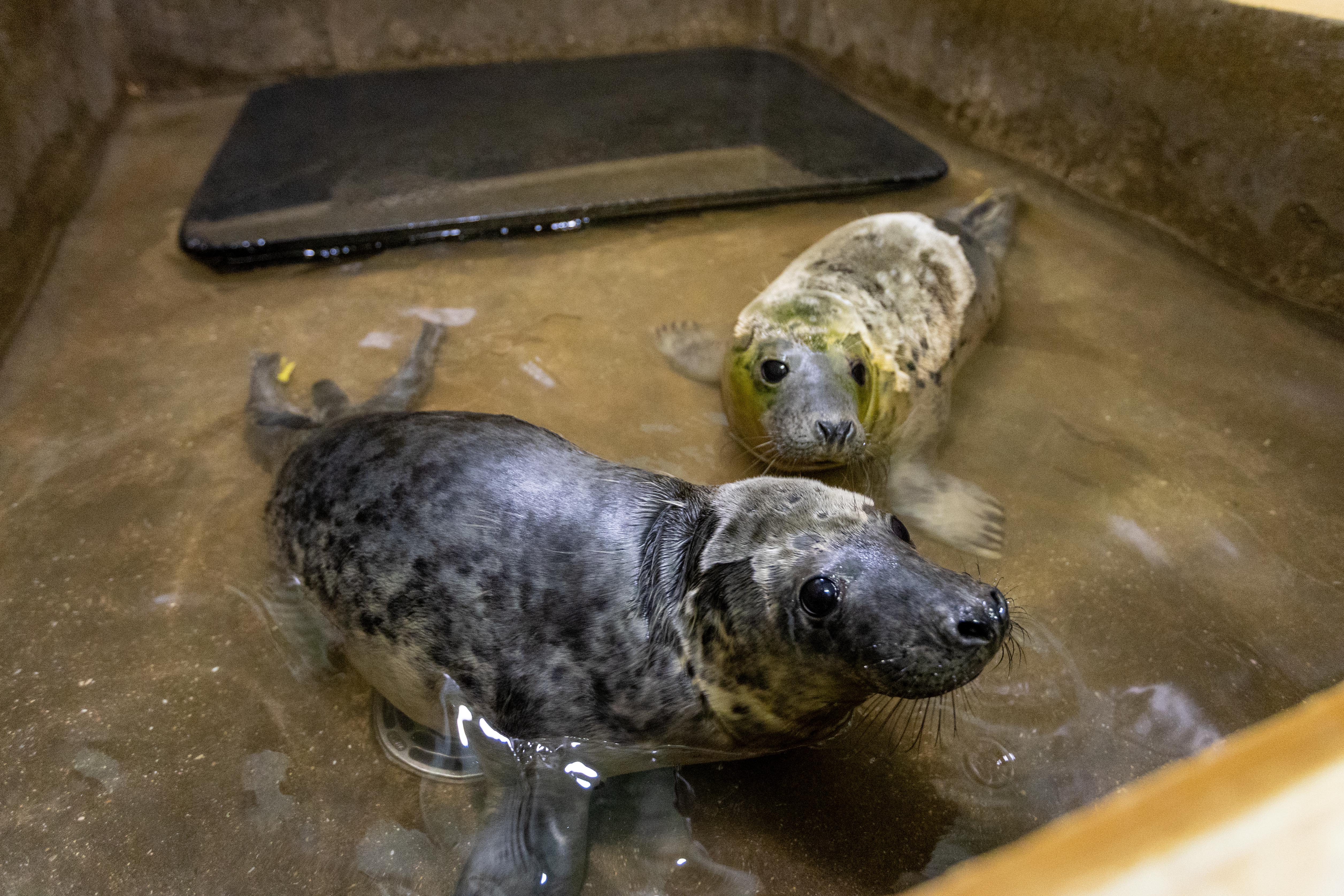
Radiation and Migraine at the RSPCA centre
TERRY HARRIS FOR THE TIMES
Cold Call is still being tube fed with a soup-like mixture of fish, multivitamins and glucose to build up her weight but she has already moulted her whitecoat and is adjusting well to the new surroundings, according to David, a wildlife supervisor at the centre.
• Rescued seal pups released to enjoy life in the wild
“She’s been pretty chill,” he says as Cold Call rolls around on her back and scratches her neck before exploring the doorstep. “Seals are really inquisitive. They’re a bit like a dog, they’ll try to escape but you also get really chilled out ones that are almost bordering on lazy.”
Cold Call was probably born in the seal colony at Horsey or Winterton around Christmas, before she was swept southwards. The colonies here started with a few dozen seals two decades ago but have now grown to 8,000 seals with 3,700 pups born just this year.
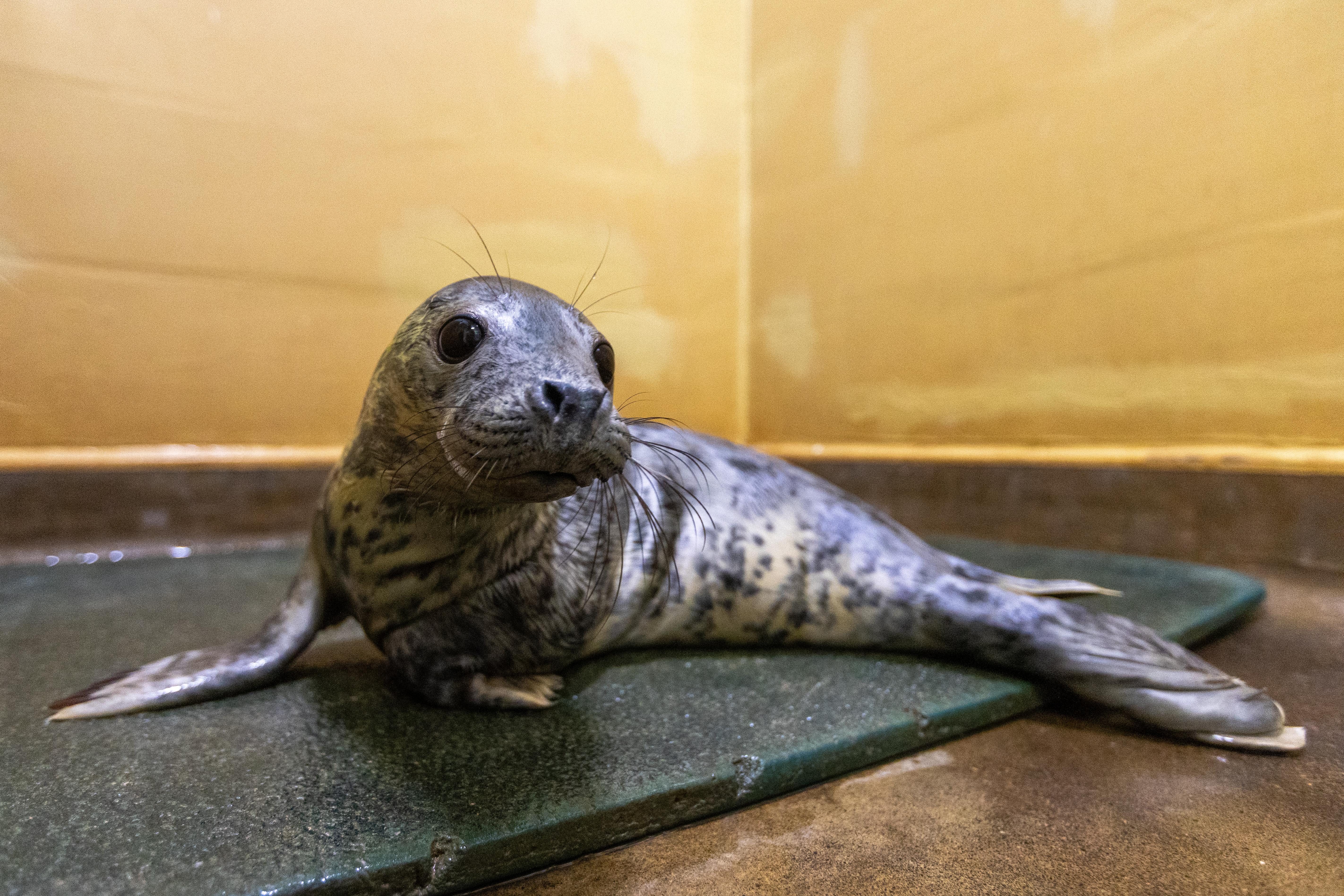
TERRY HARRIS FOR THE TIMES
Sally Butler, chair of the Friends of Horsey Seals (FoHS), said: “I think it’s a safe place for them to have their pups and during the winter months we get a lot of herring and sprat down here so there is a lot of fish for them to eat, it’s a nice easy beach for them to come and haul out on.”
Only a few young seals can still be found along the beach but during the height of pupping season more than 300 volunteers from FoHS will patrol the coast to ensure the marine animals are not disturbed by humans or their dogs.
“If a mum gets disturbed with a pup, she’ll just abandon it and the pup dies,” Butler explained. The volunteers also monitor seals wandering inland to shelter from bad weather or high tides as they can get lost in the footpaths or waterways. In December a seal pup made its way 20 miles inland up the River Bure at Horning, where it snuck into an angler’s keep net.
Over the years, the rescue teams have found seals in rather obscure places including the toilets at Winterton beach, garden sheds, muddy fields and in the town centre. Once they rescued a seal that was spotted outside a kebab takeaway. Experts say such appearances are a normal consequence of exploratory behaviour.
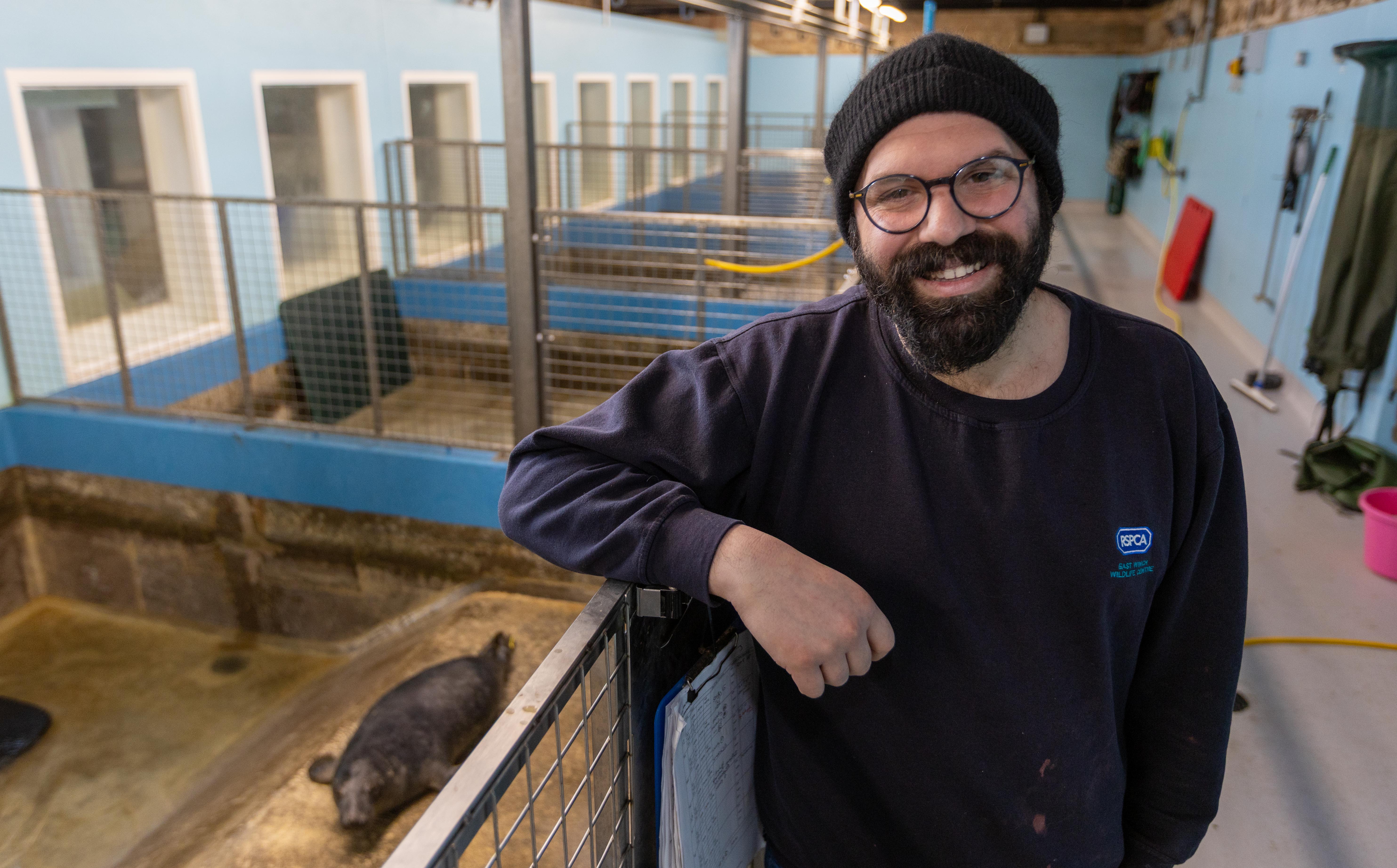
Evangelos Achilleos, the wildlife centre’s manager
TERRY HARRIS FOR THE TIMES
Last year, the teams were involved in 300 rescues for abandoned or displaced grey and common seals, with 128 of those occurring last December. In 2025 they helped 38 seals that were in places they shouldn’t be and 31 entangled seals. Sixty were transferred to the East Winch Wildlife Centre.
The rehabilitation process is lengthy and can cost up to £5,000 per pup, according to Evangelos Achilleos, the centre’s manager. He said: “Seals require a lot of care while at the centre and one of the biggest challenges is getting them to eat for themselves unaided. The road to recovery is always long.”
Cold Call is almost ready for the next step of the journey. In a few days she will be transferred to a cubicle with water where she will learn how to eat fish by herself. Eventually she will be transferred to a deep outside pool, where she will improve her fitness and fishing skills in preparation for her return to the colony and life in the rough North Sea.
Seal mothers usually stay close to their pups for the first three weeks of their life to feed them, although some occasionally venture to the sea to fish. It’s not known where Cold Call’s mother was when the pup was swept away, though it is likely that they would have been near one another on the same beach.
Seals spend about a third of their life on land and can travel a few hundred metres ashore. Some have been found several kilometres inland, however in those cases they most likely followed waterways or canals.