
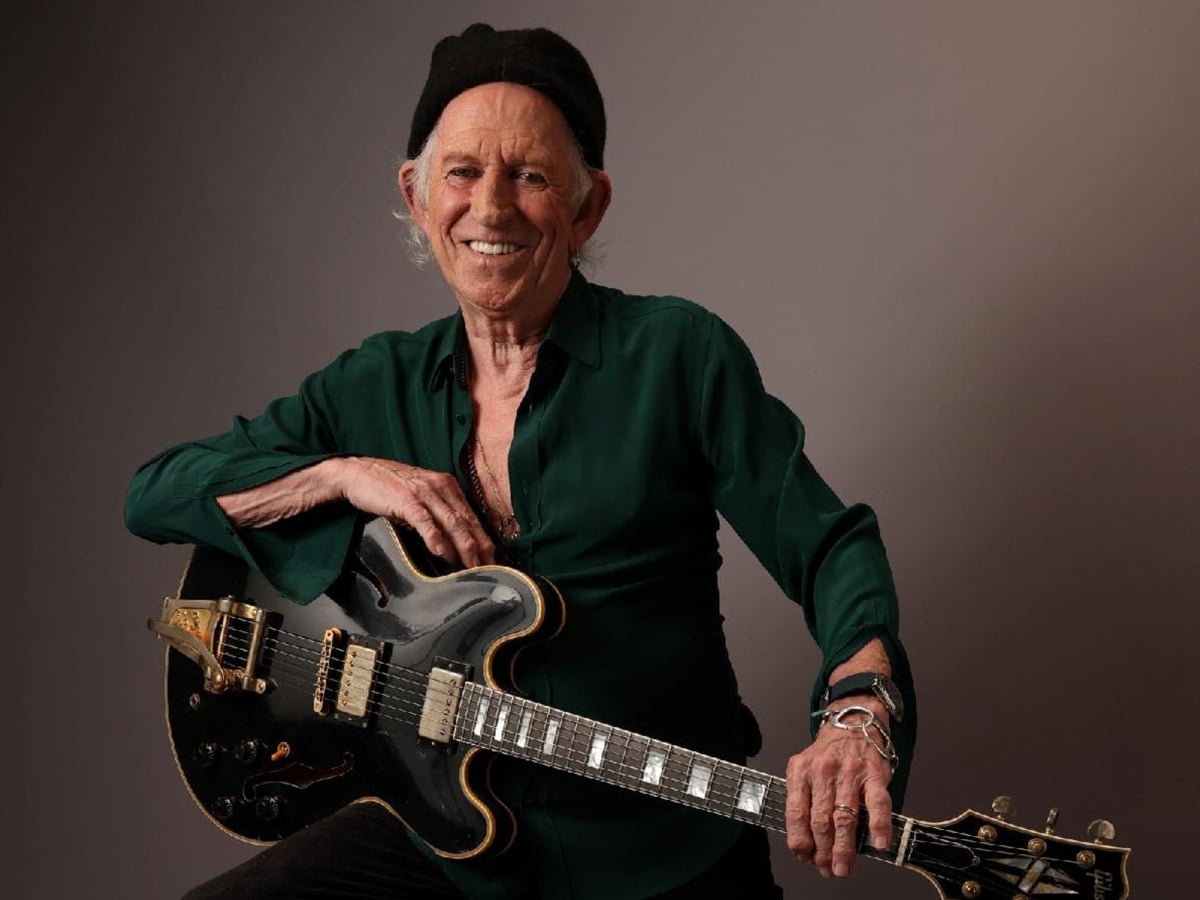
(Credits: Gibson)
Sat 17 January 2026 20:58, UK
In the grand history of rock and roll guitarists, Keith Richards didn’t seem to be competitive with much of his contemporaries.
He had his own distinct sound in The Rolling Stones, and while there were a bunch of players that could take the guitar in a lot more adventurous areas than he could, that didn’t matter so long as he could get the sound that he wanted to hear out of any six-string he picked up. It didn’t matter so long as it had the mojo, but it had to be a bit daunting trying to match the same kind of standard that his influences set for themselves before he got started.
Because, really, how the hell is anyone supposed to be a rock and roller guitar player and try to outmatch what Chuck Berry did in his prime. That music might have been part of the reason why Keef got together with Mick Jagger in the first place, but the kind of licks that he could play were more than a few patented patterns. It was the sound of rock and roll getting born, and you can hear a lot more nuances of what Berry did whenever Richards was playing in standard tuning.
It’s one thing to have licks that are trademarked to you as a guitar player, but Richards’s taste wasn’t simply about making a few open-G licks his calling card. His favourite guitar players were the ones that could play everything right for a particular song, and while it may have been a little bit daunting trying to get to the level of someone like Scotty Moore, the session scene was full of people that seemed to have it all before they even sat behind the glass.
Being a team player in a rock and roll band is no easy feat, but a session player requires a whole different set of skills. Jimmy Page knew how to switch on a dime and get the best sound out of his guitar that he possibly could on sessions, but when listening to his favourite musicians, Richards knew that few artists could really compare to the kind of licks James Burton was laying down.
You might not recognise the name, but I promise Burton’s record collection has been heard in the background of rock history. Whether it was working with Elvis Presley’s TCB Band or doing session for everyone from The Everly Brothers to Johnny Cash, Burton had the kind of touch that could get people to turn up the volume before the singer even came in, to the point where Richards would seek out records by his favourite artists solely to hear Burton’s playing in the background.
But if he was already a monster in the studio, Richards was shocked to find out that it got even better seeing him up close, saying, “He’s the master of the Telecaster. I remember being 15 and hearing him playing with Ricky Nelson and thinking, ‘How can you get a sound like that?.’ To play with James is amazing. You listen to him in the dressing room and it just makes you sick. I can play a few things but [not like that].”
Then again, what Richards is talking about might not be the technical mastery of the instrument or anything. A lot of people can spend their entire lives trying to reach the same heights that Burton did, but the true nature behind all of those great licks is something that was in his fingers whenever he played. It’s not all that dissimilar to how Richards plays either, especially when he discovered chords most wouldn’t have thought of on Sticky Fingers and Let It Bleed.
Richards could have spent time chasing after that tone if he wanted to, but it was never about the idea of copying his heroes. The great thing about all those records is that they wanted to hear a guitarist that sounded original, and the best way for Richards to honour his heroes would be to find a sound of his own.
Related Topics