

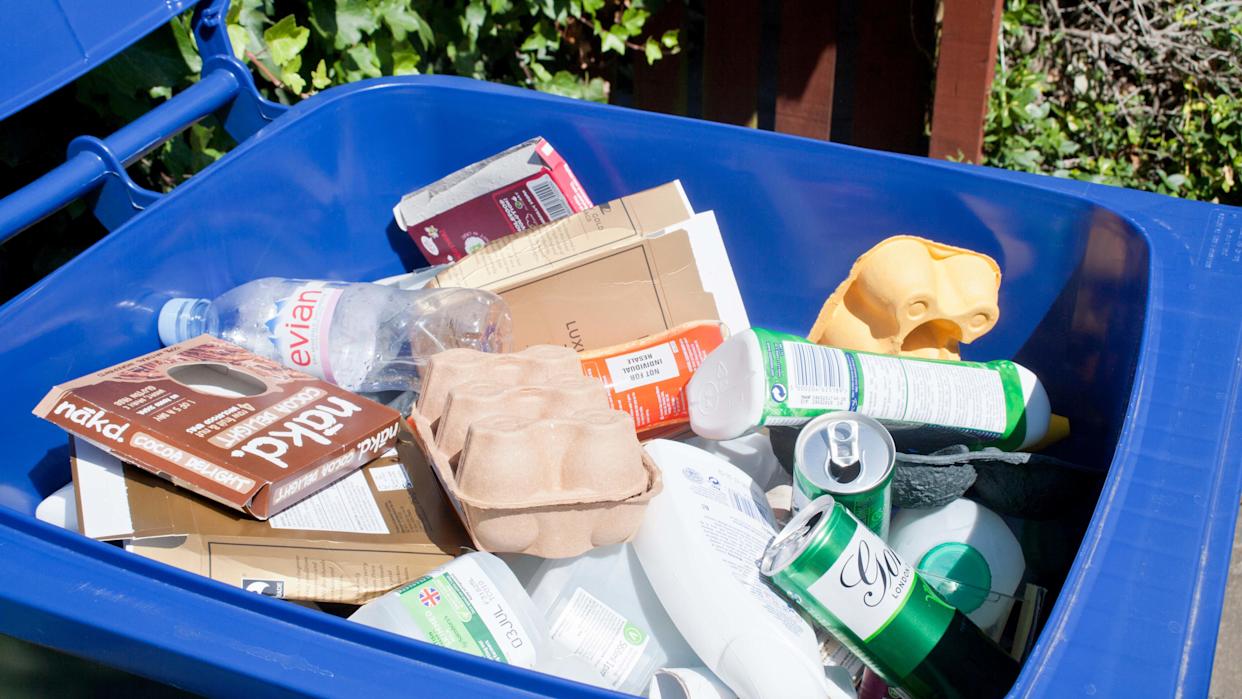
The government hopes to simplify how waste is recycled with its Simpler Recycling scheme. (Alamy)
(Alan Pembleton)
News reports claiming households could receive £400 fines for recycling 37 “prohibited” items have been branded “completely false” by the government.
Dismissing the “inaccurate” reports about the upcoming Simpler Recycling scheme, the Department for Environment, Food & Rural Affairs (Defra) attempted to clear up some misunderstandings on its website.
It said that items described in reports as “prohibited” – including food and drink cartons and plastic packaging labelled as compostable – can still be disposed of by households and are “not banned”.
Rather, they are “simply listed in government guidance for local authorities as not in scope for specific recycling streams under Simpler Recycling”, Defra said.
Many of the items mentioned in media reports, including drinking glasses, vases and mirrors, were already not supposed to be put in kerbside recycling bins in most places long before the introduction of the Simpler Recycling scheme.
“Most of the items referenced can still be placed in the residual (general waste) bin, while some items, such as batteries and electricals, must be taken to appropriate collection points,” the department adds.
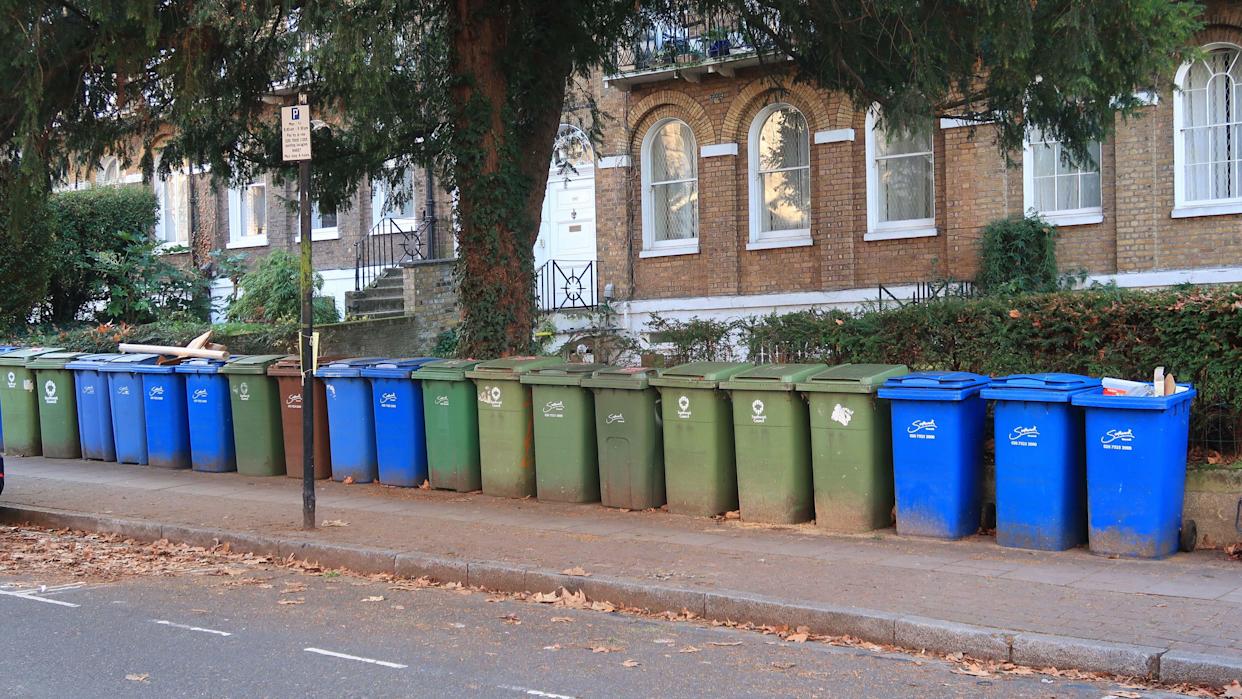
Households will be given new containers to separate different types of waste. (Alamy)
(Simon Turner)
The list referred to in news reports appears to be from this 2025 guidance from Defra for waste collectors on what they must and must not collect, not what households must not dispose of.
Defra said that Simpler Recycling, which will see clearer separation of different kinds of recyclable waste, does not carry a £400 penalty for those who get their sorting wrong.
It said the penalty for incorrect presentation of household waste in England is a civil penalty, “not a criminal fine”.
It is not clear where the claim of a £400 fine originated, but Defra says a Fixed Penalty Notice (FPN), valued between £60 and £80, “can only be issued after a written warning and where incorrect presentation is causing a nuisance”.
What is the Simpler Recycling Scheme?
One of the key aims of the Simpler Recycling scheme is to end a “postcode lottery” of bin collections in England, “whereby councils collect different materials for recycling, causing confusion for households”.
It means councils across England will have to standardise their recycling operations, making it clearer what items can and can’t be recycled.
The scheme comes into force from 31 March, and will require the streaming of waste into these four categories: residual (non-recyclable) waste, food waste (mixed with garden waste if appropriate), paper and card, and all other dry recyclable materials (plastic, metal and glass).
Councils will be given some flexibility over their own waste management, however, meaning some may choose to collect glass, plastic and metal separately.
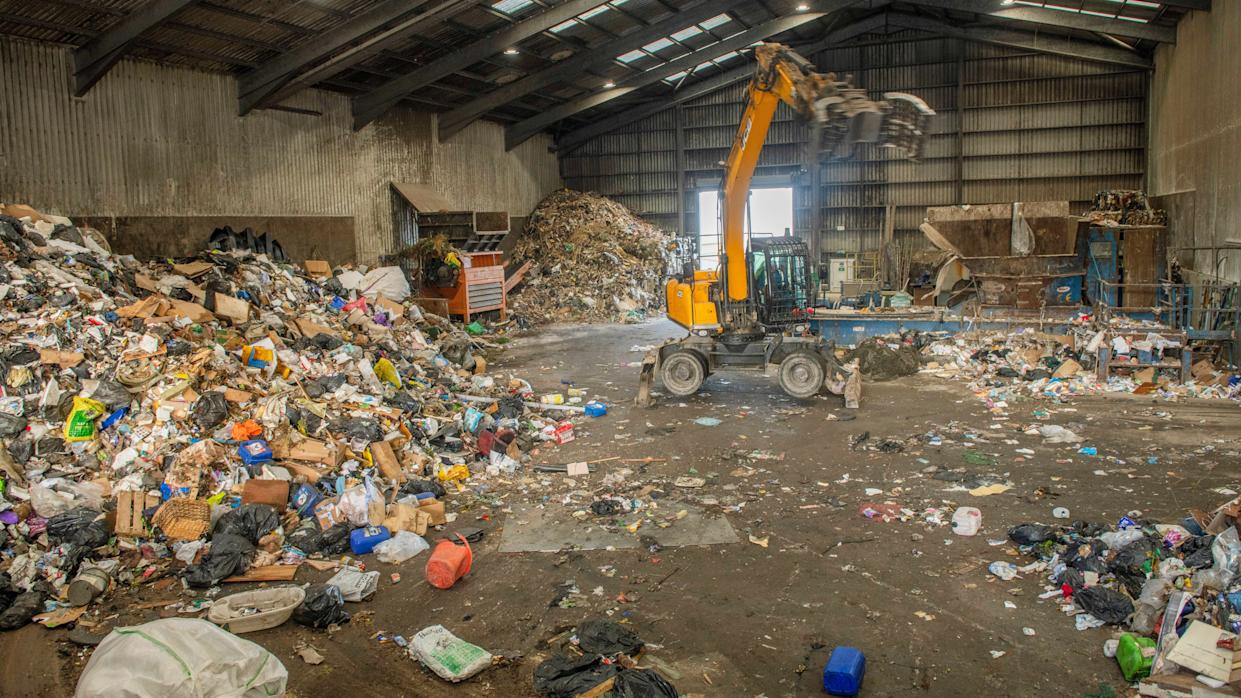
As well as cutting greenhouse gases, the government hopes increasing the amount of products made with recycled materials will give the economy a boost. (Alamy)
(Dave Donaldson)
To help households sort their waste properly, they will be provided with new containers by their local authorities to help them separate their rubbish, which could come in the form of bags, bins or stackable boxes.
Also included in the reforms are weekly food waste collections for most homes “unless a transitional arrangement applies”, the government said.
By 31 March 2027, Defra hopes to have kerbside collection of plastic film (or soft plastic) from businesses and households up and running.
The aim of Simpler Recycling is to work towards a goal of recycling 65% of municipal waste by 2035, and deliver greenhouse gas emissions savings equivalent to £11.8 billion.
Figures from Defra show the recycling rate for households across the UK is 44.6% (44% for England, around 50% for Northern Ireland, around 42% for Scotland and 57% for Wales).
As well as improving this rate for environmental reasons, the government hopes it will pay off for the economy as well.
“Simpler Recycling aims to ensure there is more recycled material in the products we buy, and that high quality recycled material can be sourced domestically, enabling packaging circularity in the UK,” it says.
“It will help to support more than £10 billion investment in the UK’s recycling capability over the next decade.”
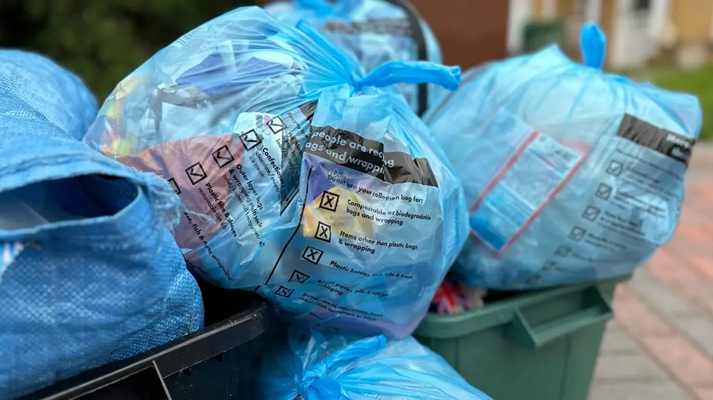
Trials have been carried out for flexible plastic collections expected to come into effect from April 2027. (Ecosurety)
(Ecosurety)
Speaking to Yahoo News in December, Claire Shrewsbury, director of insights and innovation at waste charity WRAP said: “This once-in-a-generation revamp of waste and recycling in England will mean higher recycling rates, increased green jobs and will play an important role in shifting the economy to becoming more circular, vital for a fit future.”
Some problems remain, however, particularly the sheer volume of plastic we chuck away every year, much of which still cannot be recycled.
Every British household throws away about 44kg of plastic waste every year, according to calculations from WRAP, of which only half is recycled, it says.
With many local authorities unable to recycle certain products, for example, because they are made of too many materials, the sustainability charity has called on manufacturers to take responsibility and make their products easier to recycle.
Read more