
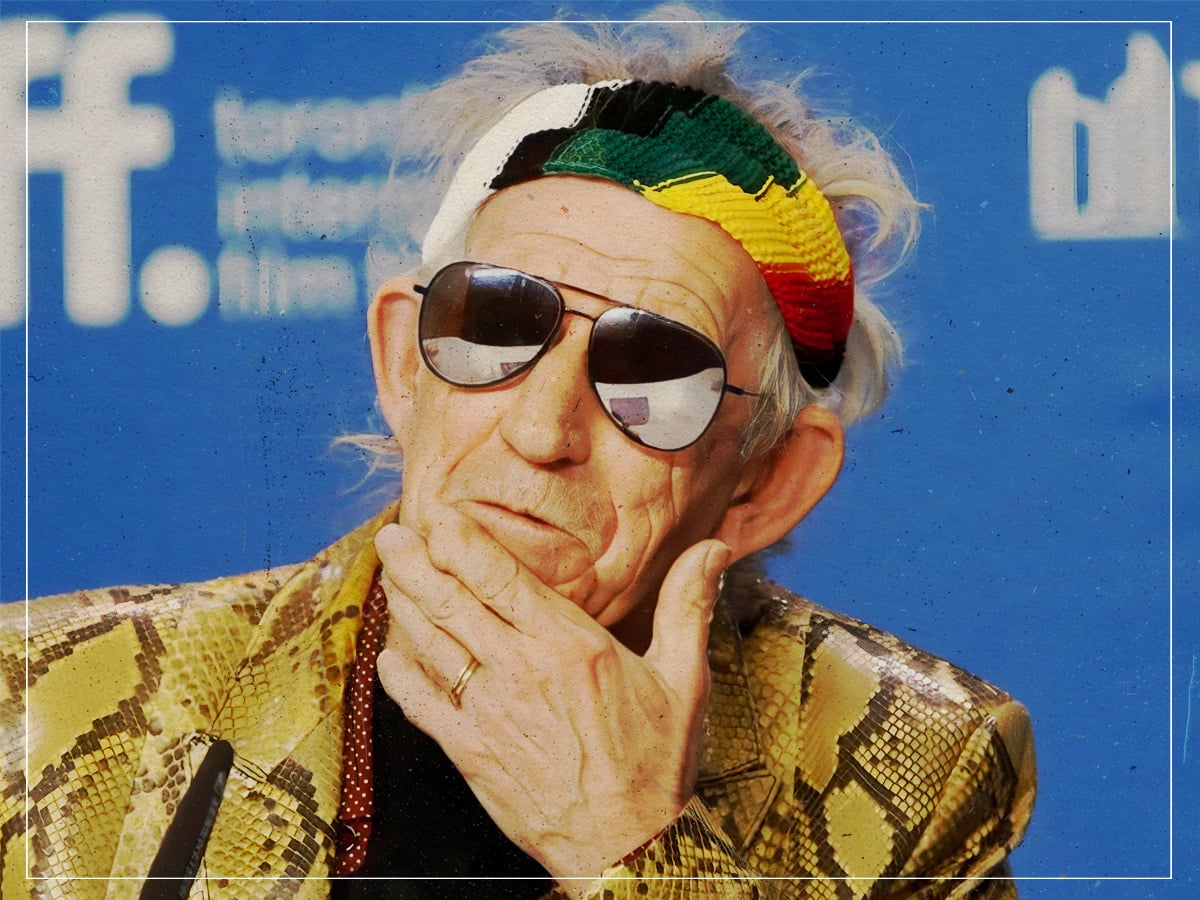
(Credits: Far Out / Alamy)
Sun 18 January 2026 16:46, UK
The role of a good guitarist on stage may seem relatively straightforward. While it’s essential to know your parts every time you perform, it doesn’t necessarily require the same level of showmanship as being a frontman, where you have to sweat out your shirt and strut across the stage under the white-hot spotlights. However, sidemen play an equally crucial role, and Keith Richards learned valuable lessons about being a sideman from the likes of James Burton and Johnnie Johnson.
When you truly consider Richards’ role in The Rolling Stones, it’s challenging to categorise him as a sideman. While he may not sing as frequently as Mick Jagger, they often feel like co-frontmen, with Richards effectively communicating through his guitar riffs and his trademark snarling grin.
The art of making those riffs is something that Burton and Johnson came about naturally. Whereas Tin Pan Alley may have been the original hit factory for the US, the biggest names in music usually had Burton and Johnson behind them. When looking at their backgrounds, each session musician is practically a different side of Richards’ record collection.
On the one side, you had Burton, known for being one of the most dominant figures in the world of country guitar and early rock and roll. Burton’s work extended from Johnny Cash to Emmylou Harris to Gram Parsons, and the second that you hear the touch of his picking on a solo or the beautiful sound of his lead lines, you know that he will be able to make you cry if you’re not careful.
As the Stones would say, though, it’s all about rock and roll, and Johnson may have written the rulebook for what happens in the background of rock songs. While he had the thankless job of keeping up with Chuck Berry on the piano, his background in jazz gave him the ability to rip a solo out of nowhere, either coming up with those iconic lines on ‘Roll Over Beethoven’ or making something up on the fly.
 Keith Richards on stage doing his best side man bit. (Credits: Far Out / Raph Pour-Hashemi)
When inducting both men into The Rock and Roll Hall of Fame, Richards said that the sidemen should deserve the same amount of respect as any frontman has ever gotten, saying, “[As a sideman], you’re watching this bum with a hairdo, and you’re hoping it doesn’t make an ass out of itself. And if you’re not mentioned, it’s because you did your gig really well”.
Richards’ point is that the sideman’s job is equal parts craft and containment. You are there to make someone else look invincible, to catch them when the moment wobbles, and to do it without needing credit. Burton and Johnson understood that instinctively. Their playing is the sound of restraint with purpose, the kind that makes a performance feel inevitable, as if it could not possibly have gone any other way.
That is why Richards talks about them with the kind of reverence usually reserved for stars. He is admitting that the real power onstage is often the person keeping the whole thing from collapsing, not the person soaking up the light. In that sense, Richards learned a paradox that would serve him for decades, that the best way to dominate a song is to serve it, and the best way to be heard is to make everyone else sound better.
It’s never an easy gig, but Richards thought that Burton and Johnson had their silent roles down to a science, explaining, “[They are] the most incredible sidemen of all time. I didn’t buy a Ricky Nelson record…I bought a James Burton. And as far as Johnnie Johnson it goes beyond. We all know who he works with…he probably had a harder time than I do with mine”.
Compared to the other guitar heroes of their day, what Burton and Johnson have made is incredibly subdued. You aren’t going to find anything too flashy with their playing, but maybe that’s the point. It’s about propping up the singer as much as possible, and sometimes, they just need that little bit of melodic sweetness to keep them going through the show.
As far as Richards goes, his work in The Stones feels like the ultimate mixture of both their styles, always playing for the song…except he knows how the song goes half the time because he wrote the damn thing. He didn’t play mind-altering guitar parts, and he may not have had the greatest lead technique, but if Burton and Johnson had taught him anything, it’s to keep everything locked in and swinging no matter what.
Related Topics