
By Yossi Mekelberg
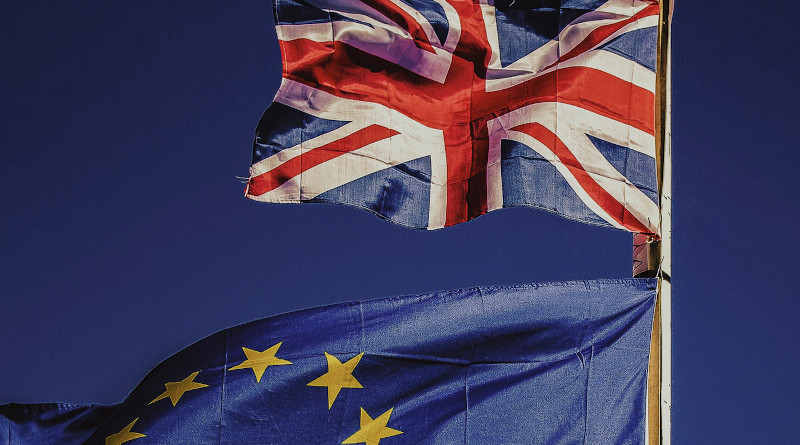
This year marks the 10th anniversary of the Brexit referendum and none of the promises made by those who supported leaving this unique arrangement have ever materialized. The UK is not more independent, because it was independent then; the economy is not doing better, but the opposite; public services have not enjoyed a bonanza as a result of not paying into the EU’s coffers; and immigration, which motivated many of the Brexiters, some more openly, others more tacitly, has only increased in recent years.
The case of resetting the relationship between the UK and the EU in the post-Brexit era reminded me of an Armenian proverb: “One fool threw a stone in the well, 40 wise people couldn’t get it out.” Hence, it is the task of the current wise people in government to rectify one of the most colossal acts of self-harm in British politics.
There is not a single member of the current Cabinet who did not support staying in the EU, including Prime Minister Keir Starmer. However, considering the paralysis the Brexit debacle caused, there is no appetite to reopen the question of returning as a full EU member. There is hardly any sign from the EU headquarters in Brussels, either, that European leaders have the energy to start such negotiations anytime soon.
Yet there is also recognition that burying the Brexit hatchet is in the interest of both Brussels and London — a view reinforced by the war in Ukraine, the Russian threat to Europe and the return of the unpredictable Donald Trump to the White House. Labour and its leader, Starmer, campaigned in the 2024 election on a platform of resetting relations with the EU, which was a euphemism for healing the rift with Europe and showing pragmatism, something that was missing throughout the Brexit affair.
Negotiations over areas of common interest began almost immediately but are moving slowly, reflecting the cautious nature of the British leadership. Winning the last general election with a vast majority, even if not all Labour MPs are Europhiles, and the fact that most Britons constantly express in surveys that it was wrong for Britain to leave the EU and think that Brexit has been more of a failure than a success, should have encouraged the UK government to move faster. The price for not doing so is dear and the progress in negotiations should have been more rapid.
The Office for Budget Responsibility, the UK’s official independent economic and fiscal forecaster, concluded that the Brexit deal would reduce long-run productivity by 4 percent relative to remaining in the EU, while both exports and imports will be about 15 percent lower in the long term. Some estimate the cost to public finances of leaving the EU at £40 billion ($53 billion) and it is already causing damage to the labor market, badly affecting tourism and leading to fewer students from the EU, which has an impact on universities’ finances.
The tone under this government regarding Europe has changed, becoming friendlier and more positive, and has been followed by baby steps to repair the damage, with an emphasis on youth and some areas of trade. Some of these — such as the UK agreeing to rejoin the Erasmus student exchange program and further negotiate a youth jobs scheme, plus agreeing to adhere to the EU’s rules on food safety and animal health, clearing the way for trade in farm goods and reducing barriers between Northern Ireland and Great Britain — are most welcome. Moreover, on security issues, which have become crucial to defending Ukraine and containing Russia’s adventurism in other parts of Europe, the UK and the EU have drawn closer together and shown resolve.
Nevertheless, as long as the domestic agenda in the UK is dominated by immigration, it is almost impossible to rethink Brexit in full. With Labour lagging in third place in opinion polls behind the anti-migration Reform UK and Conservative parties, the government is more inclined to incremental steps than big leaps forward. Starmer is refusing to consider rejoining the EU customs union, which reduces trade barriers by removing tariffs between its members and allows member states to charge the same taxes on goods imported from outside the bloc, let alone the single market that allows freedom of movement.
Given the overwhelming support among Labour voters in 2024 for rejoining the customs union, and the support among many in Parliament, such a move might prop up a government with very low approval ratings.
The signing of trade deals with the US and India puts the UK in a more favorable position in the forthcoming negotiations with Brussels, but it would be a mistake for London to see that as a substitute for closer relations with its near neighbors, not only because of geographical proximity but also because of shared values.
To sustain these shared values, advancing the case for a youth mobility scheme, for instance, is essential, as it would enable young people to study and work, at least for limited periods of time, on either side of the Brexit border. They would therefore build mutual rapport, appreciation and ties for a lifetime. Likewise the decision for the UK to rejoin Erasmus, the EU’s education and training scheme.
It is hardly a secret that the EU will not let the UK cherry-pick only what is convenient for itself, while opting out of one of the most daring experiments in history to bring nations together and overcome rivalries through open borders for people, goods and finance, which is precisely what the UK is trying to achieve.
To maximize the benefits for both sides, “resetting” the EU-UK relationship should be much bolder, mainly through seeking a formula for London to become as close to being a member as possible without becoming one officially, at least not for the time being. One measure could be to leave the door ajar to allow greater freedom of movement for those who can improve the economy or foster scientific and cultural collaboration. By reframing the conversation over migration more positively, this could allow for the richer experiences that are currently being denied to so many people.
The right-wing opposition would continue to shout from the sidelines and rooftops, as it does, that this government is betraying its promises on Brexit. However, since it is more than three years until the next general election and the majority of voters would like closer relations with the EU after the demonstrable failure of the Brexit experiment, this may just prove to be the joker up Starmer’s sleeve.
Yossi Mekelberg is professor of international relations and an associate fellow of the MENA Program at Chatham House. X: @YMekelberg