
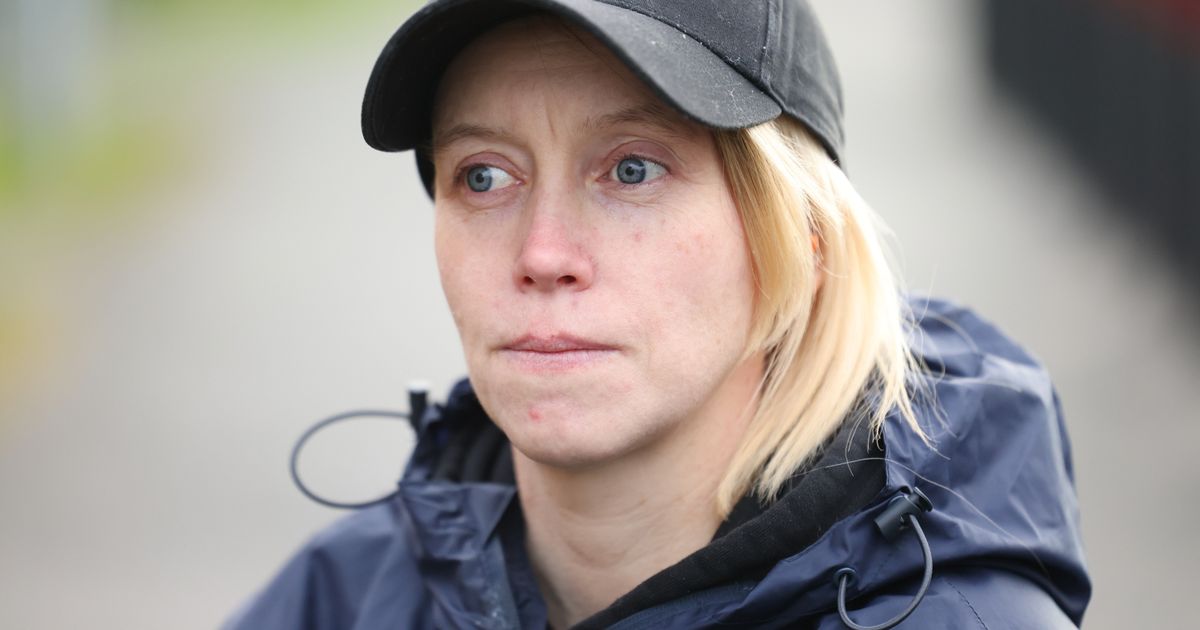
Jennifer Day turned to drink and drugs and ended up homeless – but has now been sober for four years
Kristy Dawson Multi-Media Journalist
20:06, 18 Jan 2026
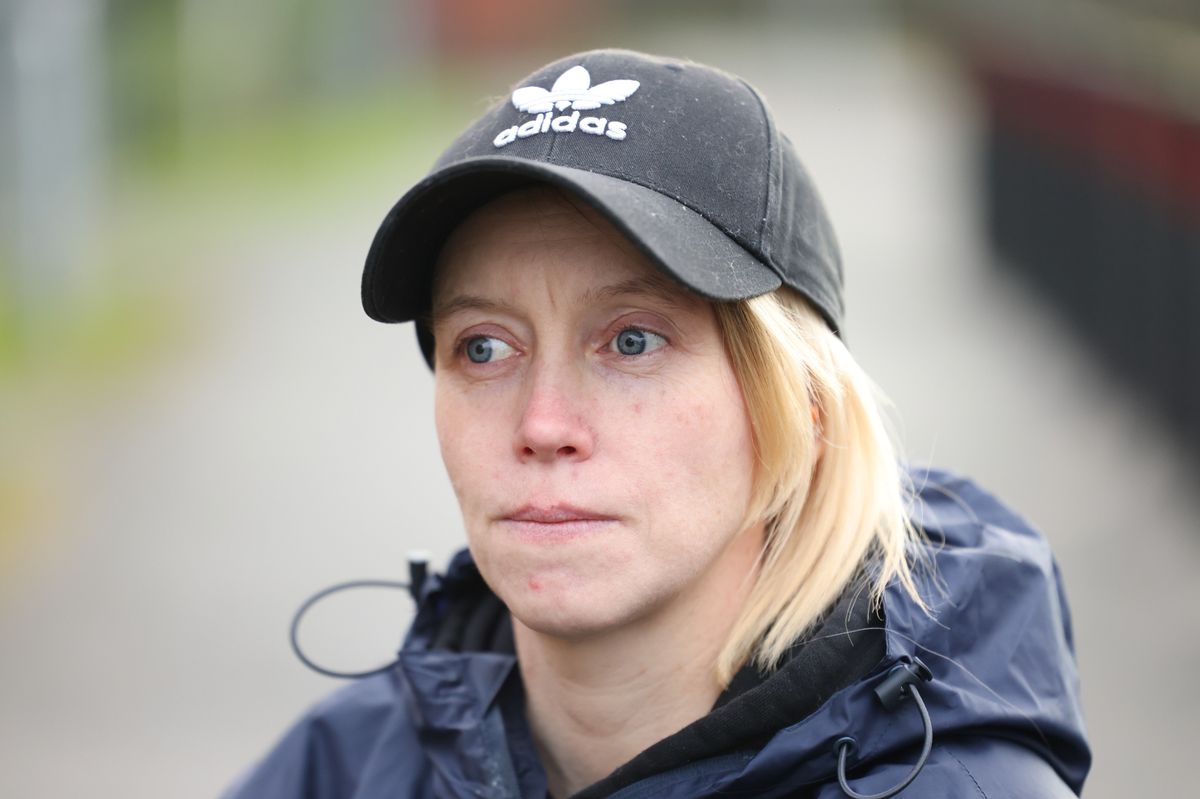
Former soldier Jennifer Day (Image: ChronicleLive)
Jennifer Day dedicated 22 years of her life to the British Army and was nearly killed in a bomb blast while serving in Iraq. However the 43-year-old says that when she left the military in 2021 she had no where to turn.
The former combat engineer suffered a brain injury in the bomb blast which left her 40% disabled and was so unwell with PTSD that she hit rock bottom. She turned to drink and drugs and ended up homeless – living in a car and sleeping in bushes.
Jennifer, from Dudley, North Tyneside, tried to take her own life several times and committed crimes which led to her going to prison twice. She has now been sober for four years and her mental health has improved significantly.
However the veteran is now seriously ill with complex medical conditions related to the bomb blast in 2004. She says her heart is failing and she is at risk of having a heart attack or a stroke.
Jennifer, who is now in a wheelchair, gets £56-a-week war pension. She told Chronicle Live: “We get tuned in to go to war but they don’t tune you in to come home. There was nothing there when I came out. You’re left on your own.
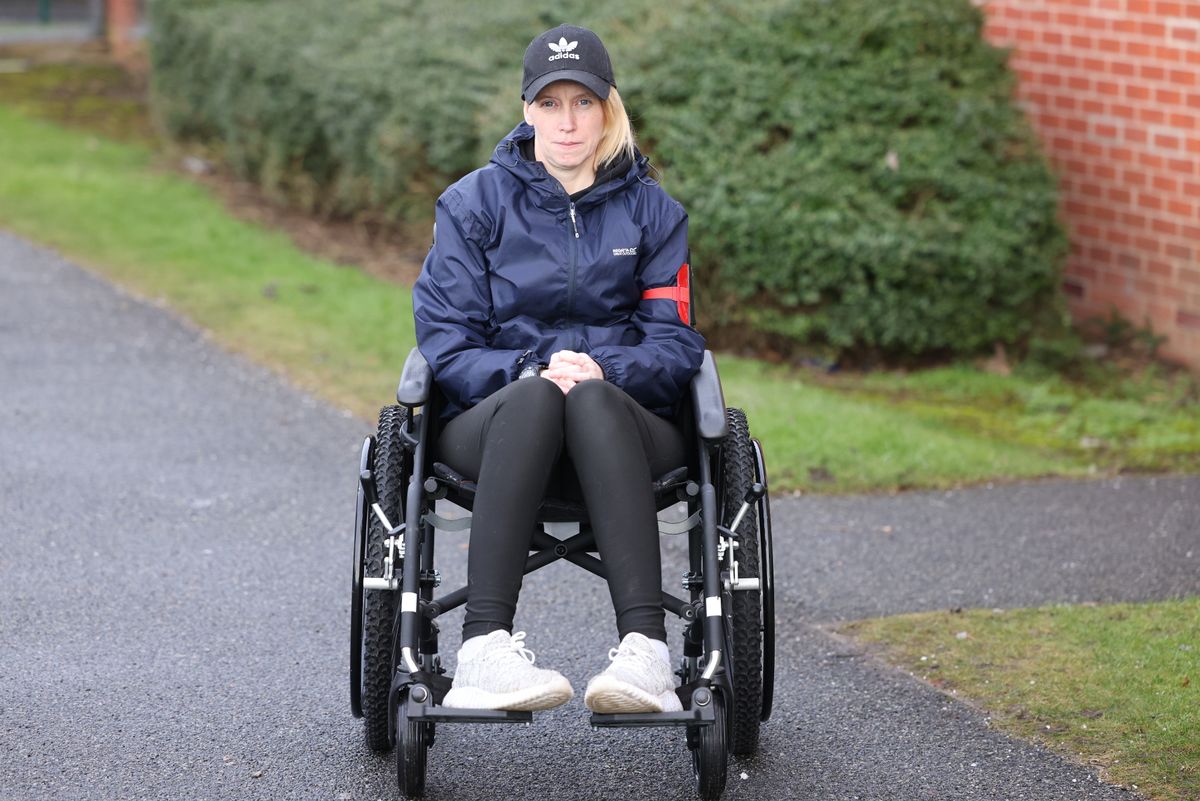
Jennifer Day turned to drink and drugs and ended up homeless(Image: chroniclelive)
“The MOD is supposed to have a meeting with you every three years to see how your mental health is. The last time I had one was 10 years ago. They were meant to come out and they never have.
“I was diagnosed with PTSD. I knew there was something wrong with me, every time I heard a bang I was hiding behind the bins. You are trained a certain way, they tell you this is what you do in a certain scenario.
“There should be some kind of support for veterans where you can keep in with your regiment. There should be a veteran support hub in your regiment so you can drop in for a chat and a tea and a biscuit but there’s nothing.
“I’ve thought about visiting my regiment but what puts me off is being in trouble with the police and being in prison. I want to go back to my regiment and be involved with them but I’m scared of being judged. I will never be able to cope with the rejection.”
Jennifer began her Army career in 1999 as a chef in the Royal Logistic Corps in 1999. After six months, she transferred to the Royal Engineers where she become a combat engineer and helped to build vital amenities and facilities.
She said: “I wanted to be in the thick of it. I was the only woman. There were other women in the regiment but they drivers and chefs. It was the best route for me. They made me feel like I was in a family, they really looked after me.
“I was there from 2000 up until 2005. I did an Iraq war stint. I have got a brain injury from a roadside bomb. I am 40% disabled now I have got this head injury.
“When I was in Iraq my role was a combat engineer and we had a job to do at Saddam Hussein’s palace. We had to get across many red routes – the most dangerous routes – and getting across one is risky. We had a lot of ammunition.
“I was top cover and I had a rifle. The only reason I got top cover was because I was on the British shooting team for the Army. I got a high score and was seventh out of 400.
“My face was covered so you wouldn’t have known anything. I could go all the places a woman wouldn’t be able to go as I had really good shooting ability. I was nicknamed ‘Sniper Jen’.”
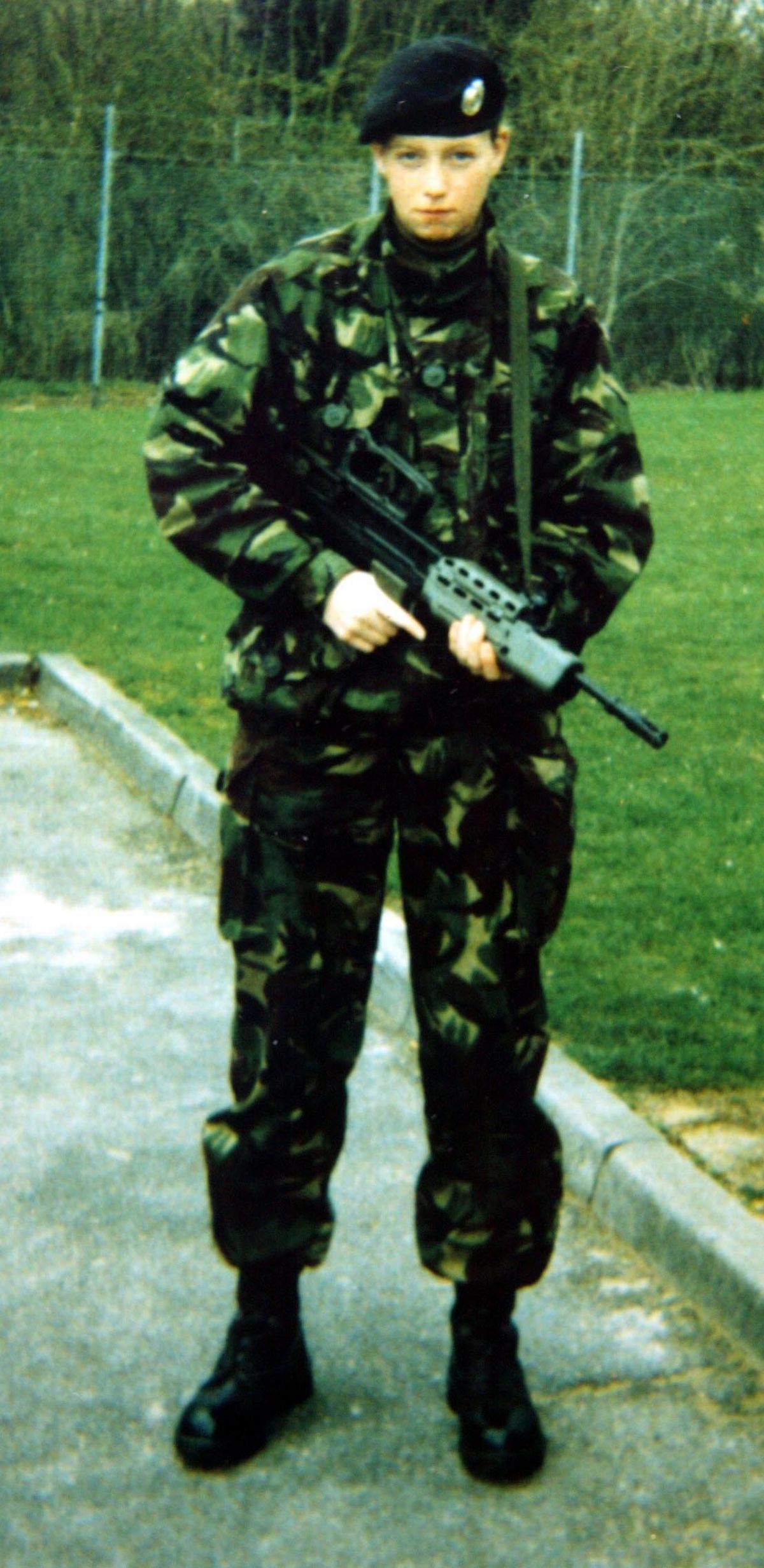
Jennifer Day around the time when she went to Iraq with the Army(Image: )
Jennifer said that she was travelling in a dumper truck with a colleague, as part of a convoy of vehicles, when a bomb exploded directly underneath the truck. They were travelling through a market area, where there was around 900 people, at the time.
Jennifer, who was 22 years old at the time, said: “There was this almighty bang. I couldn’t see the driver but I could hear him scream. I was not able to work out what happened, all I could hear was ringing in my ears and the whole cab was full of thick, black smoke.
“I couldn’t see my door so I felt for my door. I remember thinking to myself your trapped, just keep calm and try again. I just heard ‘Get out, get out’, screaming and the fire from the truck. I remember thinking to myself, I’m going to die. There’s not even time to get out.”
Jennifer and her colleague managed to escape and run as fast as they could away from the burning truck. She said there were around 400 people in the market shouting at them and trying to catch them.
She said: “People were shouting at us from rooftops and I remember sprinting as fast as I could. I remember looking up and thinking I’m going to die, I’m not going to make it. Our JCB was 200 yards up the road and we took cover in the tractor bucket.
“We got to see our truck the next day in the grave yard. We got to see the vehicle that we were blew up in and we realised how lucky we were. If I hadn’t of slumped down in my seat at that exact time when I did I wouldn’t have been here.”
After spending sixth months is Basra, Jennifer transferred to the Royal Artillery reserve regiment where she signed up to become a gunner on top of a tank. She later joined the Commanders of the Parachute regiment before finishing her Army career in the 1st Military Working Dog Regiment.
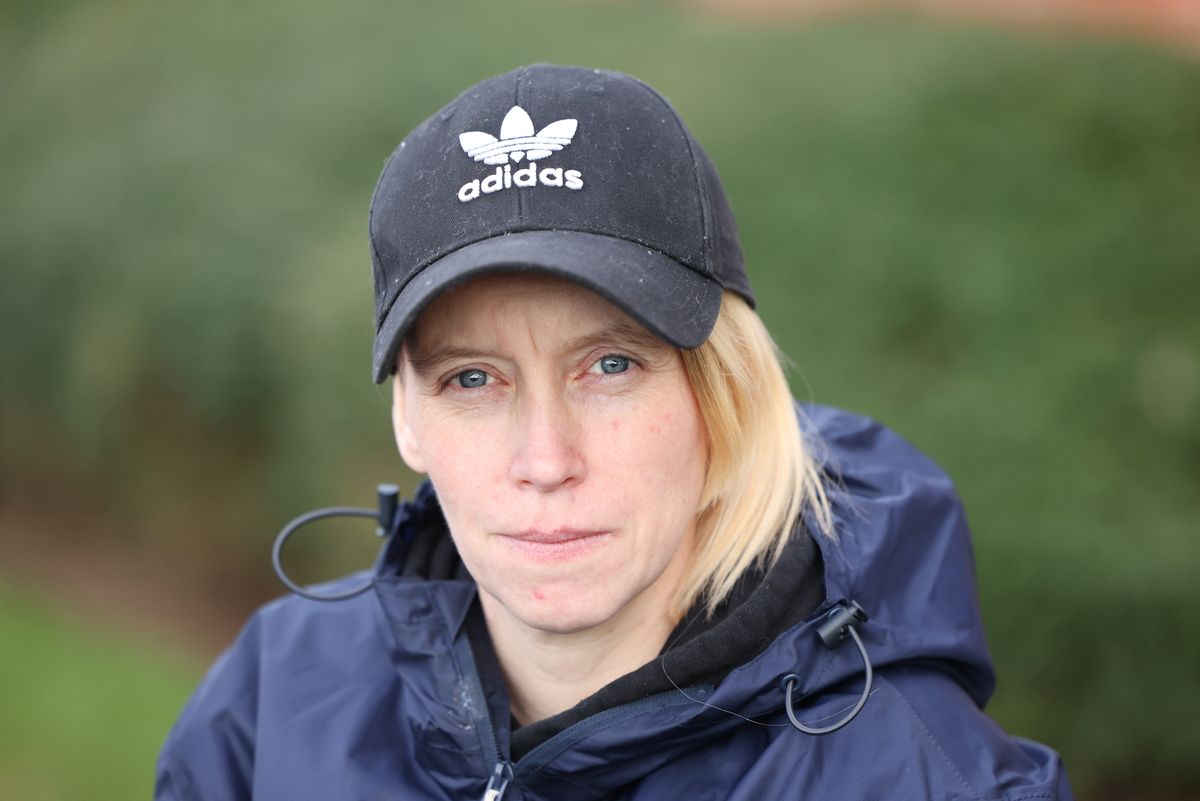
Jennifer suffers from PTDS after serving in Iraq(Image: chroniclelive)
Jennifer said her head injury wasn’t discovered until 2010 when an NHS scan revealed that she had suffered a “blast injury” and damage to the left side of her brain. She said: “I had 5mm of shrapnel in my brain. There were bits of fragments of shrapnel and bone floating about in my skull.”
Jennifer, who classes the Royal Engineers as her regiment, was due to stay in the Army until 2023 but left in 2021. She suffered with poor mental health and was later diagnosed with PTSD.
She turned to booze, became addicted to drugs and found herself homeless. During this time she tried to take her own life several times, committed crimes and found herself behind bars.
One of those crimes included driving into a 71-year-old man when he approached her car to swap details after a crash in Cramlington, Northumberland. She caused around £1,000 damage to the victim’s vehicle then left him with soft tissue injuries when she hit him with the stolen VW Polo she was driving.
Newcastle Crown Court heard how she was not involved in the theft of of the vehicle but she ended up behind the wheel when the crash happened in a car park. She said she drove at the victim out of “great fear”.
She admitted aggravated vehicle taking, dangerous driving, assault, driving while disqualified and having no licence or insurance and was jailed for 10 months in August 2022.
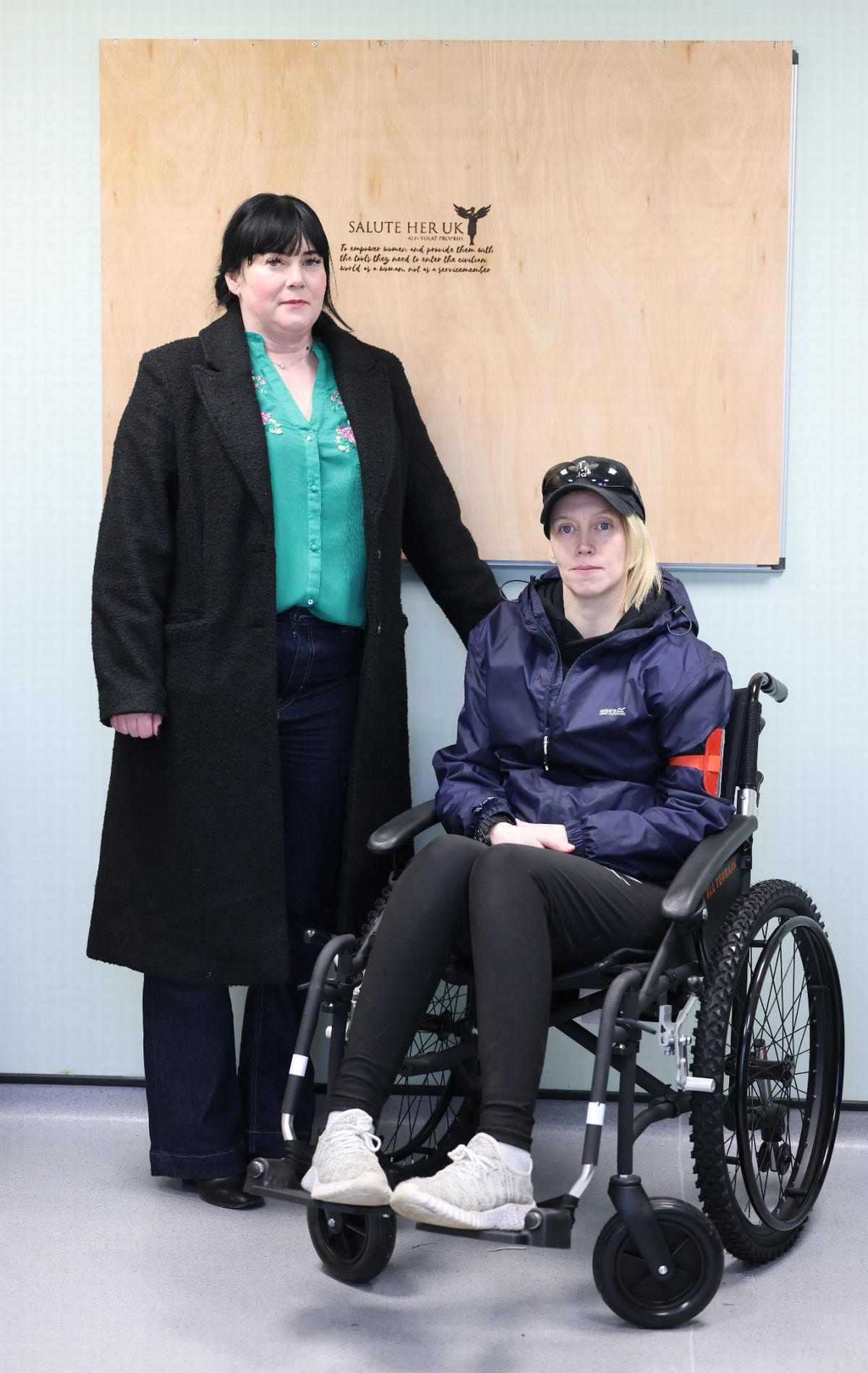
Paula Edwards (left) who runs Salute Her UK, has been helping former soldier Jennifer Day (right)(Image: chroniclelive)
Following her release from prison, she found the strength to turn her life around. She quit drinking alcohol and taking drugs and moved back in with her parents.
Jennifer has been helped over the past five years by Paula Edwards who runs Salute Her UK, a charity in the North East which helps female veterans. Paula said: “We have kept her from dying.
“We have constantly been there for her. We helped her when she was homeless.
“We have done work with her mam and dad as well. We have taught them how to manage crisis, understand PTSD, how to understand the symptoms of PTSD and how to manage suicidal ideation and behaviour.”
However Jennifer’s health has now deteriorated after being diagnosed with afferent baroreflex failure – a serious condition where the nerves sending blood pressure signals to the brain are damaged.
She also has orthostatic hypotension – a form of low blood pressure when standing, sitting or lying down – as well as hypoperfusion – where there’s inadequate blood flow to body tissues.
Jennifer said: “I have damaged a nerve in my neck which is linked to my heart. They think it’s been caused by a traumatic brain injury. They think it’s been lying dormant and something recently set it off. I have got heart failure caused by the bomb blast.
“I was never open and honest about my mental health because I didn’t know what it was. Four years ago I came off drink and drugs when I came out of prison and I have not been mentally ill for a long time. Even my parents say I’m a totally different person.
“My mind is really strong. I thank my mind for being strong as it’s got me through this condition. This condition I’ve got is debilitating but my mind has got me through it.”
Jennifer has praised Salute Her for their ongoing support. She said: “They have helped me loads over the last five or so years.”
A Ministry of Defence spokesperson said: “We hugely value our Forces and veterans and owe a debt of gratitude to all those who serve. We’re determined that no veteran falls through the cracks, ensuring they have the access to the support they need and through Defence Transition Services, we’re supporting personnel to move successfully into civilian life.
“We are investing over £25 million each year into physical and mental health services for veterans through Op COURAGE and Op RESTORE and are addressing veterans’ concerns about fragmented support services through the new £50m VALOUR programme, improving veterans’ access to essential care by improving enhanced coordination of support.”
ChronicleLive has created a dedicated WhatsApp community for breaking news and our biggest stories. You can join this WhatsApp community here. It will keep you up-to-date with news as it breaks and our top stories of the day sent directly to your phone.