
Your support helps us to tell the story
From reproductive rights to climate change to Big Tech, The Independent is on the ground when the story is developing. Whether it’s investigating the financials of Elon Musk’s pro-Trump PAC or producing our latest documentary, ‘The A Word’, which shines a light on the American women fighting for reproductive rights, we know how important it is to parse out the facts from the messaging.
At such a critical moment in US history, we need reporters on the ground. Your donation allows us to keep sending journalists to speak to both sides of the story.
The Independent is trusted by Americans across the entire political spectrum. And unlike many other quality news outlets, we choose not to lock Americans out of our reporting and analysis with paywalls. We believe quality journalism should be available to everyone, paid for by those who can afford it.
Your support makes all the difference.Read more
Donald Trump’s plan to slap 10 per cent tariffs on the UK would leave Britons facing higher prices and less choice on supermarket shelves, a supply chain expert has warned.
Oisín Hanrahan, the co-founder and chief executive of Keychain, which works with major supermarkets to identify high costs in the supply chain, told The Independent that the tariffs “wouldn’t stay confined to trade statistics, it would start showing up in the weekly shop”.
It came amid warnings that the export levy could wipe 0.1 per cent off Britain’s GDP – increasing to as much as 0.3 per cent if the tariff is increased to 25 per cent as Mr Trump has threatened – a hit that could tip the UK’s ailing economy into recession.
On Saturday, the US president said he would charge Britain a 10 per cent tariff “on any and all goods” sent to the US from 1 February, increasing to 25 per cent from 1 June, until a deal is reached for Washington to purchase Greenland from Denmark.
Mr Trump said the same would apply to Denmark, Norway, Sweden, France, Germany, the Netherlands and Finland – all of whom are members of Nato.
Speaking about the US president’s latest threats, Mr Hanrahan told The Independent: “A 10 per cent US tariff on UK exports wouldn’t stay confined to trade statistics, it would start showing up in the weekly shop.
“The US is one of Britain’s most important export markets, and making that market more expensive to serve has knock-on effects that ripple through food supply chains.
“For many British food producers, exports are what keep factories running at scale. When tariffs squeeze margins in the US, firms respond by cutting volumes, delaying investment or trying to recover costs elsewhere.”
He added: “Lose scale, and unit costs rise, increasing the risk of higher prices, fewer discounts and less choice on UK supermarket shelves, particularly in processed and branded foods where volume matters most.”
open image in gallery
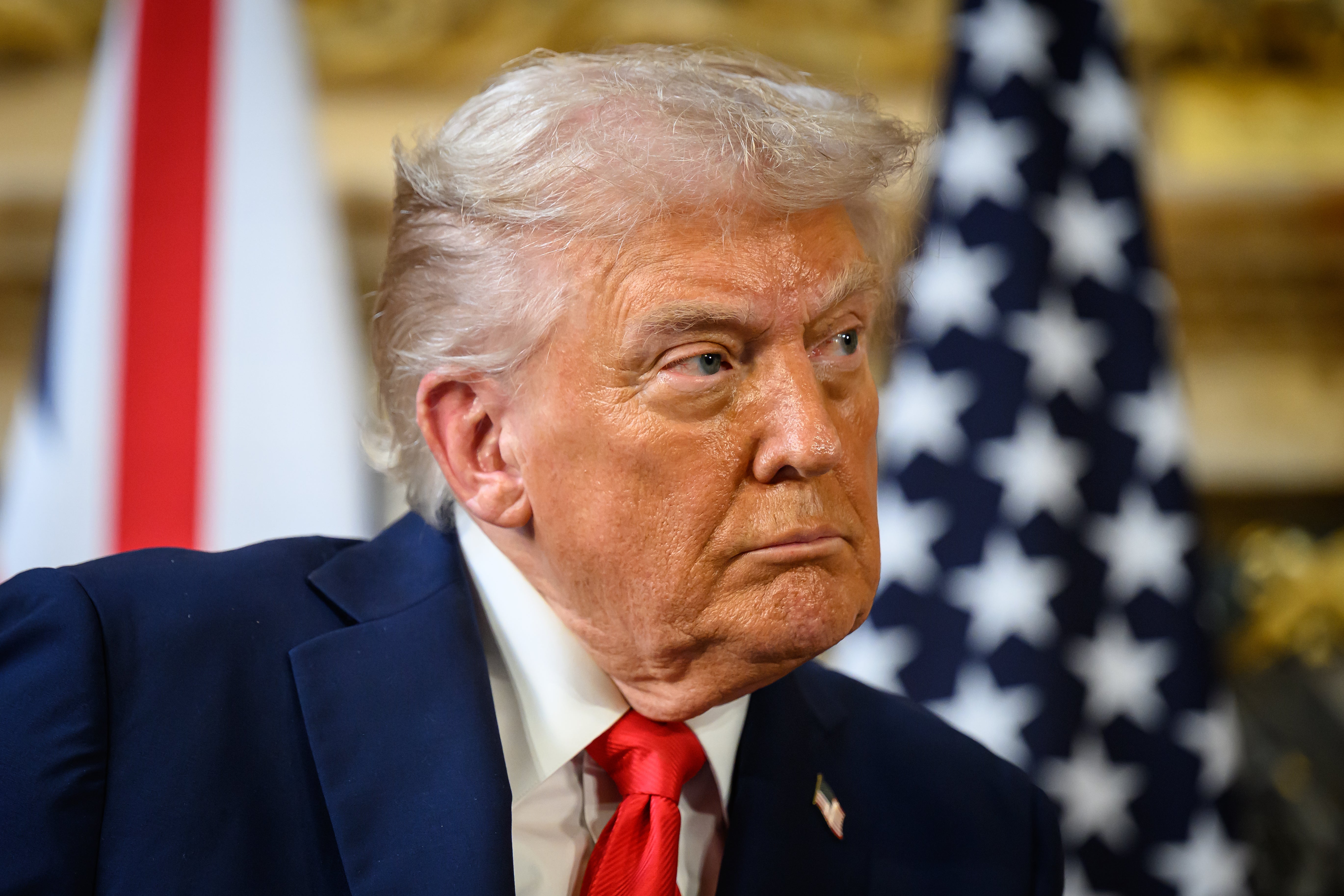
US President Donald Trump is threatening new tariffs over his Greenland bid (PA Wire)
So far, Sir Keir Starmer has ruled out retaliation, saying a tariff war “isn’t in anybody’s interest” and that he is “making sure we don’t get to that stage” –despite Germany and France weighing up hitting the US with retaliatory tariffs.
“What I want to do is to avoid a tariff war, because it will be businesses, workers and families across the country that will be hit by a trade war,” the PM said in a press conference on Monday morning.
But Mr Hanrahan warned that if the UK did decide to retaliate, the “impact on consumers would be more immediate”.
“Tariffs on US imports would raise costs on products and inputs such as nuts, peanut butter, corn-based ingredients and food packaging materials, with those increases passing quickly through manufacturers and retailers into prices,” he said.
Meanwhile, John Wyn-Evans, head of market analysis at asset management group Rathbones, warned that 10 per cent tariffs could knock 0.1 per cent off Britain’s fragile economic growth.
“The economic impacts are not to be underestimated”, he said. “A 10 per cent tariff could shave around 0.1 per cent off GDP for the most exposed economies, notably the UK and Germany, while a 25 per cent rate could hit output by 0.2-0.3 per cent.”
open image in gallery
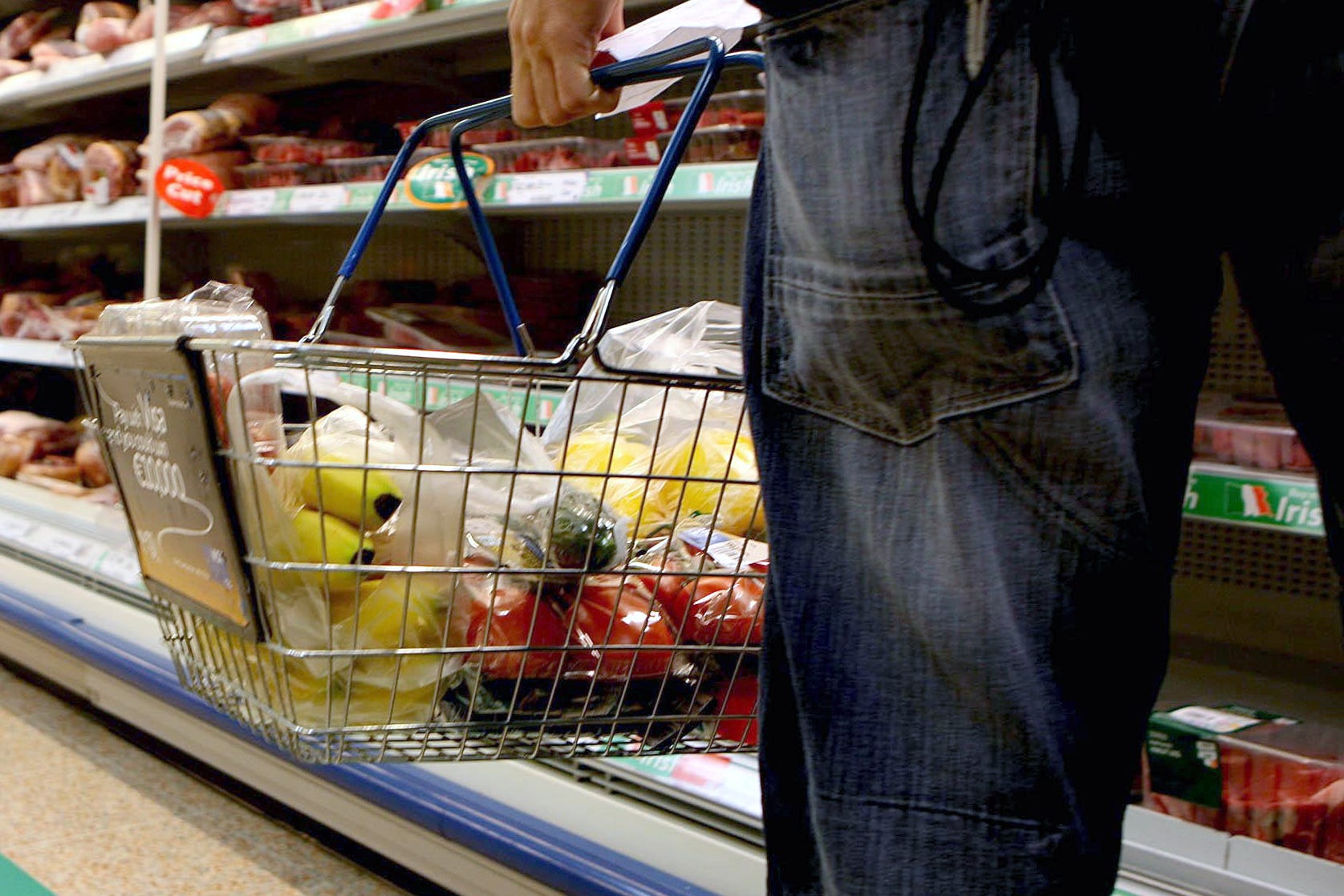
Oisin Hanrahan said the tariffs would ‘start showing up in the weekly shop’ (PA Wire)
“Ultimately, this episode reinforces the shift away from ever-increasing global integration and toward a world defined by sharper spheres of influence – a reality businesses and investors must increasingly plan for and deal with,” he added.
Meanwhile, Paul Dales of Capital Economics estimated that the impact could be even worse than this, estimating that Britain’s GDP would shrink by 0.3 to 0.75 per cent if the new levies threatened by the US president are imposed on top of the 10 per cent import tax already applied to UK goods.
“With the UK economy currently growing by 0.2 – 0.3 per cent a quarter, if this hit came all at once it could trigger a recession,” he said.
In a sign of the seriousness with which the government appeared to be taking the threats from the US, chancellor Rachel Reeves was among the senior Cabinet ministers sitting in the audience at the prime minister’s announcement, having pulled out of a Monday morning event at the London Stock Exchange.
Sir Keir also abandoned plans for a Monday cost-of-living-related visit at the 11th hour to make the announcement, with the PM promising to speak with the US president about Greenland again in the coming days after the two spoke on the phone on Sunday night.