
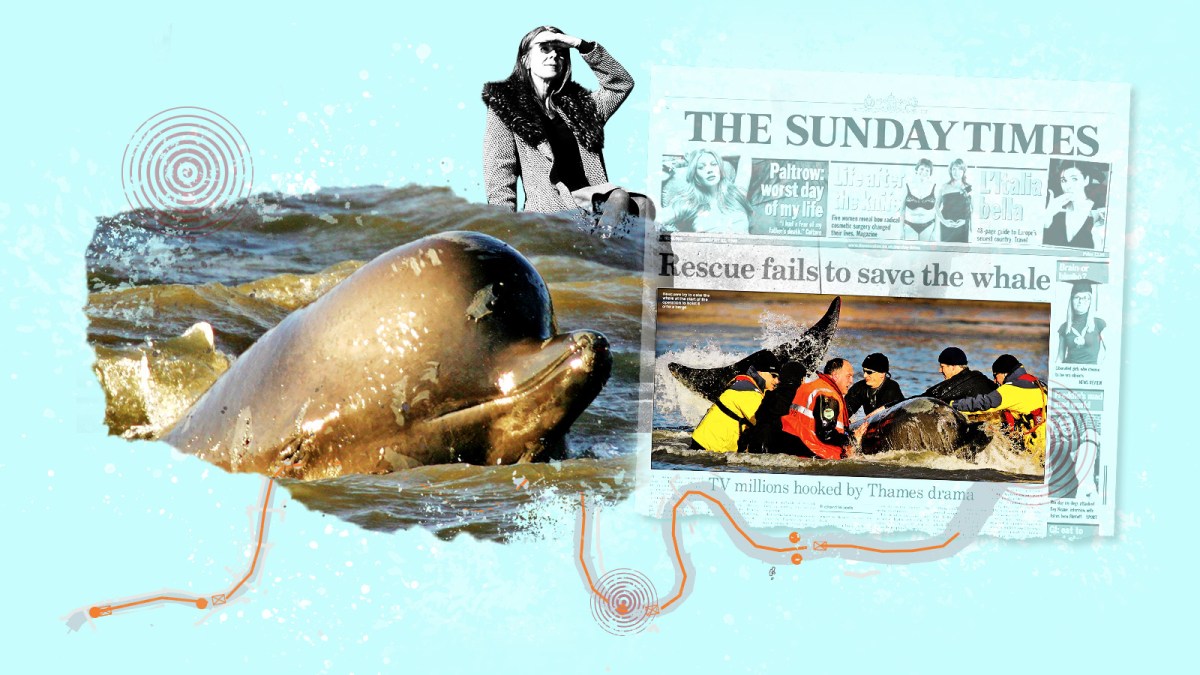
Twenty years ago this week a whale swam into London lore, and my life.
It was a northern bottlenose, six metres long and weighing about 12 tonnes, and it was heading up the Thames through central London. It shouldn’t have been. These are deep cold-water animals, rarely seen south of Iceland.
Late on the evening of January 19, 2006, however, there was a report of a whale or whales at the Thames Barrier. At 8.30am the following day, a commuter crossing the river rang the authorities to say he had seen something unusual near Hungerford Bridge and that either he was hallucinating or it was a whale.
As the news spread, thousands more would see the whale, leaving their homes or offices to take a look. It passed the London Eye and the Houses of Parliament, going under Westminster, Lambeth and Vauxhall bridges and getting as far upriver as Chelsea.
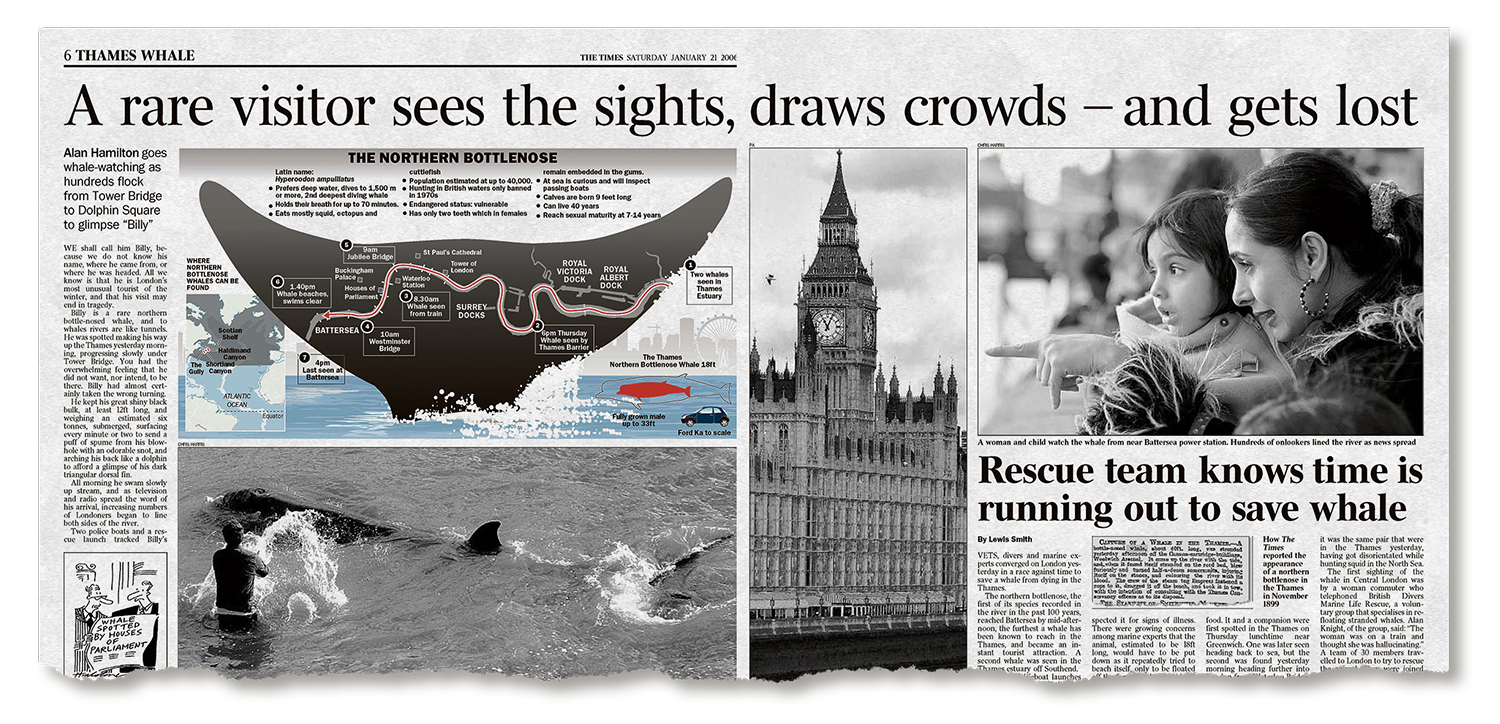
I use the term “it” because at that point the whale’s gender was unclear and, these being less enlightened times, the media assumed it was male. The Sun, where I then worked, called it Wally. The Express opted for Willy and The Evening Standard went with Pete the Pilot (which would prove wrong on both gender and species).
The gender issue would emerge only later, though. For now, it was all about trying to free Willy/Wally, which meant trying to get it back to the North Sea. The attempt became rolling news: a flotilla of media boats was following rescuers’ vessels. Sky News even had a helicopter.

It was not the first time London had been gripped by whale fever. In 1809 The Times recounted the story of a whale appearing near Gravesend in Kent. Rather ungallantly, a bargeman shot it three times. After it came to rest, exhausted, on a shoal the whale was packed onto a barge and shipped upriver on orders of the lord mayor. Thousands of spectators turned up to ogle the poor creature. The presumably junior Times reporter sent to observe the whale “in a state of putrefaction” described the stench as “intolerable”.
In 2006, the circus continued throughout Saturday as thousands more flocked to the river to try to see the northern bottlenose.
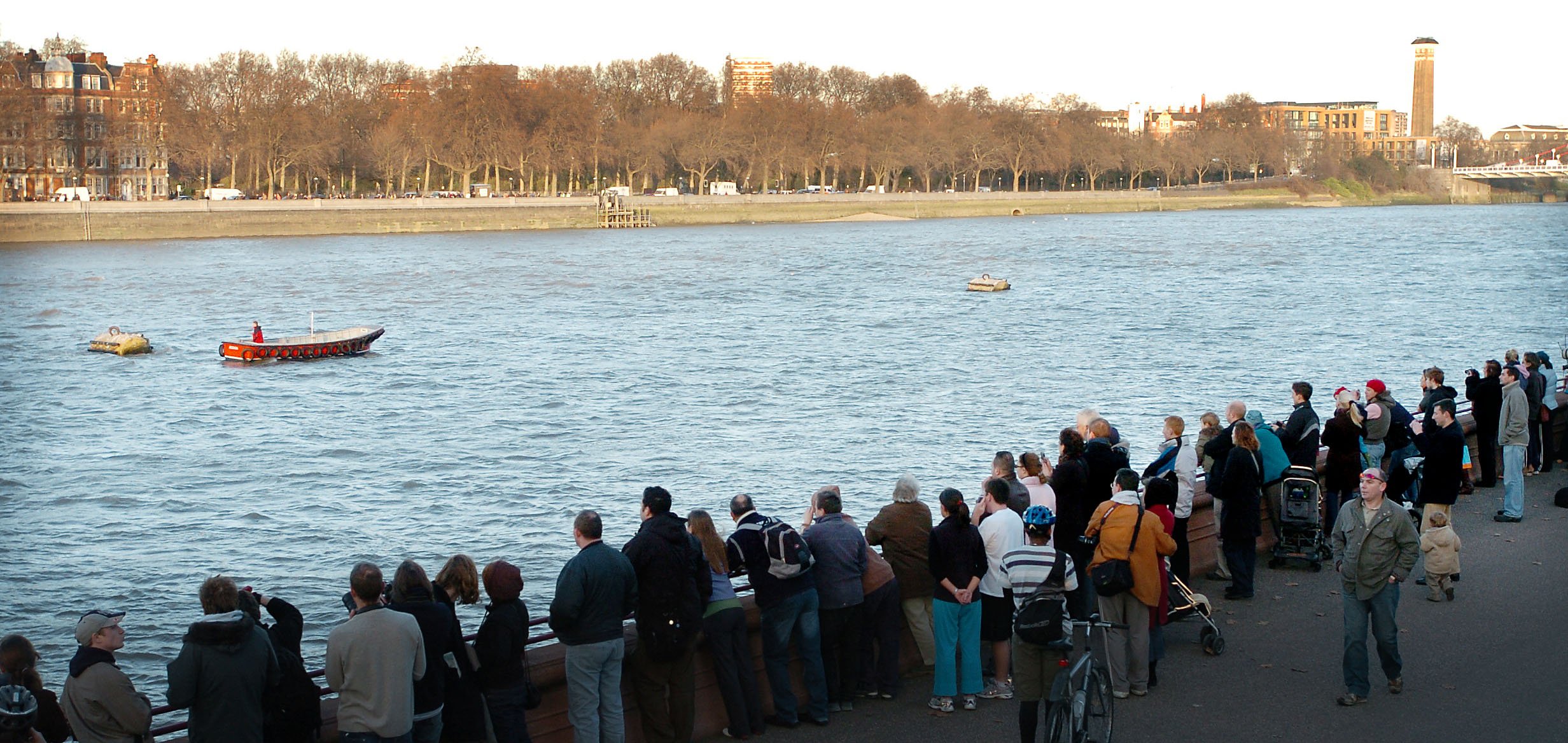
Crowds in Battersea Park scan the water for a glimpse of the whale
TIMES PHOTOGRAPHER JACK HILL
Finally, late that afternoon, rescuers managed to nudge the whale onto a barge with pontoons and began to move it downriver. But at about 7pm on the evening of January 21, by now hopelessly disorientated, diseased and weak, the whale died.
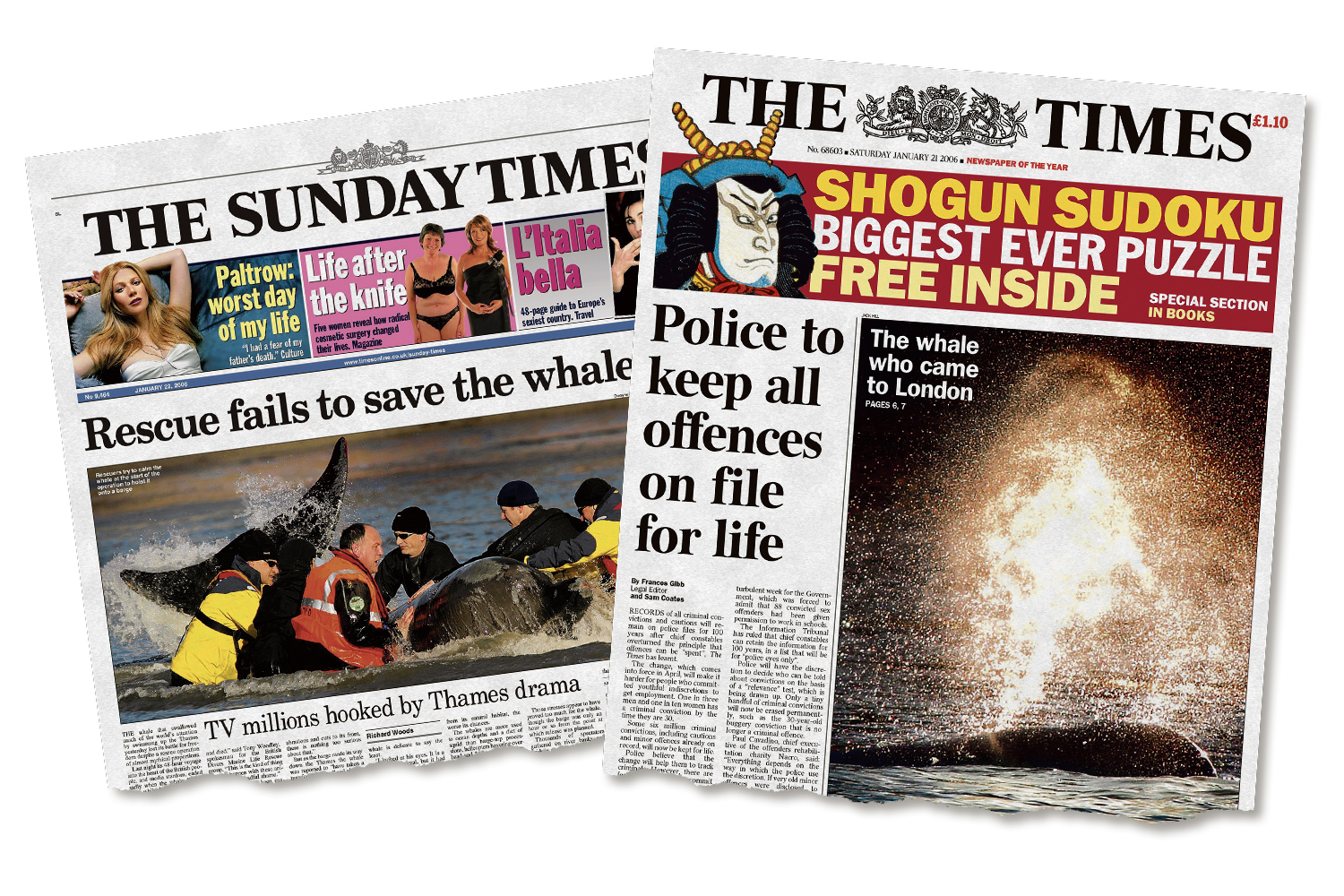
This is the point in the story at which I make my small cameo.
I came in to work that Sunday morning as duty news editor at The Sun. I knew we had to have a whale story of some kind: you can’t put something on the front page two days in a row then just drop it. But the whale’s death had killed the story. And as the morning came and went, and our news conference meeting loomed, there seemed very little new to report. The only update was a post-mortem examination, which had revealed little of interest except that, yes, she had been female.
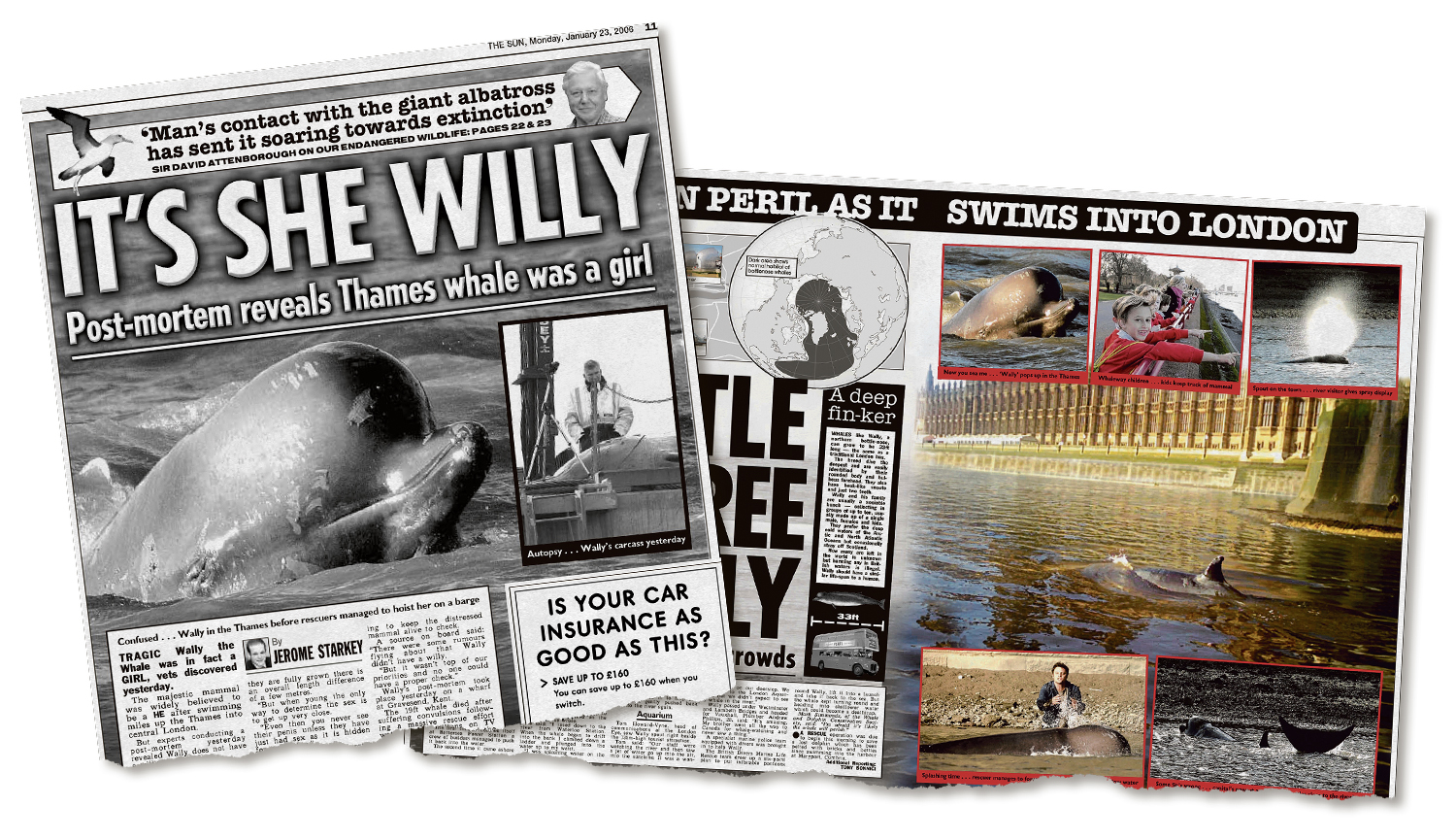
I resorted to an old editor’s ploy when desperate: firing lots of questions in the hope of unearthing something interesting that had been hitherto overlooked. I struck gold when I asked: “What are they going to do with its body?”
“They’re planning to cremate it,” came the reply. I was incredulous. This whale had become the nation’s darling. Surely she deserved something grander than burning.
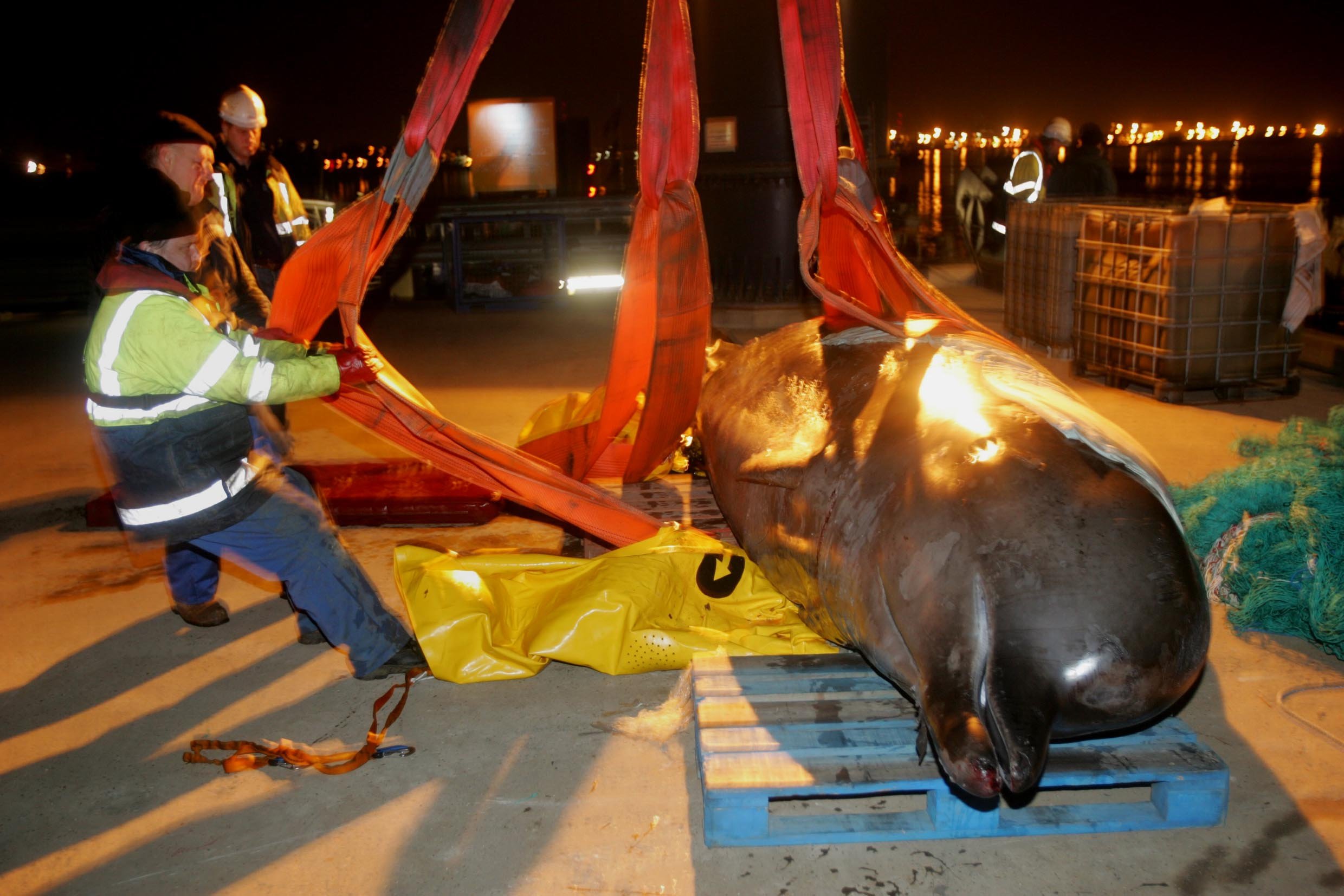
The body was brought ashore
JULIAN SIMMONDS
After ringing around, we found that the Natural History Museum would agree to strip the carcass of blubber and preserve and assemble the bones if we would stump up £10,000. This seemed a bargain so I agreed on the spot, confirming in writing our undertaking to pay.
We wrote our story: “Save The Whale! The Sun calls on our army of readers to help preserve Wally for the nation…” Next to this would be a coupon explaining how to donate.
But the next morning I discovered that after I had gone home, a sub-editor had decided that the piece would read better if it was more conclusive. “[Help] Save the whale” had become “We have saved the whale”.
It was a small but crucial alteration. Instead of an appeal, it was a fait accompli. There was no impetus for anyone to donate. What had been an ill-considered idea enacted in haste had become a fully fledged disaster.
After a week, a few dozen readers had sent money regardless, lots of pound coins, a few notes, even a couple of fifties. But we had barely a grand of the ten I had so recklessly pledged. I pictured myself going to the managing editor and explaining that I’d bought a dead whale by mistake and I needed £9,000 to pay for it. The money was owed to the Natural History Museum but it felt like I owed it to the mafia.
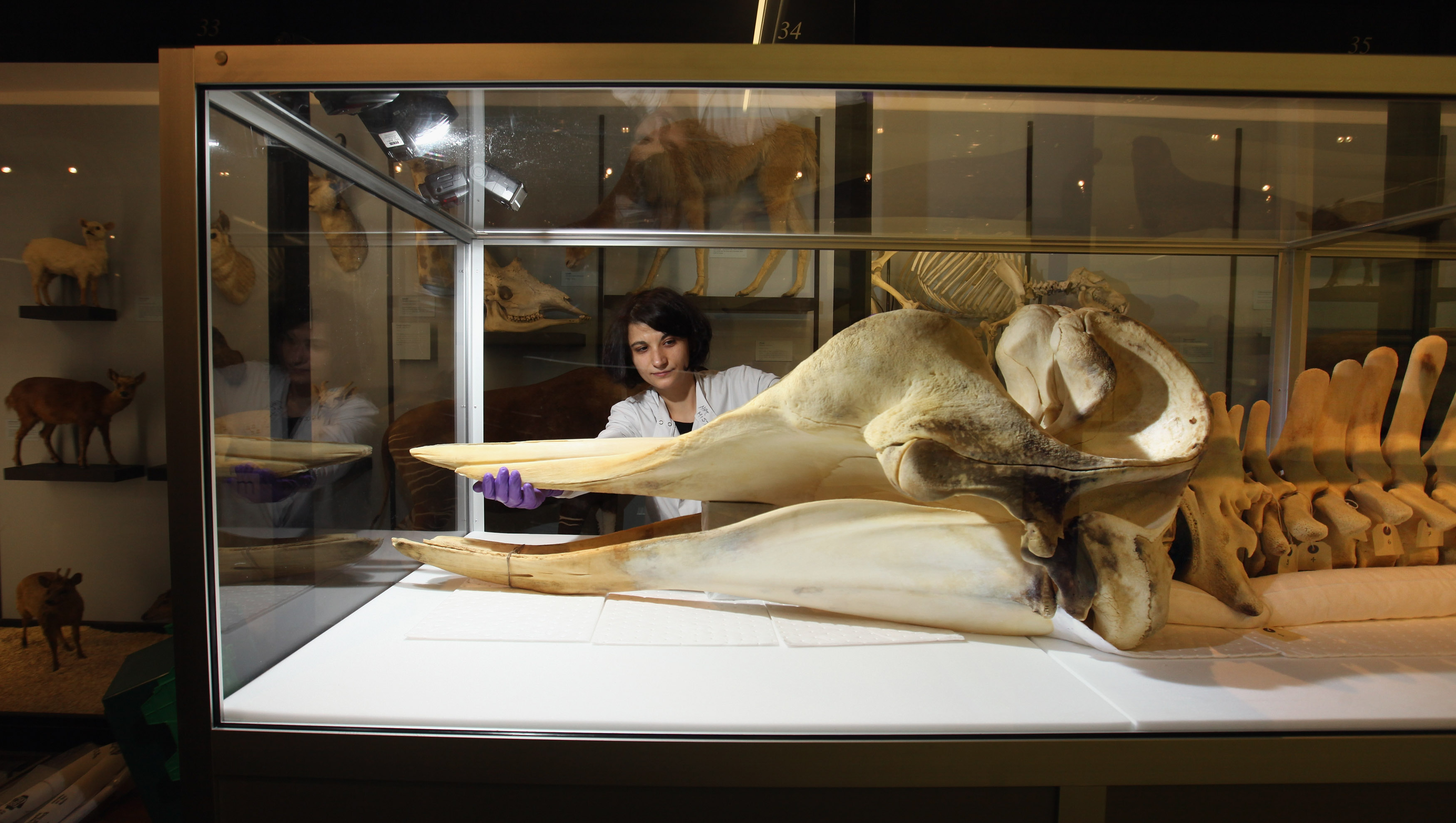
A conservation technician adjusts the skeleton before an exhibition in 2011
OLI SCARFF/GETTY IMAGES
• Natural History Museum to reopen two galleries closed for decades
A few days later, our third child was born. During paternity leave I would often find myself staring at our son, thinking: “He’s so perfect. We’re so lucky … What am I going to do about the bloody whale?”
Thankfully, over the following months, with some begging, cajoling, corporate wooing and lateral thinking, I managed to raise the rest of the money without recourse to crime.
And so it was that, 18 months later, I found myself with a glass of cheap pinot grigio at the opening night of her first public display. As others chattered around me, I walked around and around the glass case and looked, really looked, at the bones of the whale. She was massive and magnificent.
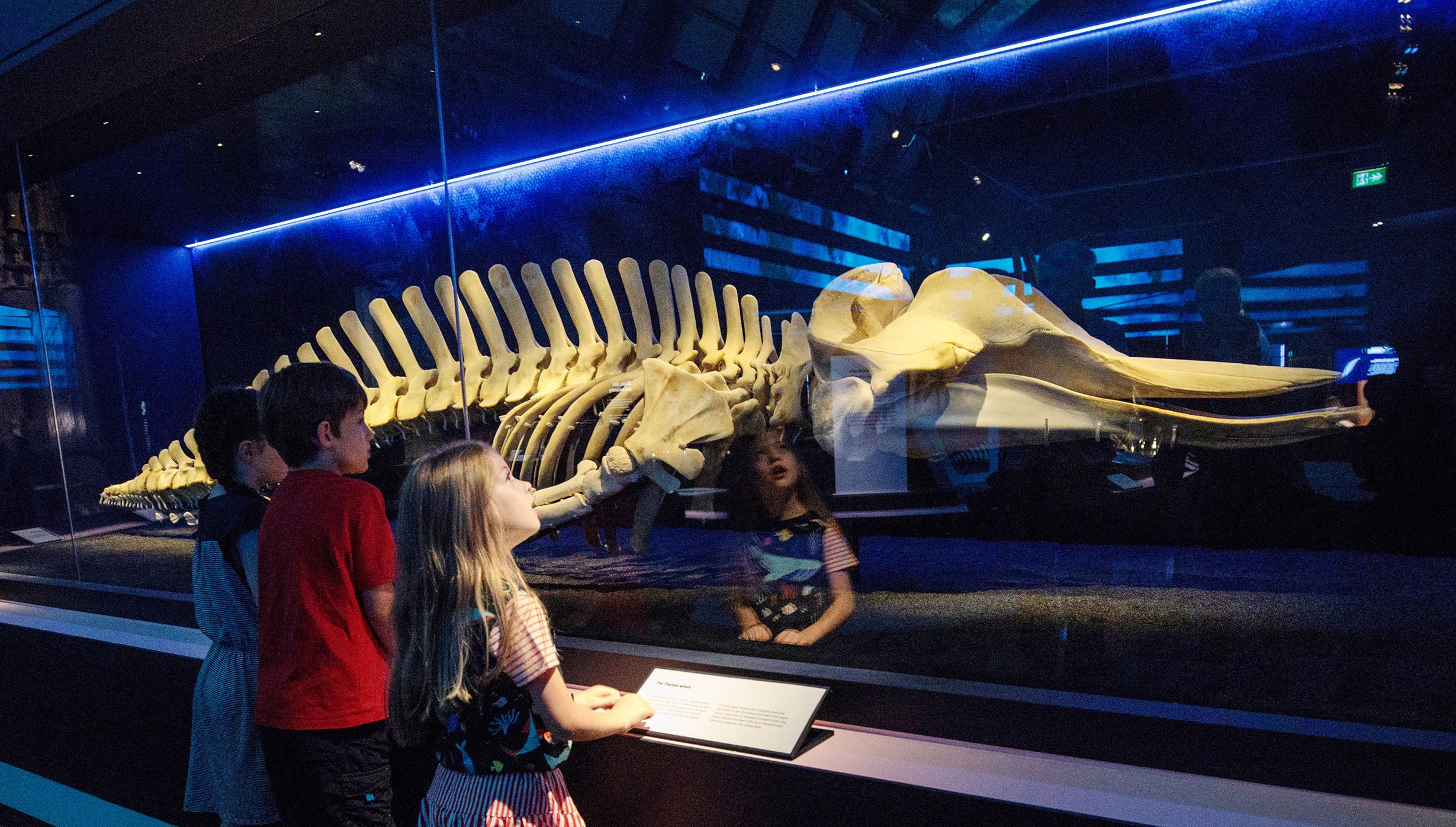
On display at the Natural History Museum in 2017
JACK TAYLOR/GETTY IMAGES
Tom Grove, director of the charity Whale Wise, now lives in Iceland, where he studies this and other species, but in 2006 he was an 11-year-old boy, already fascinated by matters cetacean and entranced by the Thames whale.
He said: “It was the most extraordinary event of its kind we’ve had in the UK. Here you had this very large and completely alien animal that was suddenly beamed into the recognisable centre of one of the most iconic cities in the world. I remember clearly how exciting it was.”
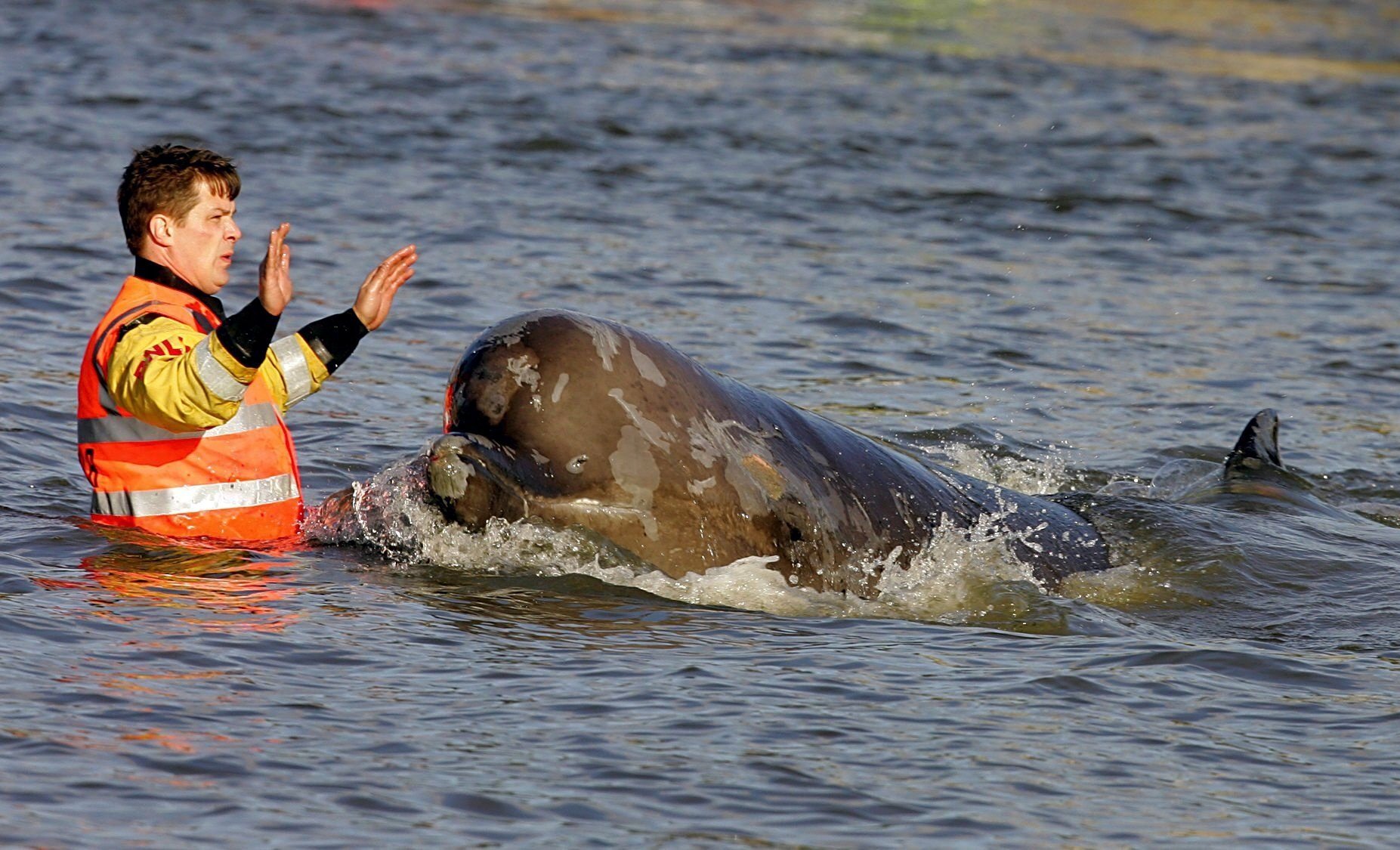
A rescuer trying to guide the whale towards a barge
JOHN D MCHUGH/AFP/GETTY IMAGES
As well as being used for research, Willy/Wally has been exhibited twice since, including a stint at the museum’s main site in South Kensington. It’s within a storage area in the bowels of the building there that she resides full time, a rather nice address in the city she chose to visit and ended up never leaving.
I realise now that as well, as being one of the worst disasters of my career, saving her was also probably the best thing I have done.