
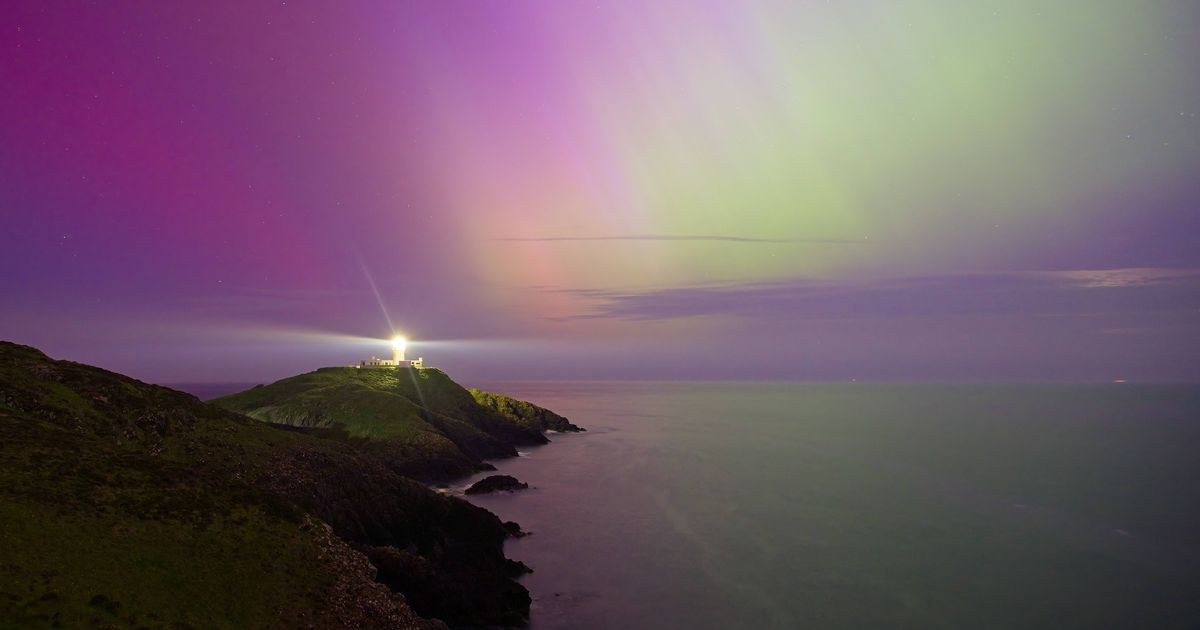
A massive solar flare is heading for Earth which could bring Aurora Borealis to UK skies including potentially Wales, with peak viewing around 4am though cloud cover may limit visibility
Joe Smith and Oliver Radcliffe Live News Reporter
19:47, 19 Jan 2026Updated 19:53, 19 Jan 2026
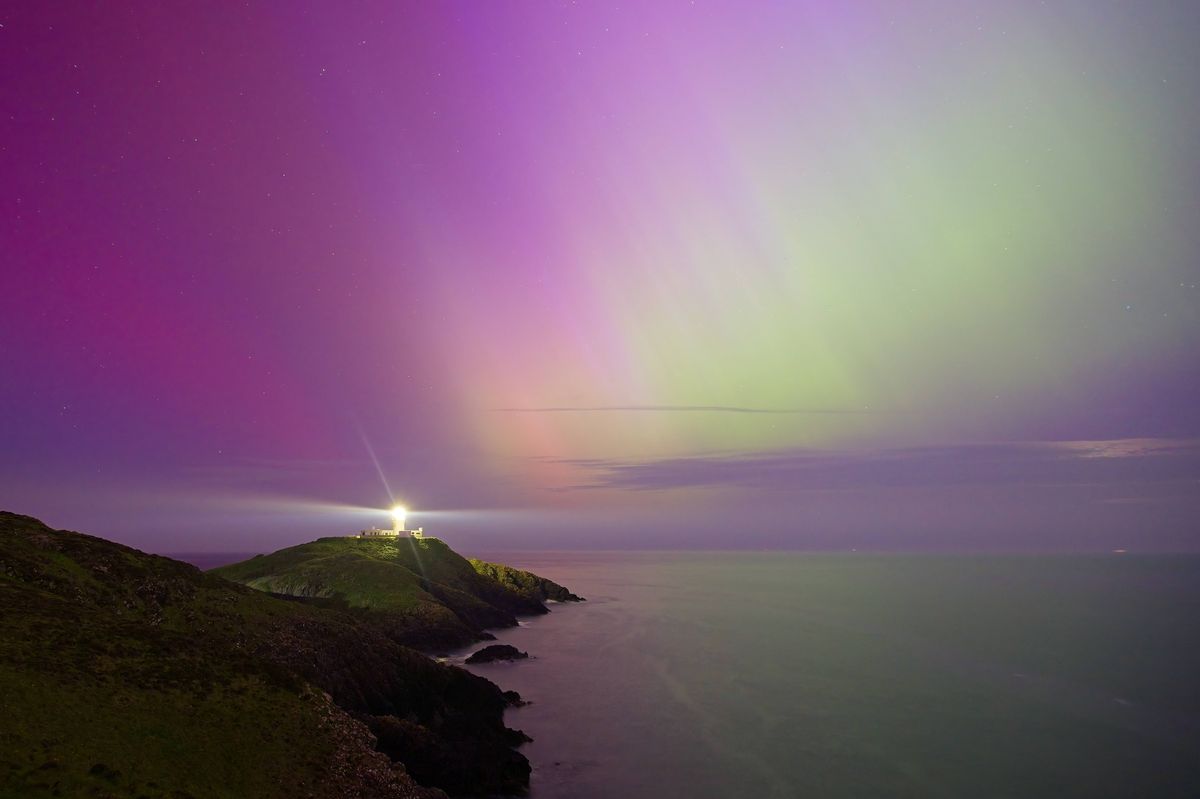
The Northern Lights at Strumble Head in Pembrokeshire(Image: birdsonline via Getty Images)
Britons are being urged to keep their eyes on the skies as the Northern Lights may grace parts of the country today and tomorrow.
According to the Met Office, a significant solar flare is making its way towards Earth, with charged particles poised to illuminate the night sky in what could be a spectacular show. This solar phenomenon, referred to as a coronal mass ejection (CME), may bring the Aurora Borealis across northern regions of Britain, with the possibility of sightings extending to southern areas as well.
The Met Office stated: “The arrival time of the CME is uncertain, but aurora sightings are possible in northern Britain and perhaps in southern areas depending on cloud cover.”
A rapid coronal mass ejection – a substantial eruption of charged material from the Sun – departed yesterday and is anticipated to reach Earth during Monday night or Tuesday morning, reports The Mirror.
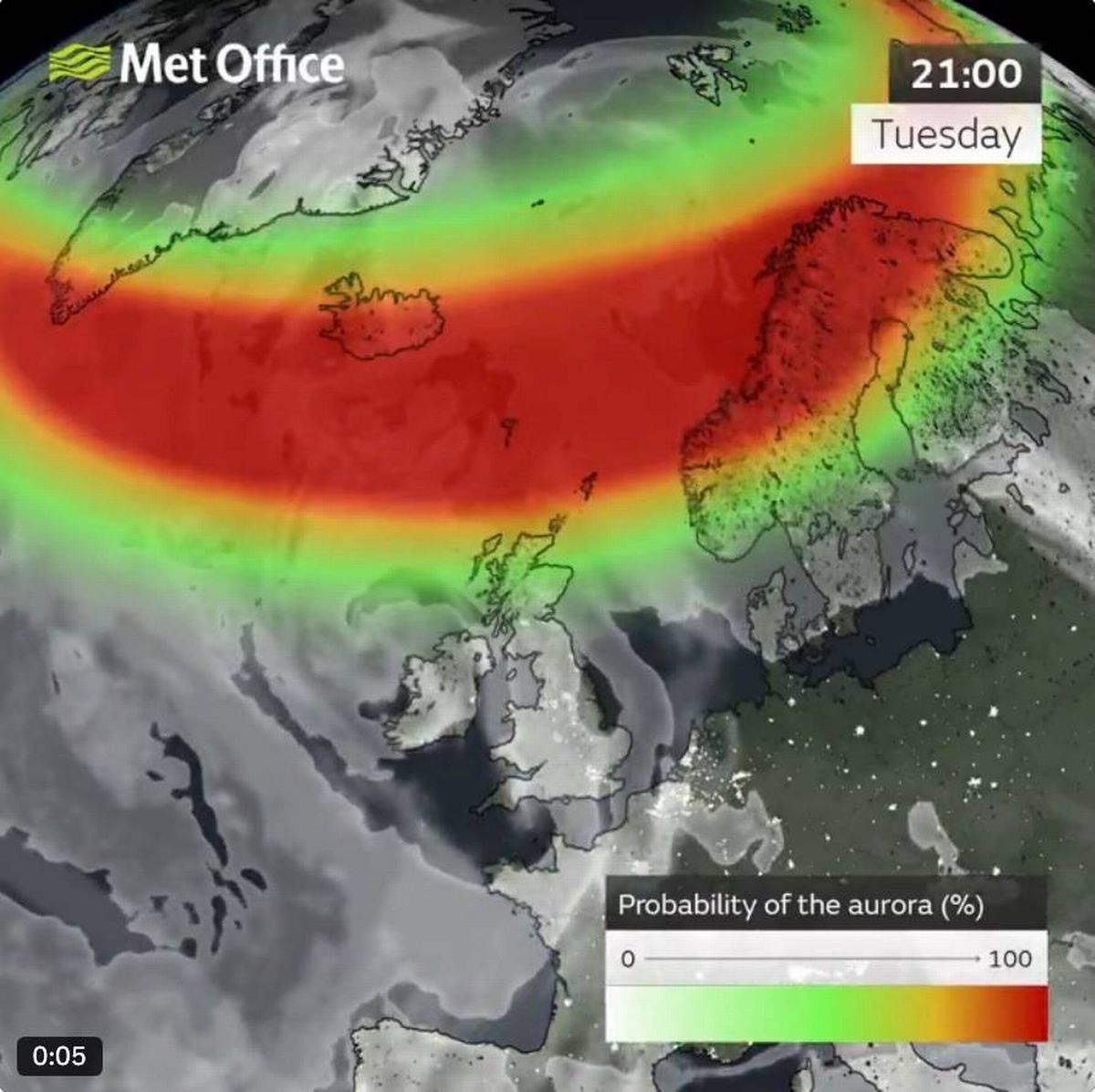
Brits could be in for a spectacular show(Image: X/@metoffice)
Which areas of the UK might witness the Northern Lights this week?
This occurrence could deliver the Northern Lights to British skies, especially throughout Scotland, Northern Ireland, northern England, and possibly beyond, although viewing conditions will hinge on the arrival timing and cloud coverage.
Krista Hammond, Met Office Space Weather Manager, commented: “There is still some uncertainty around the exact timing of the CME’s arrival, but it is expected overnight tonight or tomorrow morning. The CME is likely to result in geomagnetic storming, giving the potential to view the aurora.
“However, sightings are dependent on the CME arriving during hours of darkness and clear skies. Unfortunately, cloud and rain on Tuesday evening may make viewing difficult, even if the timing is favourable.”
Current meteorological charts indicate substantial cloud coverage blanketing the UK through Monday night and into Tuesday morning, which could hamper opportunities for observers hoping to witness the Aurora Borealis.
The Met Office’s space weather bulletin states: “A Coronal Mass Ejection (CME) which left the Sun on 18 Jan is expected to arrive either late on 19 Jan or early on 20 Jan (UTC). G2-G3/Moderate-Strong storms are likely with a chance of G4/Severe Storm intervals.
Content cannot be displayed without consent
“This is likely to bring aurora across Scotland, Northern Ireland, northern England, and potentially further south, though visibility will depend on the timing of its arrival and cloud cover.”
The Met Office suggests the lightest cloud conditions will occur around 4am on Tuesday morning, presenting the optimal window for catching a glimpse of the natural phenomenon.
For the best viewing experience, the Met Office recommends seeking out areas free from artificial lighting, directing your gaze towards the northern skyline, and timing your observation when atmospheric conditions are clearest.