
Much of the current work about letting go concerns letting our children go as they travel through their life stages: infancy, toddlerhood, teenage years, and young and older adulthood.
Not much is written about letting our parents go.
I’m in the enviable position of still having a mother in pretty good health at 93. I am mindful that I’m one of the fortunate ones and that this is not the case for the majority of people. There are as many different experiences as there are aged parents.
Mum has an intact mind. She forgets words and names and often repeats herself. She sometimes appears with an old handbag that is way past its use-by-date. I usually give her a free pass for that — well, maybe a little comment.
As I watch my mother age, I’m awed by her. She smiles and laughs. She speaks her mind, which she always has done, but now any filter she had is pretty much gone. She is resilient, and she doesn’t do guilt. I am based overseas, and I visit her at least 4 times a year.
The last 3 months have been a difficult time for her
She has had a partner who lived with her for 15 years. They lived independently, did everything together, and they were increasingly cut off from friends and activities beyond themselves.
When I was in Sydney last August, her partner’s health was declining rapidly. I visited a few aged care places, and we went through the process of filling in forms for residency. My mother was hoping that they would be admitted together to our Jewish community aged care facility, her partner for permanent residence, and her for temporary respite. It was like a trial run for her; if it wasn’t right in the long run, she could still go back to her home.
My father had carefully made provisions for her to stay in her home if that’s what she wanted.
As it happened, no place became available for either of them there.
Last October, her partner ended up in an alternate aged facility that agreed to accept him. My mother spent all day with him there. She was getting herself there and back on her own, which worried me a lot until I realized that it’s a feat for a 93-year-old to navigate buses on her own.
Last month, her partner passed. That’s been a crisis for her, and she tells me she is lonely and sad.
Because I am based overseas, the main daily care falls on my amazing brother. With technology, I can Zoom with her daily, but when she doesn’t answer, I default to “that” position: She’s fallen over. Something has happened.
Then the inner conversation begins. While I never imagined my mother to be in an aged care facility, that’s clearly my own bias. Would she be better in an aged home where she could socialize, where she wouldn’t be alone, where her medical needs would be attended to immediately, and where she would be as safe as possible?
Herein lies the sting.
Who would it be for? Would it be to quell my fears, or would it be for my mother’s benefit? How will she feel when she is lonely at the care facility, where she is away from her familiar environment —the home she loves and the place where she feels safe?
I try to get her to agree to some help at home. Food delivery, yes. Anything else “no”. “When I need it, I’ll tell you. But not yet, I don’t want anyone here.”
I realize that I’m not going to convince her, and I’m not going to have a fight with her, and maybe what keeps her going is that she’s feisty. And I’m proud that she’s standing firm in what she wants.
I feel the familiar letting go that I’ve experienced with my own children over the last 20-some years. The push and the pull. The discomfort. The self-questioning.
I have figured out there’s really only one thing I can offer her, which is a total respect for the decisions that she is making for herself. Usually they are sound, sometimes they aren’t.
I’m buoyed when I walk into her home, and the news is on the television full blast. She will only wear one hearing aid. That’s really not worth an argument. I love her savvy political commentary concerning Australian and world events that she gathers from watching the news earnestly and reading an actual newspaper. She is politically incorrect, she knows it, and she doesn’t care. She entertains us at dinner with her acerbic wit and stories from the past. Sometimes she forgets the point of the story, but she is 93.
While this is all good, I know I cannot protect her from illness or a fall. I tell myself that it can happen anywhere or at any time.
I have had to let go of my fantasy that I can keep her safe and wrapped in cotton wool, and that’s on me.
Hopefully, she will be around to get a letter from the king when she reaches 100.
I lean into her right for dignity and self-determination, and while I believe I am learning to let go, my husband thinks differently. Maybe he’s right.
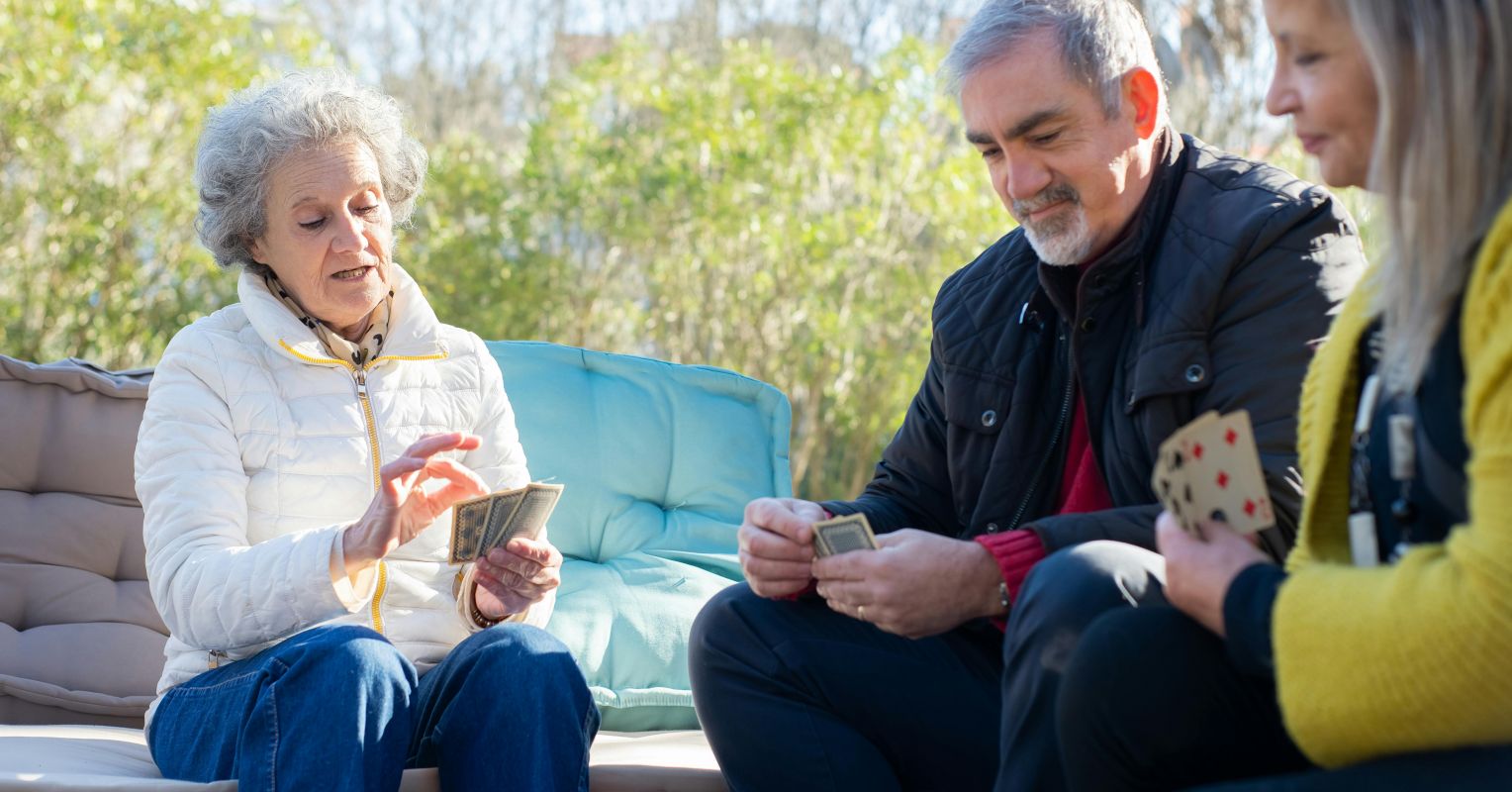
In the meantime, she will be walking to the bridge club on Friday morning at 9.30. She hasn’t played for 15 years, bar a few practice games over the last few weeks, but she will front up there. I’m hoping that she gets an understanding and a fun bridge partner. While I have reminded her of a few bridge rules in the last few weeks, she has taught me so much about aging gracefully and how important it is to listen to your 93-year-old parent’s voice.
When I left Australia the other day, she was sad, but by the time I called en route, she was fine.
My mother is brave, funny, and she rarely complains.
I marvel at her.
And she tells me often that old age isn’t for wimps.
Once more, she’s right.