
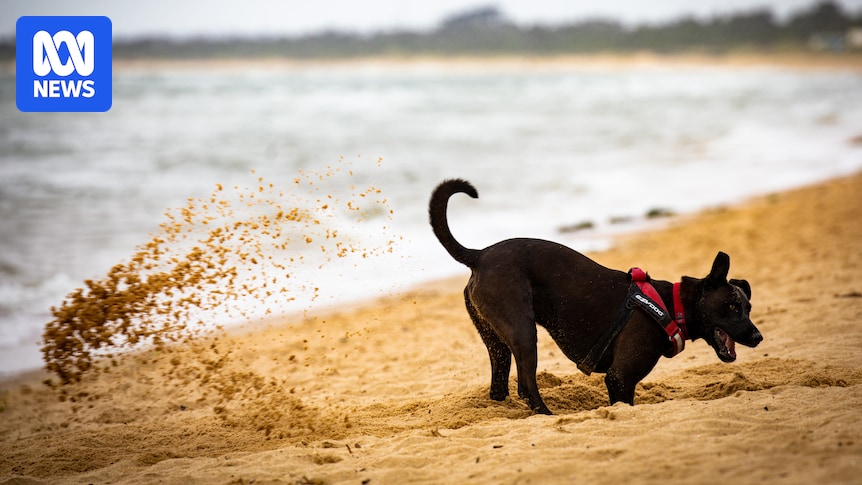
Victoria’s environment regulator is warning people this summer to keep a close eye on its weekly water quality monitoring in Port Phillip.
The Environment Protection Authority (EPA) tests pollution levels weekly at 36 beaches through the hotter months, giving a rating of “good”, “fair” or “poor”.
Beaches on Melbourne’s bay span 264 kilometres of shore from Portsea at the southern end of the Mornington Peninsula, to metropolitan Melbourne and around to Queenscliff on the Bellarine Peninsula.
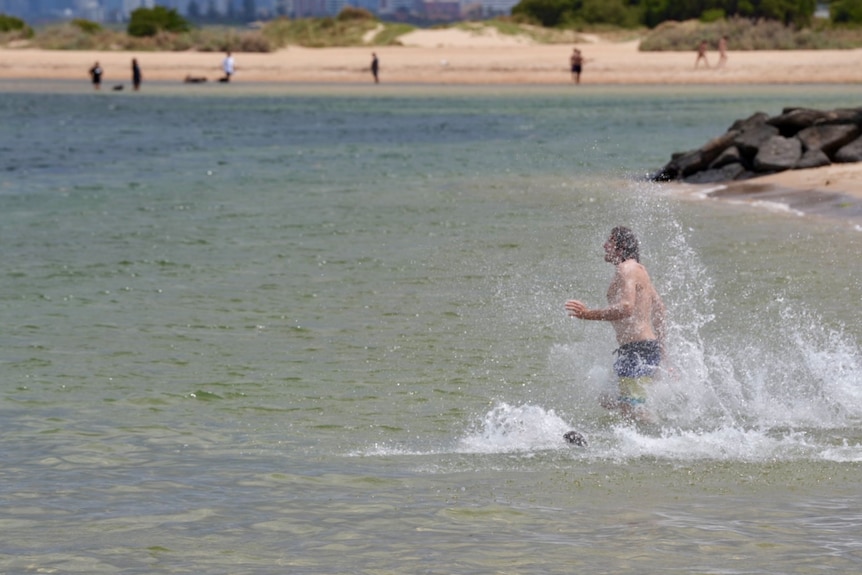
The EPA tests the water quality of dozens of beaches along Port Phillip Bay. (ABC News: Danielle Bonica)
A “good” rating means pollution from stormwater is unlikely and the water is suitable for swimming, while “fair” means pollution is possible and the water may not be suitable for swimming. “Poor” means pollution is likely due to recent or forecast rain and swimmers should stay out of the water.
Beaches closer to city most prone to ‘poor’ water quality
As far as water is concerned in greater Melbourne, all roads lead to Port Phillip — stormwater drains, rivers, creeks and treated waste water from Melbourne’s two sewerage plants.
Senior scientist from the EPA’s water unit, Paula Sardina, said water at beaches furthest from Melbourne tended to be consistently better quality than beaches closer to the city.
Last summer, the beaches that had the most “good” water quality days were Santa Casa and Portsea, which are the furthest from Melbourne near the entrance to the bay.
The beaches with the least were St Kilda and Port Melbourne, near Melbourne’s CBD, which had 59 per cent and 61 per cent “good” water quality days respectively.
Ms Sardina said stormwater was the key driver of water quality in the bay, because it flushed high volumes of pollutants and faecal matter into the sea.
“If you see ‘poor quality’, avoid swimming near stormwater or river outlets for 24 to 48 hours after … any rain,” Ms Sardina said.
“Beach water quality in general is good unless there has been recent rain.”
Beaches deemed “poor” quality on any given day don’t stay that way because eventually it gets diluted and water quality improves, she said.
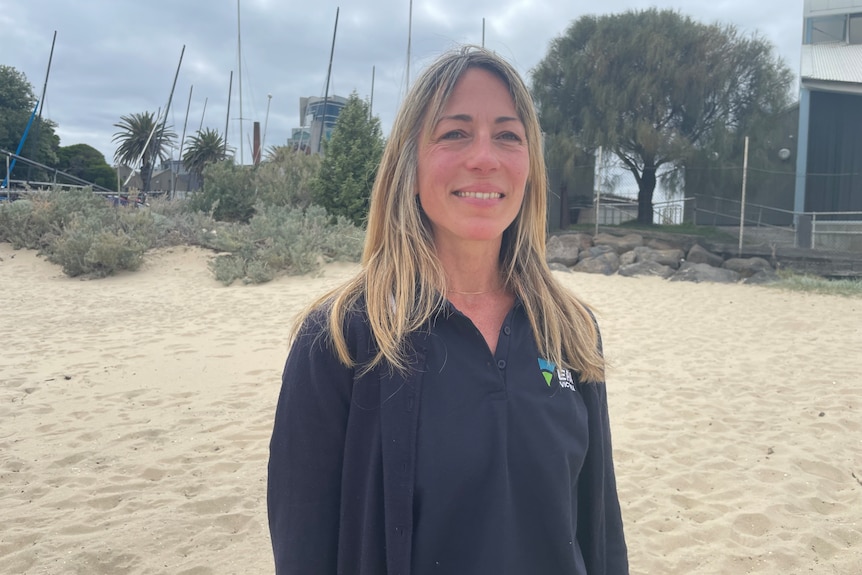
Be wary of bay water quality after rain, says Paula Sardina. (ABC News: Andi Yu)
The EPA website said people could get gastroenteritis and respiratory infections from swimming in polluted water. Children, the elderly and those with vulnerable immune systems were most at risk.
If a dog swims in beach water after rain, it’s important to wash them afterwards, she said.
Water quality under pressure as population grows
EPA chemistry operations officer Trent Renshaw spoke to the ABC on a sunny December day at South Melbourne beach, explaining that he was testing the water for a bacterial species called enterococci.
“We use it as an indicator for faecal pollution,” he said.
“It’s not just an indicator for human faecal pollution, it’s for animals as well. We use those levels to determine if it’s safe to swim”.
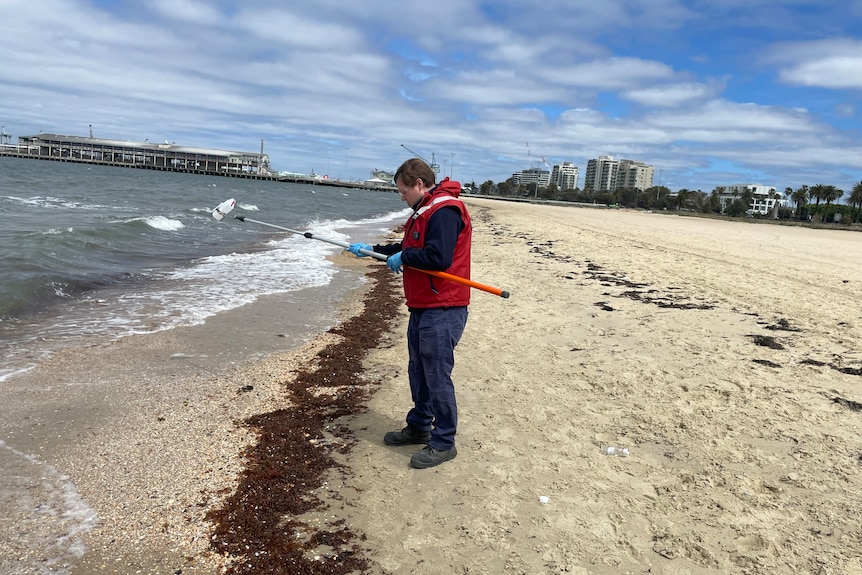
Trent Renshaw is part of the EPA team that checks water quality at Port Phillip Bay beaches in summer. (ABC News: Andi Yu)
As Melbourne’s population of 5.4 million is estimated to grow to up to 10 million by 2050, maintaining high water quality will be a challenge.
“You’ve got a stronger demand for industry, you’ve got more people using the beaches and you’ve got increased urban runoff,” Mr Renshaw said.
“So it really puts a lot of stress … on the system as our population grows.”
Other than using the EPA’s beach reports, Mr Renshaw said beachgoers should look out for unusual colour in the water or an unusual smell.
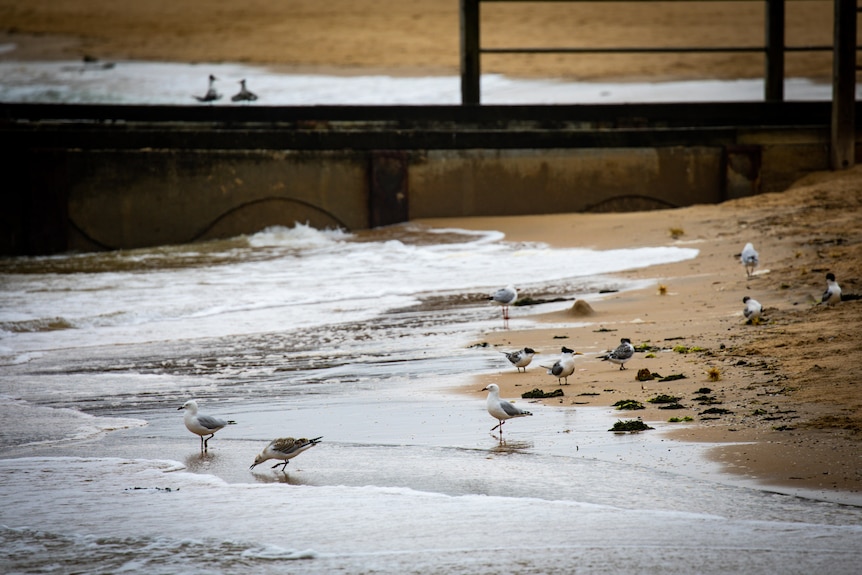
The EPA says water quality at bay beaches like Frankston, pictured here, tends to be worse than beaches further from the city. (ABC News: Danielle Bonica)
Port Phillip EcoCentre “bay keeper” Neil Blake is concerned about infrastructure keeping up with population growth.
“Many people wouldn’t appreciate that kind of infrastructure and the works to look after creeks and manage stormwater flows,” he said.
“We need to make sure that our sewerage treatment plants are scaled up to be able to accommodate the extra volumes.
“Whatever happens in the catchments can potentially impact on the bay, so don’t go washing your car on the street with lots of detergent. Try not to use pesticides in your garden.”
The bay, he says, is a precious thing to be protected
“It really is a jewel and a great asset to us in terms of our personal wellbeing and lifestyle,” he said.