
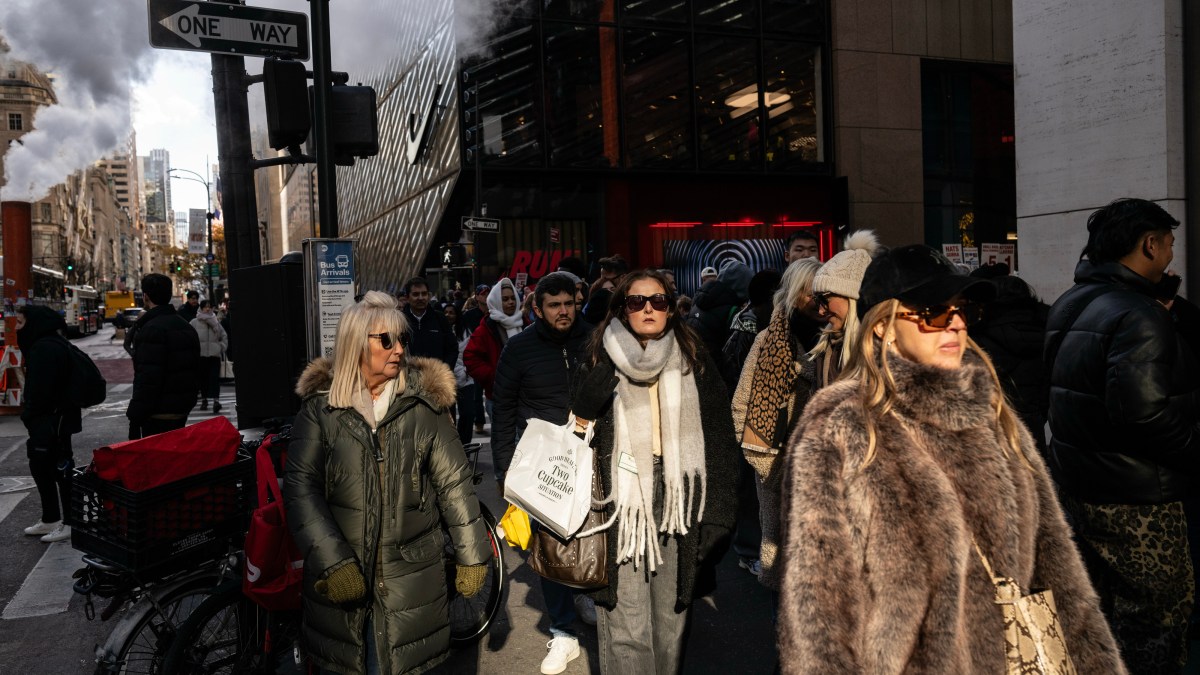
Americans cannot seem to stop spending.
Surveys have shown that consumers feel pessimistic about the economy as they worry about tariffs and the jobs market. More than half of voters believe President Trump is “losing the battle against inflation”, according to a Harvard Caps/Harris poll of 2,204 registered voters released last month.
Yet despite the economic gloom, data suggests that spending has risen across all income groups.
Alastair Borthwick, chief financial officer at Bank of America, said on Wednesday that consumers were “in great shape” and there was no indication they were borrowing more and saving less.
Some analysts are blaming the discrepancy on the phenomenon of “vibecession”. Katie Thomas, leader of the Kearney Consumer Institute, said this was “the idea that we’re not really struggling as much as we claim”.
“In the US, an easy common enemy is the economy and complaining about it,” Thomas said. “Everyone has noticed higher prices, no matter what income level you are, and that is upsetting. But there are people whose wages or personal situation has allowed them to keep up and still spend, yet they’re still part of the narrative of ‘everything is too expensive’ and ‘I’m stressed out about the state of the economy’.”
• What’s in store for the global economy in 2026?
In December, the US government reported that the economy grew at a 4.3 per cent annual rate in the July-September quarter, the most rapid expansion in two years, as consumers continued to spend in the face of inflation.
Consumer spending, which accounts for about 70 per cent of US economic activity, rose to a 3.5 per cent annual pace in the quarter, up 2.5 per cent from the April-June quarter.
Government data released on Wednesday showed retail sales in November recorded the strongest growth since July, as motor vehicle sales and other household spending rebounded, despite concerns about tariffs and jobs.
America’s biggest banks also reported that consumer spending was growing, while losses on bad credit cards were falling.
Jeremy Barnum, chief financial officer of JP Morgan Chase, said: “We continue to monitor leading indicators for any signs of stress and despite weak consumer sentiment, trends in our data are largely consistent with historical norms and we are not currently seeing deterioration.”
• Mehreen Khan: The economic questions that will define 2026
House price inflation, a booming stock market and pandemic savings have insulated the wealthiest households from higher costs, while lower and middle-income earners are under more pressure, leading economists to describe the US as a “K-shaped economy”.
Workers in the top 10 per cent of income distribution, who are making more than $275,000 a year, account for nearly half of all consumer spending, according to Moody’s Analytics. Along with those earning between $190,000 and $275,000, their spending has outpaced inflation since the pandemic.
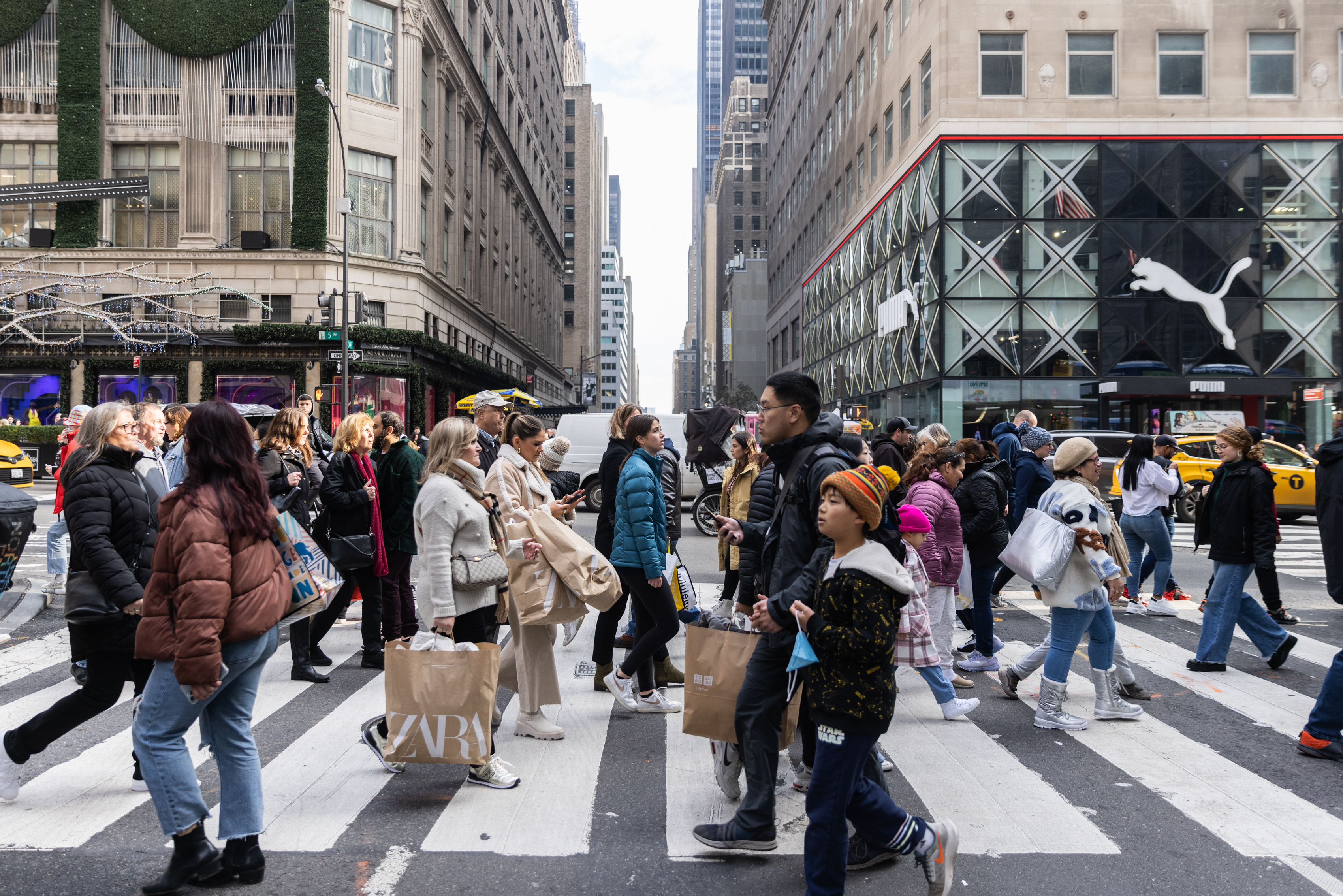
A busy Black Friday in November last year
JEENAH MOON/BLOOMBERG/GETTY IMAGES
Households in the bottom 60 per cent of income distribution, making less than $115,000 a year, are suffering disproportionately from inflation. Spending by the lower-income group “has barely kept pace with inflation, and only then because of increased borrowing”, Mark Zandi, Moody’s chief economist, said.
However, households across all income distributions still appear to be spending more on non-essential goods, even if that means focusing on deals and value. Five Below, the discount chain, said it expects sales for the three months to the end of February to be almost 15 per cent higher than the same period last year after a buoyant holiday shopping season.
Thomas said some lower income consumers were “sacrificing long-term benefits for discretionary spend”.
She said: “That’s why you still see such poor sentiment. People are struggling with being able to afford a house or pay off student loan debt and things like that, but they don’t want to fully pull back from all discretionary spend in the short term. They’re caught in this challenging space where they’re a little bit spending money they don’t have, and they’re a little bit sacrificing long term for short term.”
Joe Feldman, retail analyst at Telsey Advisory Group, said the labour market and wage growth were helping to encourage lower income consumers to spend.
Some retailers and economists are optimistic about the year ahead, citing the impact of anticipated bigger tax refunds owing to Trump’s One Big Beautiful Bill Act.
Tuan Nguyen, an economist at RSM, the consulting firm, said in a statement: “Looking ahead, we expect another solid month of spending for December with tailwinds from government employees back to work, another stock market rally and solid job numbers. We believe spending will have more room to run this year as the fiscal stimulus from the tax cuts works into household balance sheets.”
Still, higher costs will be painful for many Americans. Steak prices were up 18 per cent in the year to December, while the cost of ground beef has risen 19 per cent, according to the latest figures from the Bureau of Labor Statistics.
Overall, grocery costs rose 3 per cent last year, electricity costs rose 7 per cent and tenants’ and household insurance was up 8 per cent. The average rate for a 30-year mortgage has remained at about 6 per cent since September.
Economists will be closely watching to see how middle and lower-income consumers deal with higher prices this year, especially as some businesses that initially absorbed tariff-related costs could begin to pass them on to customers as pre-tariff inventories become depleted and supply chain pressures become more acute.