
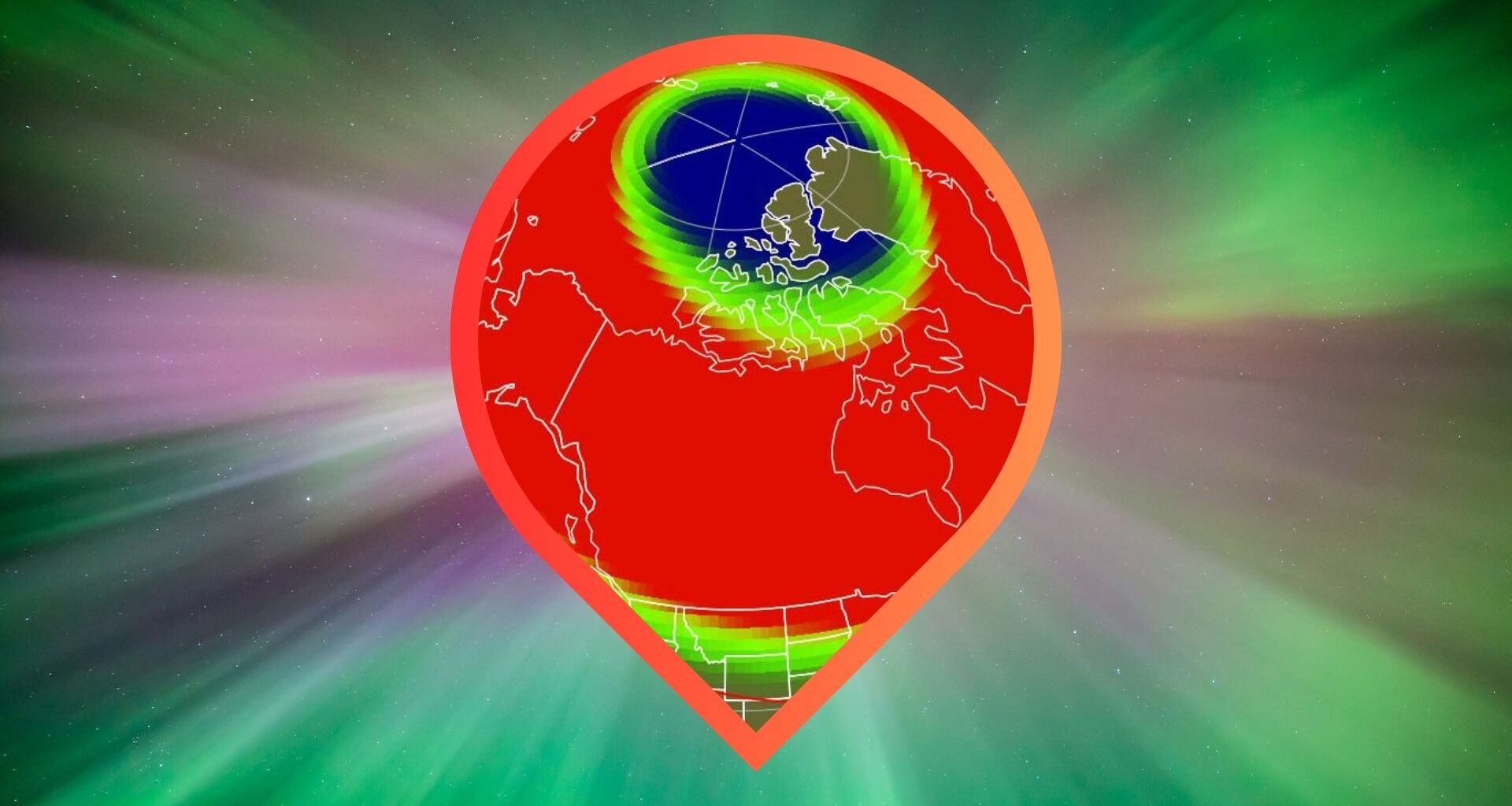
A colossal coronal mass ejection (CME) has struck Earth, triggering severe (G4) geomagnetic storm conditions that could push the northern lights much farther south than usual tonight (Jan. 19–20). The impact, confirmed by NOAA’s Space Weather Prediction Center, is already stirring Earth’s magnetic field — setting the stage for a potentially spectacular aurora display across the northern U.S. and possibly beyond.
NOAA confirmed that G4 (severe) geomagnetic storm levels were first reached at 2:38 p.m. EST (1938 GMT) on Jan. 19 following the shock arrival. The storm is ongoing, and NOAA says CME passage is expected to continue through the evening, with G4 conditions still possible. That means tonight’s aurora prospects are even more promising — if skies are clear and the magnetic field orientation remains favorable.
The CME was launched during a powerful X-class solar flare on Jan. 18 and raced toward Earth at speeds of 620–870 miles per second (1,000–1,400 km/s). Aurora chasers, get those camera batteries charged and your alerts switched on — tonight could be quite the night.
You may like
Where can I see the northern lights tonight?
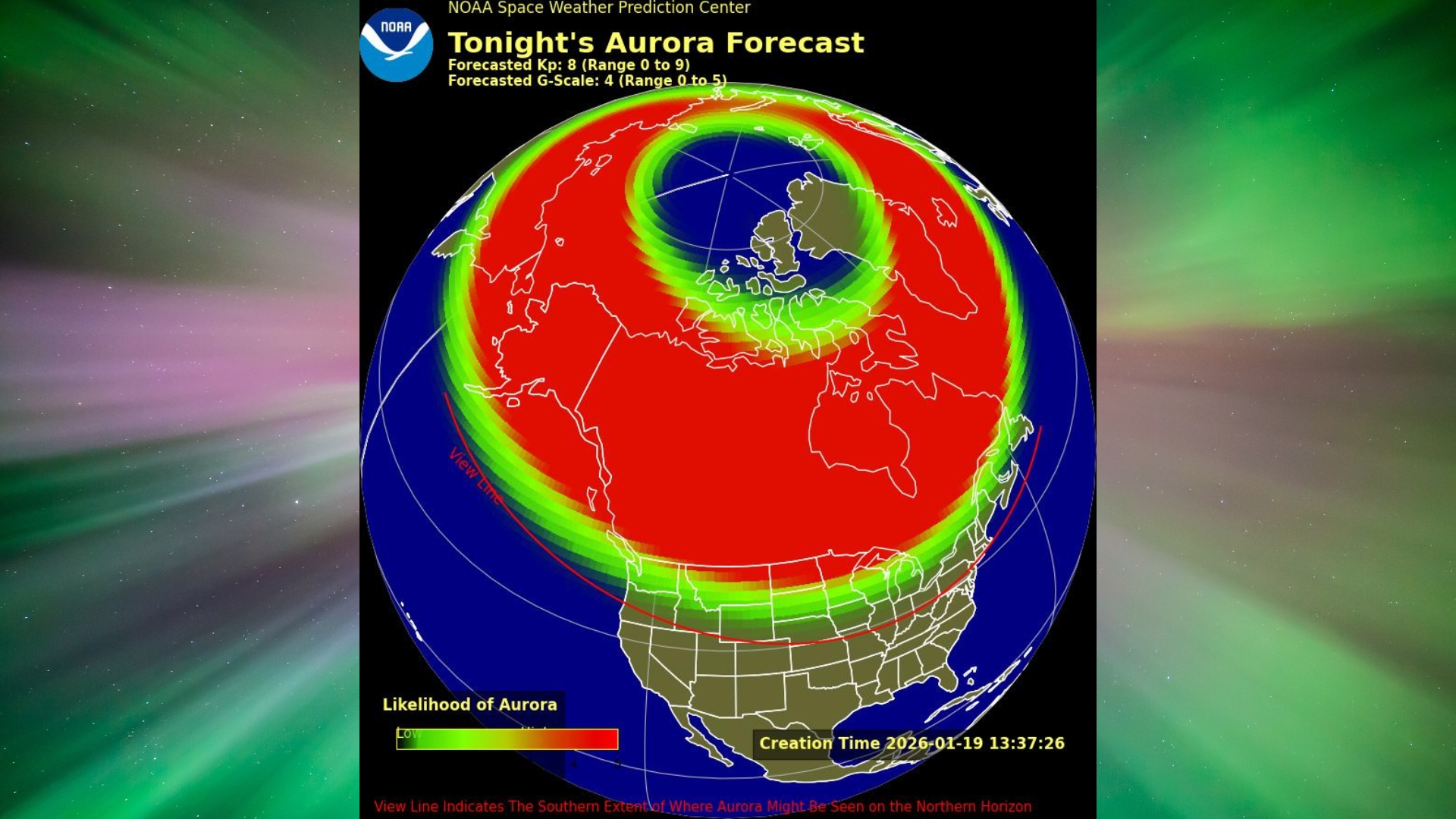
Aurora view line map for tonight courtesy of NOAA’s Space Weather Prediction Center. (Image credit: Inset map: NOAA Space Weather Prediction Center, graphic created in Canva Pro)States that could see auroras tonight
Based on the latest NOAA aurora forecast map, the following 24 U.S. states appear fully or partially above the aurora view line:
AlaskaWashingtonOregonIdahoMontanaNorth DakotaMinnesotaSouth DakotaWisconsinWyomingMichiganNew YorkVermontMaineNew HampshireMassachusettsNebraskaIowaIllinoisIndianaOhioPennsylvaniaMissouriColorado
But remember, auroras can be very fickle. The list is based on current forecast data at the time of publication, but if conditions strengthen, northern lights could reach much farther south than expected. Equally, if conditions don’t align, we could end up twiddling our thumbs, with no auroras at all.
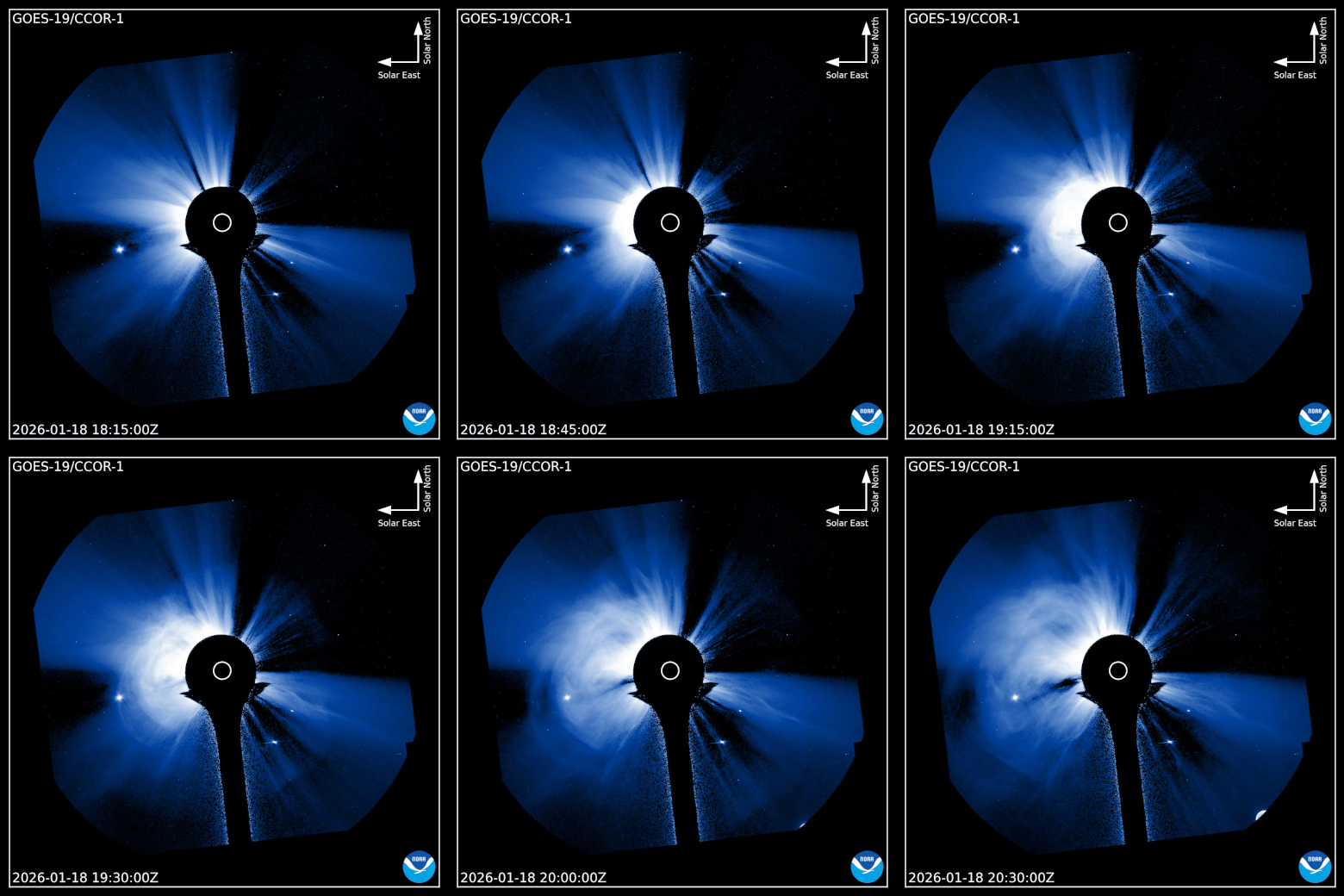
The CME was released on Jan. 18 and is currently on its way toward Earth. (Image credit: NOAA Space Weather Prediction Center)
Whether tonight’s CME delivers a dazzling aurora show or ends in disappointment depends largely on its magnetic orientation when it hits Earth.
If the CME’s magnetic field is aligned southward — a component known as Bz — it can link up with Earth’s magnetic field, allowing solar energy to stream into our atmosphere and fuel geomagnetic storms. But if it’s oriented northward, Earth’s magnetic field deflects much of that energy, and the show may never materialize.
Some CMEs contain both north- and south-facing fields, which can lead to patchy or fluctuating activity — keeping forecasters and aurora chasers on their toes. We won’t know the CME’s true magnetic orientation until it’s sampled directly by solar wind satellites like DSCOVR and ACE, positioned about a million miles from Earth.
Northern Hemisphere aurora forecast courtesy of the U.K. Met OfficeWhen is the best time to look for the northern lights tonight?
If skies are clear, make sure to look for the northern lights as soon as it gets dark tonight, as geomagnetic activity is already elevated following the early arrival of today’s CME. While the official forecast still shows the strongest (G4) storming between 1 and 4 a.m. EST (0600–0900 GMT) on Jan. 20, severe conditions have already been observed much earlier than anticipated.
That means the northern lights could appear sooner than expected, so it’s worth keeping an eye on the sky throughout the evening.
You may like
According to NOAA’s 3-day forecast, geomagnetic storm activity is expected to be best at the following times:
Swipe to scroll horizontally
EST
GMT
Activity
7 p.m. – 10 p.m. (Jan. 19)
0000-0300 (Jan. 20)
Minor (G1) geomagnetic storming possible)
10 p.m. – 1 a.m. (Jan. 20)
0300-0600 (Jan. 20)
Moderate (G2) geomagnetic storming possible
1 a.m. – 4 a.m. (Jan. 20)
0600-0900 (Jan. 20)
Severe (G4) geomagnetic storming possible
4 a.m. – 7 a.m. (Jan. 20)
0900-1200 (Jan. 20)
Moderate (G2) geomagnetic storming possible
7 a.m. – 10 a.m. (Jan. 20)
1200-1500 (Jan. 20)
Strong (G3) geomagnetic storming possible
10 a.m. – 1 p.m. (Jan. 20)
1500-1800 (Jan. 20)
Moderate (G2) geomagnetic storming possible
1 p.m. – 1 a.m. (Jan 21)
1800-0600 (Jan. 21)
Minor (G1) geomagnetic storming possible
How can I see the northern lights from where I live?
If you’re in one of the 24 U.S. states where auroras might make an appearance tonight, a little preparation can go a long way toward improving your odds of seeing them.
Start by finding a spot with an unobstructed view toward north, preferably somewhere dark and well away from city lights. The clearer your view of the northern horizon, the better.Start scanning the sky with your phone’s camera as they are usually good at picking up faint auroral glows that aren’t immediately obvious to the naked eye, helping you identify where activity may be starting.Dark adaptation is crucial and often overlooked when aurora chasing. If you can, give your eyes at least 30 minutes to fully adjust to the darkness so you can detect subtle auroral features. Keep in mind that even a quick look at a bright light or phone screen can reset the process, forcing you to start overDress for the wait. Aurora shows can be unpredictable and if conditions look promising you may find yourself waiting outside for a while. Make sure to wear plenty of layers!
We recommend downloading a space weather app that provides aurora forecasts based on your location. One option I use is “My Aurora Forecast & Alerts,” available for both iOS and Android. However, any similar app should work well. I also use the “Space Weather Live” app, which is available on iOS and Android, to get a deeper understanding of whether the current space weather conditions are favorable for aurora sightings. Want to capture the perfect northern lights photo? Our how to photograph auroras guide can help.
Editor’s Note: If you snap a photo of the northern or southern lights and would like to share it with Space.com’s readers, send your photo(s), comments, and your name and location to spacephotos@space.com.
This article was updated at 4:14 p.m. EST (2115 GMT) on Jan. 19 to reflect the confirmed arrival of the CME and the onset of G4 geomagnetic storm conditions, as reported by NOAA.