
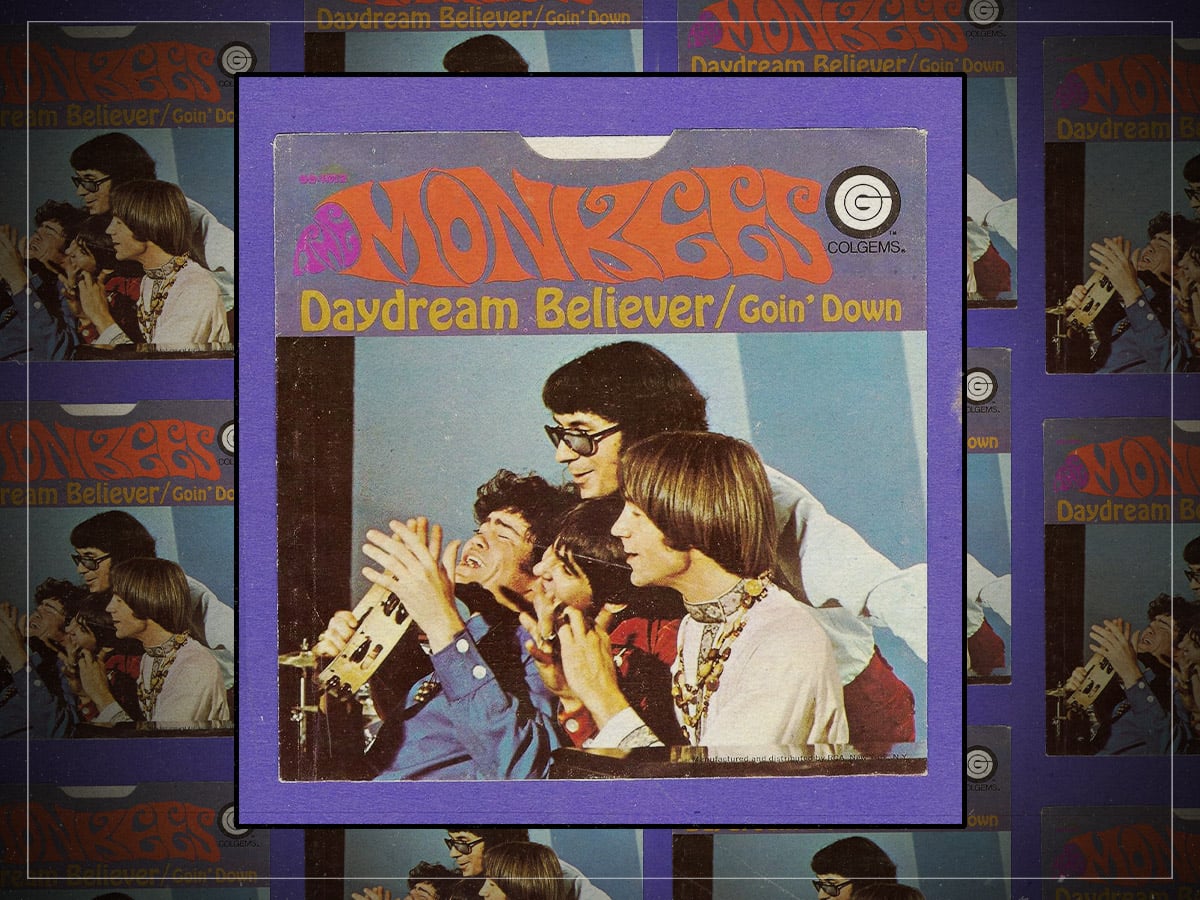
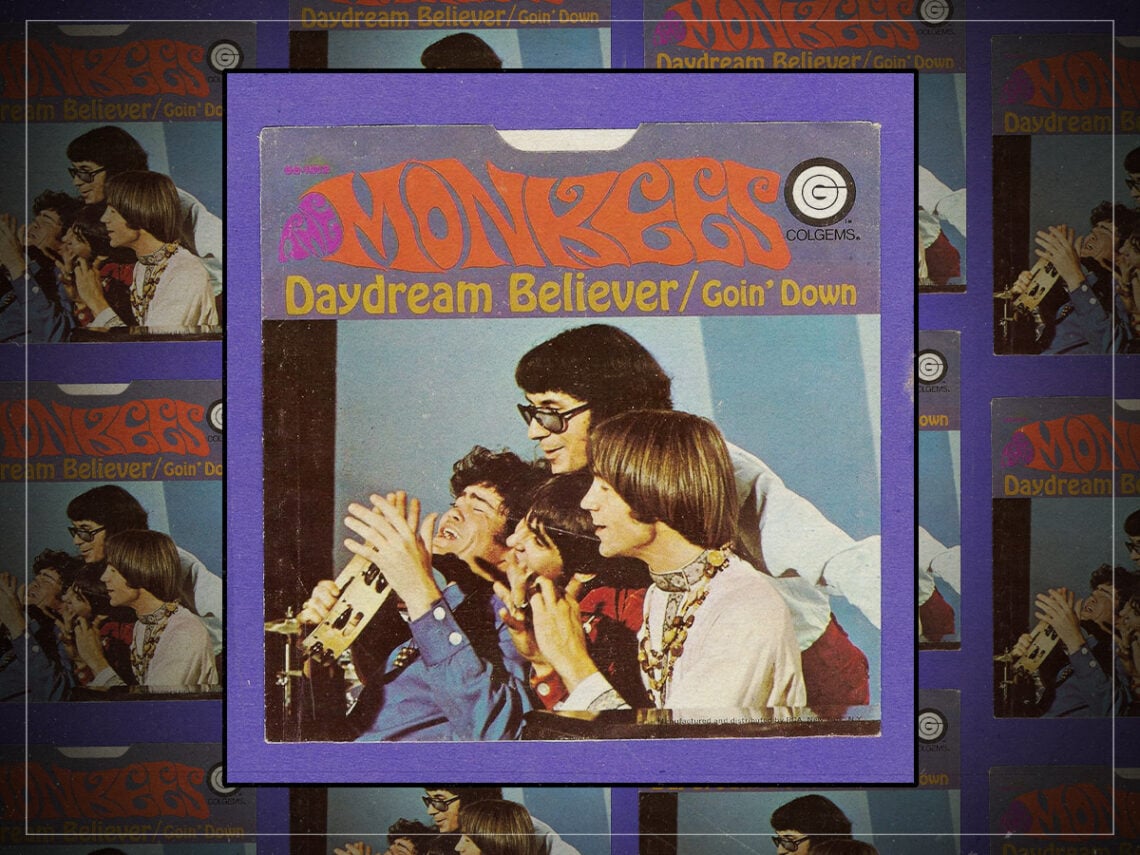
(Credits: Far Out / Album Cover)
Tue 20 January 2026 2:00, UK
In 1967, The Monkees were seemingly on top of the world, with their self-titled television series, which was soundtracked by their discography, making them one of the most commercially successful pop groups in the United States.
Their album Headquarters, released in May 1967 heard for the first time the band playing most of the instruments and contributing their original compositions. Prior, it had been revealed that they did not play the instruments on their first two albums. After the album reached number one on the US charts, only to be succeeded by The Beatles’ Sgt Pepper’s Lonely Hearts Club Band, The Monkees veered into the sonic influences of psychedelia, evident in some of their earlier records, including the songs ‘Words’ (which was to be re-recorded for their impending album) and ‘Take a Giant Step’.
The resulting album, Pisces, Aquarius, Capricorn & Jones Ltd, released in January 1968 in the UK, is a collection of psych-pop that, while reviewed favourably and notable for its experimental flair, marked the beginning of a flux period for The Monkees.
In 1968, the group experienced a shift: their television series was cancelled and their feature film, Head, debuted to poor response. Beginning with the two albums they released in 1967, The Monkees had gained creative control over their music that they hadn’t had before, but their dynamic in the studio was beginning to falter in its collaborative approach.
As a result, each Monkee recorded independently, each with their own producers, musicians and studios, and this contrast was evident: Davy Jones’ songs were Broadway pop, Michael Nesmith blended country rock with psychedelic elements and Micky Dolenz utilised soul and rock influences. Peter Tork’s compositions, while submitted, were not included in the final release, but, his contributions were heard on one song, and that’s ‘Daydream Believer’.
 The Monkees in the 1960s. (Credits: Far Out / The Monkees)
‘Daydream Believer’ had initially been recorded during the sessions for their previous album, Pisces, Aquarius, Capricorn & Jones Ltd, but would be released only as a single, performed on their show The Monkees on October 9th, 1967, eventually finding home on their 1968’s The Birds, The Bees & the Monkees, with Tork’s piano, Dolenz’s backing vocals, Jones’ lead vocals and Nesmith’s guitar. Known as one of the 1960s’ most joyful tunes, ‘Daydream Believer’ was given a spirited new life by outfit, after it was initially written by folk singer John Stewart about suburbia.
Stewart penned a ‘suburbia trilogy’ of songs, with ‘Daydream Believer’ written as the final story, and the day Stewart wrote it, as he recalled to American Songwriter, “I remember going to bed thinking, ‘What a wasted day, all I’ve done is daydream”, and from there I wrote the whole song”.
The musician had been a member of The Kingston Trio from 1961 to ’67, and wrote ‘Daydream Believer’ just after leaving the band and teaming up with John Denver. The song was offered to the bands We Five and Spanky and Our Gang, but was turned down by both, only to find The Monkees in a fateful moment of Stewart, attending a party at musician Hoyt Axton’s home in Laurel Canyon, meeting their producer Chip Douglas.
“He said, ‘I’m producing The Monkees. Got any songs for The Monkees?” Stewart recalled, during a 2006 interview, “And I said, ‘Yes I do’, and I played him ‘Daydream Believer’. He said, ‘I have to have a cassette of that immediately.”
Stewart hand-delivered a cassette, The Monkees loved it, and soon, they were in the studio recording their rendition, with one caveat: Stewart’s lyric of, “Now, you know how funky I can be”, had to be changed to “Now, you know how happy I can be”, at the request of their label, RCA Records. The change, however contentious it was, proved to be for the better: with ‘Daydream Believer’, The Monkees achieved their third and final number-one hit in the US.
‘Daydream Believer’ would later be recorded by Stewart himself in 1971 and later, by Canadian singer Anne Murray in 1979, the latter of which reached number three on the US country charts.
Related Topics