
It was a rainy summer’s day at my aunt’s birthday party. My cousin’s friend, Anna, told me, ‘I’ve just bought an AMH test to see if I can have a baby.’
AMH – or anti-müllerian hormone – is produced by the cells in the ovaries. It is related to egg count and as such, declines with age. Higher AMH levels, in principle, mean more eggs and a higher ovarian reserve. But that’s only one factor affecting the likelihood of becoming pregnant.
Anna, a successful lawyer, in her mid-30s, had been trying to get pregnant. It hadn’t happened. She’d turned to social media for help.
I asked her if she knew if the AMH test was accurate. Many such online-marketed tests aren’t. But they are ubiquitous on social media. Anna looked at me suspiciously. ‘That’s what the clinic I saw on Instagram said,’ she replied.
The truth is that AMH tests can’t predict your chances of getting pregnant, how long it will take, or at what age you will stop being fertile.
Research by the University of North Carolina, published in 2018 in the journal Current Opinion in Endocrinology, Diabetes and Obesity, suggests that after accounting for age, women with low AMH levels have similar pregnancy rates to those with average levels.
These intelligent people had one thing in common: NHS no longer worked for them and social media had become their go-to place to learn about health
Anna had paid £160 for the AMH test. The clinic’s results said that her levels were low and would only decline, along with her chances of conceiving.
The clinic offered to freeze her eggs, which would involve giving her daily injections of various hormones, followed by egg harvesting under sedation.
The AMH test had turned out to be a gateway to expensive, invasive procedures commissioned by the same clinic that provided her test and promises of a fertile future. None of this was clear in the clinic’s marketing materials.
In this way women looking for answers about their fertility are led to make emotionally fraught and expensive decisions they hadn’t perhaps expected.
Fortunately, Anna’s costs stopped there. It didn’t feel right for her, even though several of her friends were considering freezing their eggs, having been prompted by the same test. After researching her low reading more thoroughly, Anna chose to disregard it. She later conceived naturally.
Anna was just one of several friends I saw that summer who, for one reason or another, were taking their health into their own hands.
All these intelligent people had one thing in common: the NHS no longer worked for them, and social media had become their go-to resource to learn about their health and, they hoped, take control of it.

Testosterone replacement therapy (TRT) is now one of the most talked about men’s health topics on TikTok and Instagram
They were interested in what looked like serious medical products, seemingly backed by reams of evidence and endorsed by apparently credible healthcare professionals, content creators, companies and clinics – profiting by offering supposedly tried-and-tested solutions.
My friends were effectively grappling with the same issues I faced as a journalist investigating healthcare stories for media organisations and medical journals such as The BMJ.
What are the benefits and harms of this treatment? Does this disease even exist? How well is this product regulated? What conflicts of interest are involved here? And who is making the money?
This is the basis of my new book, Bad Influence, which explores why we can no longer distinguish medicine from marketing – and what we can do to protect ourselves.
For such confusion can lead us all unwittingly into dangerous places. A 2025 report by Ofcom found that more than three-quarters of UK internet users seek health and wellbeing information online. But only around half could identify content that was sponsored – and therefore likely to be biased towards persuading them to buy a product or service.
Popular health information nowadays is being posted on what are – for all intents and purposes – shopping and advertising platforms that are built to grab attention and drive consumption.
Users are receiving their health information from influencers who, in general, have little obligation to be accurate.
While information on the NHS website must be signed off by at least one clinician, there are no such checks on social media.
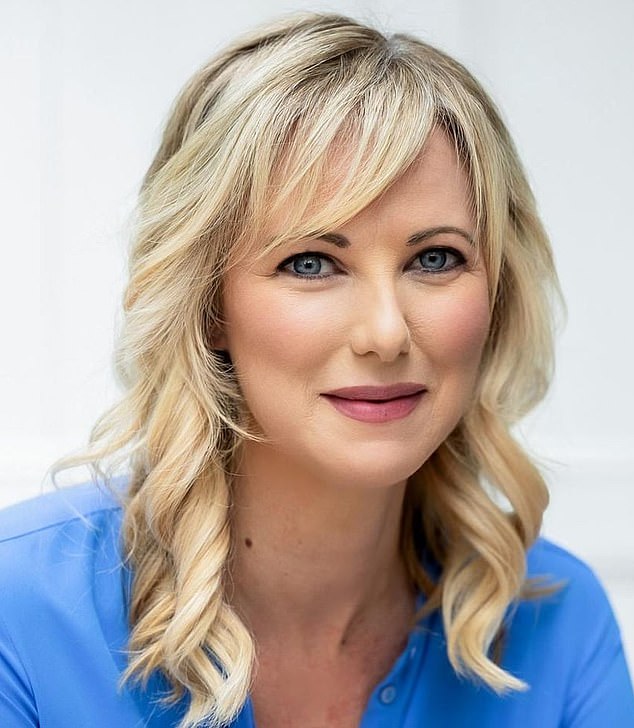
Health journalist Deborah Cohen has written a book on why we can no longer distinguish medicine from marketing
As Pete Etchells, a professor of psychology and science communication at Bath Spa University, tells me: ‘Previously, expertise was associated with someone who spent 20 years researching a topic. But now trustability is often equated with being engaging, relatable and likeable.’
And many influencers fail to disclose when they have been paid for a post. So what we see is far from the full picture.
This is further complicated by the ‘illusion of truth bias’: the more we see something online, the more we believe it, regardless of whether it’s accurate.
Click on dubious health information, and that will then affect your online algorithm, meaning you’ll then see dozens more similar claims, each repetition making them feel more true.
This collision of entertainment, commerce and health is exemplified by testosterone, which is having a moment.
Testosterone replacement therapy (TRT) is now one of the most talked about men’s health topics on TikTok and Instagram, according to a 2024 study in the International Journal of Impotence Research. In a video that went viral that year Robert F. Kennedy Jr, now the US Secretary of Health, performed a gymnastic flip over an exercise machine.
This wasn’t due to workouts, he said: ‘I’m on an anti-ageing protocol from my doctor that includes testosterone replacement treatment.’
In this admission, RFK joined the growing cohort of male celebrities and influencers who speak openly about waning testosterone levels.
The popular US podcaster Joe Rogan admits to using these treatments and even challenges fitness personalities to do likewise. These online discussions attract millions of views, while selected clips shared across social platforms reach billions.
‘I started doing hormone replacement therapy at 40,’ he says on YouTube. ‘It makes a big difference, makes your body work way better.’
On TikTok and Instagram, younger men are told high doses of testosterone are essential for achieving the muscular physiques idolised by Hollywood or on Love Island.
Dr Brooke Nickel, a researcher at the University of Sydney School of Public Health, has analysed the online portrayal of testosterone in posts on Instagram and TikTok.
She tells me: ‘Even if men are within the normal range the message is that they should aim for “peak” levels, as high as possible, to feel better.’
However, studies show that rather than offering healthy men an elixir of youthful energy, TRT may well prove an expensive waste of time and, worse, may shrink their testicles and cause infertility.
It is true that testosterone treatment is medically necessary for a specific group of men: those with hypogonadism, where the testes produce little or no testosterone. This can result in reduced bone density, heightening their risk of fractures, and infertility.
But it will not help ageing men with their energy or morale. For example, a 2020 review of studies, published in the European Journal of Endocrinology, examined TRT in mostly older men without hypogonadism causing low testosterone.
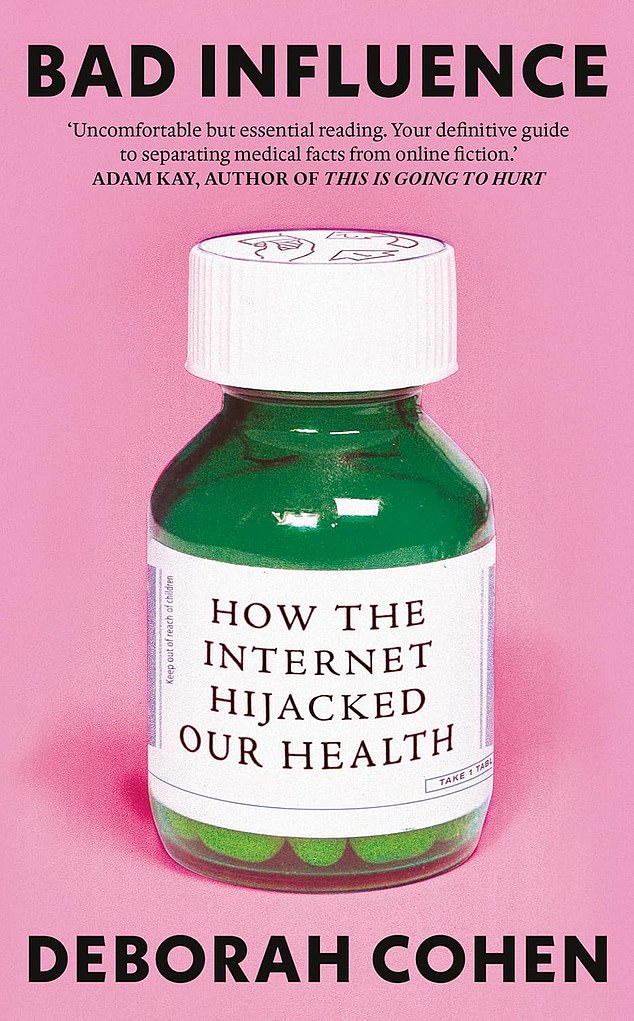
Deborah Cohen discusses Ozempic influencers, AI-powered diagnoses, ‘preventative’ screening and Instagram’s favourite wearable tech in her new book Bad Influence
It found that while TRT led to slight improvements in sexual function and quality of life, these gains were modest at best. It showed minimal impact on physical ability, depression, energy or cognitive function.
Even having low testosterone levels doesn’t indicate you will have health problems.
The 2009 European Male Ageing Study – one of the most comprehensive studies of ageing men – examined 3,000 men over 40, and while up to 30 per cent had low testosterone, most were healthy and didn’t have symptoms related to their hormone levels.
In other words, most age-related symptoms in men aren’t due to low testosterone.
Dr Channa Jayasena, a consultant in reproductive endocrinology at Imperial College London, says there is a ‘U-shaped curve’ for testosterone levels – too little may be bad for you and too much is always bad for you.
UK regulators approve testosterone only for hypogonadism. But private clinics circumvent this by prescribing ‘off-label’.
Dr Jayasena has tested these clinics’ questionnaires and found them asking leading questions such as: ‘Do you feel tired? Do you want more energy?’ Questions to which virtually any man over 50 could answer ‘yes’.
‘I answered “no” to everything’, said Dr Jayasena, ‘but it still ended with, “You may have low testosterone. Call us for a consultation.” I’ve had patients from such clinics who were told they needed treatment when their levels were completely normal.’ He warns that some private providers are prescribing dangerous doses – elevated doses that come with potential harms, including increased blood pressure, raised cholesterol, and perhaps a higher risk of heart disease.

Dr Channa Jayasena, a consultant in reproductive endocrinology at Imperial College London
And stopping TRT can become increasingly difficult the higher the dose and the longer you have been on it – because once you begin taking it, the body responds by reducing or shutting down its own testosterone production.
This can cause temporary suppression of testosterone-producing cells and lead the testicles to soften and shrink, warns Dr Harry Fisch, former director of the Male Reproductive Centre of New York Presbyterian Hospital. And stronger and more prolonged suppression makes recovery slower and less predictable.
Yet a content analysis by sexual health specialists in the Urology Times Journal of TikTok videos posted between October 2022 and October 2023 found that not a single TRT video mentioned its impact on sperm production.
Would so many men eagerly take testosterone if they fully understood the risk that their bodies might struggle to produce it naturally again?
Social media often steps into the vacuum of unexplained physical symptoms – a popular take is that these are down to food intolerances or allergies. Which inevitably involves testing.
Three years on, Ellie Matthews still feels guilty for using TikTok to champion a health test she once described as a ‘gift from God’ to her followers.
In 2022, the clean-living content creator who has more than 35,000 TikTok followers, was struggling with abdominal bloating and bowel issues, although conventional medical tests had found nothing wrong.
Meanwhile, Ellie’s own TikTok feed sent her videos about food intolerances and digestive issues that mirrored her own concerns, with symptom-relief stories and authoritative-sounding takes on complex immunology.
They talked her through IgGs and IgEs (antibodies produced by the immune system that the influencers claim are both linked to allergy symptoms).
Convinced she had an intolerance, Ellie bought a test that was cheap and quick. It cost only £20 – a bargain compared with the others on offer.
The company that made it said it could detect which foods were causing ‘unwanted reactions in three easy steps’. Ellie was convinced by hundreds of online testimonials claiming the test had helped them after eliminating foods flagged in their results.
Stopping TRT can become increasingly difficult the higher the dose and the longer you have been on it
‘I was like, “Wow, I need this”,’ she says. All she had to do was cut off a few strands of hair and post them to a lab.
The company claimed the sample would be analysed by ‘experts against a range of food and non-food products’.
The test used ‘bioresonance’, which is based on an unproven theory that patterns of electromagnetic waves from a hair sample can reveal food or environmental allergies.
As promised, within days of dispatching her hair strands, she received an impressive-looking 36-page report that appeared thorough and scientific.
Excited by this, she turned to TikTok to share her results.
In a three-minute video, she guided her followers through each page. ‘At that moment, I thought that was the best test I’ve ever had,’ she told me. ‘If this test has fixed me, then why wouldn’t I share it with other people?’
The video went viral. Most viewers shared her enthusiasm and announced they had ordered the test themselves.
Her allergy report had a traffic-light colour-coding system with ‘red’ foods requiring immediate elimination.
Her pages were filled with red. ‘All of my cheese is red… All of dairy is red… I can’t have milk chocolate,’ she said on TikTok.
Ellie diligently cut out everything ‘red’. Rather than easing her health anxiety, the test intensified it, with her thoughts consumed with worst-case scenarios. ‘What happens if I did have a banana today? I don’t want to have a bad stomach. I don’t want to feel unwell . . .’ The test that promised clarity had instead trapped her in a prison of food fear.
Then Ellie started to doubt what she’d done and she decided to see whether eating these ‘forbidden foods’ would actually trigger a bad reaction.
She started her own food reintroduction plan. To her bemusement, nothing happened. That’s when the penny dropped.
‘How does someone know what you’re allergic to via your hair?’ she tells me slightly incredulously. ‘But in that moment of desperation, it doesn’t matter because you’re thinking, “It’s only, like, £20. You could fix me”.’
Indeed, according to the authoritative European Academy of Allergy and Clinical Immunology, IgG antibodies are a normal part of the immune system’s response to food and don’t correlate with symptoms or intolerances. They’re just a reflection of what you’ve eaten recently.
The fact she might have misled people worries Ellie. She says: ‘I don’t know whether I’m spreading false information with my video still being viral. When I posted it I thought it was true.’
Adapted from Bad Influence by Deborah Cohen (Oneworld, £18.99), published on January 22. © Deborah Cohen 2026. To order a copy for £17.09 (offer valid until January 31; UK P&P free on orders over £25), go to books.mailshop.co.uk, or call 020 3176 2937.