
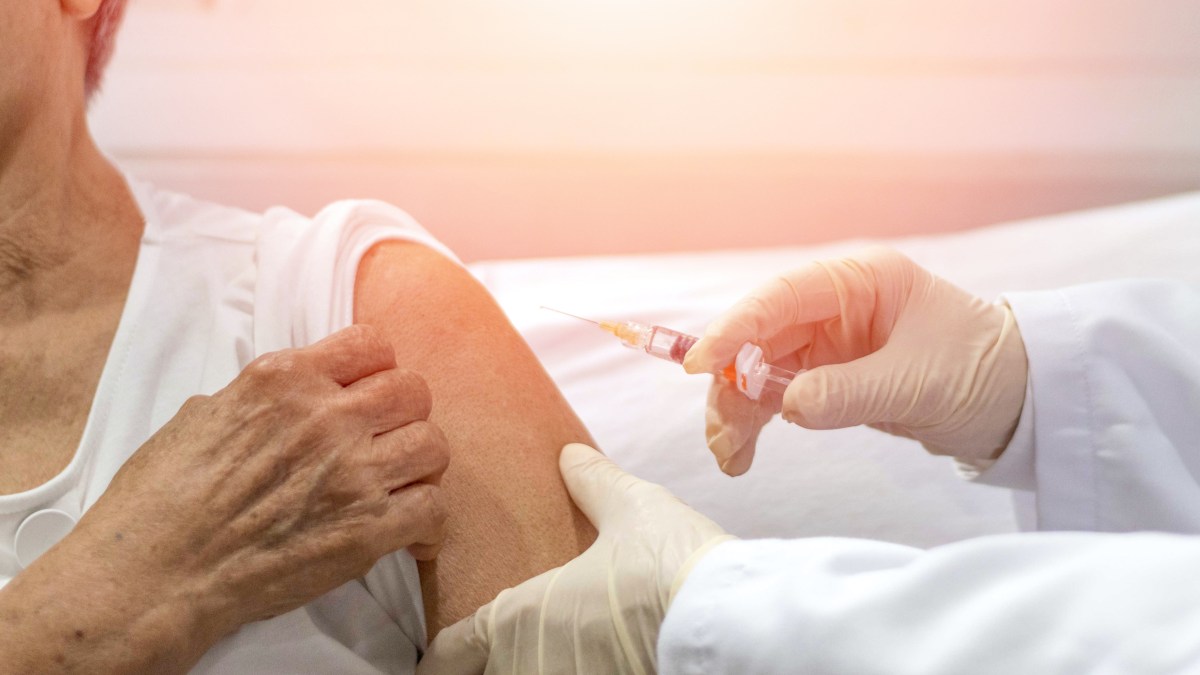
A routine vaccine given to protect older people from shingles may also help to keep them biologically younger, a study has suggested.
After analysing health data from nearly 4,000 Americans aged 70 and over, scientists found that those who had received the jab showed signs of ageing less rapidly than those who had not.
The vaccine was associated with lower inflammation, a condition linked to a host of health problems including heart disease, cancer and Alzheimer’s. The DNA of those who had the jab also looked “younger” at a molecular level, compared with those who did not.
• Shingles and flu jabs may fend off heart disease and dementia
The shingles vaccine is available through the NHS for everyone turning 65, those aged 70 to 79 and those aged 18 and over with a severely weakened immune system. The new study adds to a growing body of evidence that the benefits could extend well beyond the prevention of a painful rash.
Shingles, also known as herpes zoster, is caused by the reactivation of the chickenpox virus, which can lie dormant in the body for decades. It leads to a blistering rash and can result in long-lasting nerve pain, called post-herpetic neuralgia. The risk rises with age as the immune system weakens.
“This study adds to emerging evidence that vaccines could play a role in promoting healthy ageing by modulating biological systems beyond infection prevention,” said Jung Ki Kim of the University of Southern California, the study’s lead author.
A person’s biological age reflects how well their body is holding up as the years tick by. The team measured several aspects, including inflammation in the body, which tends to increase over time. They also looked at two measures of genetic ageing. The first, known as epigenetic ageing, refers to chemical tags that over time become attached to a person’s DNA, altering the activity levels of the genes encoded by that DNA.
The shingles jab had previously been associated with a lower risk of dementia
GETTY IMAGES
The second, called transcriptomic ageing, looks at how genes are copied into RNA, a step needed to make the proteins that keep cells working.
On average, vaccinated participants had lower levels of chronic inflammation, slower rates of epigenetic and transcriptomic ageing, and a better overall biological ageing score. Chronic, low-level inflammation is thought to drive many diseases of later life, from heart disease to frailty and cognitive decline, a process sometimes called “inflammageing”.
“By helping to reduce this background inflammation, possibly by preventing reactivation of the virus that causes shingles, the vaccine may play a role in supporting healthier ageing,” Kim said.
The study was observational, meaning it cannot prove that vaccines directly cause the body to age less rapidly. The results may reflect the “healthy user effect”, where people who choose to get vaccinated tend to be in better shape, wealthier and more engaged with healthcare generally.
However, people vaccinated four or more years before their blood was taken still showed slower biological ageing than those who had never been vaccinated. The findings were published in The Journals of Gerontology.
Another large review, published last year in the journal Age and Ageing, analysed 21 previous studies involving more than 100 million people aged 50 and over. It found that vaccination against shingles was associated with a 24 per cent lower risk of any dementia and a 47 per cent lower risk of Alzheimer’s disease.