
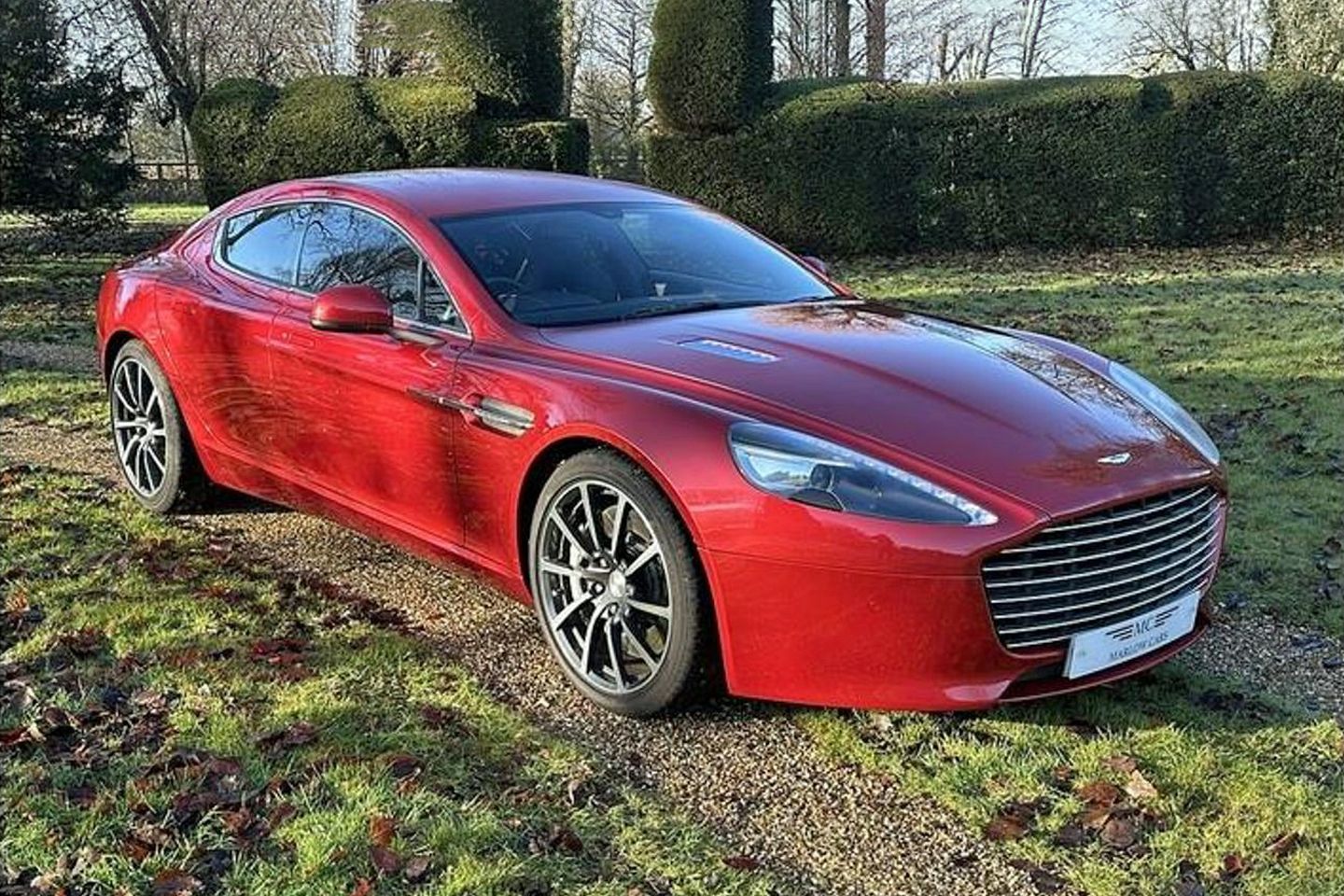
Imperfect though it may have been, the Rapide has come to represent the end of an era for Aston. The current DBX may be the company’s four-door offering today – an exceptionally good one, in case you hadn’t heard – but no SUV, however accomplished it might be, can hope to capture the swept-back drama of Marek Reichman’s liftback. Yes, it might reductively be called a stretched DB9, but it was also arguably the world’s most beautiful four-door car when it launched.
Of course, it was always a niche prospect – a fact that ultimately led to its demise. The DBX has acres more space (an Achilles heel called out at the time by owners of the much more practical Panamera) and is inevitably more useable than a rear-drive car powered by a naturally aspirated 5.9-litre V12. Nevertheless, it could convey four adults much more readily than most traditional GT cars, and it looked and sounded a million bucks while doing it. Eventually, in improved S format, Aston reckoned it would nudge 200mph.
This particular example has covered 55,000 miles, suggesting it’s been used as Gaydon’s engineers intended rather than mothballed as a (misguided) investment piece. The Volcano Red metallic paintwork with contrasting black leather interior featuring red stitching strikes just about the right balance between subtle and special – an Aston needn’t shout about its presence, merely state it confidently.

All the confidence comes with knowing there’s 552hp under the driver’s loafer. Increased output was inevitably part of the S variant’s appeal, though it was detailed improvements elsewhere that helped result in a much improved car overall. And while there are fans of the subsequent limited edition AMR, we’d recommend the S as the sweet spot – especially at a price point that makes one question if the PH classifieds have suffered a decimal point error. The single Aston Cygnet for sale would cost you £2k more.
Which isn’t to suggest that Rapide values have ever been solid; indeed, their softness tends to compare favourably with a peat bog in June. Regardless, £38k for a car with fairly modest miles and, the dealer reports, a full Aston service history, seems like a hefty return on your outlay – the non-S we featured in Brave Pill back in 2020 wasn’t much less, and that had accumulated 92k. That’s assuming you favour orchestral V12s and a suitably analogue (and old-school) chassis dynamic. The school run ought not to be dull, let’s put it that way.
At any rate, it’s highly cost-effective proof that (reasonable) practicality and passion need not be mutually exclusive. Or cost-effective at the point of purchase – naturally, you’re going to become well acquainted with the inside of your local petrol station, and, should you wish to keep the service record in Aston’s name, well accustomed to large bills. The brake pads were done in April at the cost of £4k – or, to put it another way, about 10 per cent of the current asking price. Crazy, right? But cool, too.
Navigate leftNavigate right
1 / 4