
Fresh from being signed by the Commission, the EU-Mercosur trade deal is facing mounting resistance in the European Parliament, joining European farmers who fear overseas competition.
Progressive lawmakers warn it could drive up greenhouse gas emissions, accelerate deforestation and increase chemical pollution on both sides of the Atlantic.
European Commission President Ursula von der Leyen signed the agreement on Saturday in Asunción, Paraguay, alongside leaders from the Mercosur bloc.
The EU-Mercosur partnership agreement, to give it its full name, will still need to be ratified by the Mercosur states – Argentina, Brazil, Paraguay, Uruguay and Bolivia – and all EU countries. However, the EU Council has already approved the provisional application of the trade section once a Mercosur country ratifies it, pending the European Parliament’s approval.
Environmental organisations and progressive MEPs criticise the deal’s growth-first approach, which they say prioritises profit over environmental preservation and other common goods.
“How can you aim at reducing greenhouse gas emissions by 55% and sign the Mercosur agreement? It’s completely hypocritical,” said MEP Manon Aubry, co-chair of The Left group. “This is further proof that the EU is caught up in a broader wave of total deregulation on environmental issues.”
The agreement provides for the elimination of most customs duties between the EU and Mercosur, covering more than 90% of trade in both directions, with quotas, transition periods and safeguard clauses. It promotes the export of European industrial and agricultural products to the Mercosur bloc – automobiles, machinery and chemicals – while opening up the EU market to imports, notably beef, poultry, sugar and soya.
“Climate-damaging and greenwashed trade deals, which legal experts say may even violate EU law, do little to foster equal partnership, genuine cooperation or strategic autonomy,” said Audrey Changoe, trade and Investment Policy Coordinator at Climate Action Network (CAN) Europe, after the deal was signed Saturday.
Euractiv quizzed a trio of MEPs – Pascal Canfin of liberal Renew, Saskia Bricmont of the Greens, and Aubry – about what they saw as the main risks and potential benefits of the trade deal.
EU-Mercosur trade deal: What you need to know
EU states endorsed the controversial EU-Mercosur trade deal on Friday, but that is not the…
5 minutes
Deforestation
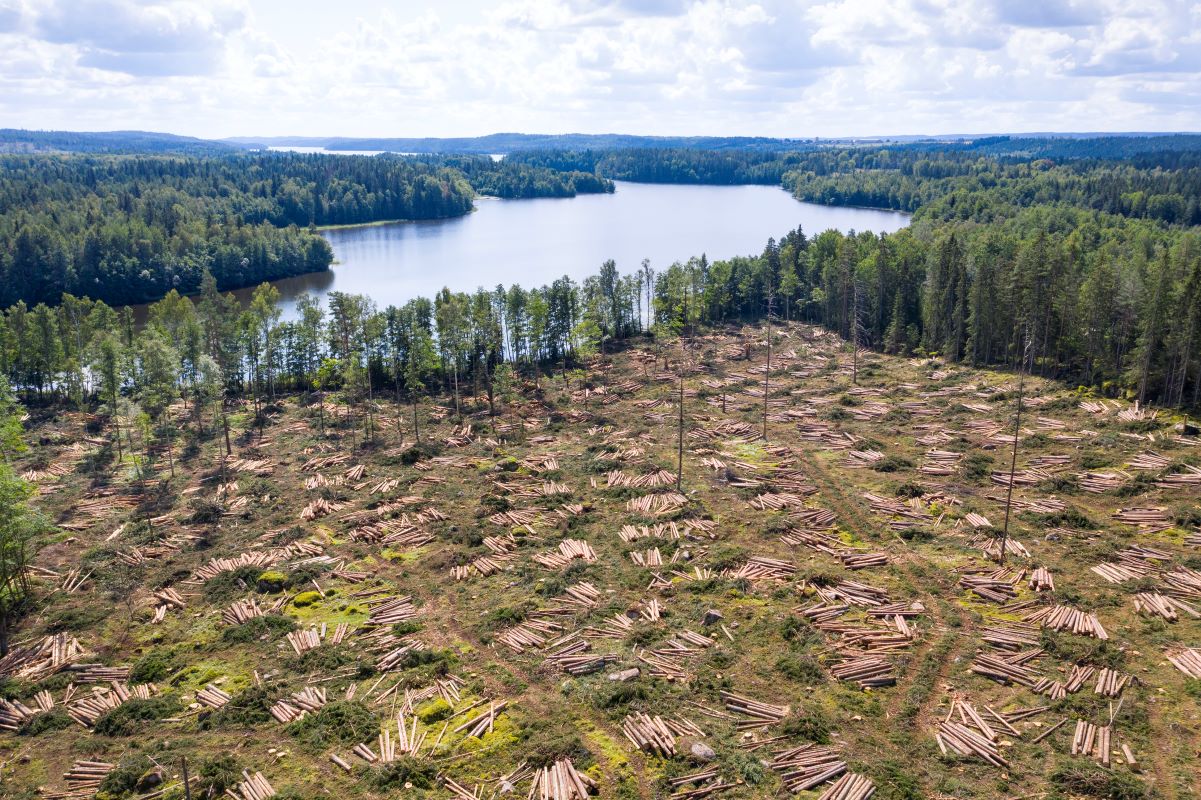
Canfin and Bricmont did not hesitate in identifying deforestation as the greatest threat. The trade agreement will increase exports of products that promote deforestation in Latin America, such as soybeans, beef and bioethanol.
“Given the quotas set out in the agreement for beef, we estimate that the risk of deforestation will increase by 25% compared to today,” Bricmont told Euractiv.
Mercosur poses an even greater risk, according to Canfin, as “two safeguards have just been removed: the Deforestation Regulation and the soybean moratorium”.
The EU Deforestation Regulation (EUDR) was postponed twice and is not due to take effect until next year, and is likely to be swept up in the European Commission’s regulatory “simplification” drive in April, when a review clause comes into effect.
The regulation, originally intended to keep products linked to deforestation off the EU market, could be subject to a rebalancing mechanism introduced into the EU-Mercosur agreement in December 2024, where aggrieved parties can take disputes over policy, and environmental policy in particular, to arbitration.
A question of balance
The mechanism was added to address Latin American concerns over the deforestation law and other green policies like the Corporate Sustainability and Due Diligence Directive, allowing a party to the trade deal to demand compensation – which could take the form of increased export quotas, reduced tariffs or other concessions – if they consider a policy measure taken by the other party to skew their trade relationship or negates expected benefits of the partnership.
“The Deforestation Regulation will most likely be challenged by the Brazilians,” Canfin warned. “Especially since all texts that are not fully implemented at the time of signing the agreement may be subject to the rebalancing mechanism.”
Bricmont sees this as a threat to European sovereignty, which must be able to “decide for itself what legislation it wants to adopt”, without third countries interfering in “our regulatory capacity”, because the EU has given them a say in its own regulations.
Combined with the EU-Mercosur agreement, major Brazilian grain traders’ recent withdrawal from the moratorium on Amazonian soybeans increases the risk of deforestation, Bricmont and Canfin told Euractiv. Under the moratorium, traders committed to not generating more deforested areas in the Amazon.
Without the safeguards provided by the EUDR and the moratorium, “more exports to Europe will mean more deforestation,” Canfin said. “It’s inevitable.”
EU hits deal to delay key deforestation law, review in April
EU lawmakers reached a political agreement on Thursday evening to delay the implementation of the…
2 minutes
Pesticide pollution
The European chemicals industry is one of the main beneficiaries of the EU-Mercosur agreement, as the reduction in customs duties is set to boost exports to Mercosur countries. The European Commission projected a 47.6% increase in a sustainability impact assessment conducted in 2020.
Europe already exports harmful chemicals whose use is prohibited in the EU to these countries, and Brazil is known as one of the world’s largest consumers of pesticides.
“There is complete hypocrisy,” said Aubry. “We allow our industries to export dangerous products to Latin America and Mercosur countries, and then produce agricultural goods using these plant protection products, which are then sent back to Europe.”
The Intergovernmental Science-Policy Platform on Biodiversity and Ecosystem Services (IPBES), a UN body, has identified environmental pollution by toxic and harmful substances as one of the five direct drivers of unprecedented levels of biodiversity loss that some characterise as the sixth global mass extinction event.
According to the Heinrich Böll Institute, a green think tank, Argentina is also a major user of pesticides, with 2018 seeing the use of 240,000 tonnes of the herbicide glyphosate alone, mainly for soybean production.
Rising greenhouse gas emissions
The European Commission has estimated that the impact of the trade deal on the climate would be marginal.
Another assessment report submitted to then French prime minister Jean Castex estimated in 2020 that the agreement would result in between 4.7 and 6.8 million tonnes of additional CO2 emissions. The report’s authors deemed this impact modest compared to the anticipated economic gains.
Not everyone is convinced, and some perceive a prioritisation of economic growth. “We are promoting a model that aims to develop livestock farming, while the agricultural sector is already the largest producer of emissions,” leftist lawmaker Aubry said.
She cited the import of cattle, whose carbon footprint is considerable even when not raised on deforested land, but also the export of internal combustion engine cars, which are subject to strict emissions limits and a gradual phase-out within the EU. For her, this is yet another example of the EU’s “hypocrisy”, which will further exacerbate global warming.
“The EU claims to be greener than green, but in reality it is contributing to global ecological chaos,” Aubry said.
While not everyone shares Aubry’s view in the European Parliament, the assembly could yet delay the application of even the provisional trade deal.
On 21 January, MEPs will vote in plenary on a resolution tabled by Aubry to refer the EU-Mercosur deal to the Court of Justice of the EU, to assess its compatibility with the EU treaties, particularly as it jeopardises European farmers through unfair competition and asymmetric concessions. Any request for an opinion from the EU’s highest court could delay or suspend the application of the agreement until it has reviewed the case.
MEPs to vote next week on legal challenge to Mercosur deal
The European Parliament will vote next Wednesday in Strasbourg on whether to ask the EU’s…
2 minutes
(rh, vib, aw)