
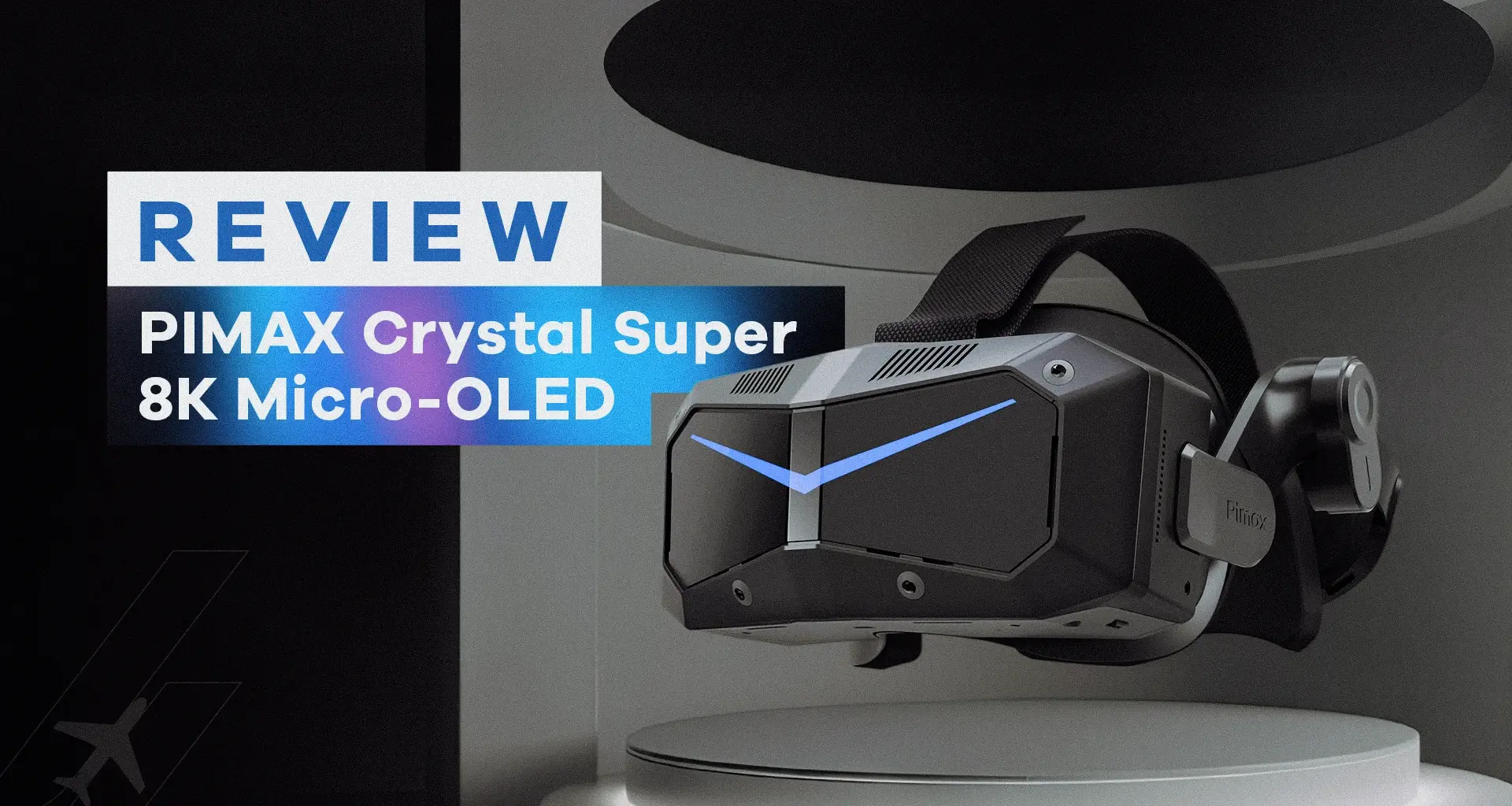

When Pimax first announced the Crystal Super, the headline features weren’t just the resolution or the glass lenses, but also the modularity. The idea that a single headset could transform from a high-brightness daytime flyer to a wide-field-of-view VFR machine, and finally, to a contrast-rich night fighter, sounded ambitious.
We’ve already covered the base QLED unit and the Ultrawide module. Now, Pimax has sent over the final piece of the puzzle: the Micro-OLED optical engine.
After swapping out the modules and spending a couple of weeks in the cockpit, it’s clear that this OLED module makes a big difference compared to the LCD-based ones that came before. I think it is indeed a fundamental change in how the simulator looks and feels, creating a distinct divide between daytime and nighttime flying.
The swap and the weight
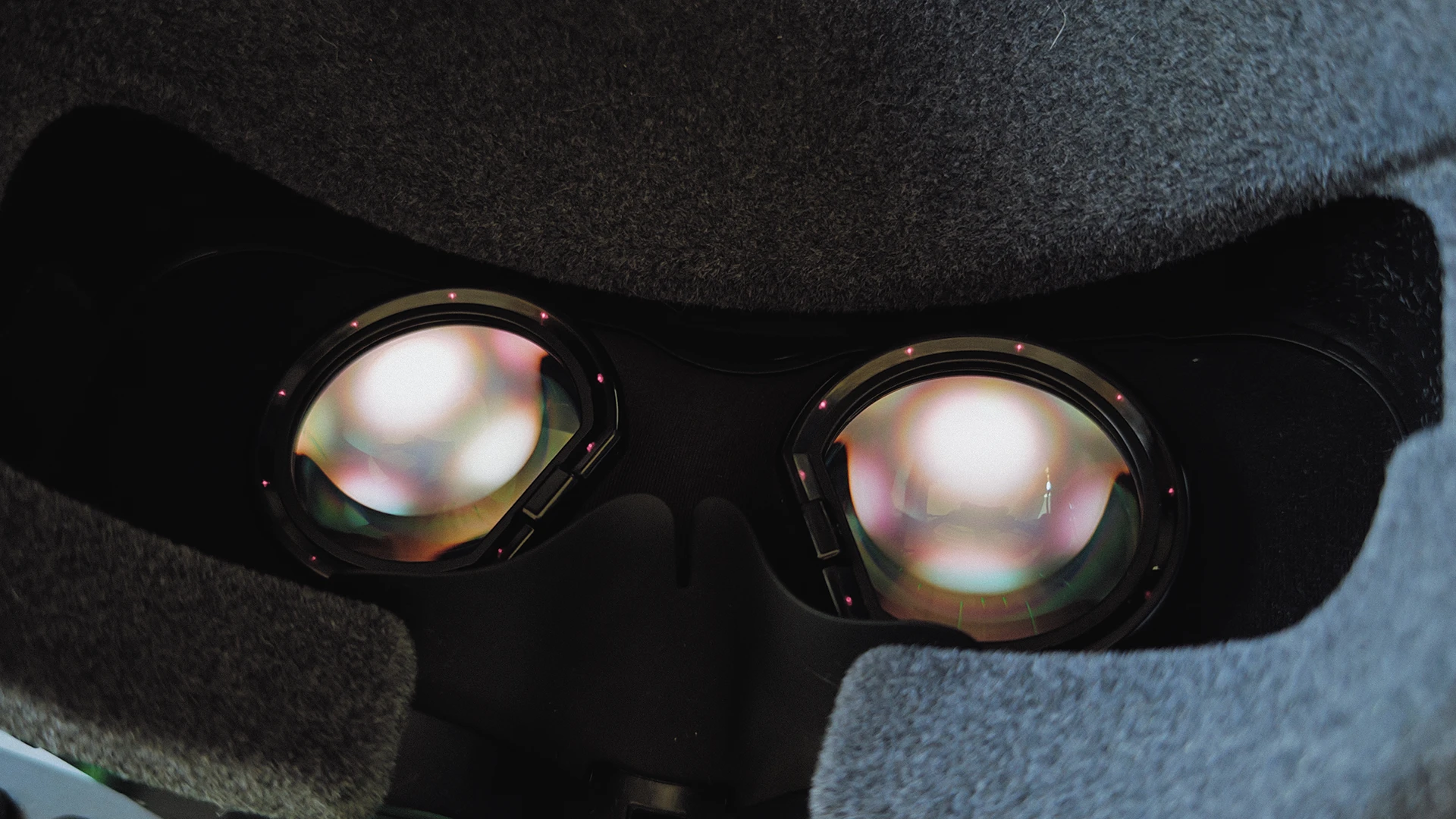
The first thing you notice before you even turn on the headset is the physical difference. The QLED module, with its massive glass aspheric lenses, is a heavy piece of engineering. The new Micro-OLED module uses pancake lenses (Pimax calls them “Concave View”) and the weight reduction is immediately perceptible.
We are talking about a difference of roughly 115 grams. While the Crystal Super is still a large headset, shedding that front weight significantly reduces inertia. When you turn your head to check the overhead panel or look out the window, the headset feels less like it wants to keep moving without you.
Swapping the engine remains a slightly nerve-wracking but straightforward process. You remove the facial interface, unlock the two side levers, and pull the front off. Clicking the new OLED unit in feels satisfyingly mechanical. It is a system that works and validates Pimax’s modular bet.
 The OLED experience
Let’s address the main reason anyone considers this module: the black levels.
In the QLED version, local dimming does a valiant job, but it essentially tries to “trick” you into seeing black by turning off backlight zones, which can create blooming around bright instruments in dark cockpits.
With the Micro-OLED module, that problem simply vanishes. In Microsoft Flight Simulator, flying a night approach is truly transformative. The runway lights pierce the darkness without a gray haze surrounding them. The cockpit shadows are genuinely pitch black, not dark gray. The difference is jarring, in a good way. The “infinite contrast” provides a sense of depth that LCD panels, no matter how advanced, cannot replicate.
The colors also carry a different energy. They are richer and more saturated. The Sony 4K panels used here deliver a vibrancy that makes the QLED look slightly clinical by comparison.
The trade-offs: brightness and optics
However, physics demands a trade. The most immediate sacrifice is brightness. The QLED module is a light cannon, capable of simulating the glare of a midday sun. The OLED module is dimmer. It is not “dim” in a way that makes it unusable, but if you jump directly from the QLED to the OLED, the world looks like a cloud just passed over the sun.
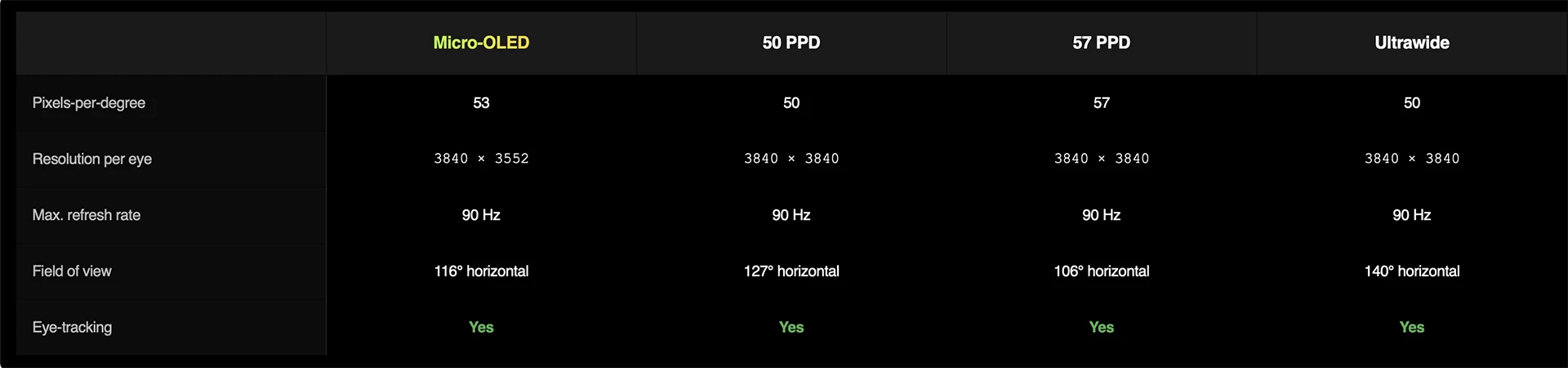
Then there is the field of view. The Micro-OLED panels are physically smaller, and despite the clever lens design, you lose peripheral vision. While the QLED module sits comfortably around 130 degrees (diagonal) and the Ultrawide pushes even further, the OLED module feels more constrained, hovering near the 110-degree mark horizontally. This is not a negative point as it’s mostly personal preference, but something worth keeping in mind.
Optically, the pancake lenses are excellent, but they introduce some characteristics inherent to the tech, such as some glare (minimal) in high-contrast scenes, and color fringing in the far edges of the lenses if your eye positioning isn’t perfect.
Crucially, however, Pimax has solved the “mura” effect. Mura is that dirty-window grain that plagued older OLED headsets. On this unit, the image is incredibly clean. The “screen door effect” is virtually non-existent thanks to the density of the Sony panels.
Performance
The module runs at a resolution of roughly 4K per eye with 90Hz refresh rates. Eye-tracking is built into the module, so Dynamic Foveated Rendering works out of the box. In my testing, this continues to be the magic bullet for performance, allowing the system to maintain frame rates even with the massive pixel count.
However, be aware that the 4K Micro-OLED panels generate more heat than the LCD counterparts. The headset gets warm, though the active cooling does a decent job of managing it.
 The Verdict
The Pimax Crystal Super OLED module is a specialist tool. Id’d say that if you exclusively fly airliners in broad daylight or enjoy VFR sightseeing over photogrammetry cities at noon, the QLED module is probably the superior choice. Its brightness and edge-to-edge sharpness offer a clarity that is hard to beat.
If you want to feel the speed of low-level flight, the Ultrawide module is your pick.
But if you are a night flyer or someone who values image depth and contrast over raw brightness, the OLED module is the winner. It turns night flying from a gray, washed-out experience into a moody, atmospheric reality.
The fact that you can now choose your compromise – brightness, FOV, or contrast – without buying a new headset is Pimax’s greatest achievement here.
Pros
True blacks and infinite contrast transform night flying.Zero mura effect.Significantly lighter weight improves comfort.Vibrant, saturated colors.Working dynamic foveated rendering.
Cons
Noticeably lower brightness compared to QLED.Smaller field of view than other Crystal Super modules.Slight glare and edge tinting (inherent to optics).Most expensive module in the lineup.
The Pimax Crystal Super 8K Micro-OLED is available now for $2,199 USD (1,960 €). It’s a high price to pay for one of the very best VR experiences you can have in Microsoft Flight Simulator, so feel free to use our discount code msfsaddons to get 2% off.
MSFS Addons is reader-supported. When you buy through links on this page, we may earn an affiliate commission at no additional cost to you. Thank you!
