
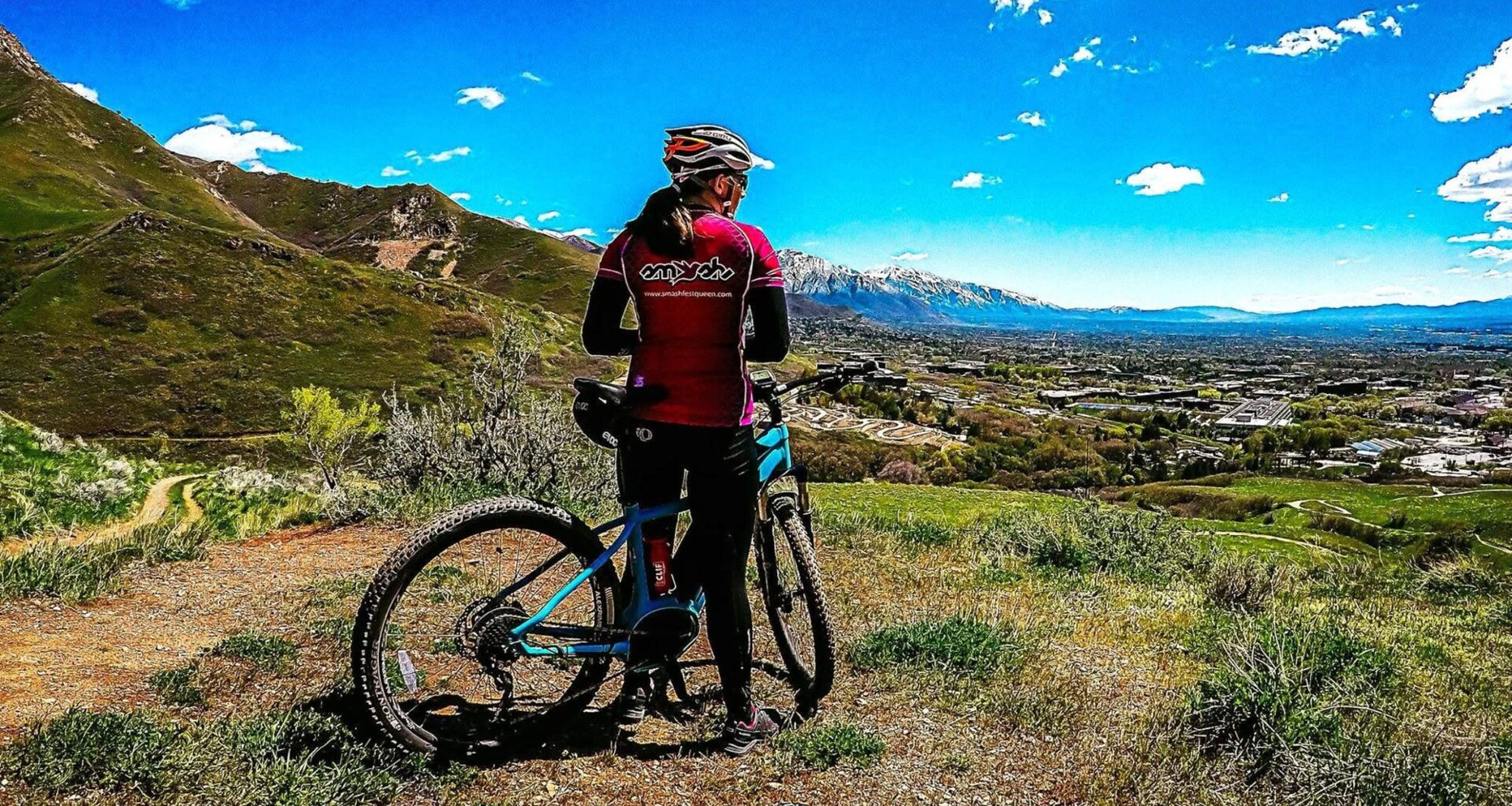
Van Rysel has a new concept TT e-bike that might scare you. I say embrace it.
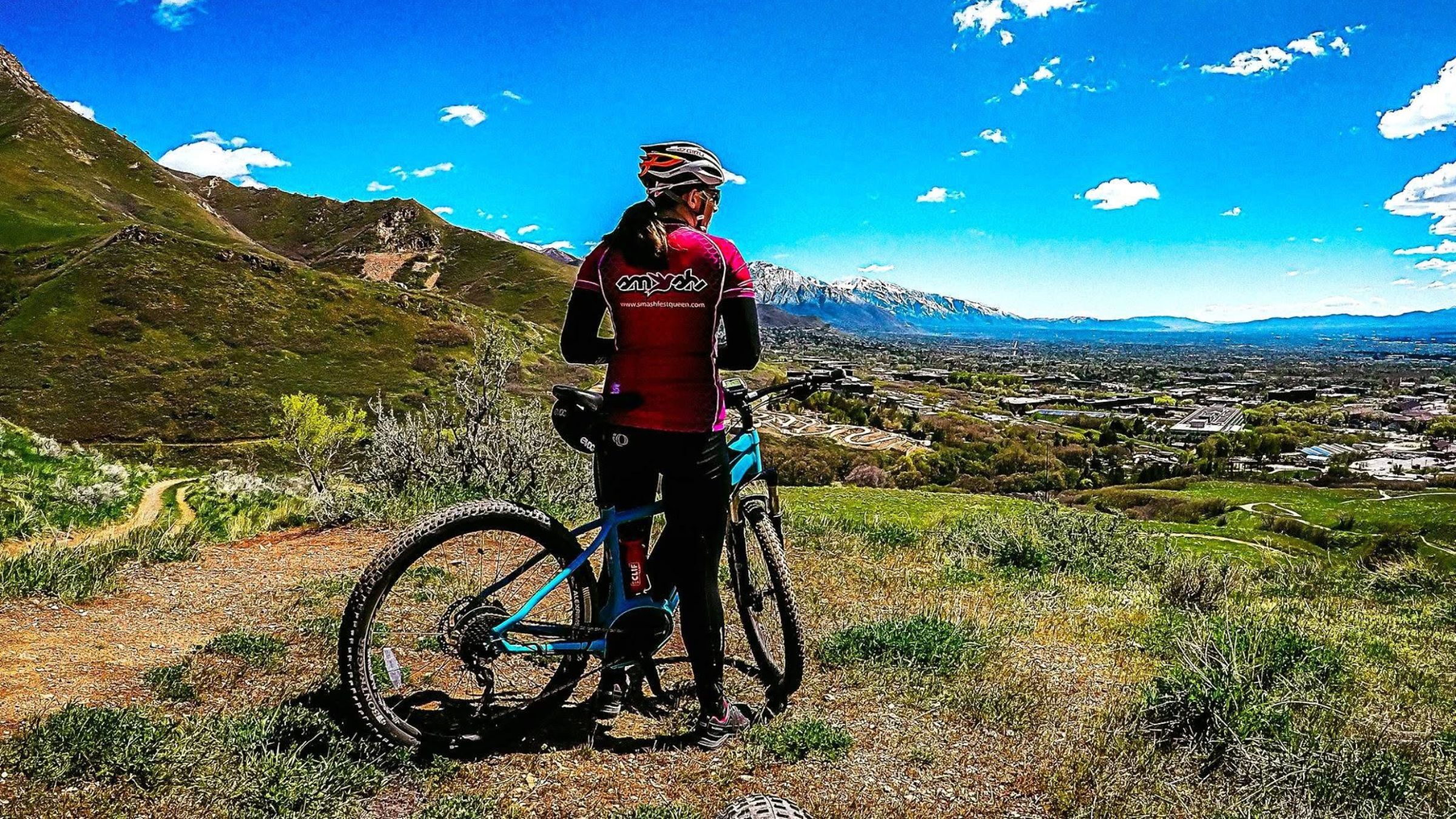
E-bikes can play a role in getting athletes comfortable on a bike or recovering from injury. Susan Lacke explains. (Photo: Susan Lacke/Triathlete)
Published January 20, 2026 06:40AM
Last week, Belgian cycling brand Van Rysel announced a new concept TT bike. They touted it as a “bold statement of innovation” that is “showcasing what’s possible and inspiring the future of cycling.” It claims to “double riders’ functional threshold power (FTP) and deliver the thrill of pro-level speed.”
The big innovation? A motor.
You’re probably throwing your hands up in exasperation and muttering something about how no one wants to do hard work anymore (bonus points if you preface that statement with “kids these days”).
Maybe you’re angered about the idea of people using e-bikes to cheat at your next race, or concerned that triathlon will turn into some kind of motor-doped En*anced G*mes spin-off (we self-censor here to prevent any accidental coverage). Or maybe you’re just wondering why anyone would bother with e-bikes.
As someone who bothers with e-bikes fairly regularly, I can tell you they’re pretty freaking great, actually.
The accidental e-biker
Years ago, my husband bought me an e-bike for my birthday. At our house, we subscribe to the “n+1” philosophy when it comes to bikes, yet I was still offended when I first saw the battery pack and pedal assist features on the mountain bike frame. I believe my exact words were “Where the hell do you expect me to ride this thing?”
As it turns out, the answer was “with him.” Though I loved riding my road and tri bikes, I had largely avoided gravel and mountain biking with my husband because I simply couldn’t keep up on the more challenging terrain. Sure, I could have trained harder and built the strength to do those kinds of rides, but I didn’t see the point. Like many triathletes, I looked at off-road racing like XTERRA as some kind of extreme branch of the sport that wasn’t for me.
That changed the first time I rode on an e-bike-friendly trail at a local mountain preserve. I came home sweaty, dirty, and grinning from ear to ear. My husband was stoked that I had a great time, because the first and last time I rode mountain bikes with him, I cried and swore to never-ever-ever ride with him again.
Yet after that first e-bike ride, I wasn’t just planning on going again (and again), I was looking up strategies to build up my skills for mountain biking. My Class 1 e-bike (which has no throttle) required me to do a lot of the work, but offered a little pedal-assisted boost on steep climbs. I still had to get my heart rate up to stay within view of my husband, but I wasn’t frustrated by the chase – I was giggly.
Why e-bikes are rad
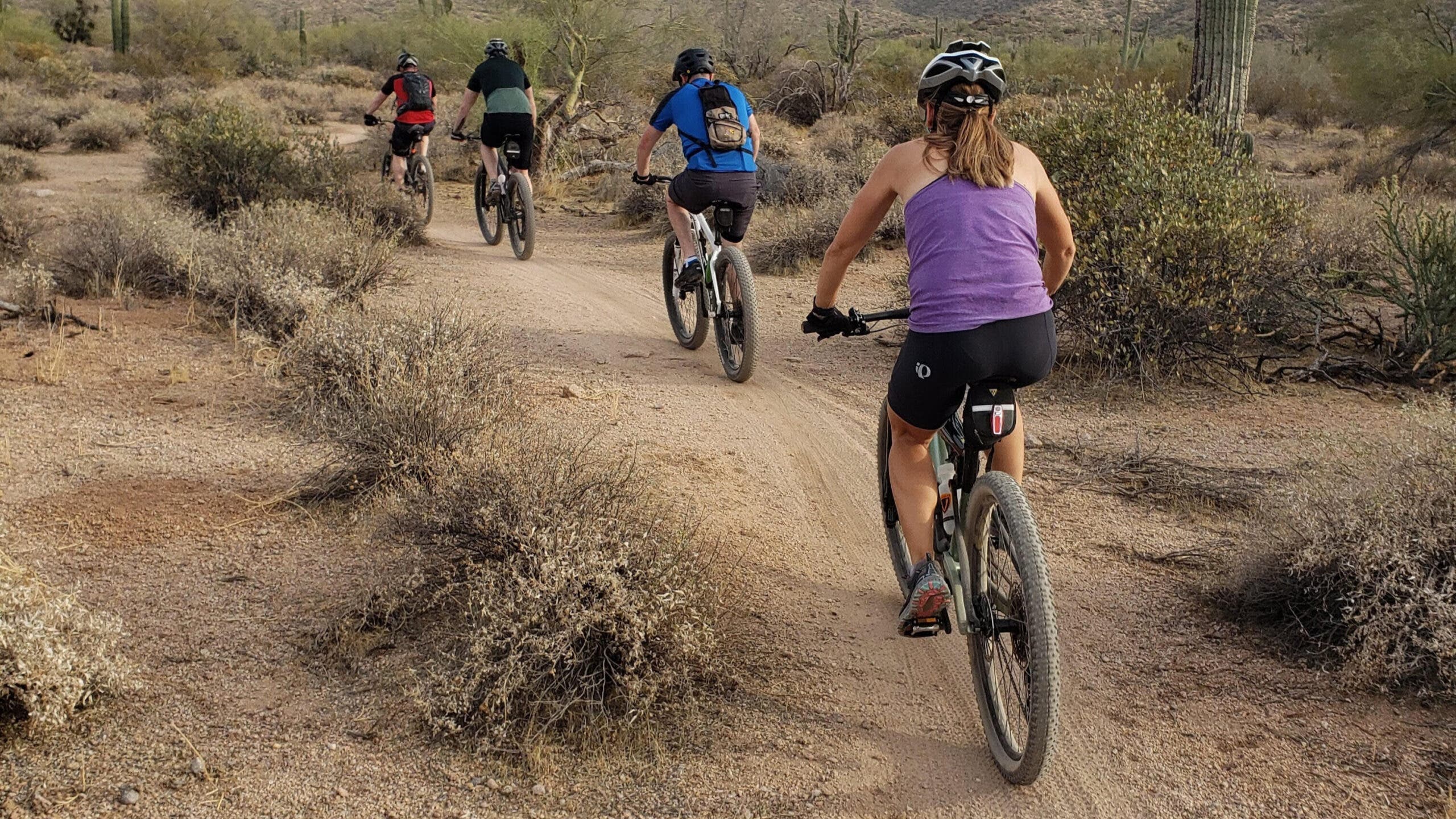 Getting a mountain e-bike was the perfect entry into the sport for Susan Lacke. (Photo: Susan Lacke/Triathlete)
Having pedal assist on an e-bike felt like the training wheels I had on my pink Huffy as a kid: I was glad they were there while learning to ride, but also wanted to practice and get good enough to ditch them. My e-bike gave me a glimpse of what could be possible with some bike-specific strength training. Suddenly, I had a new goal: to buy a so-called “real” mountain bike and train for an off-road triathlon.
A few years later, when recovering from a health scare and surgery, an e-bike allowed me to continue joining in on light social rides with my core group of training buddies, whose fitness at that time was far greater than mine. I am not exaggerating when I say that an e-bike is what saved me from isolation, depression, and self-loathing during a very difficult time in my life. If I couldn’t have gotten on a bike, I’m not sure I would have gotten out of the house. I’m not sure I would have reclaimed my fitness, either – the thought of rebuilding from the ground up felt too overwhelming at that time.
My pro-e-bike stance strengthened when I started using it as a mode of transportation. Now, instead of fighting traffic, I get from Point A to Point B fairly efficiently. (This is the case for a lot of e-bike users; a 2022 study found that when people ride an e-bike, their car mileage goes down by half).
Even more benefits of e-bikes
There are other ways triathletes might benefit from e-bikes. Upon reading the Van Rysel press release, my editor-in-chief, Chris Foster, astutely pointed out that pro triathletes have been motor pacing for years. This could be a tool for that.
It could also be used for real-time road aero testing, where the rider sets a specific wattage, then adjusts position to find the optimal setup at a higher average speed. This seems to be the premise of the Van Rysel concept bike, which they say will be used to “investigate extreme speed scenarios in a controlled environment.” An e-bike could make it easier to unlock new speed secrets for conventional, non-motorized bikes, and that’s an exciting thing to think about.
But I believe the greatest benefit of embracing e-bikes is inclusivity. An e-bike makes the impossible feel possible. Whether you’re a brand-new rider scared of how you’ll make it 20 miles, an injured triathlete wondering how to start all over again post-recovery, or someone who cries while mountain biking with her husband because “it’s just not fair” (ahem), that little bit of pedal assist could be just the momentum you need to discover (or rediscover) the things your body can do.
And yes, a workout on an e-bike still counts as a workout: Research shows riding a pedal-assist bike still gets a rider’s heart rate and VO2 max up to “moderate intensity.”
So go ahead, lament the TT e-bike if you wish. Maybe it’s not for you, and that’s fine. But there’s no denying that e-bikes can be great for other people. In a time when just 28% of Americans are meeting the minimum recommendation for exercise, why not provide a fun, approachable option for getting on two wheels? Perhaps the neighbor who finds joy and fitness on an e-bike today could be racking a non-motorized bike next to you in transition this summer.
The e-bike isn’t just a vehicle for cheating. It’s a gateway drug, and that’s an exciting thing for the future of triathlon.