
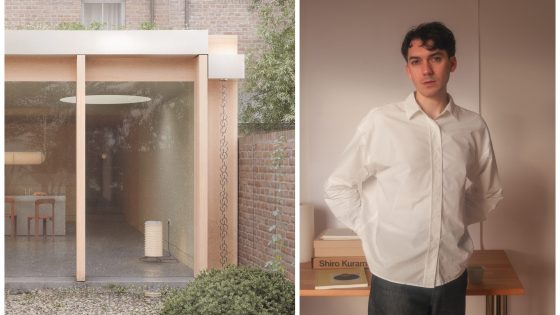
Practice name Apricot Square
Based Hackney, London
Founded 2025
Main people Juan Guilmar Baldoni, founding director
Where have you come from?
Apricot Square comes from an interest in architecture as a cultural practice, not just a professional one.
Before founding the studio, I worked for several years at Common Ground Workshop, having relocated to London from Argentina, where I’m originally from. During that time, I worked across hospitality, retail and residential schemes, gaining a clear understanding of the different ambitions and pressures shaping commercial and domestic projects.
Alongside formal architectural practice, I come from a background in fine art and music. Those experiences have remained central to how I think and work. They made me comfortable with intuition and uncertainty, and gave me an understanding of making as something driven by attention and judgement rather than the execution of fixed ideas.
I founded Apricot Square to give those parallel interests a clearer architectural outlet. The studio is conceived as a framework for multidisciplinary ways of working, and for collaborating with creative people across fields rather than isolating architecture from them. It’s an approach grounded in professional rigour, but driven by shared ambition, curiosity and cultural engagement.
What work do you have and what kind of projects are you looking for?
At the moment, the studio is working with a small number of clients across residential commissions alongside temporary and cultural work. Many of these commissions sit between private and public use. We tend to collaborate with people who see architecture as an open process rather than a fixed brief, and who are curious about how projects can evolve through conversation and testing rather than being predetermined from the outset.
‘We collaborate with people who see architecture as an open process rather than a fixed brief’
We consider process an integral part of architecture rather than something that simply supports it, and we see ambition as something not tied to budget or scale. What matters more to us is shared intent, a willingness to explore ideas, trust the process, and work collaboratively. That’s often where projects gain their specificity and character.
Rather than defining the studio by project type, we’re interested in a way of working. We’re comfortable operating across boundaries, where domestic spaces can take on a more public or gallery-like quality, and where retail, hospitality or cultural projects can feel intimate, informal and lived in. Those moments of overlap often allow projects to move beyond the limits of their original brief.
The practice is growing through relationships and conversations rather than competitions, and through working with clients who recognise themselves in the way we think and are interested in shaping the project together as a shared creative endeavour.
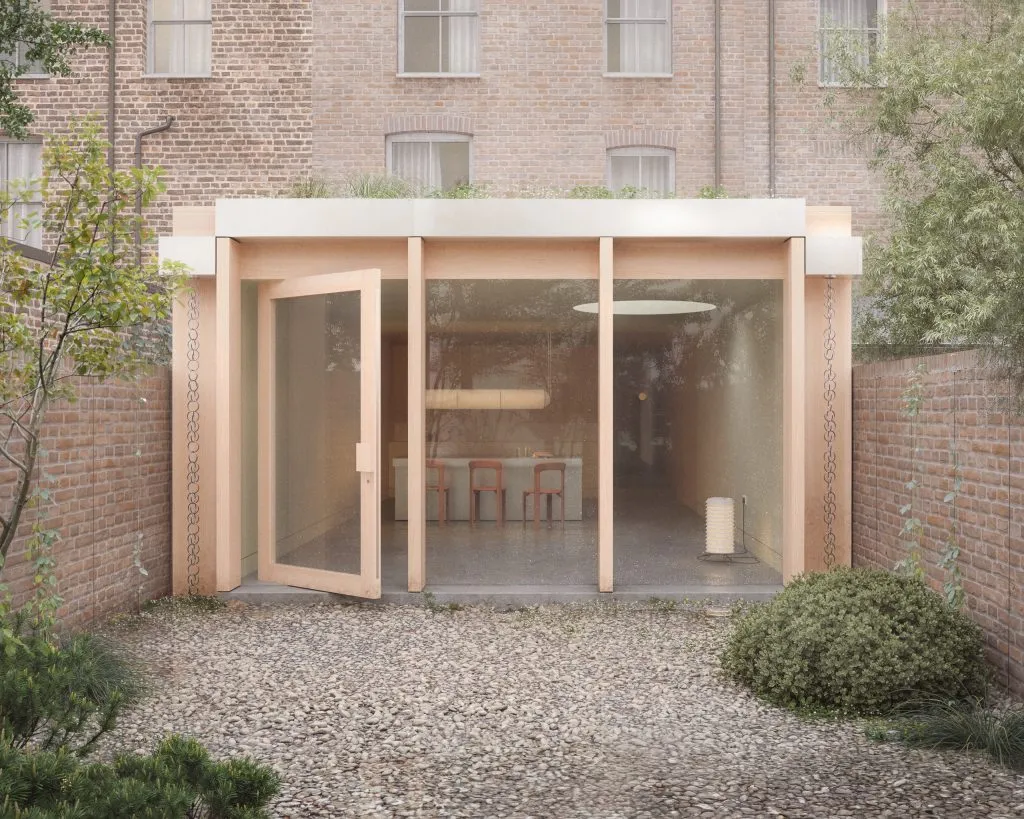
More Place by Apricot Square, a proposal to reimagine an early Victorian terrace in Islington, London, as a creative living and working environment
Are you being asked to do more retrofit work – and are you steering clients in this direction?
Working in London, most projects inevitably involve a degree of retrofit, whether that’s adapting existing houses or reworking fragments of the city that already carry history and use. It’s something we’re genuinely excited by because of the opportunities it opens up spatially, aesthetically, sustainably and economically.
Existing buildings bring weight, texture and specificity. Working with what’s already there can sharpen decisions, grounding projects in context while allowing contemporary interventions to feel more deliberate and precise. That tension between what’s inherited and what’s added is where we find a lot of creative potential.
More broadly, retrofit aligns with how we think about making in other fields. The idea of reworking existing material, reframing it through a contemporary lens, and allowing new meaning to emerge is something you see increasingly in music, fashion and art as much as in architecture. In that sense, retrofit isn’t about limitation but about attention, and about working with what already exists to produce something renewed and relevant.
What are your ambitions?
I’m interested in exploring a dynamic studio structure that can rotate, expand and adapt through project-specific collaborations, bringing different creatives and specialists into the process where they meaningfully contribute to the work.
This reflects both the studio’s multidisciplinary ethos and a wider generational shift towards more flexible, collaborative ways of working.
While the practice is London-based and current commissions are mainly local, I’m keen to continue exploring international work. We’ve worked on an exhibition project in Shanghai and, while small in scale, the cultural exchange it enabled and the way those experiences feed back into other projects has been invaluable.
Ultimately, I’d like Apricot Square to be recognised for creating architecture that opens up questions as much as it provides answers. Work that encourages people to notice more, and to engage with space, material and atmosphere in a deeper way, while responding carefully to context, use and the shifting conditions of contemporary life.
What are the biggest challenges facing you as a start-up and the profession generally?
One of the biggest challenges for people starting their own practices today is financial, particularly in cities like London. I’ve been fortunate to have had strong professional support during the transition, with Common Ground Workshop allowing a flexible and considered shift into establishing my own studio.
‘Project scopes are shrinking while expectations continue to rise’
More widely, the growing complexity around building costs, regulation and planning requirements means that project scopes are often shrinking while expectations continue to rise. For both clients and architects, that calls for a more careful and considered approach to decision-making.
We’re operating in an increasingly fragile and uncertain context, and there’s a responsibility for the next generation of practices to respond creatively by working with constraints rather than against them, and by thinking more laterally about how architecture is conceived and delivered. Other creative fields have been quicker to adapt their forms and ways of working, which is something I find instructive.
Looking ahead, the conversations we’re having with clients are increasingly centred on authenticity, character and specificity.
There’s a growing appetite for work that feels distinctive rather than generic, and that’s where smaller, more nimble and flexible studios can offer real value. I’m optimistic about 2026 and about the opportunities that may emerge from this shift.
Which scheme, completed in the last five years, has inspired you most?
I’m less interested in the singularity of individual projects than in some of the qualities they hold and the ways they challenge conventions or spark a shift in my own thinking.
One project that made a strong impression on me was Studio for a Composer by Mary Duggan Architects, particularly its formal ambiguity and its relationship to the setting, sitting somewhere between architecture and art.
More recently, I’ve been intrigued by the restoration work by Hayatsu Architects at the Catford Constitutional Club, especially in how new interventions add layers to the building’s history rather than erasing or concealing it.
Some older buildings also continue to feel new to me over time. Each visit to the Lisson Gallery by Tony Fretton shifts my perception slightly, sometimes through its spatial qualities, other times through the almost punk, DIY character of its Modernist façade.
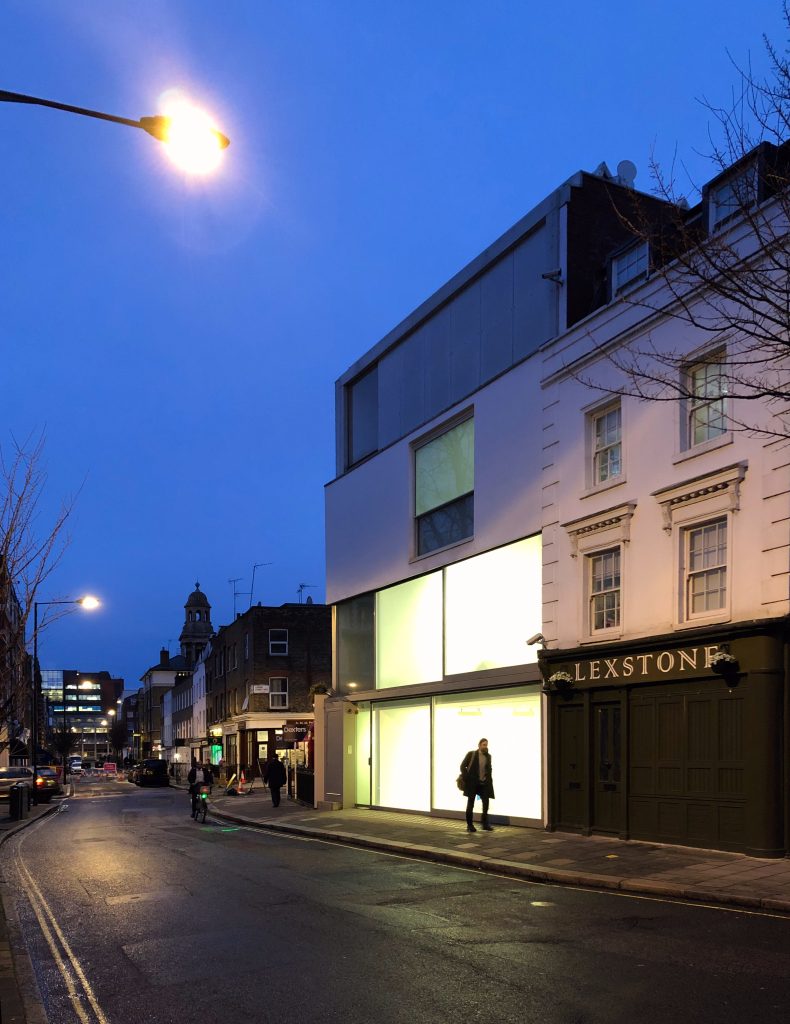
Lisson Gallery, Bell Street, London (1992)m by Tony Fretton Architects
Are you using any new design techniques, such as AI?
I’m very positive about the possibilities of AI within the design process. I’m not interested in using it to cut corners, but to add corners. I understand it as a working surface, almost like a cutting mat. It’s somewhere you can lay things out, test ideas, and make a mess.
‘I use AI as a working surface, almost like a cutting mat’
I don’t see AI as something opposed to craft. Craft isn’t a fixed technique. It’s a way of working based on attention and judgement. In that sense, AI can become part of the same process, another material to work with rather than something that sits outside it.
In architecture, we tend to expect technology to deliver certainty. What interests me more is whether it can introduce instability in a productive way, supporting slower, more attentive and more experiential forms of making.
How are you marketing yourselves?
Most opportunities are coming through casual conversations rather than formal routes. I’m interested in talking to people who feel passionate about what they do. Many of those encounters happen naturally through exhibitions, pop-ups and cultural events, often with people working across different creative fields. That overlap feels very aligned with the studio, and it’s usually where things begin.
Alongside architecture, we see photography, writing and graphic design as part of the studio itself, so sharing work feels natural rather than strategic. We’ve started doing this through our website, journal and Instagram. Anyone curious is very welcome to follow along. It should be a fun 2026.
Website www.apricotsquare.co.uk
Instagram @apricot.square