
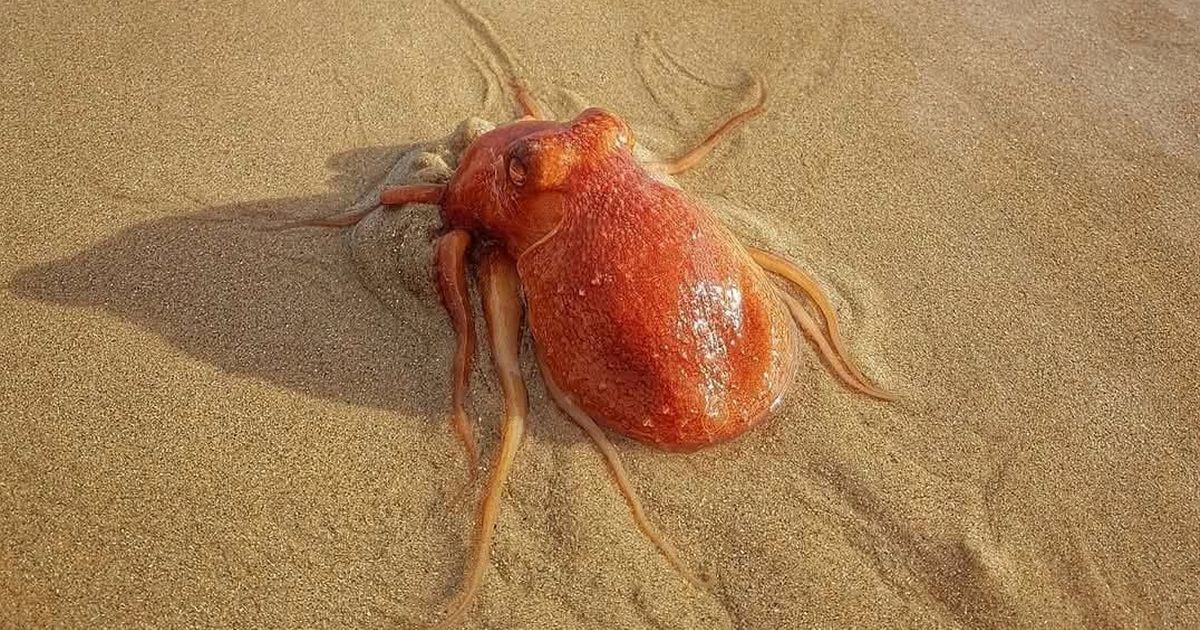
An eyewitness who took the images said the creature changed colour before sinking into the sand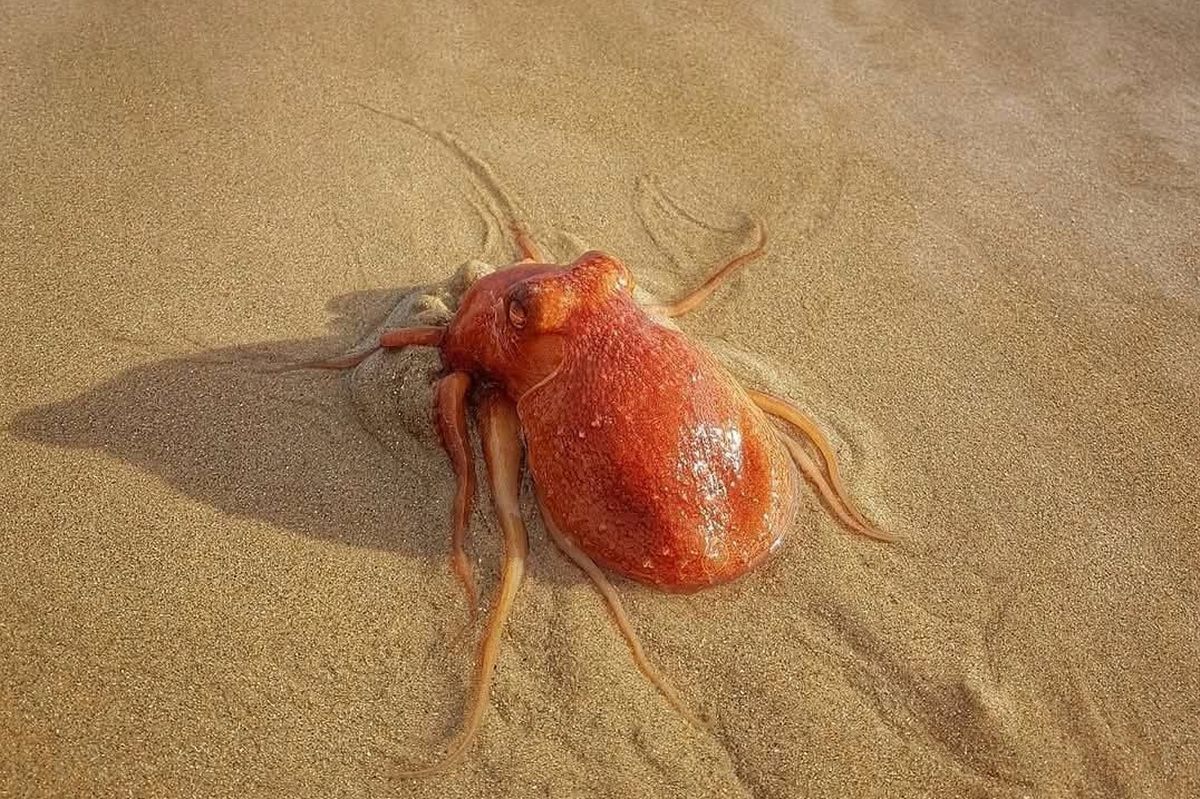
The octopus was spotted on North Beach in Tenby(Image: Hidden Pembrokeshire – Gareth Davies Photography)
A photographer was enjoying a walk on a beach in Pembrokeshire this week when he stumbled across an octopus. Gareth Davies, who runs the Hidden Pembrokeshire Facebook page, spotted the bright orange creature partially buried in the sand on Tenby’s North Beach on Sunday.
People were so surprised about Gareth’s discovery that some questioned whether his images were real at first. Others said how incredible the find was and how lucky Gareth was to see the octopus up close.
He said: “I love seaside walks because you never know what might turn up to surprise you. I certainly didn’t expect to come across this beautiful octopus at low tide on North Beach in Tenby.”
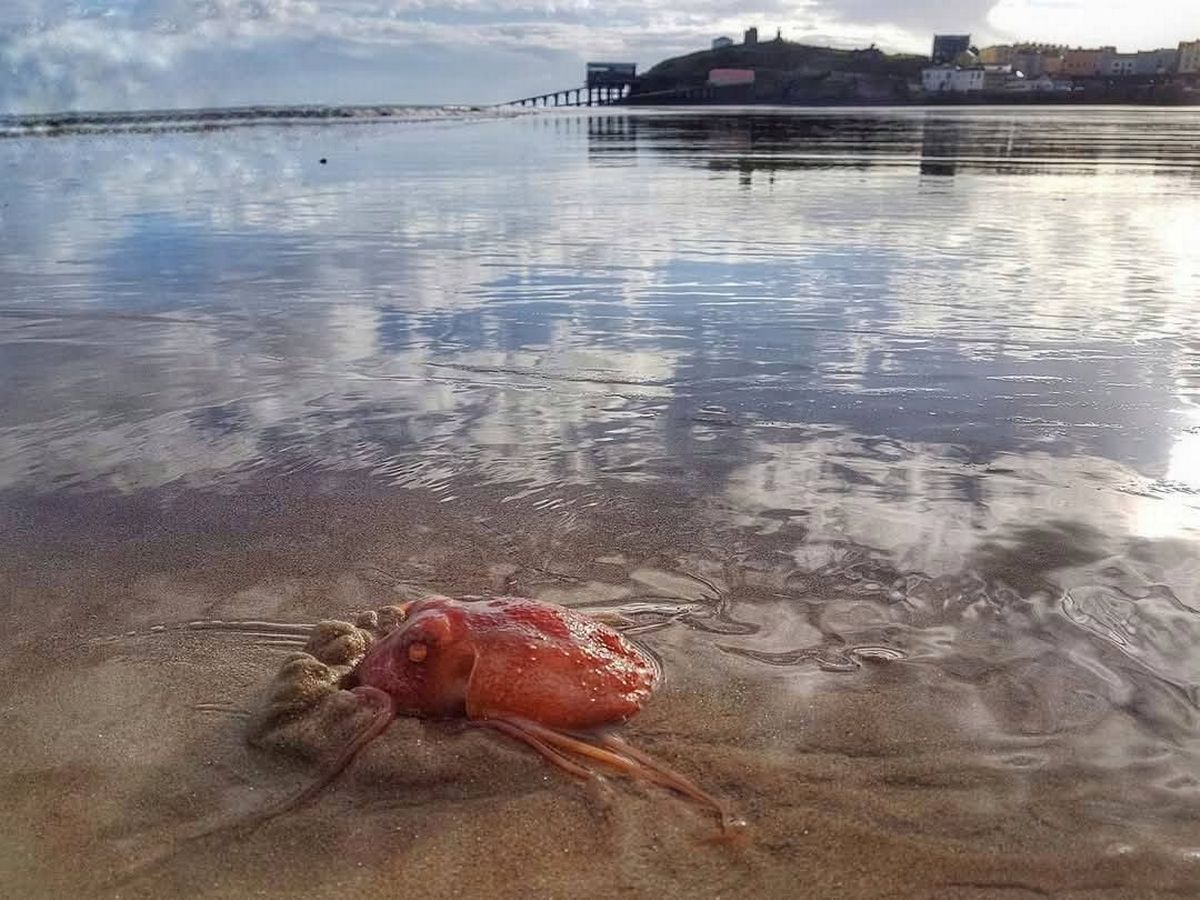
Gareth Davies was shocked to see the remarkable animal on the beach(Image: Hidden Pembrokeshire – Gareth Davies Photography)
He added that it was “fascinating” to watch the octopus begin to bury itself in the sand and change colour. “With the tide returning quickly, it soon vanished from sight,” he said.
The octopus is likely of the curled or common variety. Curled octopus, also known as lesser octopus, can be found in the UK as well as European beaches. They live in shallow waters and feed on other marine creatures such as fish, crabs, shrimp, clams and mussels.
On occasion these creatures will use their camouflage abilities to change colour quickly. The curled octopus is very elusive and can spend most of the day hiding between rocks with its tentacles curled up.
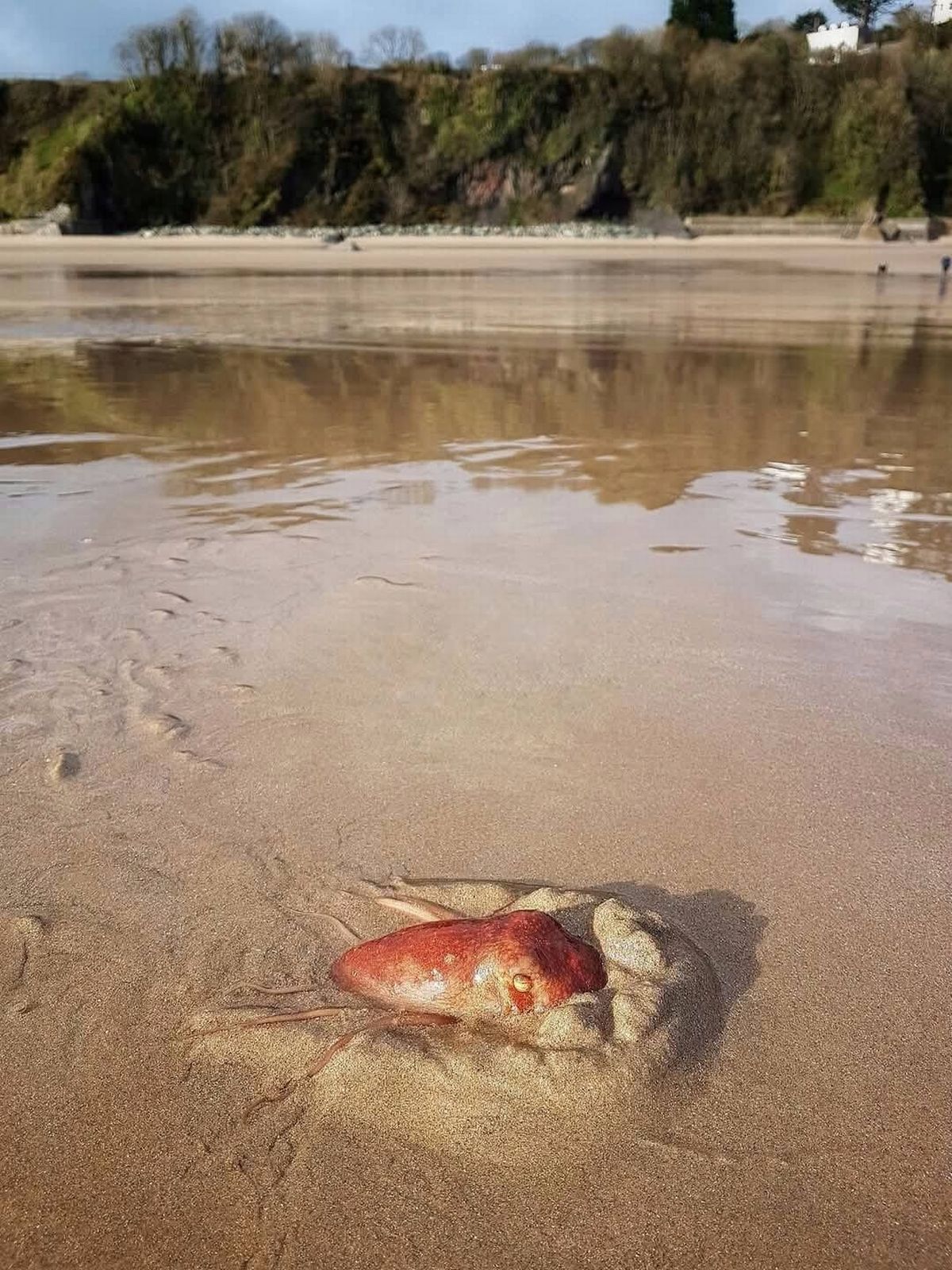
He added that it was ‘fascinating’ to watch the octopus begin to bury itself in the sand and change colour(Image: Hidden Pembrokeshire – Gareth Davies Photography)
The common octopus is a rarer sight on UK beaches. They tend to be larger than the curled octopi and also have two rows of suckers rather than just one.
This species also has the ability to change colour depending on the environment. Like other octopi, soft, bag-like bodies allow them to squeeze into the smallest spaces, helping them avoid predators or ambush prey.