
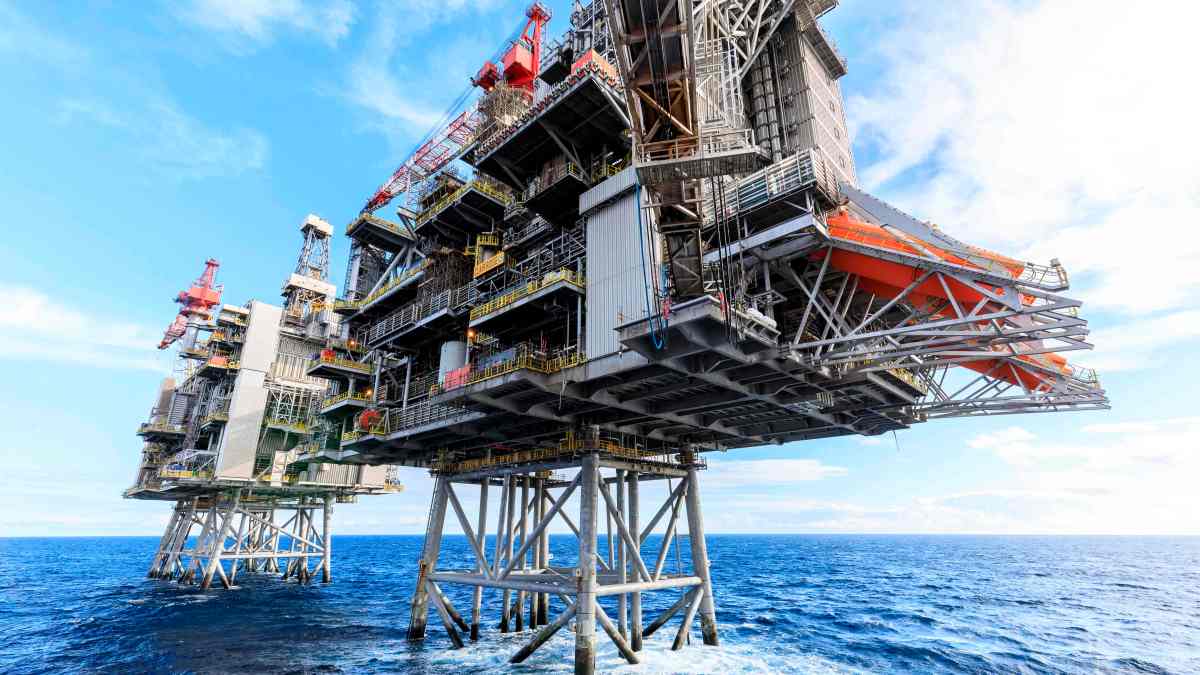
President Trump has renewed his attack on government plans to phase out the production of North Sea oil and gas, claiming that the UK has more than 500 years of supply that could still be extracted.
As part of a wide ranging attack on Europe the president used his address to the World Economic Forum in Davos to claim that British ministers had imposed environmental restrictions and taxes that made it “impossible” for oil companies to drill new fields.
He blamed rising UK debt on the move towards clean power saying that the “more windmills a country has, the more money that country loses”.
Trump has long been a critic of the government’s policy not to allow new licences to explore potential future oil and gas fields in the North Sea, telling Sir Keir Starmer in September that it was a “great asset” that the UK should exploit.
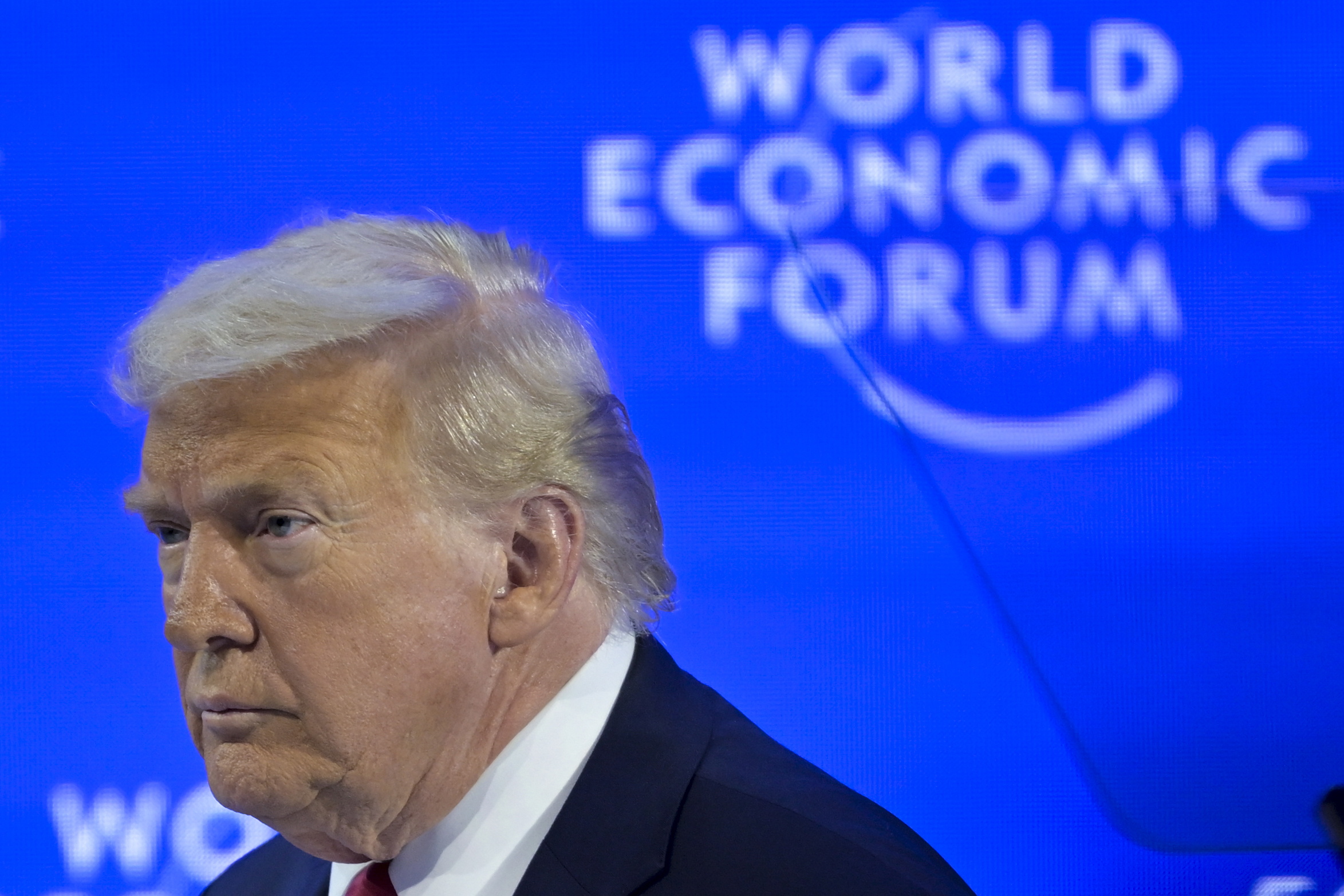
President Trump in Davos
EPA/GIAN EHRENZELLER
But in Davos he went further, making a series of claims about the basin and the UK tax regime.
“The United Kingdom produces just one third of the total energy that it did in 1999,” he told the gathering of business leaders. “They’re sitting on top of the North Sea, one of the greatest reserves anywhere in the world. But they don’t use it.
“And they like to say, ‘Well, you know, that’s depleted.’ It’s not depleted. It’s got 500 years. They haven’t even found the oil. The North Sea is incredible.
“They don’t let anybody drill. Environmentally, they don’t let them drill. They make it impossible for the oil companies to go. They take 92 per cent of the revenues. So the oil companies say, ‘we can’t do it’.”
UK government figures show that UK energy production fell from an all-time high of about 290 million tonnes of oil equivalent in 1999 to about 100 tonnes in 2023 — broadly in line with Trump’s claim that the UK produces only about a third of the energy it did at the turn of the century.
However, critics say this is because the North Sea is a mature field with dwindling reserves that are more expensive to extract.
Last year the North Sea Transition Authority estimated that there were about 2.9 billion barrels of proven and probable oil (or gas equivalent) left in UK waters, with a further 10 billion barrels of potential reserves from parts of continental shelf that have yet to be explored.
Since production began in the late 1960s around 48 billion barrels of oil or gas equivalent has been extracted — suggesting that Trump’s claims the area has a further 500 years worth of supply are far-fetched.
“The UK has already produced around 94 per cent of the economically recoverable oil in the North Sea,” said Guy Prince from the Carbon Tracker think tank. “At current production rates of around 400 million barrels a year, that equates to roughly seven years of output — not anything closer to 500.”
Trump also claimed the UK government taxes 92 per cent of North Sea oil and gas revenues. Under the Energy Profits Levy the effective headline rate of tax is set at 78 per cent of profits.

An offshore oil exploration rig in the North Sea
GEORGE STEINMETZ/CORBI
Trump also directed his criticism at wind energy, suggesting it was behind rising consumer energy costs.
“There are windmills all over Europe. There are windmills all over the place, and they are losers,” he said.
• Businesses urge fast track for new North Sea fiscal regime
“One thing I’ve noticed is that the more windmills a country has, the more money that country loses and the worse that country is doing.”
The Department for Energy Security and Net Zero said: “We will pursue an energy policy that is right for our national self-interest.
“For the UK, this means getting off the fossil fuel rollercoaster, which makes us a price taker, and instead having clean homegrown power which we control.”