
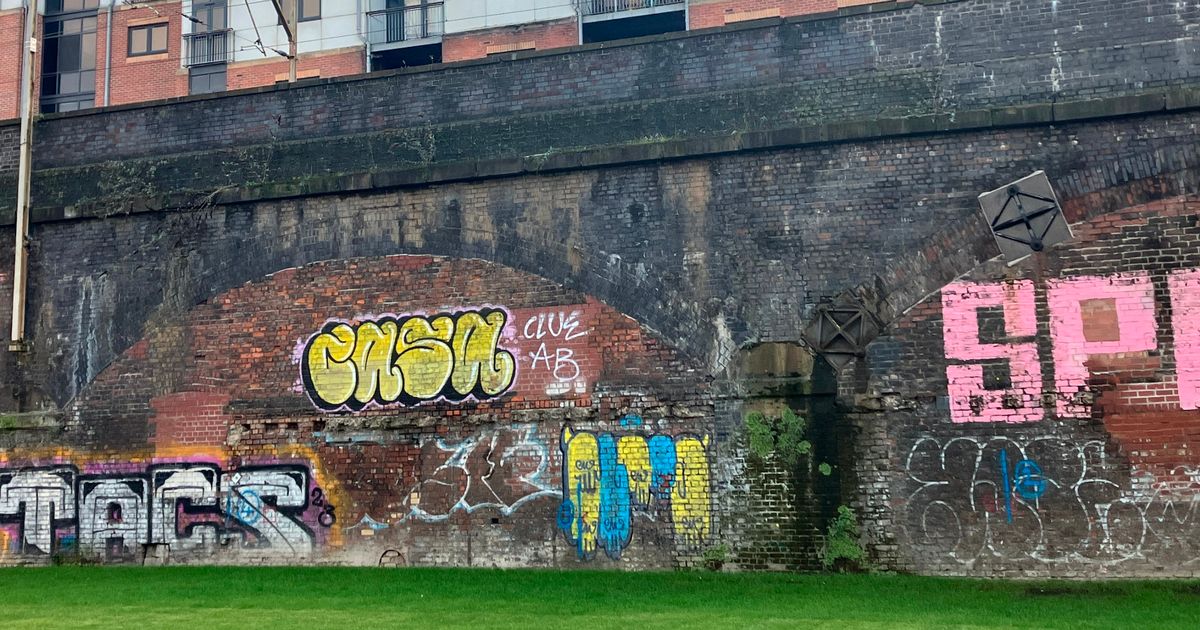
Investigating where people on the streets of Manchester draw the line between art and vandalism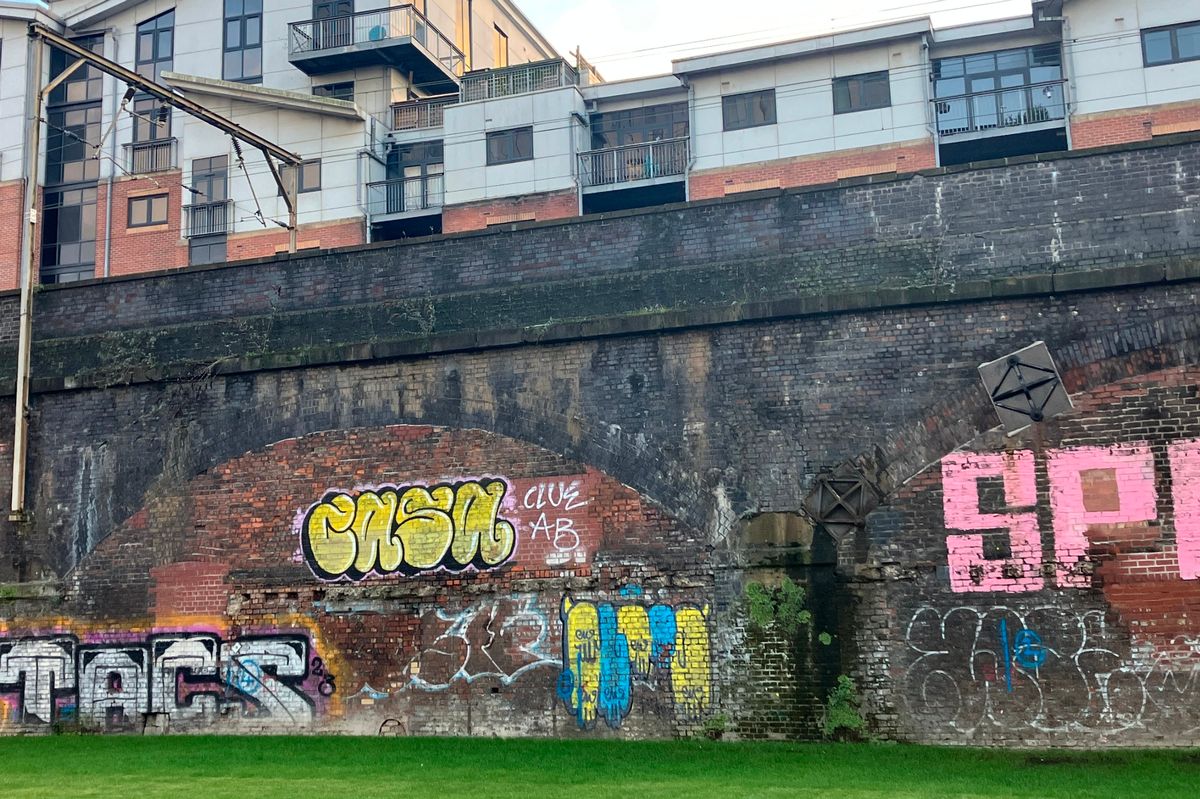
Graffiti on Whitworth Street West(Image: MEN)
Wandering around the city centre, it’s impossible to miss the endless rotation of spray-painted imagery that adorns many of its walls and buildings.
Being met by graffiti around almost every turn is inevitable. What is much less of a guarantee, however, is how Mancunians will feel about it.
Studies on the UK’s best street art cities rank Manchester in the top fives this decade. And murals in the Northern Quarter remain some of the most photographed on social media, with companies like Netflix even commissioning walls in the past.
But last year the council received 1,878 graffiti reports, the three areas privy to most complaints being Piccadilly with 482 incidents, Deansgate with 309, and Withington with 118. Amongst recent graffiti removal plans, a £17,000 clean-up of Slate Wharf marks Manchester Council’s ‘biggest intervention’ to date in the matter.
The Manchester Evening News spoke to locals living and working near the spray-painted streets, calling into question how the council’s ‘war on graffiti’ will be perceived.
 Graffiti – Art or Vandalism? We asked for your thoughts on Manchester’s graffiti
For many, the spontaneous nature of graffiti makes it an attraction in certain corners of the city. Products consultant Matthew, 37, was particularly enthusiastic about its presence around canal areas.

Matthew, 37, products consultant(Image: MEN)
“I think it’s important to have space for those bigger pieces that display dynamism and range of colour, which can sometimes feel animated in their style,” he told the M.E.N. “Particularly when you walk along the canal from Castlefield to Old Trafford, it makes the walk even more special to me.”
However, the practice of graffiti ‘tagging’ proved unpopular with almost everyone. Dennis, 26, being one of many to single it out: “Graffiti’s always been part of Manchester’s culture, but when it’s just someone’s name or some sort of gang sign, then it’s too much.”
Josh, 26, who also lives near Deansgate-Castlefield tram stop, added: “I think [the council’s] going in the right direction, they could spend more money on making the aesthetics of the streets better for sure.”
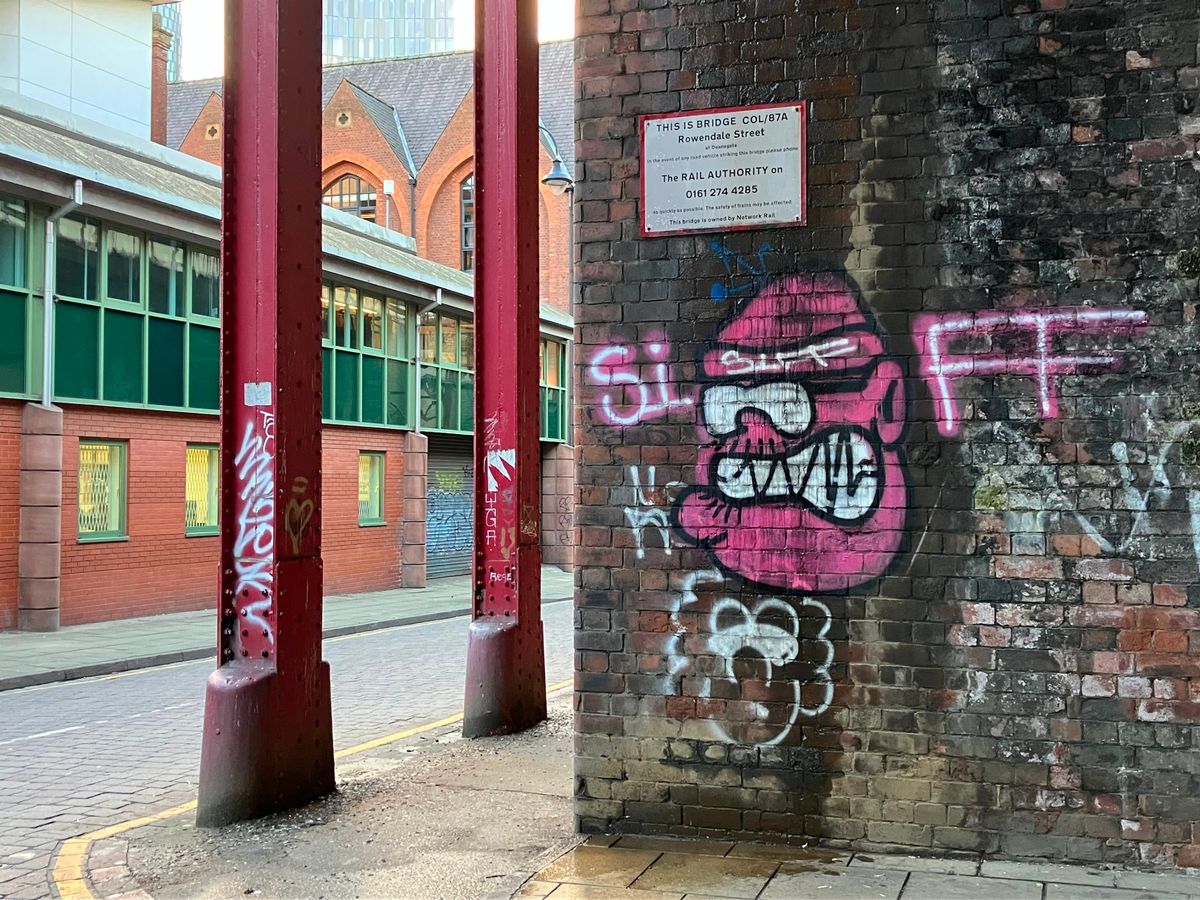
Graffiti in Deansgate Castlefield(Image: MEN)
It’s thought the council will target tagging in future clean ups, however concerns were raised over who gets to decide who calls the shots on what’s defined as tagging.
A street artist operating in the area, who wished to remain anonymous, called the council’s approach ‘short sighted’ in a statement for the M.E.N: “I’ve been stopped in the street by the council while creating street art and warned that I could get into trouble, yet the same artwork has later been shared by the council on their own Instagram to promote Manchester as a vibrant, creative city.
“Street art is a huge part of what draws people to areas like the Northern Quarter. It brings character, culture, tourism and a sense of identity that can’t be manufactured.
“Instead of spending more public money on cleaning up art, the council should be thinking about how that budget could be used to support and amplify local artists, commission legal walls, and genuinely invest in creativity.”

Dennis, 26 (left) and Josh, 26 (right)(Image: MEN)
Masters journalism student, Stella, 21, shared a similar view on commissioning more murals. She explained: “If local people in an area want it gone, I think that’s fair enough, but say especially around Castlefield, a lot of the graffiti’s really nice.
“Obviously if it’s on people’s property that’s a different story, but say it’s on a bridge or a public wall, I don’t really see a problem with that.” Stella is from Bristol, which most commonly outranked Manchester in aforementioned street art studies.

Stella, 21, Masters journalism student(Image: MEN)
Tilly, 25, was another local that expressed love for the variety in the medium’s expression: “There’s making a smart choice about what it is and where it is. I think you can have your political vandalism, depending on what the building is, but there’s a time and a place for specific words, depending on say if it’s near a school.”
She added: “I think we need a clean-up effort in the sense that we’re currently stood next to a very mucky canal. Clean up the canal, clean up the fly tipping. A bit of words on walls isn’t actually harming anyone, whereas that is pollution.”
A council spokesperson previously outlined how concerned residents can help remove graffiti. They said: “Graffiti art and street art styles make up a huge part of Manchester’s character and presence. However, graffiti that is not commissioned or agreed can negatively impact the appearance of our city and the sense of community we all share.
“If you see graffiti that needs to be removed, information on where to report graffiti throughout the city can be found on the council website. Any graffiti on council land, assets or buildings can be reported for removal on the council website. Where the landowner is unknown, we can also further investigate this.
“For graffiti in public transport areas, please contact Transport for Greater Manchester through their website or customer service line.”