
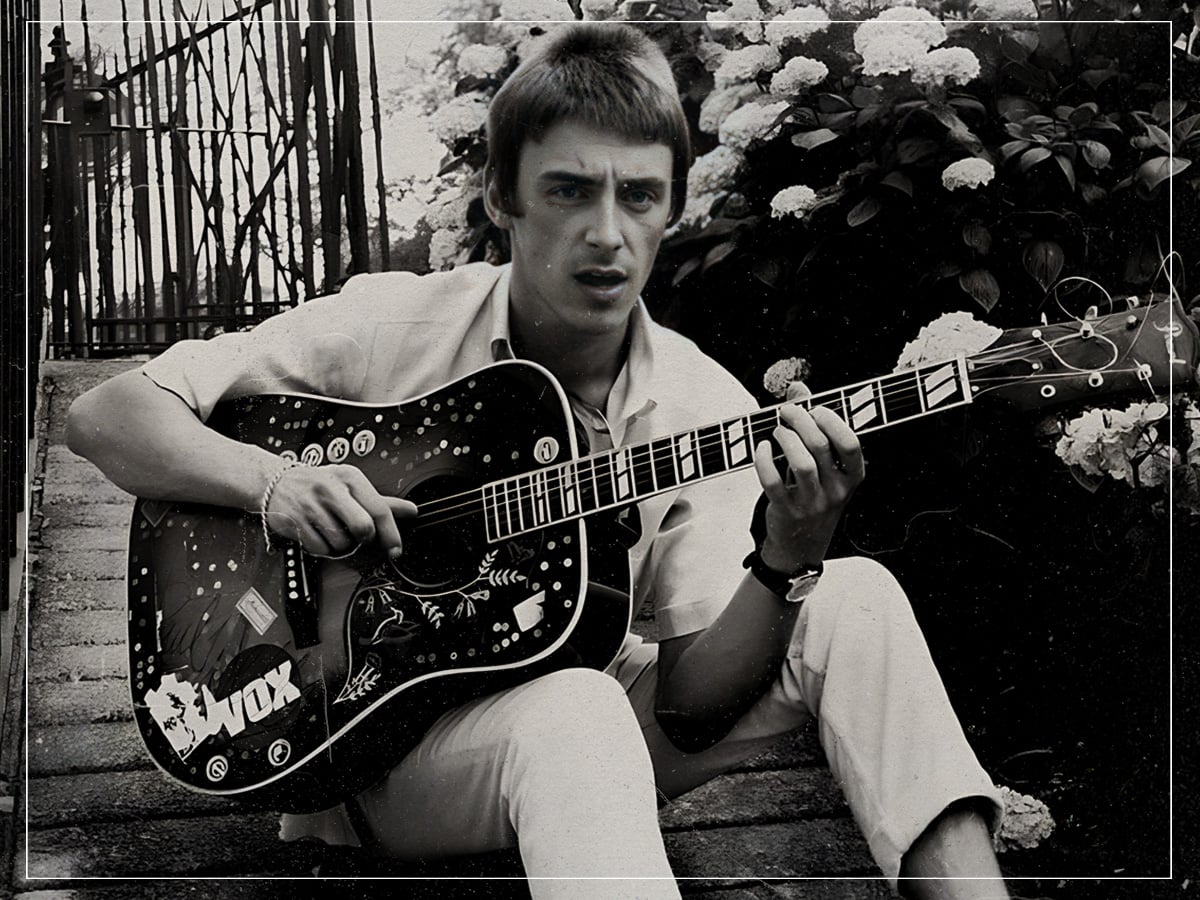
(Credits: Far Out / Alamy)
Thu 22 January 2026 9:14, UK
Bridging the gap between the punk and mod scenes might have been a stroke of utter genius, but above all, Paul Weller pierced the British cultural fabric with his lyrics.
His generation’s embodiment of the great songwriters of the 1960s who inspired him – The Who, The Kinks, The Rolling Stones, Small Faces and The Beatles – he packaged a tangible essence of this distinctive isle into social commentaries and stories about the everyday that spoke to listeners in ways that the Sex Pistols and The Clash never could.
Perhaps he was less directly rebellious than those acts, but like Gil Scott-Heron before him, he sensed that the real revolution would not be televised (although he was open to the possibility that it may well occur in your front room – ala ‘That’s Entertainment’). Paul Weller knows people, and he adores songs that share that empathetic insight.
Sure, Weller’s haircut has been replicated to ridiculous levels by his diehard fans, and he might have called The Cure’s Robert Smith a “fucking fat cunt”, but there’s no doubt that Woking’s finest export pulled up a place at the table next to his heroes decades ago. He might also have been in his pomp during the late 1970s and across the 1980s, but there’s a reason why the likes of ‘That’s Entertainment, ‘The Eton Rifles’, ‘Going Underground’, and many of The Jam’s other cuts strike something deep within British listeners decades later.
As Weller is hailed as the instigator of the mod revival, and due to his aesthetics, he has often been deemed a diehard acolyte of Small Faces and The Who, original innovators of the form. Yet, according to the former Jam and Style Council leader, another world-famous band made the most significant impact on him: The Beatles.
Of course, Weller is a big fan of all of the British Invasion, but speaking to The Guardian in 1995, he said, “the biggest influence has to be the Beatles.” Like everyone his age, they were the first act that made him sit up and take notice of the craft of songwriting, something which would begin to make more sense as he got older. It’s a lifelong affinity, too; he was six when he first fell in love with them.
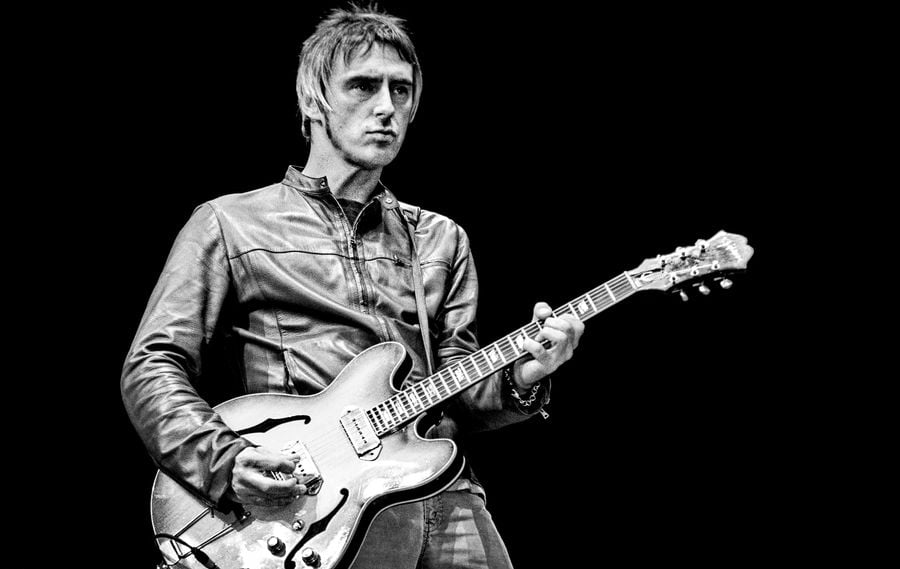 Paul Weller giving it some welly. (Credit: Alamy)
To a working-class lad, they made it clear that a future in pop was actually possible. As even Jimmy Page put it, “The Beatles’ popularity established that you didn’t need to be highly educated to enjoy art or make it in pop music.” In fact, aligning with Weller’s penchant for pop that reveals the true heart of the proletariat, this could be a stirring advantage.
Symptomatic of his era, Weller “became a total Beatles fanatic.” As anyone who’s enamoured with a band does, he loved everything about them, which laid the foundations of the man and songwriter he is today. It wasn’t only the music but also the clothes, attitude, and frontman John Lennon’s forward-thinking thoughts on religion, politics, and culture at large. As we have seen countless times, The Beatles were much more than just a band for him; they were pathfinders.
So, what lyric moved Weller the most?
Weller first saw them on television, performing at a Royal Command Performance at the London Palladium in 1964, when Beatlemania was in full swing. The band still had their iconic mop-tops, and they were on the verge of their truly pioneering phase. Surprisingly, considering his famously sharp aesthetic, Weller also said he preferred their look from 1966 onwards when they grew their hair out and started experimenting with drugs. It just struck a chord; it was so different but so important.
In light of this surprising revelation that the suave Weller actually preferred the later, shaggy Beatles aesthetic, it will come as little surprise to find out that his “favourite Beatles record” is the 1967 double A-Side, ‘Strawberry Fields Forever’ and ‘Penny Lane’. The narcotic former track contains his favourite lyrics.
In the HMV My Inspiration series, he revealed that the following section of ‘Strawberry Fields Forever’ is his favourite of all time, reaching a level of greatness hitherto unknown in pop: “No one I think is in my tree / I mean, it must be high or low / That is, you can’t, you know, tune in, but it’s alright / That is, I think it’s not too bad”.
Given his tendency to write about the real, this surreal segment seems like a strange choice for Weller. However, what the words, the song, and this era of The Beatles represented is the most vital thing to remember. Before they grew their hair and took drugs, everyone loved them, including his mother, but they all went off them as soon as any hint of experimentalism and transgression entered the picture. After that, they were the band of the younger generation, who would take their lessons in myriad ways over the coming decades. And acts like The Jam are proof of their piercing influence. “Not too bad,” indeed.
Related Topics