
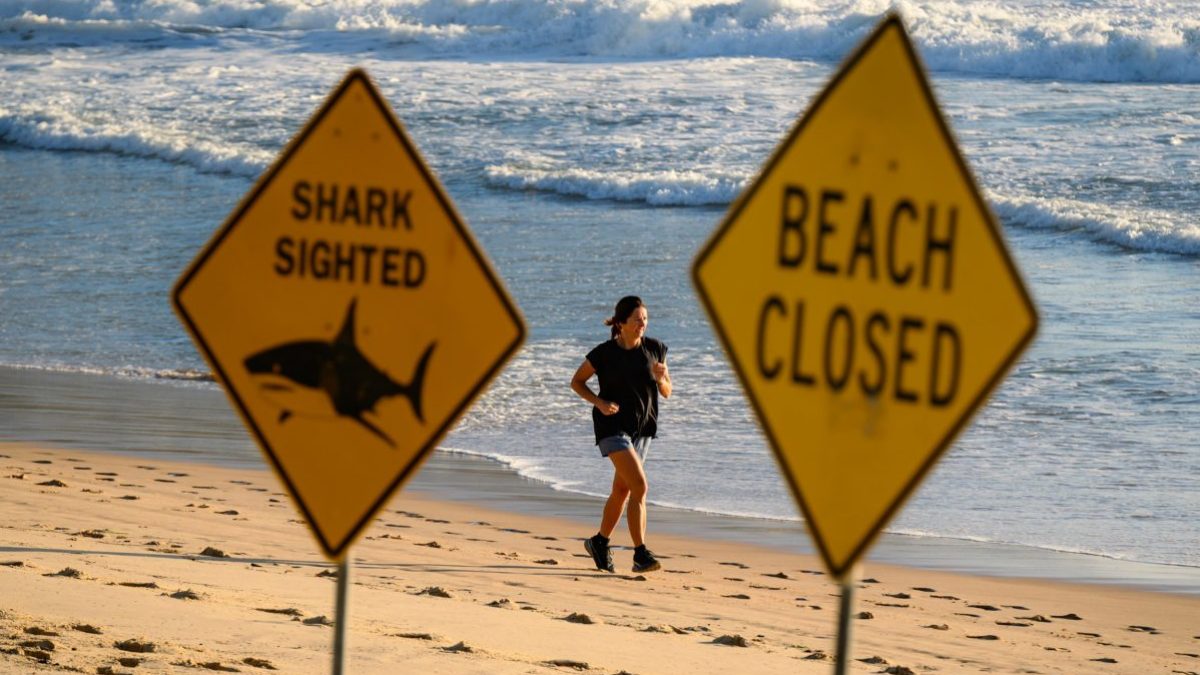
A booming population, heavy rain and climate change are among the factors leading to a rise in attacks, say experts
Four people were attacked by sharks in the space of 48 hours in the Australian state of New South Wales this week.
Dozens of beaches have been closed, including several beaches in Sydney where three of the attacks took place.
The number of attacks is unprecedented. Experts say intense rainfall created the perfect conditions for the marine predators, while there is also some evidence that climate change could be contributing to a rising number of shark attacks in Australia.
New FeatureIn ShortQuick Stories. Same trusted journalism.
What has happened in Sydney?
The first attack took place on Sunday afternoon when a shark bit the legs of a boy swimming with friends in Sydney. In a statement, his family said he remains unresponsive in a coma and is unlikely to regain consciousness.
On Monday, an 11-year-old escaped injury after a shark bit his surfboard. Later that day a 27-year-old surfer was taken to the hospital with “life-changing” injuries after his leg was bitten. Both incidents took place in the Sydney area.
On Tuesday morning a surfer was knocked off his board near Point Plomer Beach, 200 miles north of Sydney. He was taken to hospital with minor injuries.
Is it safe to swim in the water?
All the attacks are believed to have been carried out by bull sharks, which are responsible for a quarter of all fatal bites, according to the Australian Shark Incident Database.
“January and February are the months where bull sharks are most common around Sydney,” said Daryl McPhee, a shark expert based at Bond University in Australia’s Gold Coast.
McPhee explained that a “significant rain event” had “created murky water” that attracts the fish that bull sharks feed on.
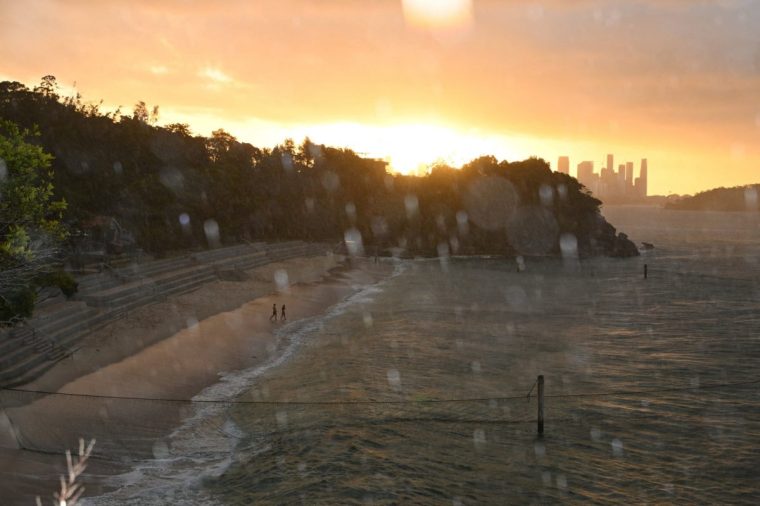 A view of rainfall over Shark Beach in Sydney the day before a shark attack (Photographer: Flavio Brancaleone/Reuters)
Robert Harcourt, a shark expert from Sydney’s Macquarie University, said male bull sharks respond “promptly” to high rainfall and move upstream to estuarine areas within a day a heavy rain in anticipation of the arrival of bony fish, which typically arrive a few days later.
“So the very high rainfall means the bull sharks are feeding inside the harbour in very turbid water – often in very shallow inshore areas – coinciding with where people swim and surf,” he said.
Dozens of beaches were temporarily closed in response to the attacks.
However, the likelihood of being bitten by a shark at Australia’s beaches is still very rare.
In 2024, the most recent year for which there is complete data, there were 13 “unprovoked”’ shark bites resulting in zero deaths. In the same year 150 people died from drowning off Australia’s coastline.
Authorities recommend a number of actions to reduce the chance of falling victim to a shark attack. These include staying close to shore, avoiding swimming after heavy rainfall, and avoiding swimming around dusk or dawn when sharks are most active.
Are shark attacks on the rise?
Shark attacks are on the rise in Australia, particularly within the state of New South Wales.
In the decade to 2025 there were 262 attacks, the Shark Incident Database shows. It records both “provoked” and “unprovoked” incidents, compared to 194 the previous decade.
A total of 82 incidents were recorded in the 1990s and 65 in the 1980s.
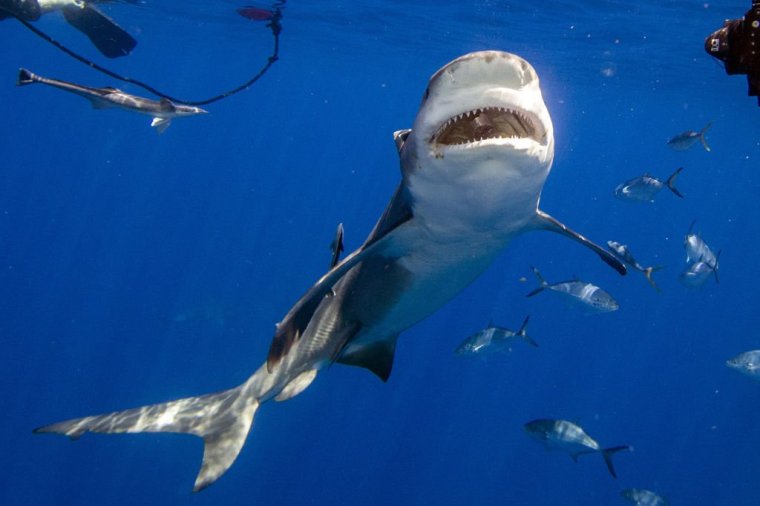 The recent attacks in Sydney are believed to have been carried out by bull sharks (Photo: Joseph Prezioso/Anadolu)
Since the 80s, Australia’s coastal population has boomed, which could explain the increase in attacks, as well as better reporting standards.
Globally the evidence is less clear. In 2024, 47 unprovoked shark attacks were recorded worldwide, the lowest in nearly 30 years according to the International Shark Attack File, compiled by Florida’s Museum of Natural History.
There are still many limitations to the data, as reporting standards vary across countries and time, making it hard to identify long-term trends.
Your next read

Is climate change causing sharks to attack?
There is also evidence that climate change is altering the behaviour of sharks and could be in a factor in the increasing number of attacks in Australia.
Bull sharks are typically only found around Sydney when the water is above 19°C. These temperatures are being recorded for longer in New South Wales owing to rising sea temperatures.
“Climate change means bull and tiger sharks are expanding their range south and also staying longer in the more southerly regions, which coincides with where there are higher human populations, so increased probability of shark-human interactions,” Barcourt explained.
Research published last year by Nicolas Lubitz, an ecologist at James Cook University, found that migrating bull sharks had added a day onto their summer stay in Sydney for each year over a 15-year period, meaning a shark was staying 15 days longer in 2024 than they were in 2009.