

It would seem that, as far as the 2026 Six Nations is concerned, all roads lead to France. The 8.10pm finale to the tournament on March 14 is no coincidence. It’s the blockbuster, the one for which ITV has paid the big bucks.
England have won their past 11 Test matches since losing to Ireland in last season’s first Six Nations Saturday. Expectations are great. England expects. Anything but a grand slam would be a failure. That’s what Stephen Jones, my dear friend, would be writing. God bless, I can see him pounding the keyboards.
In the context of the forthcoming tournament, he is quite possibly right. Even with the borderline lunacy of omitting the broken-field genius of Damien Penaud, France have the depths of talent to catch fire against a grand-slam seeking England in Saint-Denis and extinguish English dreams. They have the players to beat any side in the world — including South Africa — in front of their anthem-singing supporters.
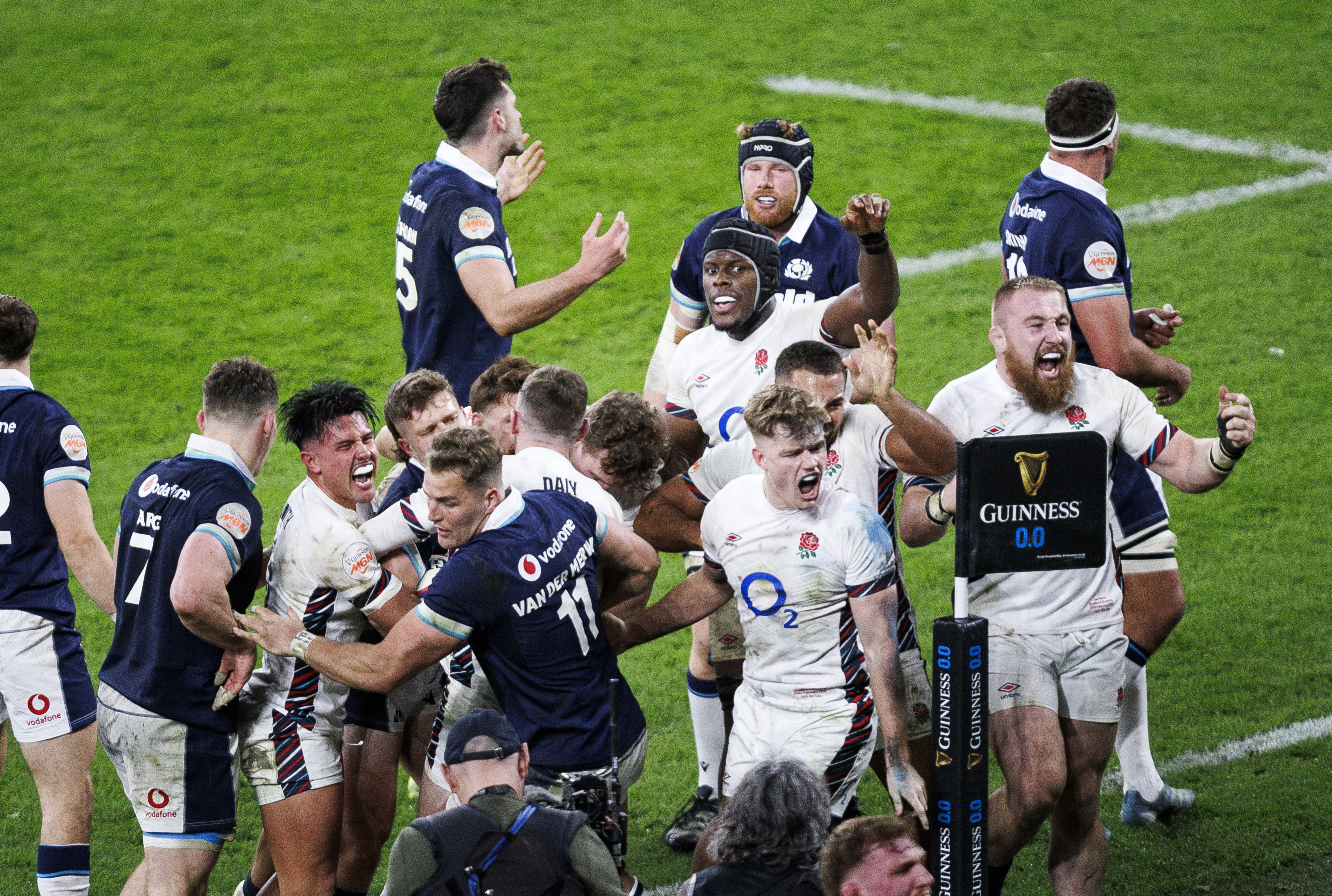
England scraped past Scotland during the 2025 Six Nations with a 16-15 win at Twickenham
BOB BRADFORD/GETTY
Matthieu Jalibert is up there with Sacha Feinberg-Mngomezulu as one of the world’s most dazzling fly halves. Romain Ntamack is injured, so the possibility of France’s best No10 playing grows, although there’s always Thomas Ramos as another option to keep the Bordeaux man sitting on the sidelines — or watching from a wine bar in his home city.
France have the players to beat anyone. I’ll say it again. But in Fabien Galthié, do they have the coach? I digress. Whatever the state of France, come the 15th and final match of the 2026 Six Nations, they could beat any England team, no matter how good.
Indeed, were England to go there in search of what would be a 16th straight win, and a grand slam, defeat would gall Steve Borthwick’s team but it wouldn’t set them back on the way to next year’s World Cup. In 2002 Serge Betsen hunted Jonny Wilkinson down. England learnt their lessons, won the grand slam the next season and the World Cup in November, beating France in the semi-final en route to the northern hemisphere’s only global success to date.
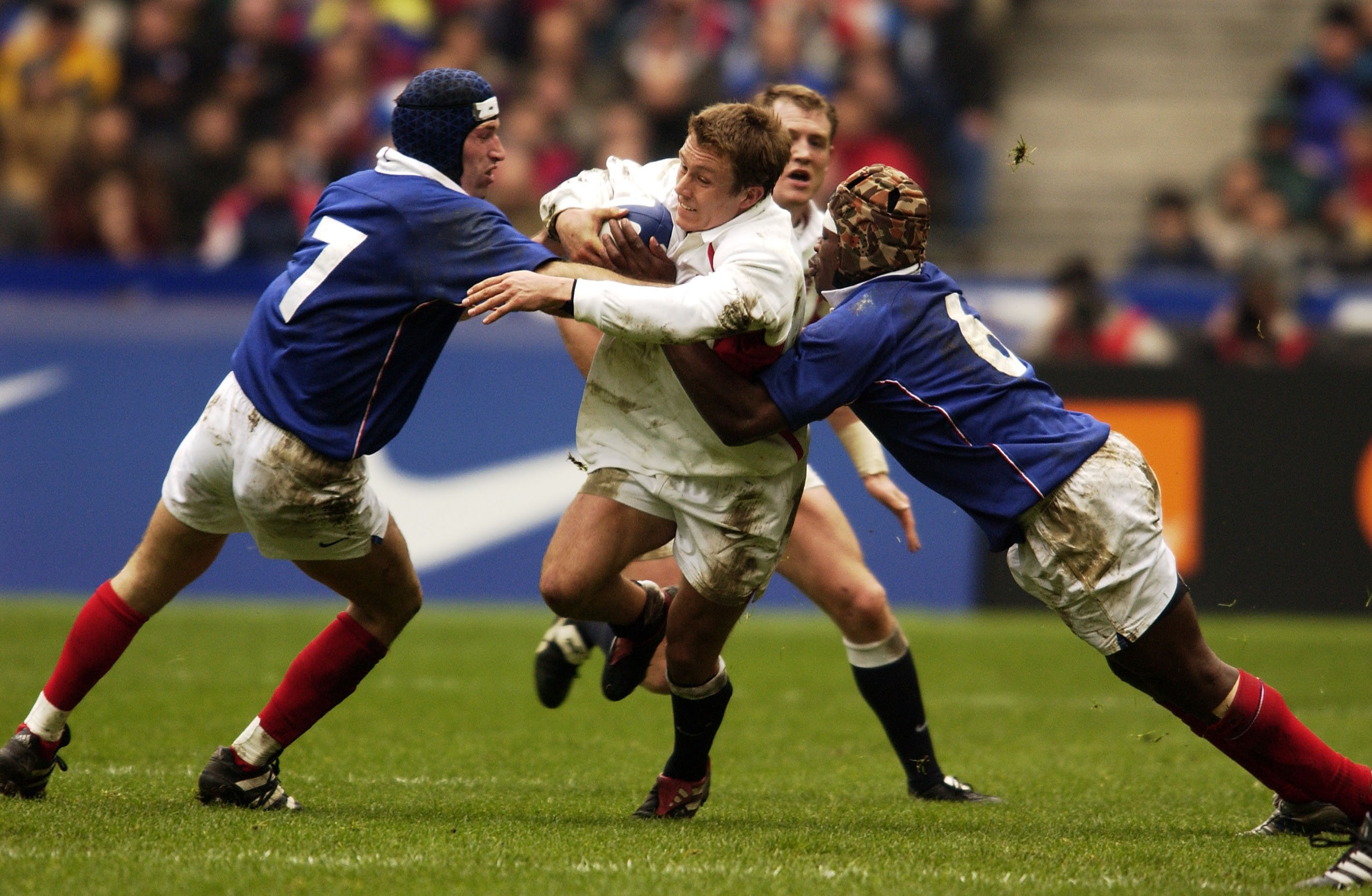
Betsen, right, gave Wilkinson a tough time in 2002
TIMES PHOTOGRAPHER MARC ASPLAND
To some supporters the very thought of a “good” loss is anathema, but to a coach with global aspirations the more bitter the pill, the better the long-term prognosis can prove — think Betsen in 2002. The acid test for England — the game that will prove whether they are in a position to hunt down the dominant Springboks — is Scotland.
February 14 is the afternoon when the temperature of Borthwick’s England will be tested. England may have ended their four-match losing streak against the Scots with victory at Twickenham last season, but Scotland were still the better team. It is time for England to not only beat Gregor Townsend’s team but to beat them well, in Edinburgh, if they are to prove themselves. The comprehensive defeat of New Zealand in the autumn needs to be backed up against the yardstick of Scotland.
Given that Ireland must travel to Twickenham, Wales are in a state of rugby civil war and Italy are improving but not that quickly, defeating Scotland is the key that opens the door to a grand-slam shot for England in Paris. But it is more important than a step on the way. It is the game that measures the real improvement. Or not.
Last year’s win was little more than a sigh of relief for the men in white. That was an England team taking their first tentative steps towards their position now as contenders for second-best team in the world. When Ireland were scrapping with the big boys — before losing their past four games against South Africa, New Zealand and France — they were putting Scotland away with an intense excellence. What England would have given for the overwhelming quality of their 32-18 win at Murrayfield in 2025.
That was Ireland’s 11th consecutive victory over their Celtic rivals. New Zealand have never lost to Scotland. Since becoming world champions in 2019 the Springboks have faced them three times and won by 15 points twice and then by 17 last time out in 2024. France have won the teams’ past four Six Nations clashes. You don’t lose to Scotland if you are at — or near — the top of the tree.
England have been grubbing around at the roots. It is true, though, that the Calcutta Cup comes with a rivalry that adds an extra spice to these fixtures. Perhaps this justifies England’s awful record compared to the world’s other leading Test teams?
On that basis, how do we assess the rivalry when England were building towards their solitary World Cup triumph? In 2001 England won 43-3. The next year they kept Scotland to a mere three points again but “only” scored 29, as Jason Robinson ran amok in Edinburgh. In 2003 the result was another rout, this time 40-9.

England need their attacking threats, such as Tommy Freeman, to take inspiration from Robinson’s 2002 display
PATRICK KHACHFE/GETTY
England were ambitious. Brian Ashton, the backs coach, had ignited that ambition and with it an until-then unseen England attacking game. In 2002 I clearly remember the shrug of heads in a post-match press conference when Sir Clive Woodward refused to get carried away by the 50 points England had put on Wales because the opposition lacked quality. Honesty wasn’t the done thing, but the commitment to excellence was necessary if England were going to win a World Cup.
France on the final night? It could go either way, but it is time to set that scoreboard ticking in Scotland. It is a glorious opportunity. Scotland, with Glasgow Warriors the second-best team behind Bordeaux Bègles in the Champions Cup, are deserving of respect from England. Even the most begrudging critic of Finn Russell knows he can run and manage a game, as shown by his beautiful Calcutta Cup performances in recent years.
Scotland should be no pushover for any but the very best. One almighty shove in Edinburgh, and it is time to make England contenders for the World Cup, win or lose in Paris.