
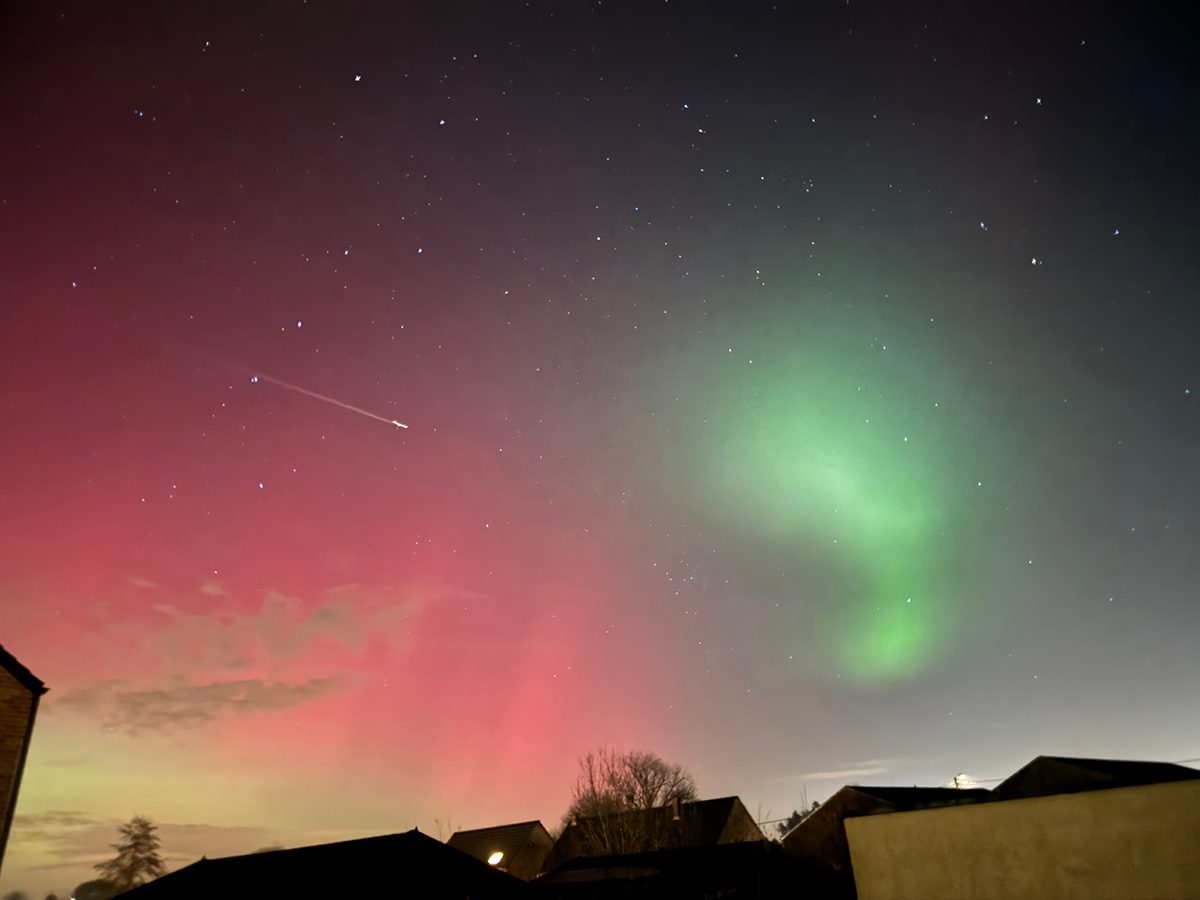
A severe geomagnetic storm is currently underway on the Sun and could lead to displays of aurora tonight, 21 January 2026.
While space weather monitoring bodies say the most intense periods of the storm have passed, and therefore we’ve likely already seen the peak of the display, we could still see aurora this evening.
The solar storm stems from a strong coronal mass ejection – a fierce eruption of plasma and charged particles flowing from the Sun – that struck Earth’s magnetic field at the start of this week.
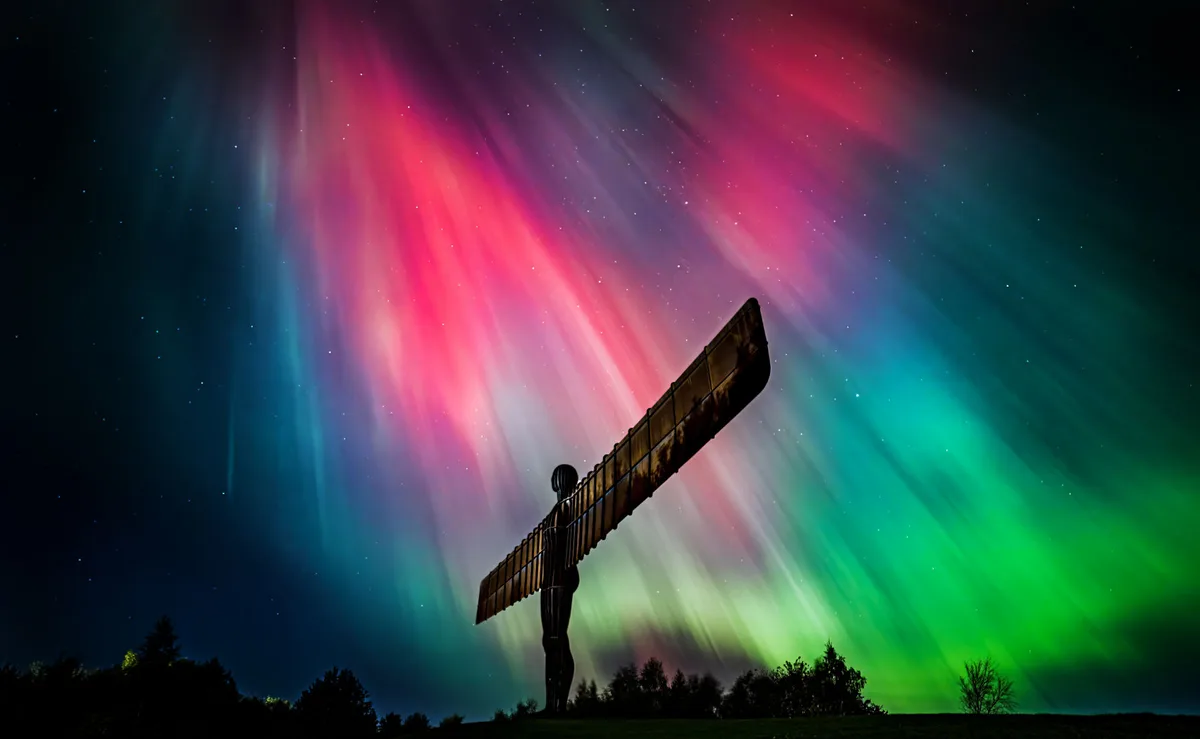 Aurora borealis by Andrew Morkot, Gateshead, Tyne and Wear, UK, 11 October 2024
This has generated a geomagnetic storm categorised as G4, or ‘severe’.
The US Space Weather Prediction Center, run by the National Oceanic and Atmospheric Administration, says G4 storms are powerful enough to affect satellites and communication systems on Earth.
Severe solar storms like this can also generate stunning aurora displays in Earth’s skies.
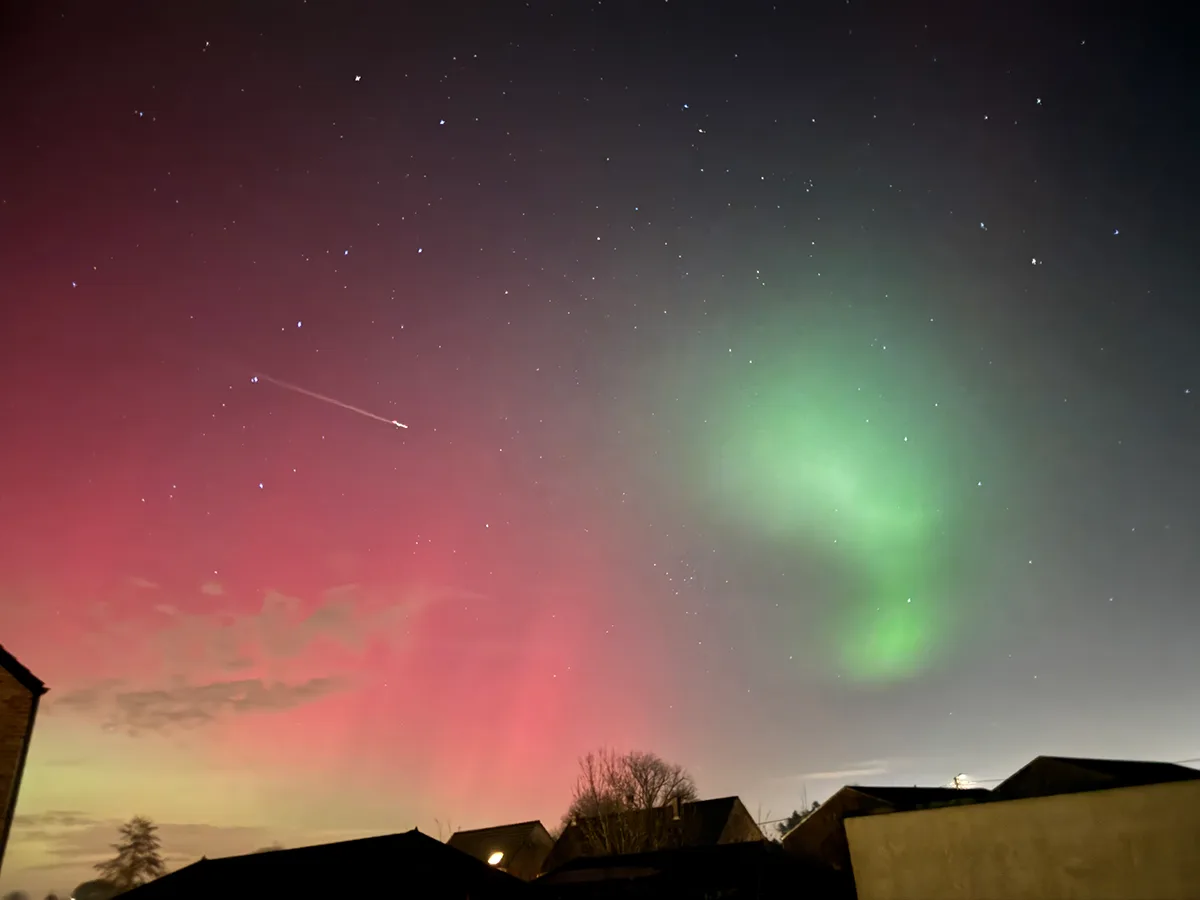 Aurora borealis captured by Julien Wilmotte, Thorembais-Saint-Trond, Belgium, 19 January 2026, 22:59 CET. Equipment: iPhone 15 Pro Max. Exposure: ISO 2500, 10 seconds
A primer on aurora science
An aurora display is generated when streams of energetic particles from the Sun – the solar wind – collide with gases in Earth’s upper atmosphere.
As these energetic particles slam into atoms of oxygen and nitrogen in our atmosphere, those atoms become energised and emit light in colours like green, red and purple. This is what forms the beautiful displays on Earth we call the aurora.
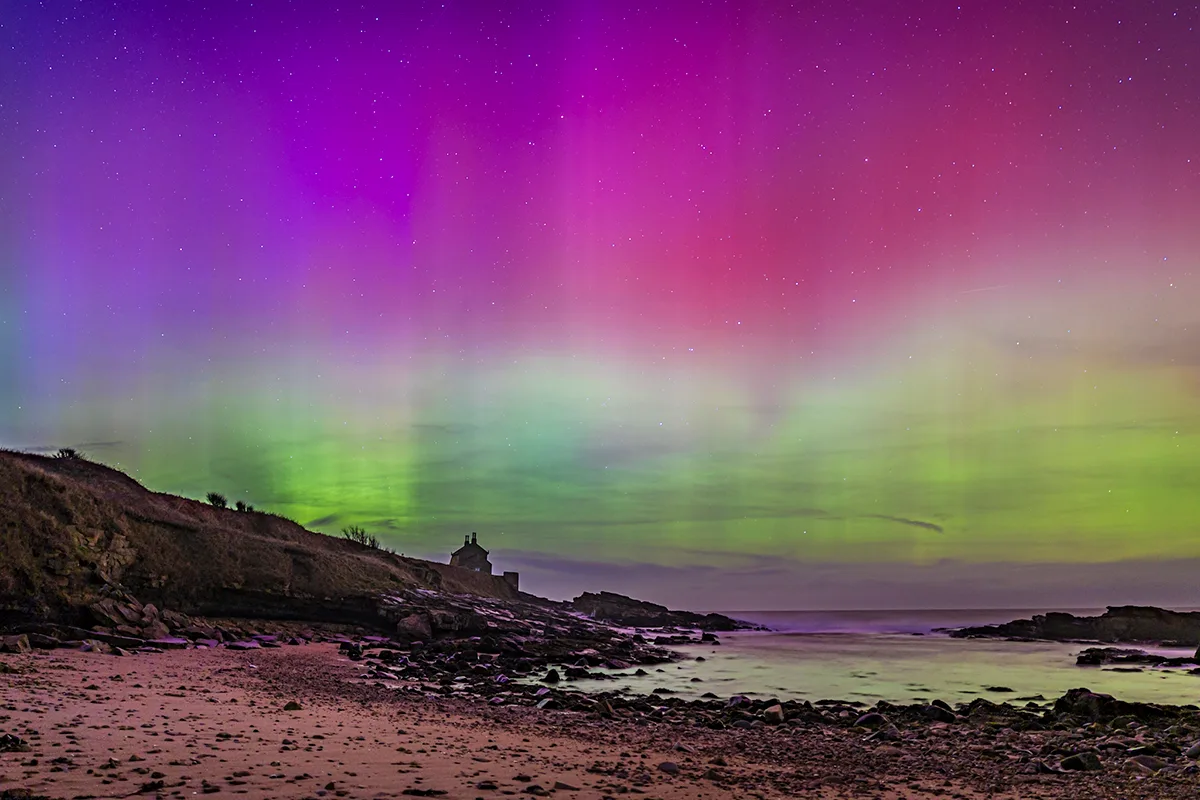 Aurora over Howick Sands beach, Northumberland, 20 January 2026, captured by Tom Wright
Normally, auroral activity is confined to an oval around Earth’s magnetic poles, which is why some of the best places to go aurora-hunting in the Northern Hemisphere are northerly regions like Sweden and Norway.
But when a particularly powerful coronal mass ejection hits Earth’s magnetic field, the aurora may be seen at lower altitudes, making the display visible further south than usual.
The current, ongoing aurora display is a result of an X-class solar flare – the most extreme kind of solar flare – that erupted on 18 January 2026.
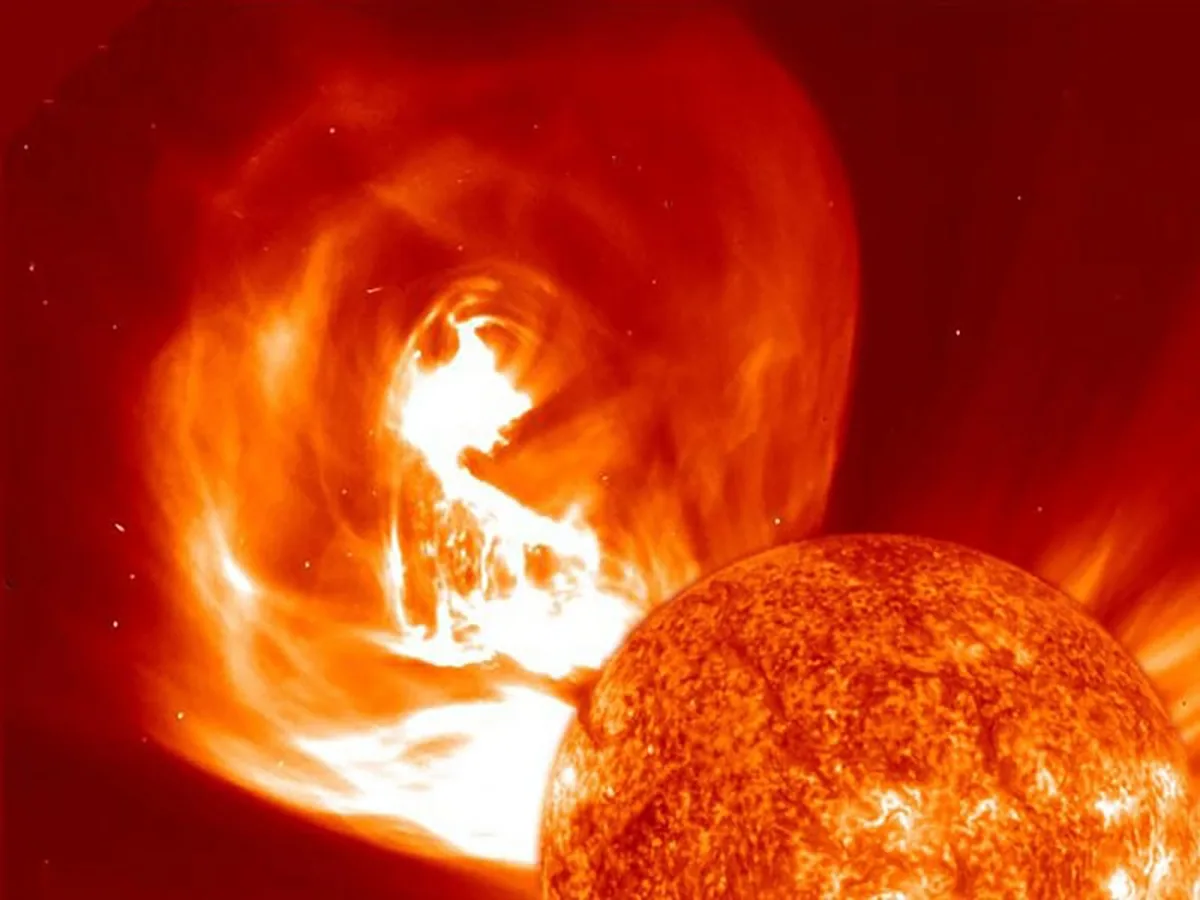 A coronal mass ejection seen by NASA’s Solar and Heliospheric Observatory. Credit: NASA/SOHO
Current conditions
The NOAA Space Weather Prediction Center has officially issued a G4 (Severe) geomagnetic storm alert and confirmed that severe levels were reached early on 20 January as the coronal mass ejection continued to hit Earth’s magnetic field.
G4 storms are strong enough to enhance auroral activity dramatically, but are also capable of affecting satellites, navigation and radio communications on Earth.
While the peak of the solar storm has likely already passed, aurora activity may still be seen over the coming nights.
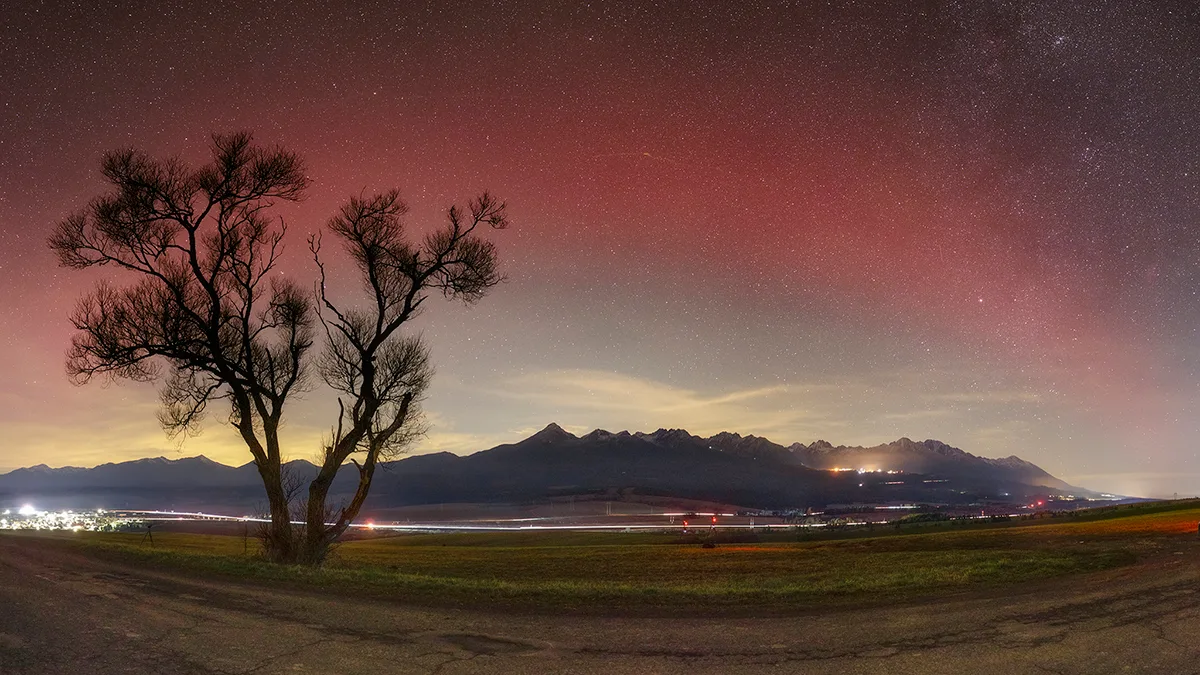 A SAR arc (Stable Auroral Red Arc) over the Tatra Mountains, Slovakia, captured by Ondrej Králik, 12 November 2025. Equipment: Canon EOS 6D DSLR camera, Sigma 24mm, f/1.4@f/2.8, ISO 4000, 13 sec
Seeing the aurora tonight
In the UK
The UK Met Office’s space weather forecasts indicate this solar storm could create conditions favourable for aurora sightings, especially in northern regions such as Scotland, Northern Ireland and the north of England.
Cloud cover remains a factor, however, and widespread cloud and rain across the UK could make aurora spotting difficult for some.
However, breaks in cloud may give amazing views of an auroral display shimmering in the darkness.
In North America
Across Canada and the northern United States, aurorae are expected to be visible well into mid-latitudes tonight.
Forecasts suggest the aurora could be seen from Alaska and northern tier states; possibly even further south.
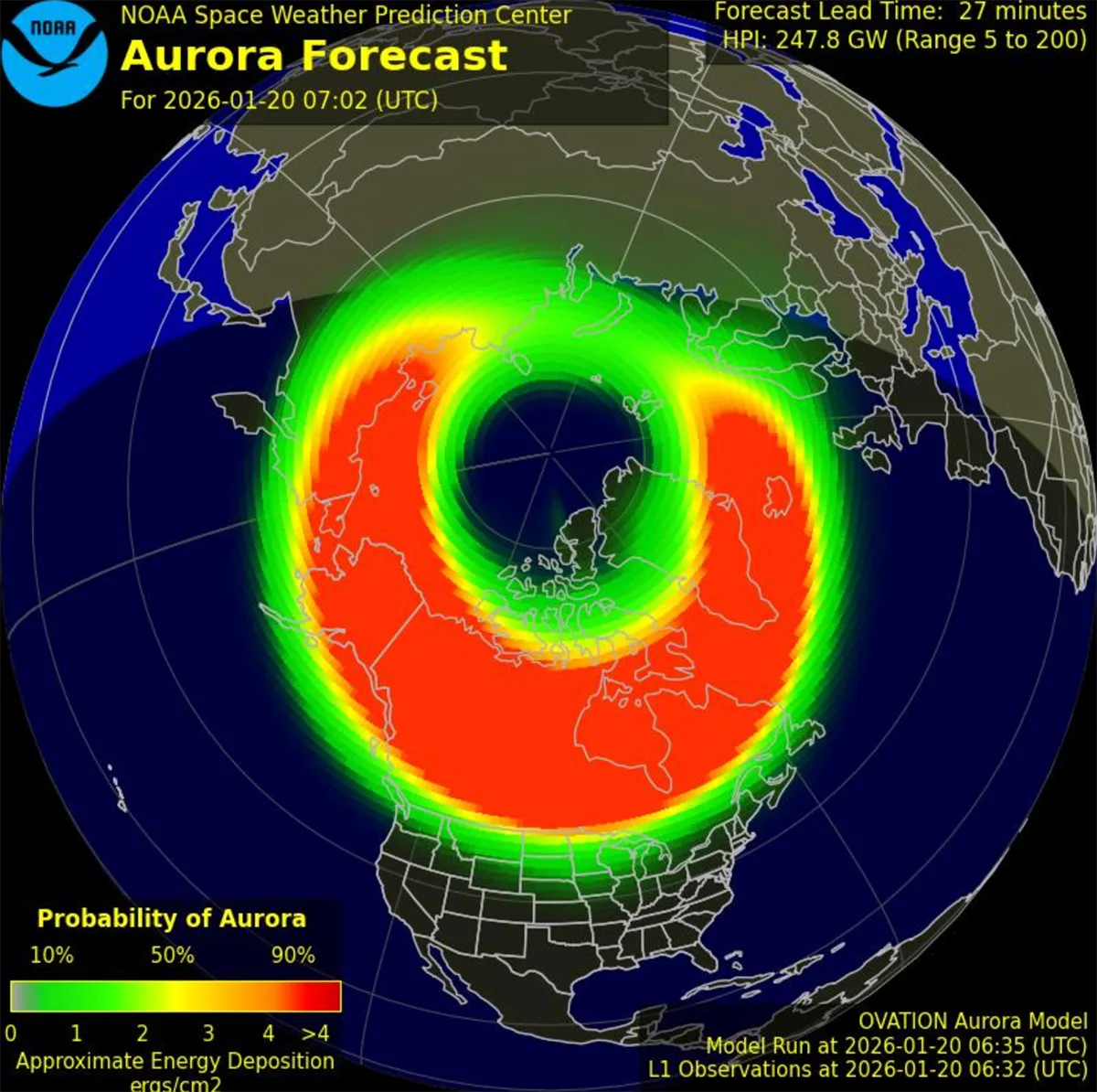 NOAA Space Weather Prediction Center aurora forecast for 20 January 2026. Credit: NOAA
Where and when to Look
We’re just after new Moon, which means the sky will be free from lunar glare, and that’s good news if you’re an aurora observer or photographer.
North is generally the best direction to look for the aurora in the Northern Hemisphere.
In the UK, the best viewing will be between sunset and dawn when the sky is darkest.
In Canada and the USA, look toward the northern horizon after dark. The best time in North America to see the aurora is generally between 22:00 and 02:00, local time.
If you live in a built-up area, get yourself away from tall buildings and artificial lights so you can see the sky more clearly, and you’ll have a better chance of spotting an aurora display.
Resources for predicting an aurora display near you
If you observe or photograph the aurora tonight, get in touch by emailing contactus@skyatnightmagazine.com