
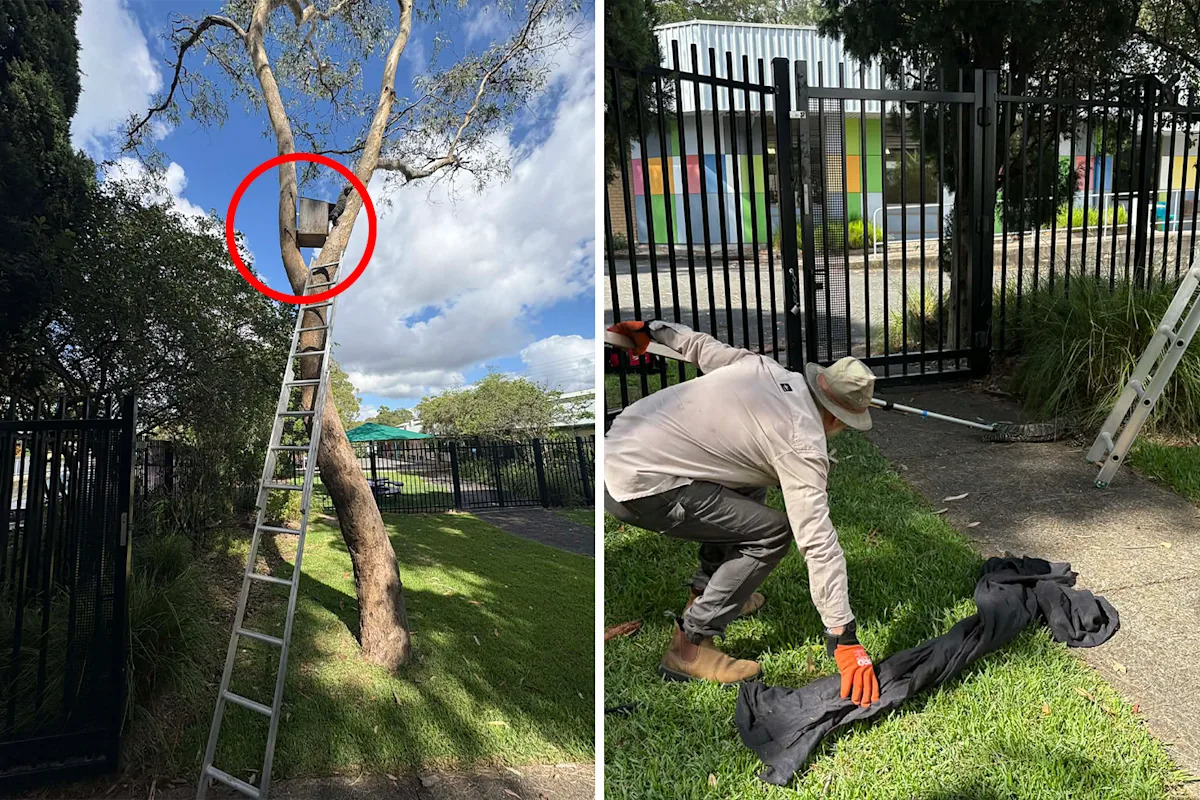
There were concerns eating lunch could soon become dangerous at an Australian school because a massive reptile was scavenging its lawns, looking for dropped sandwiches. It was causing concerns around the campus, even devouring a wild rabbit and the local possum.
On Wednesday, the dead marsupial’s former nesting box, which was secured high in a tree, was now occupied by the culprit, an 80cm-long goanna that was missing a tail.
“He was just getting more bold,” the school’s assistant principal told Yahoo News.
“He was out and around near the staff table, and he hissed at the school’s wellbeing dog.”
The teachers were powerless to stop its antics, so in the morning, during the school holidays when no students were around, they called in an expert for help.
“We quite liked ‘Stumpy’, and enjoyed having him at our site, but it became apparent it would become a potential problem,” the assistant principal added.
“Although we were sad he had to leave, it was the safest thing to do.”
Chris Williams from Sydney’s Urban Reptile Removal arrived at the school on Sydney’s Northern Beaches with a long ladder, a pole and a rope.
While he’s used to handling snakes, it’s goannas — also known as lace monitors — that are a more “serious challenge”.
“They’re incredibly strong, and their claws are formidable. They enable them to climb a tree in seconds, and if they clamp onto you, they do serious damage,” Williams told Yahoo News.
“The tail is also powerful, and they’ll often use it to whip dogs or people if they get too close.”
Reptile’s mouth more dangerous than its claws and tail
But it’s their teeth that are the “real issue”.
Not only is the reptile’s mouth filled with bacteria from eating what Williams describes as “manky, decomposing animals”, but they also have a dangerous venom.
Similar to Indonesia’s famous Komodo dragons, anything bitten by the reptiles will likely become sick from toxins in the saliva, weakening the victim until it becomes easy prey.
“A bite from one of those guys is the gift that keeps on giving,” Williams said.
“If you don’t have serious tendon damage, then you can have a secondary infection, and all sorts of nasty things from a bite.
“They’re by far the most dangerous animal we deal with — give me a brown snake over one of them any day.”
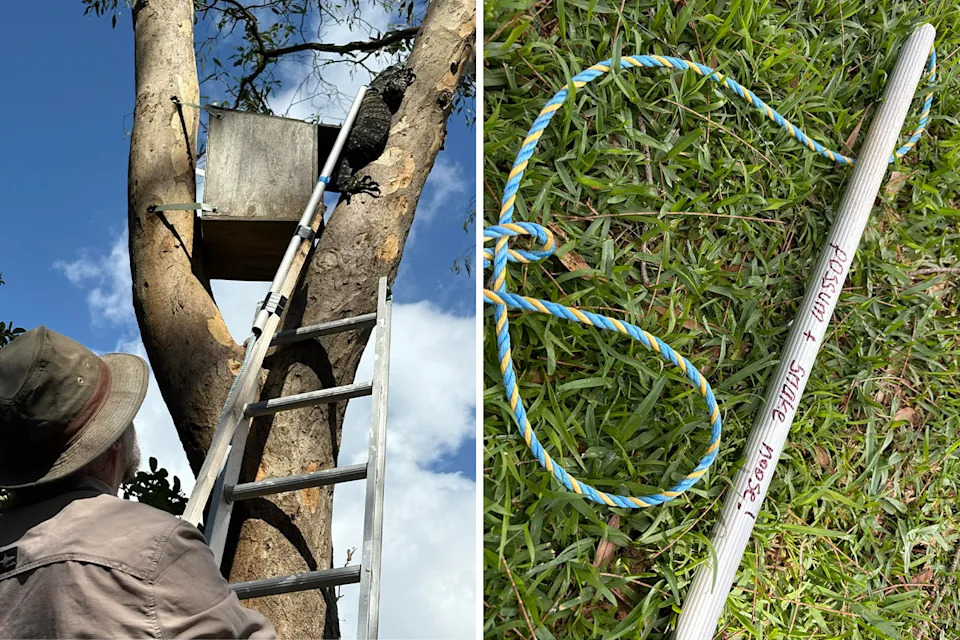
Because the lizard was missing a tail, Williams had to improvise a different method of capture. Source: Urban Reptile Removal
Goanna’s historical injury creates major challenge for expert
When Williams arrived at the school, the goanna was sitting on top of the nesting box.
Ordinarily, his approach would be to grab the whip-like tail, but in the case of the schoolyard lizard, that wasn’t possible because it had somehow been cut off years ago.
The injury would have likely been “horrendous” at the time, and easily been enough to kill a mammal or a bird.
It’s even rare for a hardy goanna to survive losing a tail, because their reproductive organs are in that region.
It was too dangerous to climb up the ladder and grapple with the lizard, so instead, Williams threw a noose around his body and slowly brought him down to the ground.
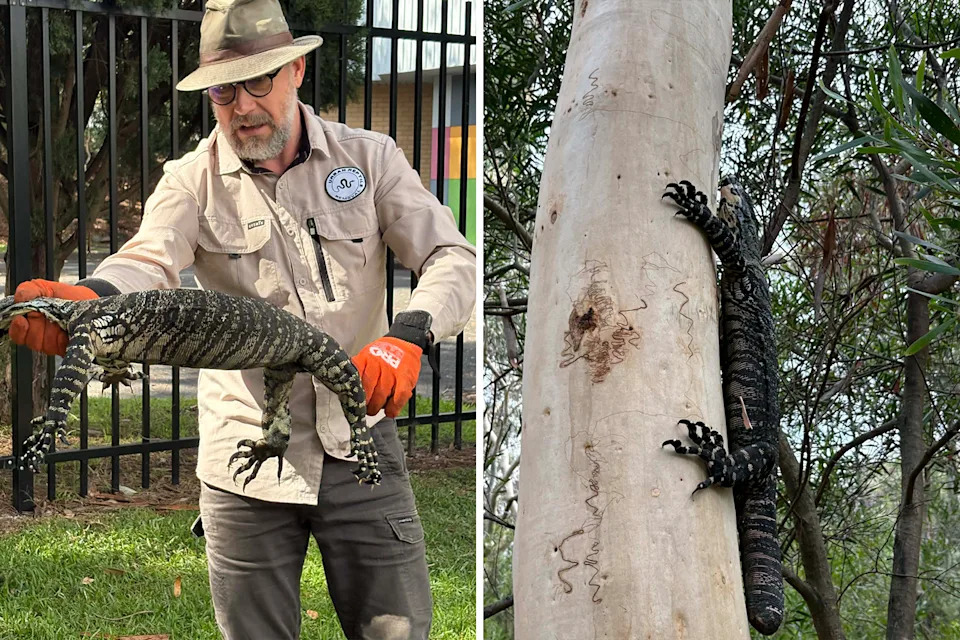
After being captured, the goanna was released in nearby bushland. Source: Urban Reptile Removal
From his size, it’s estimated the goanna was between 20 and 50 years old, and likely knew the area well.
He was bundled up in a bag and taken to nearby bushland and released.
“I didn’t cross any main roads, because I was very conscious of making sure we didn’t put him anywhere that’s going to lead him to being hit by a car,” Williams said.
“Because he’s so distinctive, if he was to make his way back it’ll be pretty apparent it’s him, and I’ll just catch him for free next time.”
Love Australia’s weird and wonderful environment? 🐊🦘😳 Get our new newsletter showcasing the week’s best stories.
