
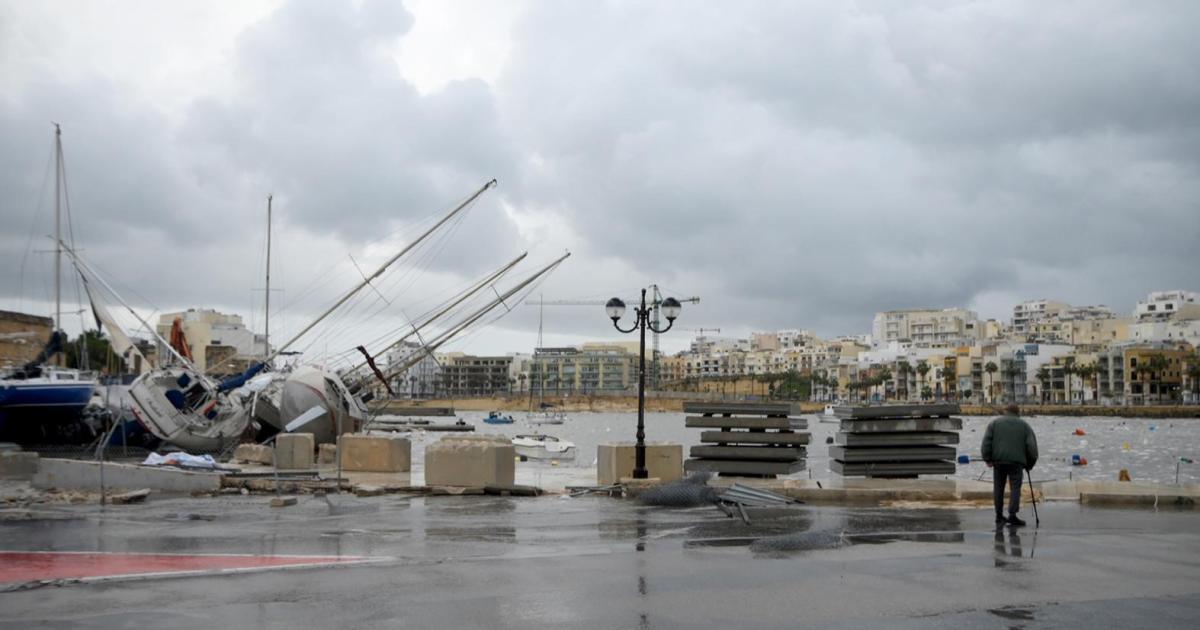
All coastal businesses that took part in a study five years ago said they did not have a long-term contingency plan to address flooding caused by rising sea levels and storm surges.
The study, by the Department of Geography of the University of Malta, found that many businesses did not consider creating such a plan, as they viewed flooding as a “seasonal threat” unlikely to disrupt the peak summer tourism period.
Most suggested it was usually a ‘temporary setback’, study authors Daniel Spiteri and Ritienne Gauci said.
“This reluctance [to have a long-term contingency plan] stems not from ignorance but from the belief that long-term economic benefits outweigh short-term disruptions. Nostalgia, inheritance and tourism demand further reinforce resistance to relocation,” the study said.
Storm Harry leaves trail of destruction across Malta. Video: Antoine Farrugia Lauri
After Storm Harry smashed through coastal businesses on Tuesday, the question arises over whether there is a need to prepare differently in the future.
“Storm Harry definitely increased awareness and concern that this may happen again. Going forward, a plan is needed to better address the financial and social impacts of such disasters through further studies and consultation to strengthen coastal resilience,” Gauci told Times of Malta.
RELATED STORIES
This data was analysed in two studies authored by Spiteri and Gauci titled “Coastal Flood Risks and the Business Community: Stakeholders’ Perception in Malta” (2022) and “Place Attachment and Coastal Flood Risk Perceptions Among Maltese Business Communities” (2025).
To conduct the research, they analysed questionnaire responses from 188 businesses in Gżira (40), Sliema (50), St Julian’s (78), Xlendi (7) and Marsalforn (13). Most businesses were in the hospitality industry, followed by retail.
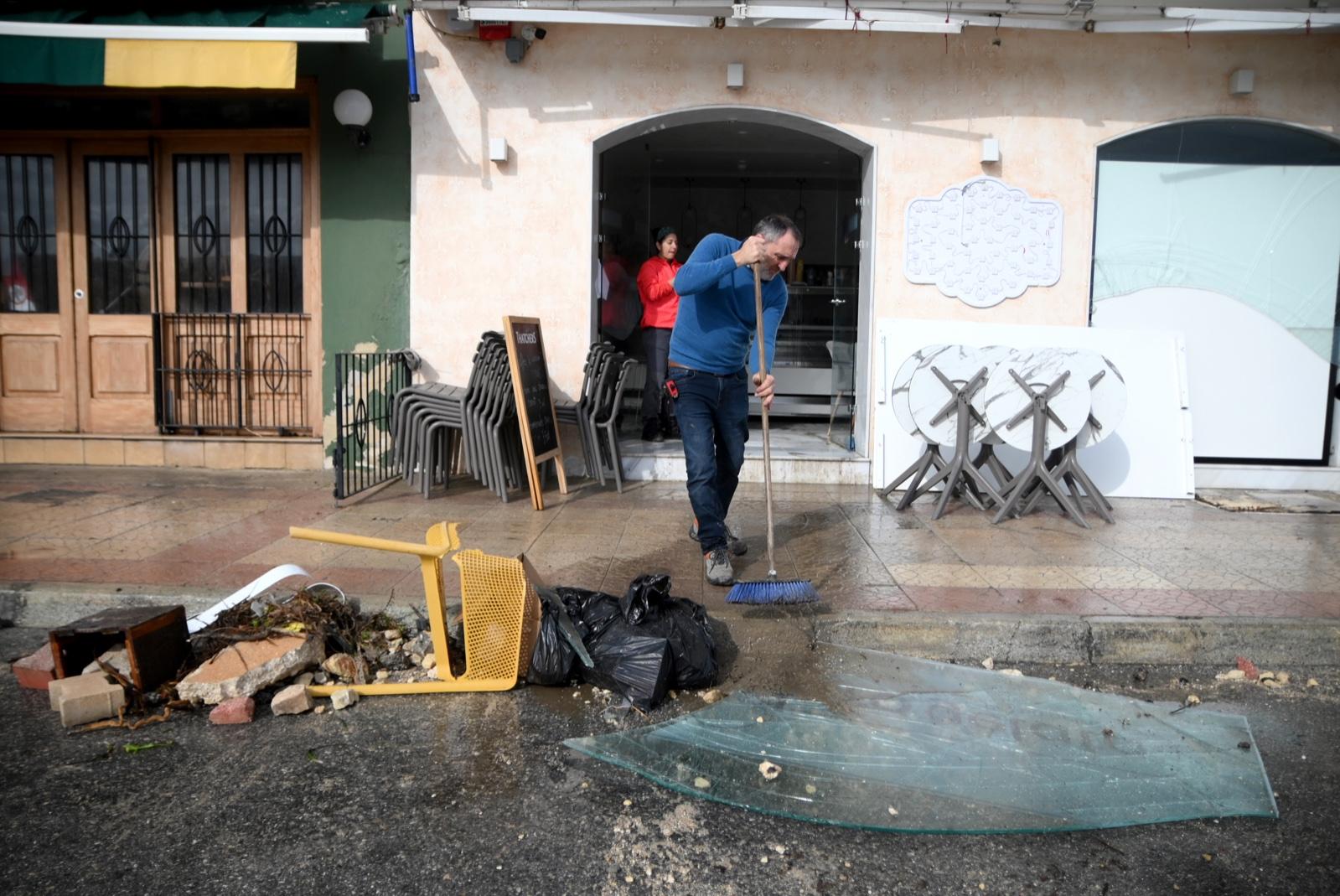 Shopfronts in Marsascala were damaged by the storm. Photo: Jonathan Borg
Responses showed that while most business owners are aware of coastal flooding risks, many had limited knowledge of sea level rise and storm surge when they first started their enterprises.
The study found that the confidence businesses gained from recovering after previous floods reflects a strong commitment to their locality, reinforcing owners’ determination to remain and rebuild despite recurring flood risks.
Tied to this, an overwhelming majority of businesses also refused to relocate inland. The refusal rates in each locality are as follows: 71 per cent in Xlendi, 82 per cent in Sliema, 86 per cent in St Julian’s, 88 per cent in Gżira, and 100 per cent in Marsalforn.
Relocation was viewed as a threat to business continuity, the study noted.
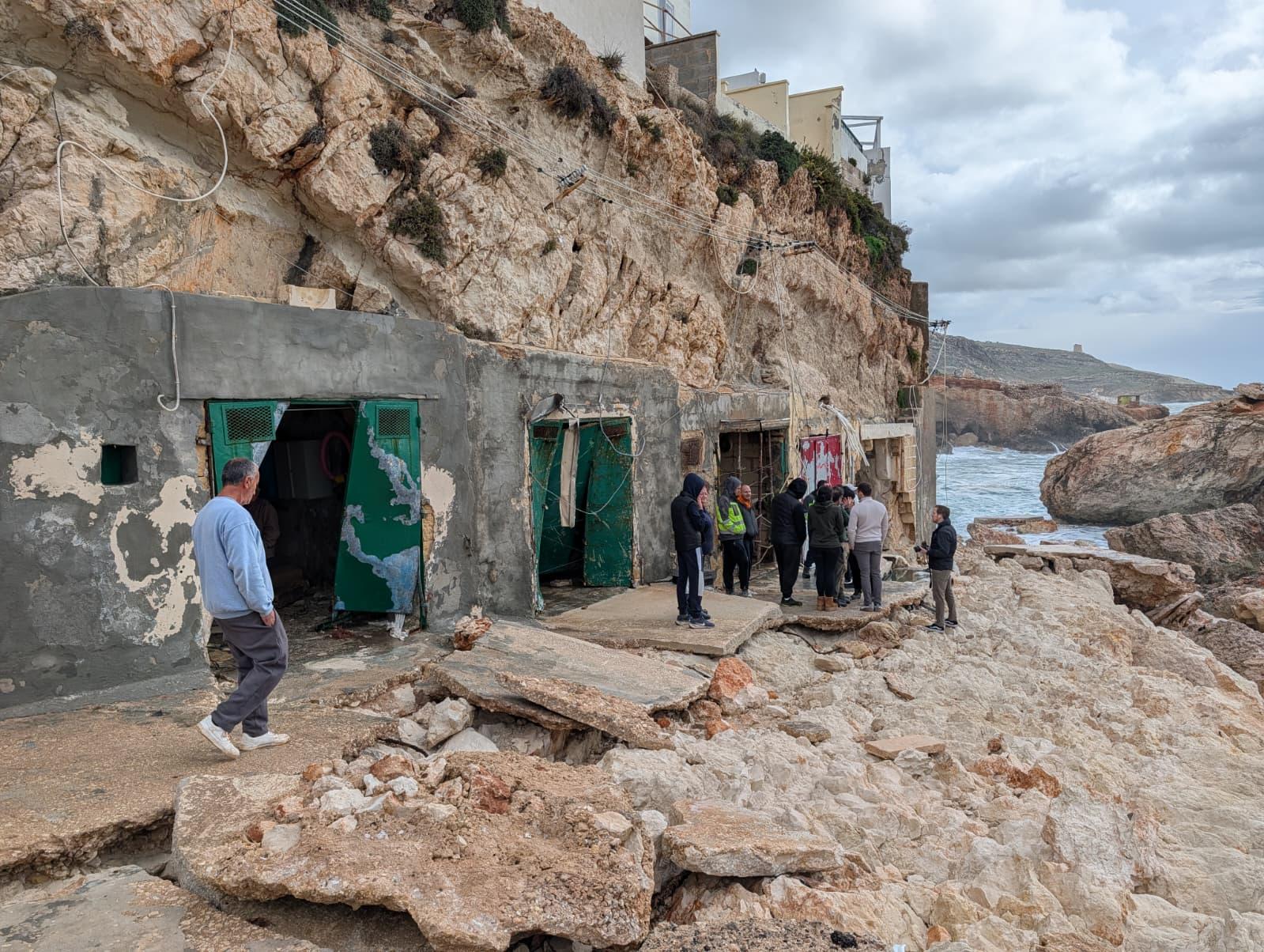 The popular Carmen Bar in Għar Lapsi was badly damaged by Storm Harry. Photo: Chris Sant Fournier
“For many, especially those with long-standing or inherited establishments, moving inland would entail similar rental costs, reduced visibility, and the potential loss of the established customer base,” the study said.
The results suggest that financial considerations also reinforce business owners’ emotional and cultural attachment to their location.
“The perception that current location is essential to business success outweighs concerns about future climate-related risks,” the study said.
It said respondents’ concerns reflected fears that losing the coast would mean a loss of identity and way of life, highlighting a strong sense of place attachment that helps explain business owners’ reluctance to relocate.
RELATED STORIES
“Policymakers must develop a comprehensive understanding of the factors and motivations shaping individuals’ perceptions of climate-related threats and their approaches to risk management,” it said.
On Tuesday, gusts hit more than 100 kilometres per hour, destroying farms, beaching fishing boats and smashing through seaside restaurants. The popular Għar Lapsi bay has been left unrecognisable.
Following the destruction caused by Storm Harry, the prime minister said that the government has begun an outreach exercise to assist businesses impacted.