
British Cycling, Scottish Cycling, and Beicio Cymru have called on the government to invest £30 million to deliver over 250 new community cycling facilities across England, Scotland, and Wales, which they say will have a “transformational impact on the health and well-being of the nation”.
According to British Cycling CEO Jon Dutton, “targeted public investment” towards cycling schemes, particularly those serving marginalised groups, would help the government hit its health, inclusion, and environmental targets, while also ensuring a lasting legacy for the Tour de France Grands Départs in the UK next summer.
The governing bodies’ combined call for enhanced cycling funding comes after new research, undertaken using methodology developed by Sheffield Hallam University, State of Life, and Manchester Met University, showed that the ‘Places to Ride’ programme has delivered over £100m in ‘social value’ across the UK, while saving the NHS over £13m.
 Places to Ride, Abbey Road – A group of kids riding bikes on a path in a park (credit: British Cycling)
Launched in 2019 as a £15m funding scheme awarded by the government as part of the 2019 UCI road world championships in Yorkshire, Places to Ride is the largest ever investment in community cycling facilities in England, reaching half a million people, many of whom learned to ride a bike for the first time through the project.
A collaboration with Sport England and the Department of Culture, Media and Sport, the project has delivered over 150 community cycling facilities and opportunities across the country, including BMX pump tracks, mountain bike trails, school cycle routes, and forest and park bike trails.
83 per cent of Places to Ride’s projects have focused on children and young people, while 41 per cent centred on women and girls, 35 per cent on supporting low-income groups, and 41 per cent engaging people with disabilities or long-term health conditions, including cardiovascular disease, diabetes, stroke, dementia, and depression.
According to data gathered by Sport England, between its launch in 2019 and November 2025, Places to Ride has had a “seismic impact in healthcare prevention costs”, saving the NHS £13.1m.
By estimating the savings resulting from the reduced cases of a range of conditions stemming from participating in the project, Sport England found that the NHS saved £3.7m in Type 2 Diabetes cases over the five-year period in question, as a well £3.5m for depression, £1.18m for reduced psychological stress, £1.12m for coronary heart disease, and £1.08m for stroke. The number of reduced GP visits from participants also saved the NHS £854,131, according to the data.
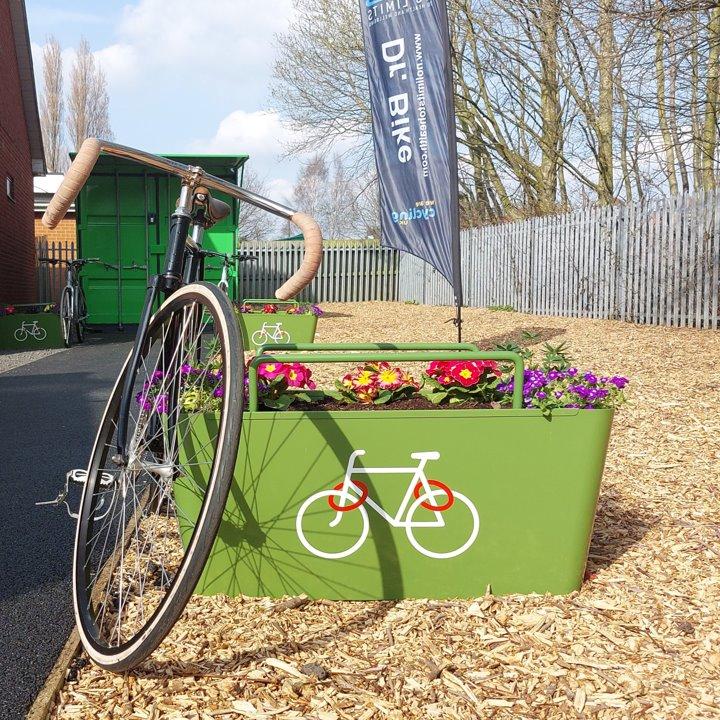 No Limits to Health, Wolverhampton – A bicycle parked in a green container (credit: British Cycling)
One example of Places to Ride’s work, the ‘No Limits to Health’ project in Wolverhampton, was cited by a PhD researcher at Edge Hill University as a “leading example of cycling as social prescribing”, thanks to its community-based support bringing physical and mental health benefits to thousands of people in the region.
The project received £8,661 of Places to Ride funding (securing over £3,000 of match funding in the process) to buy bikes and safety equipment, as well as purchasing a storage container and CCTV, to enable people in the East Park area of Wolverhampton to learn basic bike handling skills and grow in confidence.
The research undertaken by Sheffield Hallam and Manchester Met shows this project and its three cycle hubs have so far brought nearly £50,000 of social value to the area, the equivalent of £231 for each participant.
“Through my PhD, I saw the real-life stories from projects showing how the Places to Ride investments improved physical and mental health, strengthened communities, and tackled inequalities through place-based investment,” Nina Smith, SEND and mental health lecturer at Edge Hill University, said.
“Time and time again people told me that they experienced improved mental and physical health, reduced isolation, and a renewed sense of confidence and community connection.
“This was especially true for groups often excluded from mainstream sport – such as disabled children and adults, for whom cycling proved uniquely accessible. The impact on people’s lives has been truly transformational.”
In Scotland, meanwhile, the Cycling Facilities Fund – launched as a legacy project of the 2023 Glasgow ‘mega’ world championships – has seen £8 million invested into cycling projects, while unlocking over £18 million in match funding for 31 facilities so far.
And with Yorkshire 2019 and Glasgow 2023 delivering an impactful legacy for cycling across Britain, British Cycling hopes the same can be said of next summer’s double Tour de France Grand Départ extravaganza, when the men’s and women’s editions of cycling’s biggest race will start in Edinburgh and Leeds, respectively.
 Wythenshawe Park, Places to Ride – A dirt track with trees in the background (credit: British Cycling)
“Places to Ride has demonstrated the power of targeted public investment,” British Cycling CEO Jon Dutton said in a statement.
“We have hundreds of stories alongside the raw data to show how people’s lives – particularly those in underserved groups – have been and continue to be transformed by the project. It has increased cycling participation and narrowed inequalities, providing more opportunities in communities which needed it most.
“This next phase will build on that proven model with high impact for relatively small investment. With £30 million, we will deliver over 250 new or upgraded cycling facilities across England, Scotland and Wales, with a continued focus on inclusion, innovation and local need.
“Crucially, this investment will unlock significant match funding from local authorities, charities, commercial partners and communities themselves, ensuring public money goes much further.
“It will also align with national strategies on health, inclusion, active travel and levelling up, whilst playing a vital part in creating a lasting legacy across the home nations ahead of the 2027 Tour de France and Tour de France Femmes avec Zwift Grands Départs.”
“Impact reports from both the Places to Ride programme in England, and the Cycling Facilities Fund in Scotland, clearly demonstrate the impact that facility funding has on the health and wellbeing of the nation,” added Scottish Cycling chief executive Nick Rennie.
“There have been some fantastic facility developments in Scotland over the last five years, which have quickly become the centrepiece of communities, but we still have large portions of the country without a facility that is easily accessible, with more funding required to fill the gaps.
“We fully support the ask from British Cycling and are committed to working collaboratively with partners to deliver a fund that helps transform England, Scotland, and Wales into true nations of cyclists.”