
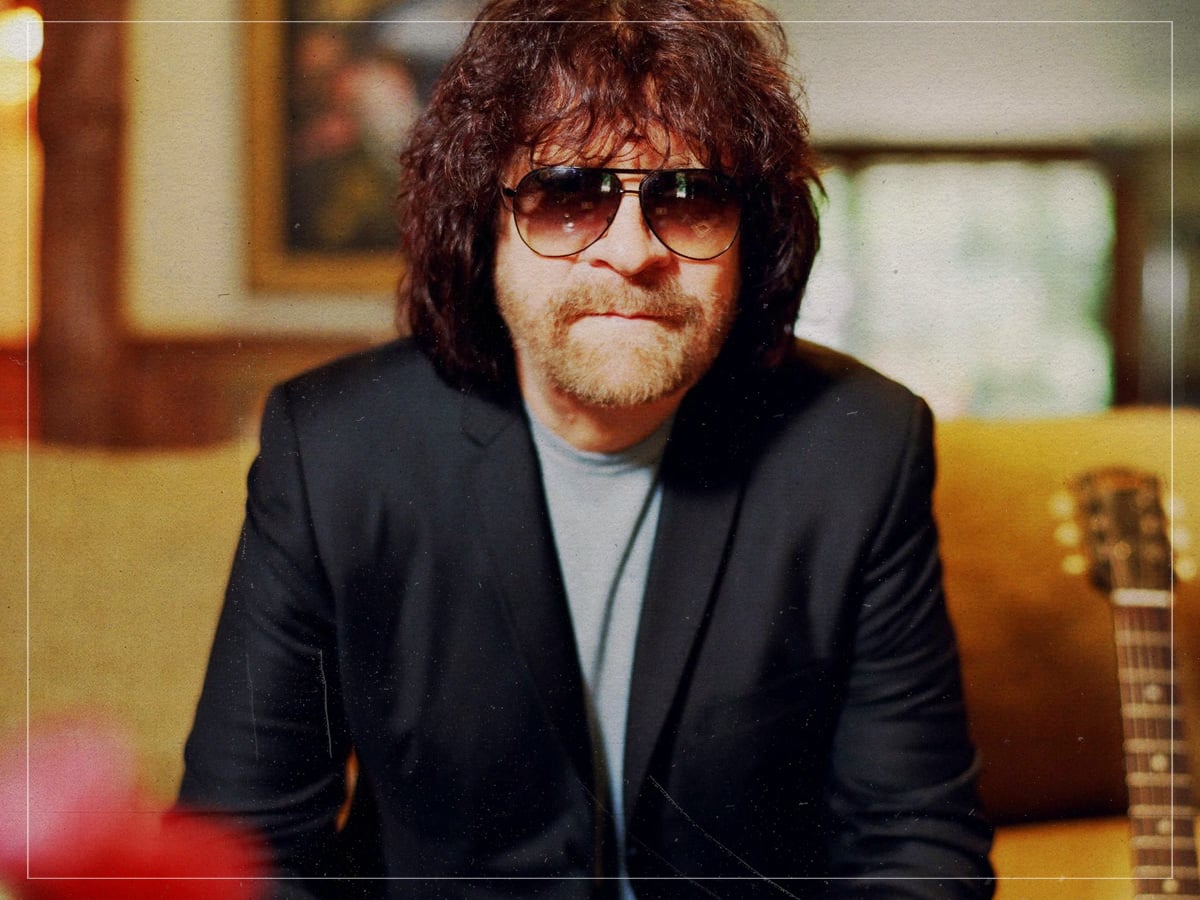
(Credits: Far Out / Jeff Lynne)
Fri 23 January 2026 17:00, UK
Like many people within the world of music, Jeff Lynne was inspired by The Beatles (I know, right? Join the club).
He’d always had a penchant for making music, putting together different tracks and working out how he could push the boundaries of contemporary music, but that love was well and truly solidified when he got the chance to see The Beatles making their record The White Album. One day at Abbey Road Studios somehow equates to decades’ worth of work.
“I didn’t actually listen to The White Album,” said Lynne, recalling the event. “I was invited to Abbey Road by an engineer I knew from where I was recording the first Idle Race album [Advision Studios]. But all I saw was Paul and Ringo in one studio and John and George in the other. They were really friendly, the lads, and there was George Martin, leaping around, conducting the strings for ‘Glass Onion’. I couldn’t believe I was there! I couldn’t sleep for days.”
Lynne’s love for the Fab Four has never been something he shied away from, as he said he was always intent on ELO picking up where the Beatles left off. Those who listened to what his band put out were certainly intrigued, as he essentially cemented himself as a pop artist with a prog sensibility. His music was experimental and yet accessible, and people were enjoying it.
Perhaps some of the biggest praise he ever received came from one of the musicians he admired the most: John Lennon, who said that he thought ELO were “the sons of The Beatles”. John Lennon was never one for handing out idle praise, so these were certainly words that Lynne should have held close.
“That was rather a good compliment. I’ve still got that down on tape,” he said, “I admired all of them, to be honest.”
What made Lynne’s excellent musicianship even more impressive was the fact that he was putting a lot of these songs together on his own. Sure, he worked with bandmates in the studio, but when it came to actually working out how a song should sound, the creative process was very much a solo endeavour. This was good because it helped Lynne better understand the crooks of a song, but it also meant it was often hard for him to chisel a melody out of the mountain of ideas he had. His most prevalent critique came from his father, a classical music lover, who was always hesitant about his son following in the footsteps of The Beatles.
“I was concentrating on trying to get the melodies where I wanted them,” said Lynne. “That was my dad’s criticism. He’d say, ‘The trouble with your tunes is you ain’t got no tunes’. And I thought, ‘I’ll show yer, you bugger’.”
Arguably, his biggest turning point came in the form of Eldorado, an album that saw the musician become less progressive and more pop-centric. Those blocks of musical marble had been well and truly chipped away at, and Lynne had exposed the melody which was lingering underneath. This was the first actual pop album that ELO ever put together, and it marked a turning point for the band, one that even Lynne’s father had to acknowledge, showing he was on the right track.
“I was always surprised when anything did well,” admitted Lynne. “And they all started to do well at that point.”
Related Topics