
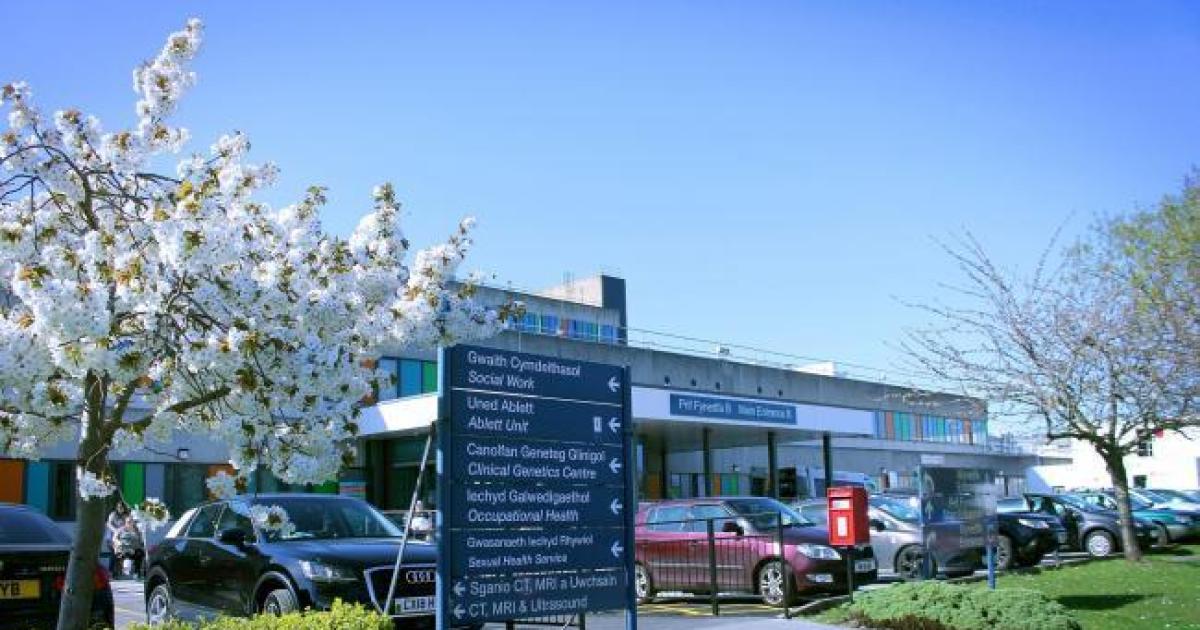
Rory Colin Williams died aged 45 at the Bodelwyddan hospital in August 2024.
An inquest held at Ruthin county hall on January 7, Kate Robertson, assistant coroner for North Wales east and central, ruled his death as being due to natural causes.
Ms Robertson has now urged Betsi Cadwaladr University Health Board (BCUHB) to take action, and issued the health board with a Prevention of Future Deaths report on January 13.
Mr Williams was initially referred to Ysbyty Glan Clwyd in May 2023 under an “urgent suspected cancer pathway due to suffering with symptoms of dysphagia and weight loss”.
Multiple attempts by the Gastroenterology service to contact Mr Williams were made, but he disengaged with the service after failing to attend a follow-up endoscopy.
In April 2024, Mr Williams re-engaged with healthcare services at the Emergency Department at Ysbyty Glan Clwyd with chest pain and was referred for an outpatient endoscopy.
However, this was not undertaken until late July, with the health board “accepting that there had been a delay between April 2024 and July 2024 in undertaking the endoscopy”.
He was then admitted to Ysbyty Glan Clwyd with severe abdominal pain on August 8 and died at the hospital two days later.
Ms Robertson’s report states: “It was accepted by the Health Board that there had been a delay between April 2024 and July 2024 in undertaking the endoscopy.
“Whilst this did not impact on the outcome for Rory Williams it did highlight a number of ongoing concerns with the gastroenterology / endoscopy service:
Staffing – the evidence at Inquest was that the Health Board was struggling to maintain this most basic service at Ysbyty Glan Clwyd due to staffing issues which included lack of consultants, endoscopists and other essential healthcare staff. There is currently only one full time equivalent consultant and three locums. The service is currently considered to be ‘absolutely dependent on locums’. It was noted that recruitment into gastroenterology is a challenge yet these issues have been ongoing for many considerable years, potentially since 2018.
Infrastructure – evidence was heard that this requires significant investment and improvement within the service, and despite business cases having been made there have not been significant steps to improve this. It is not known why.
The Health Board’s target for urgent suspected cancer referrals to endoscopy (that is from GP referral to endoscopy) is 21 days. Today, this stands at 8 weeks.
The Health Board’s current wait time for urgent referrals (non-suspected cancer) to endoscopy is currently 89 weeks. This figure has increased since 2023.
The Health Board’s current wait time for routine referrals to endoscopy is currently 148 weeks. This figure has increased since 2023.
“I am concerned that there is no fully networked service for endoscopy / gastroenterology where this and the above concerns do not appear on the corporate risk register.
“Whilst they appear on the local risk register it is extremely concerning that corporately it does not appear as a risk. Evidence was heard that at one point the risk score for the service was reduced from 25 to 20. The reason is not known.
“The overall impression is that the service is not fit for purpose and that all of these concerns, many of which have existed for several years, signify a risk of harm and death of patients into the future as a result.”
BCUHB has until March 10 to respond to the report.
Its response must contain details of action taken or proposed to be taken, setting out the timetable for action, or an explanation for why no action has been proposed.