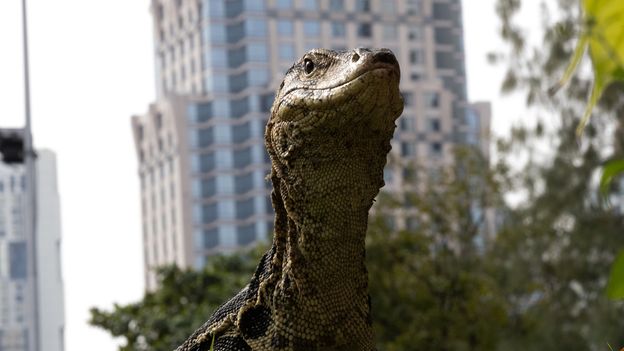
While Lumphini Park is the easiest place for visitors to spot them, Bangkok’s water monitors are far from confined to a single green space. Once pushed to the city’s edges, the reptiles have quietly adapted to life in the megacity, patrolling many of the almost 1,700 canals that still thread through neighbourhoods, from residential backstreets to busy commercial zones. Several hundred water monitors are thought to live in and around Lumphini Park alone, drawing locals, tourists and photographers into uneasy proximity with an animal that has long divided public opinion.
“Their population in Bangkok is much, much greater than you’d ever see in the wild,” said Michael Cota, a retired associate at Thailand’s National Science Museum, speaking from his study in northern Thailand. Surrounded by leaning towers of academic papers – including several of his own – he explained why. “When it comes to food, they’ll eat anything they can get a hold of, dead or alive. They’re extreme generalists.”
“Head to Lumphini Park,” he had told me earlier, with a giddy grin. “That’s where you’ll get to know them properly.”
One December morning, before the city had fully awakened, I set off on the hunt, cutting through Bangkok’s endless maze of streets. But inside Lumphini Park, an early sight of the ancient water monitor lizards offered the first clue about what life was like here before Bangkok’s founding as a tiny trading outpost on the west bank of the Chao Phraya River in the early 15th Century.
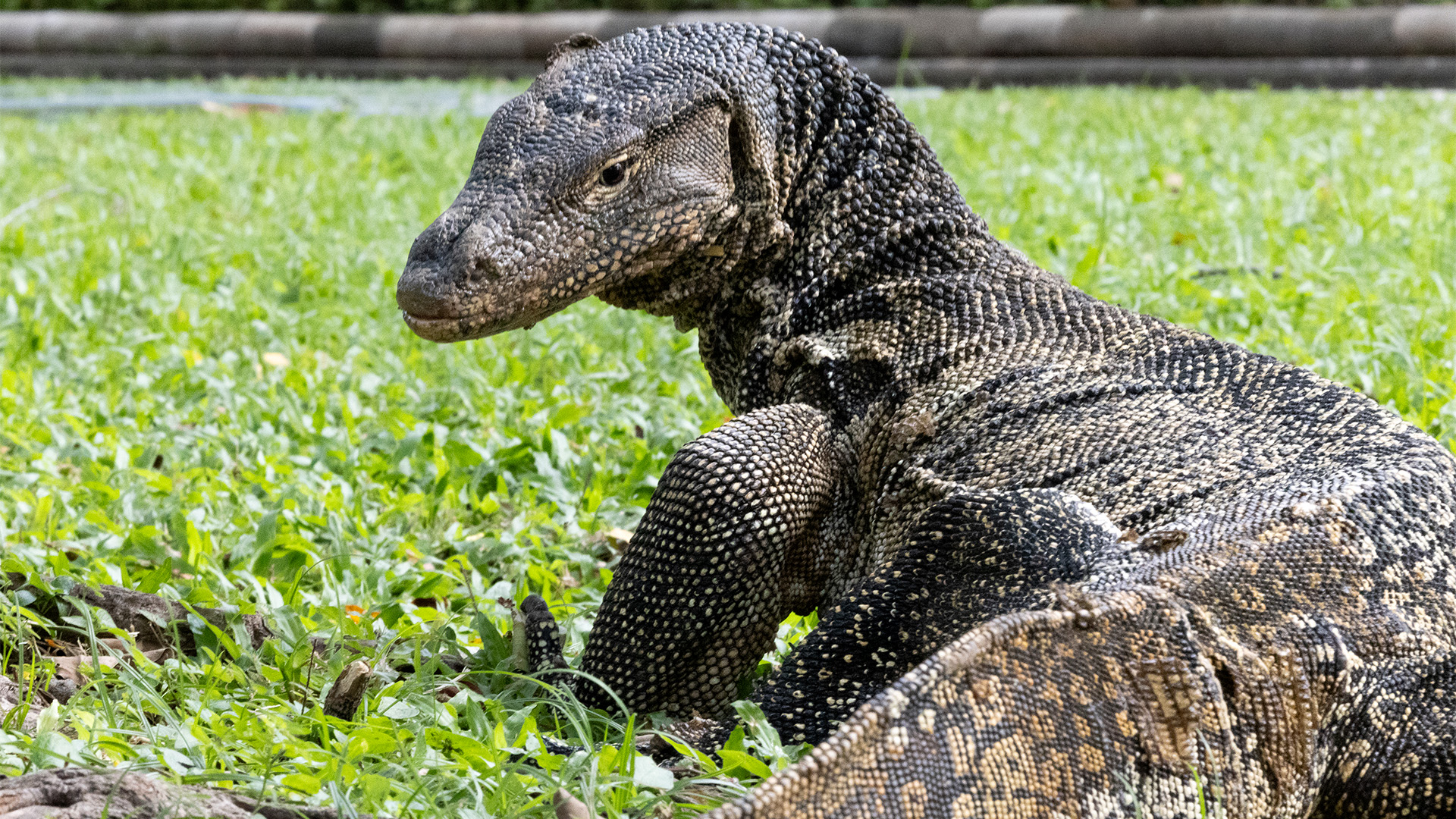 Mirja VogelOnce pushed to the city’s edges, the species has adapted to life in parks and canals, with populations now estimated in the thousands (Credit: Mirja Vogel)