
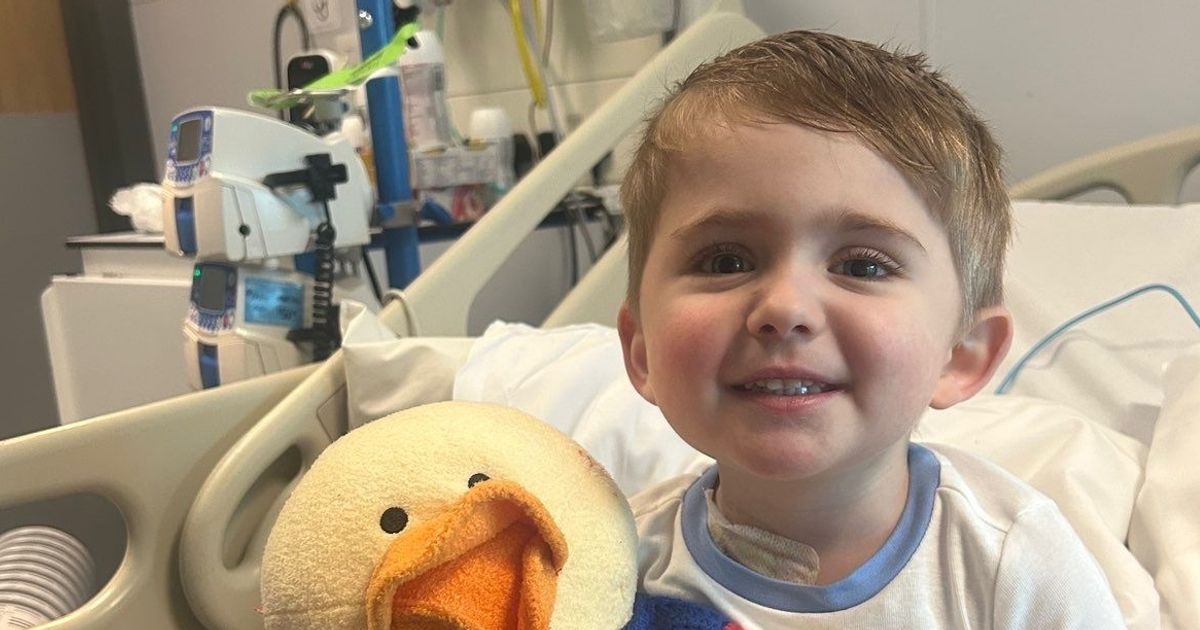
Three-year-old Elijah John was a normal little boy until a rare diagnosis completely changed his life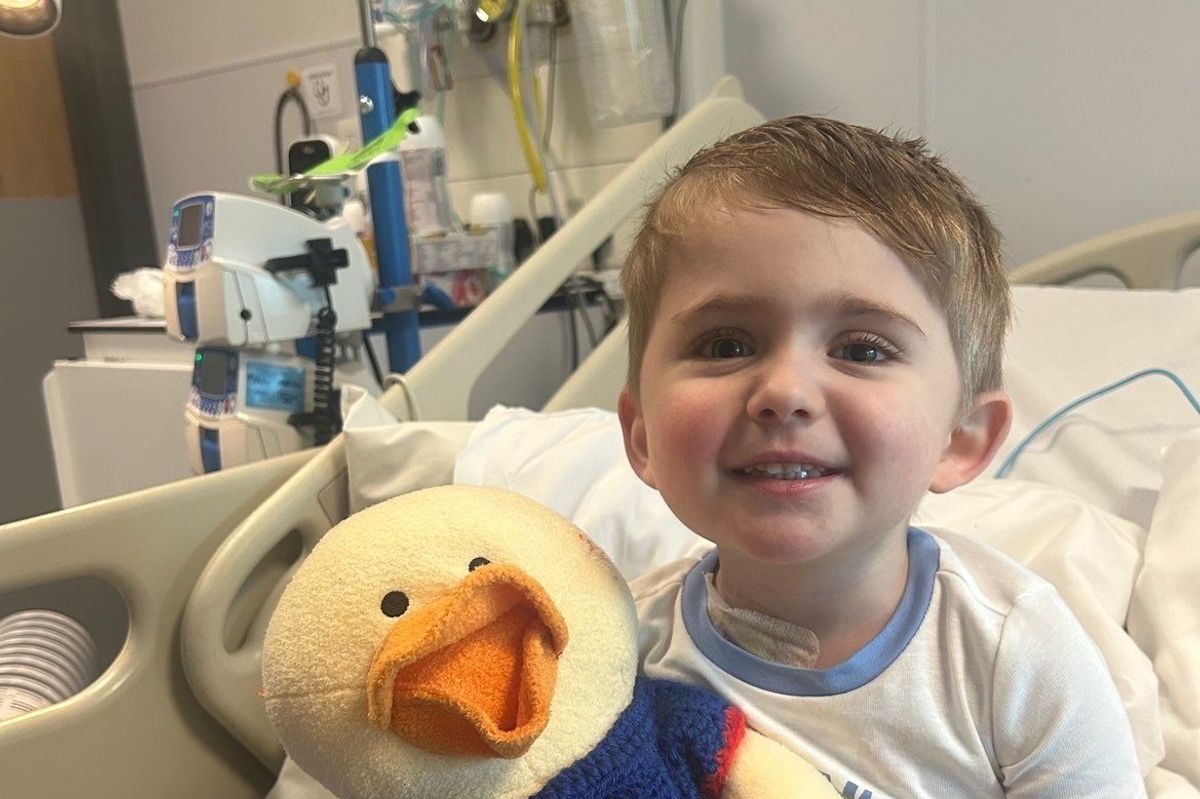
Throughout it all, Elijah John is still smiling(Image: Kyle John)
Elijah John does not sit still for very long. At three years old, the Pontypridd toddler is constantly on the move – whether it’s playing with his toy dinosaurs, watching an episode of Bluey, or racing through the soft play at the centre where his dad works.
He loves the park, being outside with his mum, and carries the kind of boundless energy that leaves adults breathless just watching him. He is, by every definition, a normal little boy – but a rare diagnosis has disrupted his family’s life in ways no parent could expect.
It started with fevers back in November 2025. Not constant, but recurring enough to cause concern. Each time, Kyle and his partner Chloe took Elijah to the doctor, and each time they were sent home.
“He’d have these spikes in temperature,” Kyle says. “But whenever we went to the doctors, we’d just end up coming back.”
At first, there was no sense that anything serious was wrong. “I remember saying to Chloe, ‘It’s probably just a common virus,'” he says.
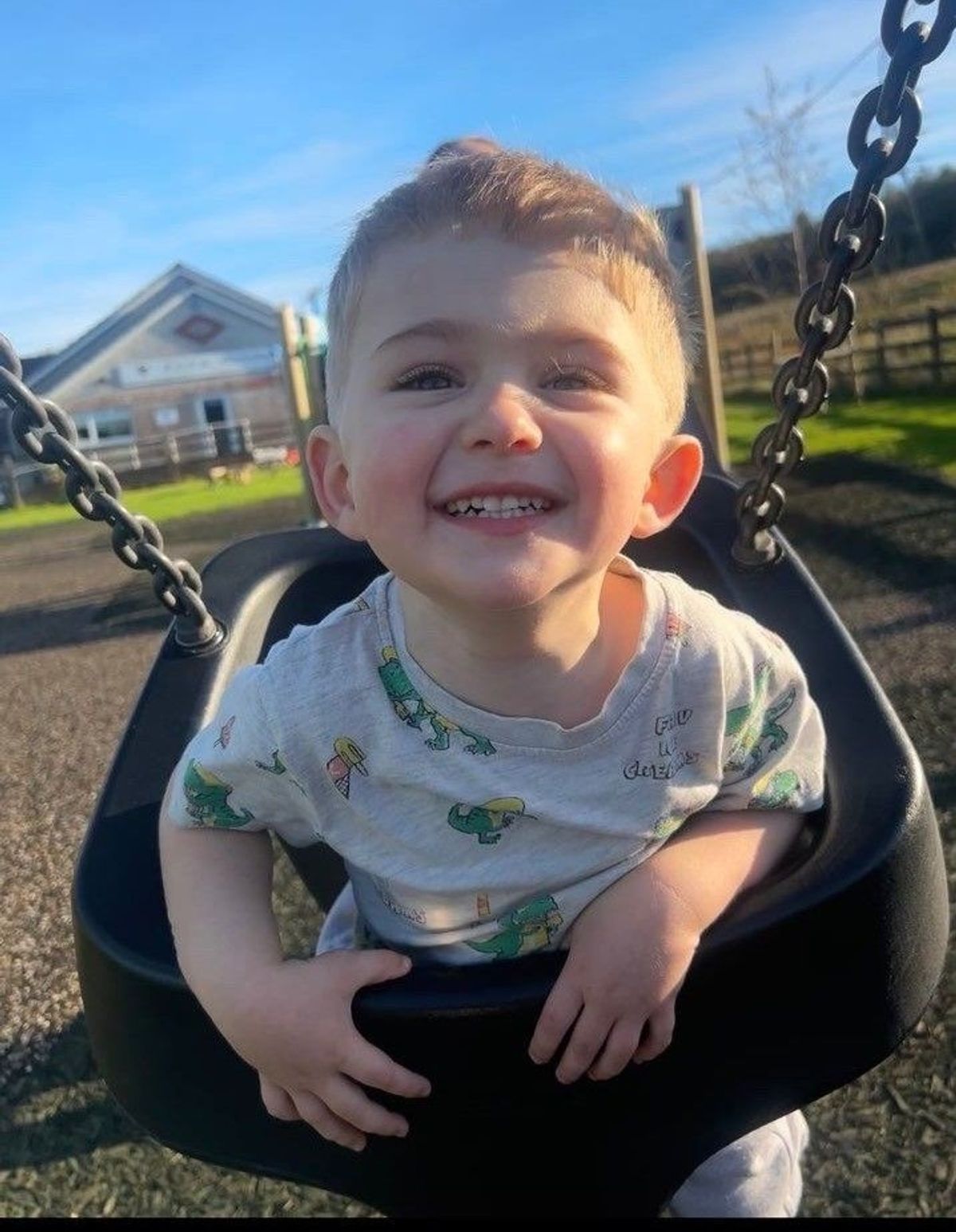
Elijah is described by his dad as “energetic” kid who loves nothing more than a run round the park(Image: Kyle John)
Then a rash appeared. It began on Elijah’s cheek and spread gradually over the next five days all over his body.
As his symptoms worsened, uncertainty grew. Even in hospital, doctors were unable to identify the cause and began treating him for a range of possible conditions, including Kawasaki disease.
Instead of improving, Elijah’s condition only deteriorated further. His abdomen became swollen as his liver and spleen enlarged, while his temperature continued to spike.
“It was getting bad,” Kyle says. “His temperature went up to 40, 41. It was scary.”
Then Elijah became unresponsive to any type of treatment. “It was at that point where the staff at Royal Glam didn’t know what to do,” he recalls. “They just said ‘We need to get you down to specialists.'”
The young boy was transferred by blue light from the Royal Glamorgan Hospital to Noah’s Ark Children’s Hospital in Cardiff, where he underwent urgent and extensive investigations, including blood tests and a lumbar puncture.
For Kyle, the change in his son was stark. “Normally he’s just on the go all the time – running around, playing,” he says. “But when we were in hospital, he was just out of it. He was lying there the whole time, hooked up to all the machines. As a parent, it was difficult to see.”
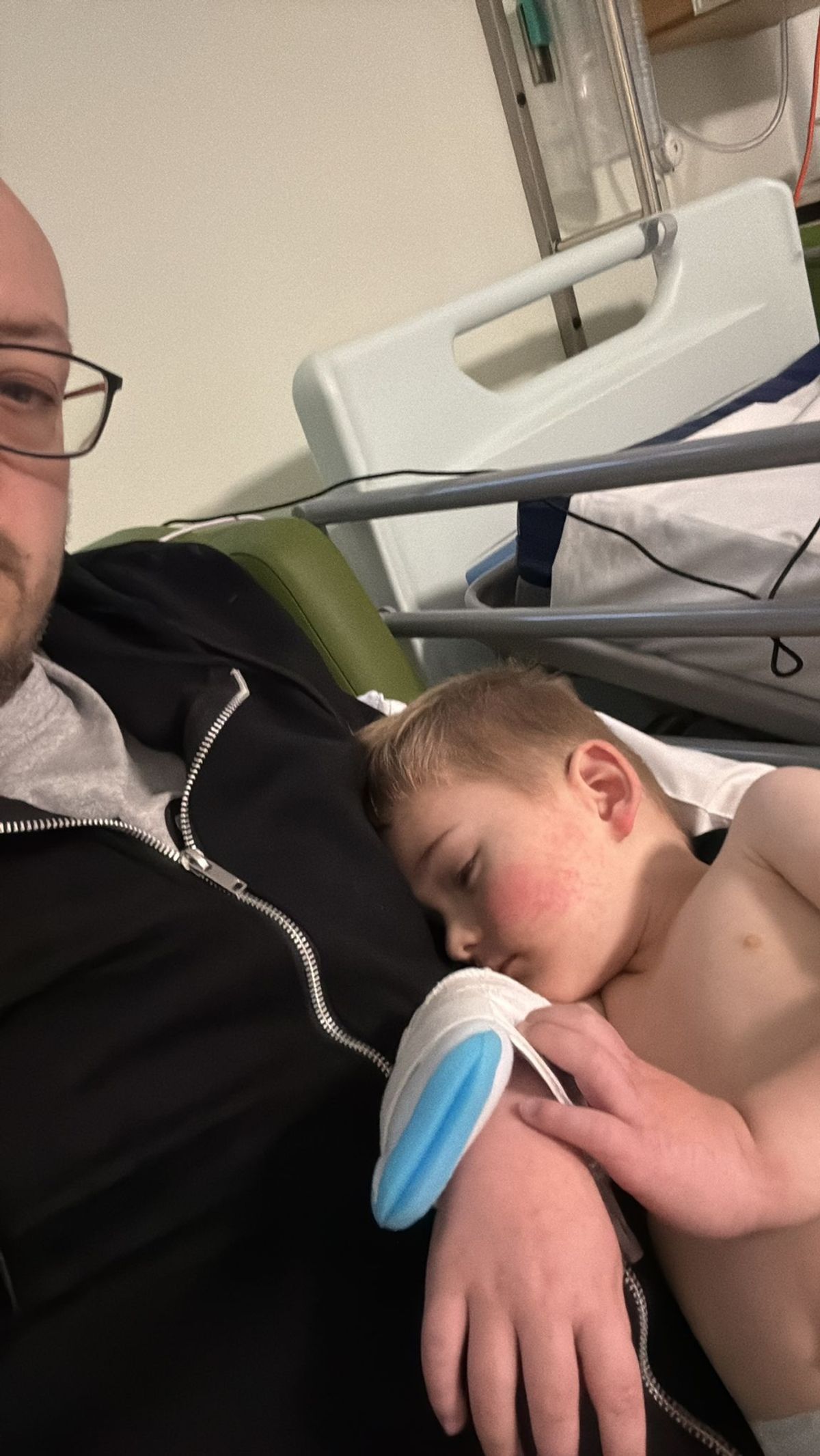
According to Kyle, Elijah’s rash first developed on his cheek(Image: Kyle John)
As part of specialists’ investigations, Chloe and Kyle were also tested for any underlying genetic conditions. The results finally brought a diagnosis: Primary HLH, a rare and life-threatening disorder of the blood and immune system.
In children with Primary HLH, the immune system doesn’t switch off properly and instead attacks the body’s own organs and tissues.
Further testing revealed the underlying cause was XIAP immune deficiency, a rare inherited genetic condition (X-linked inhibitor of apoptosis protein deficiency). XIAP plays a crucial role in regulating the immune system and controlling inflammation.
In children with XIAP deficiency, the immune system cannot regulate itself properly, leading to severe inflammation, recurrent infections, and conditions such as HLH.
“So it’s a gene defect that’s passed down through women and only affects boys,” Kyle explains. “Apparently it’s really rare, when we told nurses about it back home, they didn’t even know what it was.
“When we Googled it, it said only about 100 kids had it since 2006. At the specialists here in Newcastle, they’ve treated it four or five times, but a few more cases have come up this year.
“They think it might have been triggered because Elijah had sepsis when he was around one, but looking back at his old blood results, it seems it could have been HLH even then. It’s tricky because it can mask itself and sometimes looks like sepsis.”
According to Histio UK, HLH can be thought of as an extreme form of inflammation that the body is unable to control. Uncontrolled white blood cells – lymphocytes and histiocytes – can destroy healthy blood cells and damage multiple organs.
The condition is extremely rare, affecting an estimated 1.2 children per million each year, though the true number may be higher because it can be misdiagnosed. Early symptoms often resemble a normal infection, making it difficult to detect.
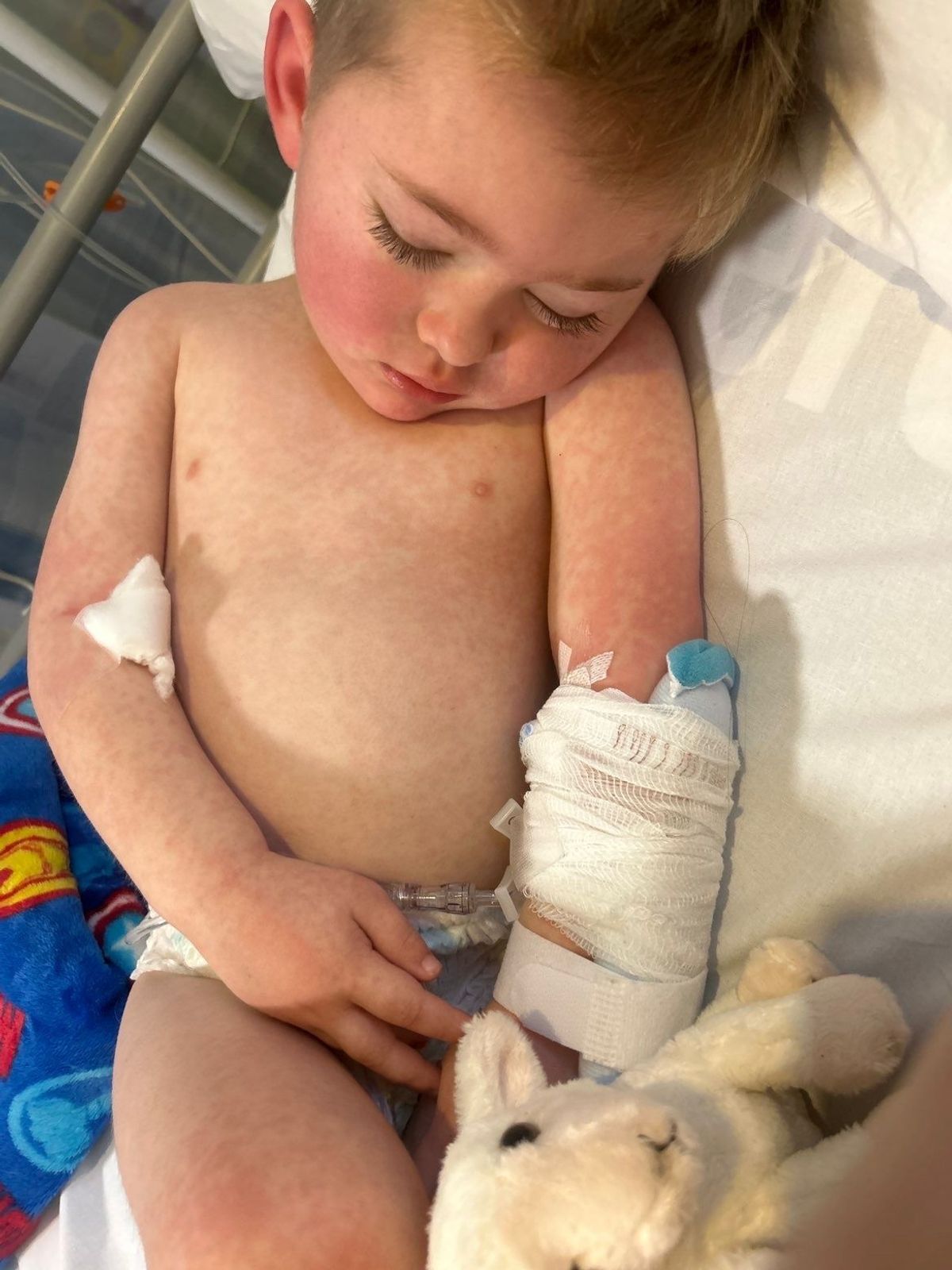
The reason behind Elijah’s temperature and rash was a rare genetic disorder(Image: Kyle John)
“It was hard because no one had heard of it. Then with it being a genetic illness, Chloe and me have had to come to terms with the fact that future kids is going to be a probably a no-go. Her family also have to consider getting tested to see if they have the gene.
“But we are grateful in other ways – to know what the illness is and how we can help Elijah moving forward.”
By December 2025, Elijah’s condition required further treatment to stabilise him. He was put under general anaesthetic so doctors could insert a central line, which allows medication to be delivered safely and directly.
Elijah now faces a short course of chemotherapy, along with steroids and several other medications, to calm his overactive immune system and keep him stable while preparing for the next stage of treatment – his bone marrow transplant. This stage is particularly demanding and is considered one of the most intense parts of the process.
“Basically, the idea is that they use the chemo to dampen the immune system, so the HLH can’t attack the body as much,” he says. “They’ve got control of the HLH attack with the chemo and steroids. He’s still on medication now – he has an injection in his leg every day – and he has a central line in his chest ready for medication.”
Despite having to endure procedures no child should have to face, Kyle says Elijah has remained his upbeat, resilient self. Stay informed on the latest health news by signing up to our newsletter here
“He’s not dull at all,” he says. “As soon as he sees the tray coming, he knows it’s time for his injection. Now, when a nurse comes in, they might need to do an op, and he’s already there – he’s giving his arm, he’s ready. He’ll sit there for his blood pressure and temperature checks.
“When they give him his medication through the lines in his chest, he knows it doesn’t hurt. He’s fine with all of that. He definitely copes with it better than an adult would, that’s for sure.”
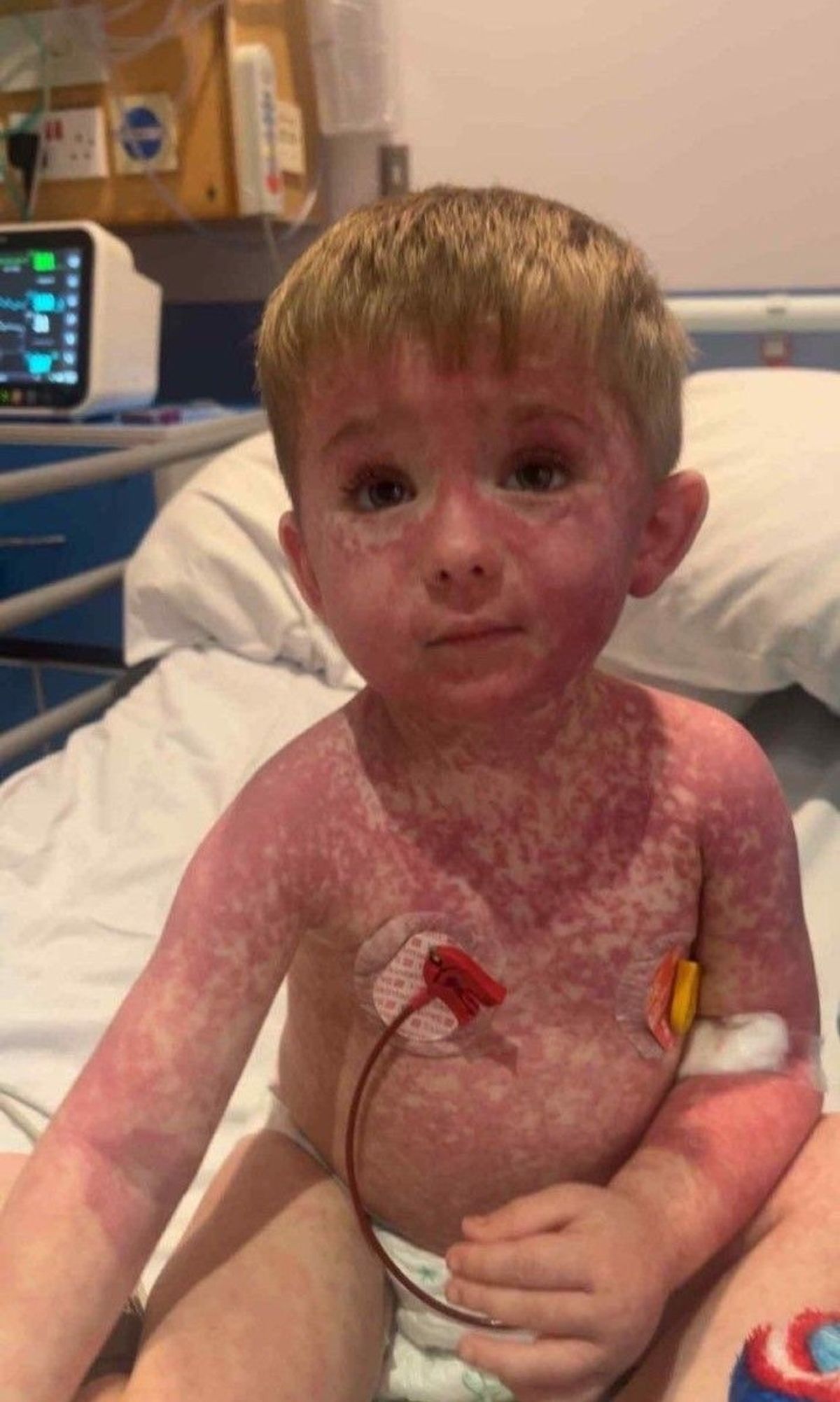
No one knew the reason behind Elijah John’s widespread rash(Image: Kyle John)
Beyond the procedures and hospital stays, Elijah and his family have also had to adapt to a dramatic change in their everyday lives.
Due to Elijah also taking immunosuppressants, both Kyle and Chloe have had to step away from work to reduce the risk of bringing infections home.
“Any virus could trigger it now – even something like EBV, which is the basic cold sore virus,” Kyle explains. “It could all set it off again. I work in hospitality, Chloe in retail; it would be so easy for us to pick something up.”
The restrictions have also meant Elijah can no longer attend nursery. “He was in a Flying Start pre-nursery but he had to leave,” Kyle says. “He was due to start school, but again he couldn’t. We’ve now been given a date for his bone marrow transplant next month so hopefully can start to move forward with things again.”
While both of their employers have been supportive, Kyle admits the situation has placed an obvious strain on the family.
“Keeping him safe is our absolute priority,” he says. “But being unable to work has had a significant impact on our household income, alongside the months we will need to spend away from home.”
In an effort to ease the pressure and allow them to focus fully on Elijah’s health, Chloe set up a GoFundMe. “It’s not something we ever expected to do, and we never would have turned to it under normal circumstances,” Kyle says. “But we still have bills to pay and rent to keep up with, even though we’re travelling for his treatment.”
The response, he says, has been overwhelming. “So far, everyone has been amazing,” he adds. “The school Elijah was going to are doing fundraising, and loads of family, friends, and even people who just know about it have started getting involved. The GoFundMe has taken off more than I ever thought it would, and we are so unbelievably grateful.”
The family has also had to adjust to life far from home, travelling six hours to Newcastle for Elijah’s treatment.
“We’re up here at the moment for his pre-assessment,” Kyle explains. “Then we go back home, and we’ll have to return in the middle of February for the transplant. My partner will be in hospital with him, and I’ll need to stay in a hotel until they can arrange a halfway house for me. We’ll have to swap shifts – we can’t really both be there at the same time, so it’s a bit of a juggle.”
Despite the distance from home, Kyle says the family has been reassured they are in the right place. “They’ve told us this is one of the best centres for this type of procedure,” he says. “So even though it means travelling and being away, it’s worth it.”
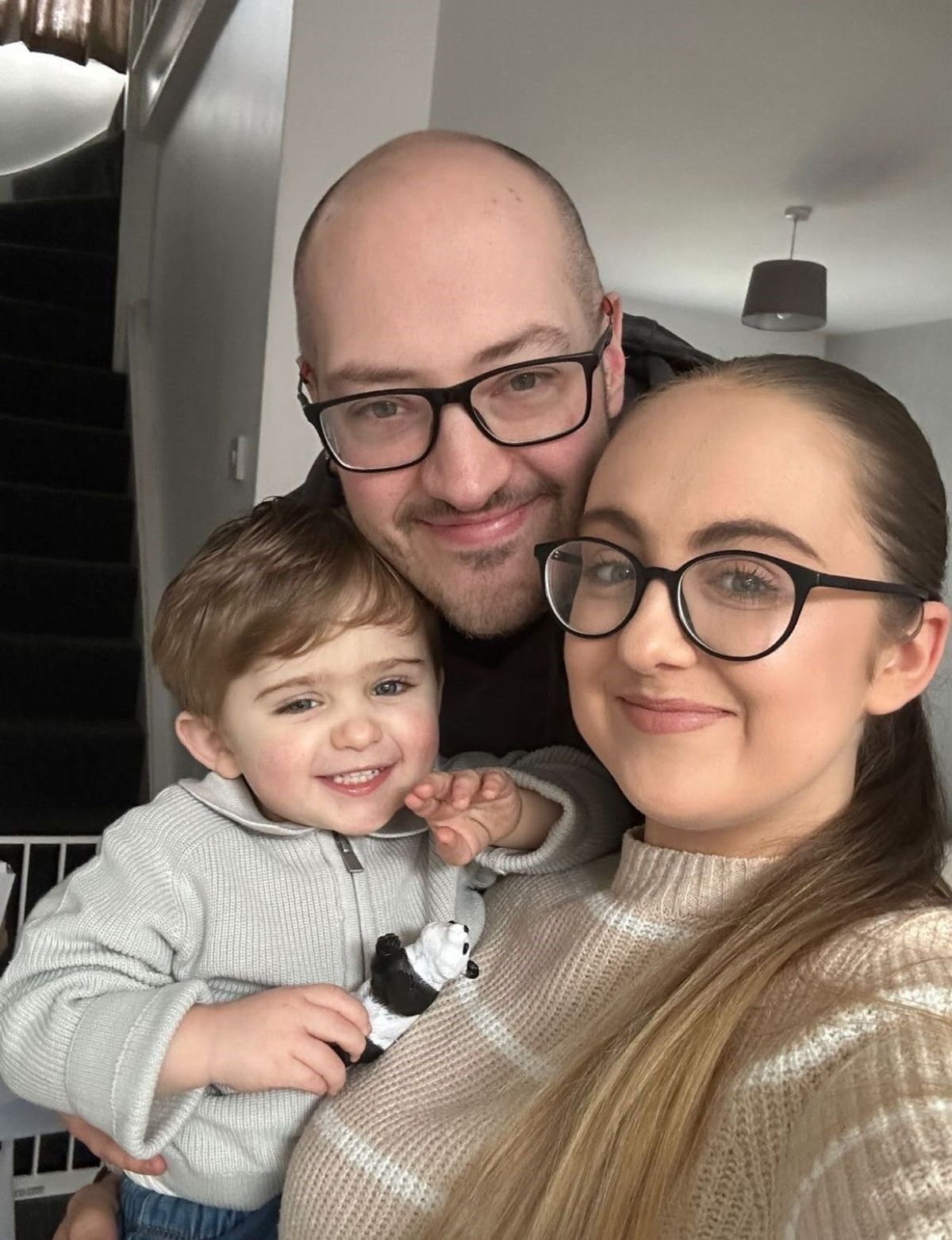
Chloe and Kyle are willing to do anything to help their son (Image: Kyle John)
Elijah is scheduled to undergo a bone marrow transplant in February – a procedure his family hopes will offer him a chance at a future free from the condition.
“The crucial time is really the three to four weeks afterwards,” Kyle explains. “That’s when they see whether the transplant has taken, whether there are any complications, or whether he gets sick. He’ll have no immune system at all, so everything has to be really strict.”
If the transplant is successful, doctors have told Kyle it could be a complete cure. The faulty gene would no longer be present.
However, the treatment has already brought difficult consequences. Kyle and Chloe have been informed that the chemotherapy used is likely to leave Elijah infertile later in life.
“Because of that, he’s had something called a testicular harvest,” Kyle says. “It’s an operation where they remove and freeze tissue, so in the future it could help him have children of his own. The team here have been amazing in helping us through that.”
The decision to proceed with a transplant has not been an easy one. Without it, Kyle says doctors have warned that children with Primary HLH are unlikely to survive long-term.
“You’re basically told that at some point, an illness will get him,” he says. “Then you’re speaking to specialists and they explain there’s a 10 to 15 per cent fatality rate on the transplant itself. It’s hard to put into words – but you have to take that risk to give him a chance to get better.”
You can donate to Elijah’s GoFundMe, here.