
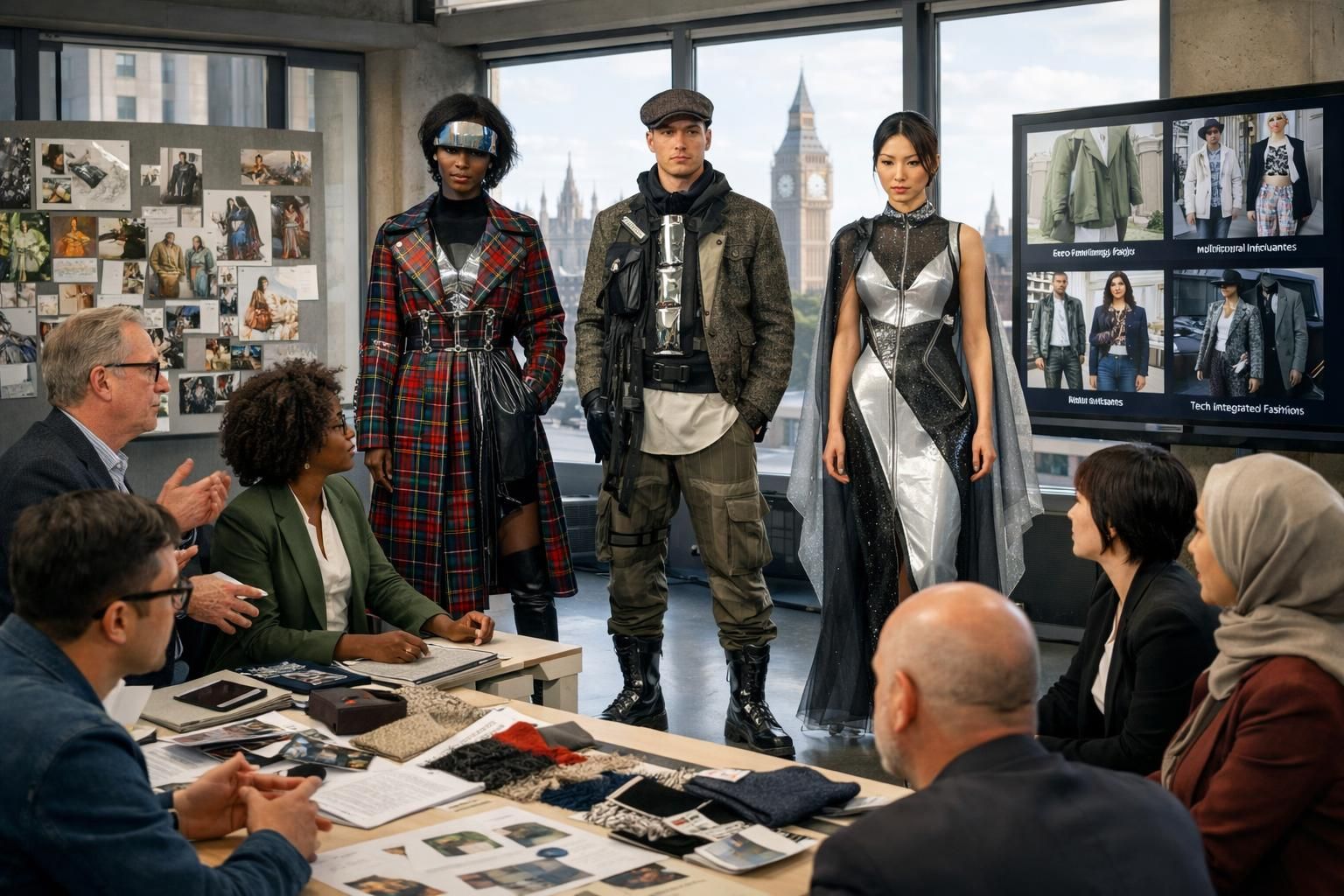
From London’s club nights to regional high streets, the United Kingdom is treating clothing like a public conversation—one shaped by social trends, digital life, and a fast-changing sense of identity. What people wear now signals values as much as taste: sustainability claims compete with the thrill of micro-trends; gender codes soften into fluid silhouettes; and “heritage” is rebuilt through new communities rather than old institutions. In this landscape, modern fashion is not merely a creative output—it is a living record of consumer behavior, migration stories, class signals, and the pressure of online visibility. The result is a new kind of trend analysis where runway references matter, but so do TikTok edits, resale platforms, Saturday clubs, and the reputations of local makers.
United Kingdom trend analysis: mapping social trends that steer modern fashion
Digital visibility and the new pressure to “perform” style
From class signals to value signals
Consumer behavior in UK fashion: why wardrobes are becoming hybrid and strategic
How algorithms change shopping instincts
Resale, rental, and repair as mainstream habits
Cultural influence and style evolution: how UK fashion remixes music, heritage, and identity
Heritage tailoring meets street pragmatism
Global pop references, local reinterpretation
Fashion industry strategy beyond London: education, manufacturing hubs, and wealth distribution
Scholarships, placements, and paid early-career routes
Manufacturing visibility and regional craft ecosystems
Apprenticeships and studio training as innovation engines
Where trend analysis meets product design
How do social trends change modern fashion in the United Kingdom?
What consumer behavior is most reshaping UK fashion right now?
Why is spreading the fashion industry beyond London such a priority?
What does fashion innovation look like in the UK by 2026?
Across the country, the fashion industry is also being asked to spread opportunity beyond the capital, invest in skills, and keep innovation grounded in real jobs. British fashion’s global reputation—built on tailoring, rebellion, and theatrical design—now hinges on how well it connects cultural energy to practical pathways: education, apprenticeships, manufacturing hubs, and support for young talent from every background. Watch closely and you’ll see a style evolution that doesn’t move in a straight line, but in loops—borrowing from subcultures, responding to world events, and continuously negotiating what “UK fashion” means today.
Social trends are reshaping silhouettes, gender norms, and the meaning of “dressed up” across the United Kingdom.Consumer behavior increasingly blends thrift, resale, rental, and selective “investment” purchases.Cultural influence comes from music scenes, diaspora communities, sport, and online creators as much as luxury houses.Growth outside London depends on education, manufacturing visibility, and paid early-career routes.Fashion innovation is moving toward traceability, craft-tech hybrids, and community-led brand building.
United Kingdom trend analysis: mapping social trends that steer modern fashion
In the United Kingdom, clothing choices have become a practical way to process social change in public. When commuting patterns shifted and hybrid working became normal, people didn’t simply “dress down”; they invented a new uniform that can jump from a train platform to a video call. This explains the popularity of elevated basics—clean trainers, wide-leg trousers, premium hoodies—paired with one “signal piece” such as a bold coat or statement bag. The look says: functional, aware, and still expressive.
One useful lens for trend analysis is to follow moments when public life becomes louder. During major tours, festivals, and football tournaments, wardrobe codes tilt toward group identity. You see it in scarf styling, reworked team colours, and “match-day to night-out” outfits. A fictional but realistic example is “Maya,” a 24-year-old from Manchester, who buys a vintage jacket on resale, adds iron-on patches linked to a local music venue, and films the customization process for social platforms. Her outfit is not just fashion; it’s a story about belonging.
Digital visibility and the new pressure to “perform” style
Modern fashion is increasingly designed for cameras, not mirrors. People plan outfits around how textures and proportions read on screens: glossy fabrics, high-contrast colour blocking, and accessories that “catch” light. This digital-first logic also accelerates micro-trends. A necklace shape or denim cut can surge in days, then fade once it feels overexposed. The social effect is a constant negotiation between individuality and staying current.
Comparative context helps clarify what’s uniquely British. UK style often absorbs global cues and twists them with irony or pragmatism, unlike destinations whose tourism branding drives a more unified aesthetic. A helpful parallel is how travel culture shapes local aesthetics in places covered by Spain cultural tourism, where visual identity can lean into “place-based” styling. In the UK, place matters too—yet it’s frequently subcultural rather than scenic: Camden nostalgia, Bristol DIY energy, Glasgow club minimalism.
From class signals to value signals
Where status once centred on recognisable logos, it now often revolves around “proof of values.” Wearing a repaired knit, a locally made shoe, or a known-resale piece can communicate discernment. This does not mean everyone shops sustainably all the time—price pressures are real—but it does mean the story behind an item has become part of its social function. That shift foreshadows the next question: how do people decide what is worth buying at all?
Consumer behavior in UK fashion: why wardrobes are becoming hybrid and strategic
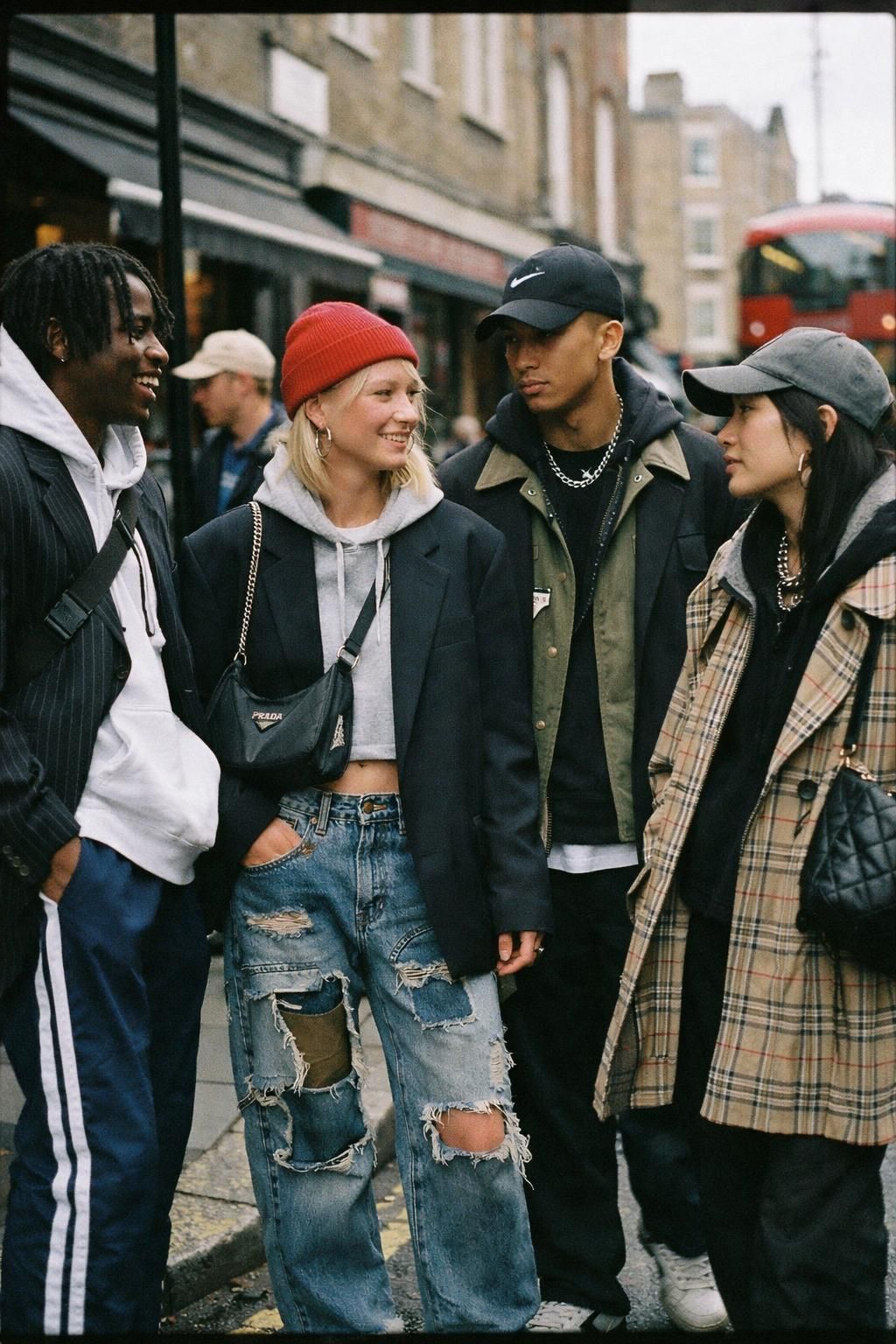
UK shoppers now build wardrobes the way they build playlists: mixing classics, discoveries, and short-term obsessions. This hybrid approach is shaped by tighter household budgets, growing literacy about materials, and the convenience of resale and rental. In practice, it means many consumers spend less on “mid” items and more strategically on pieces that promise longevity or versatility—coats, boots, bags—while using second-hand markets for experimentation.
Consider “Tom,” a 32-year-old in Birmingham working in a hybrid office. He rotates three layers: a well-cut overcoat that elevates everything, knit polos for camera-ready calls, and relaxed trousers that still read smart. He buys the coat new, the polos from a premium outlet, and the trousers from resale. His consumer behavior is not contradictory; it’s rational: he pays for durability where it matters and saves where trends are volatile.
How algorithms change shopping instincts
Recommendation systems don’t merely reflect taste; they nudge it. When social feeds prioritise “hauls,” impulsive purchasing rises, yet so does backlash against wasteful consumption. That tension is visible in the UK’s split between speed and scrutiny: people want novelty, but they also want reassurance. Brands respond with traceability pages, material explainers, and limited drops that feel curated rather than mass.
To understand this push-pull, it helps to compare how social platforms steer purchasing in other markets. The mechanics described in Germany social media trends show how quickly content formats can shape what audiences trust. In the UK, trust tends to build when creators demonstrate “wear testing,” cost-per-wear calculations, or repair journeys rather than pure unboxing.
Resale, rental, and repair as mainstream habits
Second-hand shopping is no longer framed as a compromise; for many, it’s the first stop. Rental is also used for high-visibility events—weddings, award nights, milestone birthdays—where photos are permanent but the garment doesn’t need to be. Repair has moved from niche craft to social statement, especially when visible mending becomes part of the design language.
Shopping route
Typical motivation
Best for
Common UK example
New retail
Fit reliability, warranties, brand trust
Outerwear, footwear, everyday staples
Buying a “one good coat” for multiple seasons
Resale/second-hand
Value, uniqueness, circularity
Denim, occasionwear, vintage accessories
Finding archival pieces and tailoring them locally
Rental
Short-term glamour with lower commitment
Events, trend experimentation
Renting designer looks for weddings and galas
Repair/alteration
Extending life, personal meaning
Knitwear, denim, tailoring updates
Visible mending or resizing thrifted finds
These patterns do more than change baskets at checkout; they change what designers prioritise. If garments are expected to be resold, they must survive multiple owners. That reality leads naturally into the next theme: the deep cultural influence that powers UK style—and how it’s evolving.
Cultural influence and style evolution: how UK fashion remixes music, heritage, and identity
British fashion has always thrived on remix culture. From punk’s safety pins to the sharp minimalism that followed in later decades, the UK’s strongest looks often emerge when a social scene pushes back against the mainstream. Today, the same dynamic continues—only the scenes are more networked, more diverse, and more visible. UK fashion is being built in real time by musicians, stylists, skaters, gamers, and diaspora communities who bring new references into everyday dressing.
Music still acts as a powerful engine. Grime’s legacy shaped the embrace of luxury sportswear, while indie’s return has revived slimmer silhouettes and thrifted layering. Meanwhile, dance music culture continues to influence club-ready minimalism: dark palettes, technical fabrics, and silhouettes designed for movement. The point is not that one genre “causes” a trend, but that a scene provides a social script for how to dress, where to wear it, and what it signals.
Heritage tailoring meets street pragmatism
One distinct British contribution remains the tension between formal craft and everyday rebellion. Tailoring—think sharp shoulders, structured coats, clean lines—keeps reappearing, but it’s worn in deliberately casual ways: suit trousers with trainers, a crisp shirt under a football jacket, a trench over a hoodie. This is style evolution as negotiation: respect for craft without submission to old rules.
Regional identity also matters. People increasingly want to know where a garment was made and who made it. That desire links to artisan hubs across the UK, where specialist skills—knitwear, leather, small-batch production—support a more distributed industry. It is also a cultural statement: wearing “made here” becomes a form of local pride that competes with global sameness.
Global pop references, local reinterpretation
UK looks absorb international aesthetics quickly, especially through pop culture and social platforms. K-beauty-inspired styling, cleaner silhouettes, and playful accessories have filtered into youth fashion, but typically with a British twist—more layering, more weather-proofing, more irony. For readers tracking how entertainment exports shape wardrobes, South Korea pop culture offers a useful reference point. In the UK, the “influence” is rarely copy-and-paste; it’s a toolkit used to rebuild identity locally.
Ultimately, the UK’s cultural advantage is its ability to turn difference into design: multiple histories, accents, and communities coexisting, then showing up on the same high street. The next challenge is making sure the industry infrastructure keeps pace—so cultural energy translates into careers and sustainable businesses.
Fashion industry strategy beyond London: education, manufacturing hubs, and wealth distribution
When the United Kingdom discusses the future of its fashion industry, the conversation increasingly turns to geography. London remains a global fashion capital, but long-term resilience depends on distributing opportunity—skills, jobs, and visibility—across the country. The most direct lever is education: if talented teenagers in Leeds, Newcastle, Cardiff, or Belfast can access high-quality fashion learning, the pipeline becomes broader and more representative.
One model that has gained traction is free, local training that doesn’t require moving away or paying premium fees upfront. National Saturday clubs hosted with colleges and universities are a practical example: they let young people explore fashion design and fashion business in their own region, with guidance from professionals. That early exposure can be the difference between “I like clothes” and “I can build a career.”
Scholarships, placements, and paid early-career routes
Access is not only about talent; it’s about affordability. Scholarship funds tied to BA and MA study help ensure that background and circumstance don’t quietly filter out capable students. The British Fashion Council’s education-focused funding has historically used headline events to raise money for scholarships, and the logic remains relevant today: celebrate the industry while directly investing in those who will sustain it.
Beyond degrees, the crucial factor is paid experience. Partnerships with established UK and international brands to provide grants and placements can prevent fashion from becoming a “work for free” culture. Graduate traineeships—especially year-long, salaried roles—help new entrants build real competence in merchandising, production, PR, and design operations. This is where wealth distribution becomes tangible: wages, not just applause.
Manufacturing visibility and regional craft ecosystems
Another pillar is making UK production easier to find and easier to trust. Databases that spotlight high-end and designer manufacturers across regions can connect emerging labels with local factories and artisan workshops. That visibility supports both sides: designers gain reliable capacity, and regional makers gain consistent demand.
To illustrate, imagine a small brand in Sheffield producing tailored outerwear with a limited budget. Instead of manufacturing overseas, the founder uses a national manufacturer directory to locate a specialist in structured coats in the North of England, then builds a transparent supply story. The brand’s identity becomes inseparable from place and craft—an advantage in a crowded market. The insight is simple: fashion innovation is not only digital; it’s also infrastructural.
Fashion innovation in 2026: sustainability claims, tech-enabled craft, and the next wave of modern fashion
By 2026, modern fashion in the United Kingdom is defined as much by systems as by aesthetics. Consumers want to know what a garment is made of, how it will age, and whether it can be repaired. Brands, in turn, are experimenting with traceability tools, stronger aftercare services, and design choices that support circularity. The most successful labels treat sustainability less as a slogan and more as product engineering.
Yet “sustainable” isn’t a single look. Some brands lean into minimalism and quiet luxury; others express eco-values through visible patchwork, upcycling, or bold colour stories. The common thread is accountability: can the brand explain its choices clearly, and can it show progress over time? That expectation has become a new form of cultural literacy among shoppers.
Apprenticeships and studio training as innovation engines
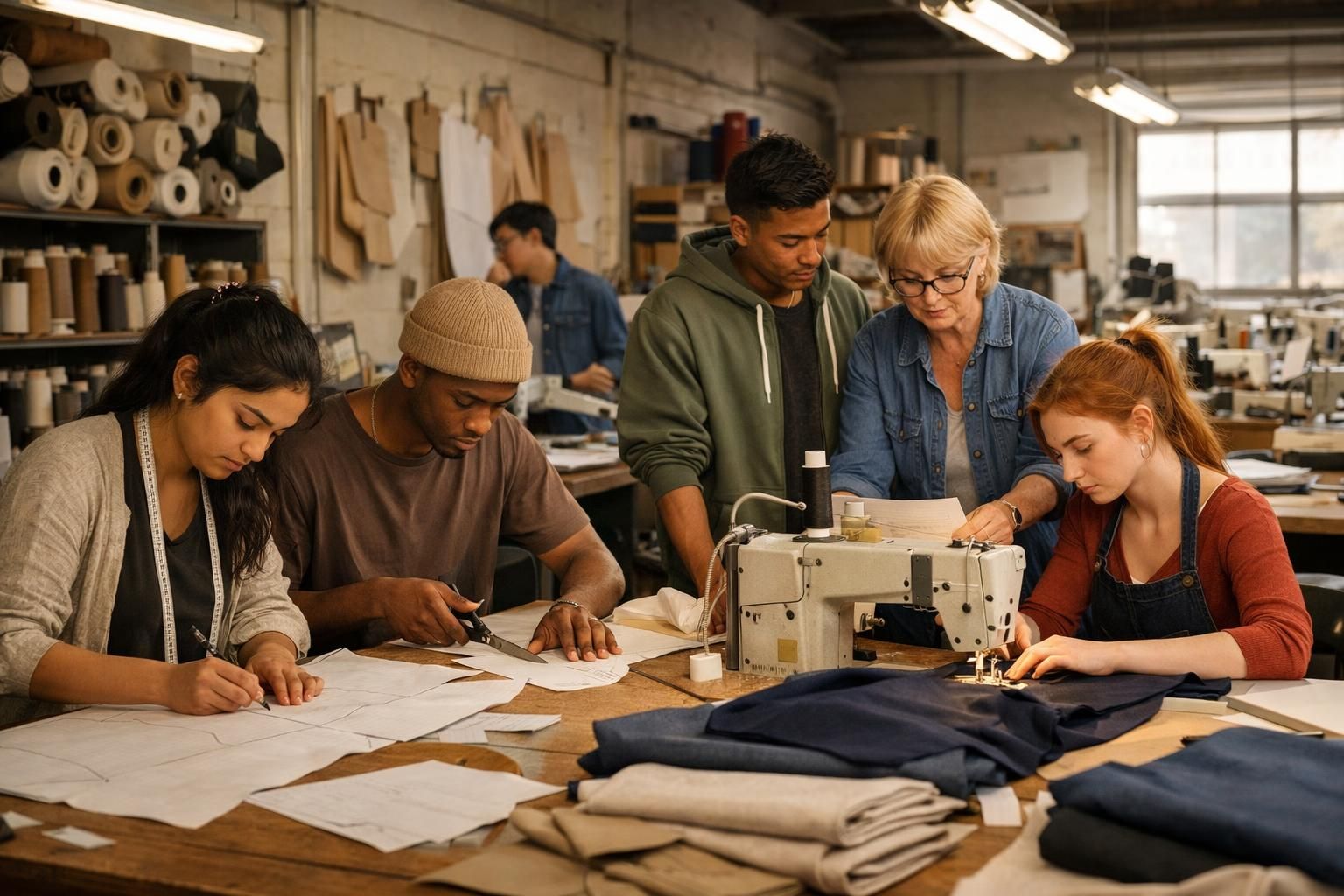
Innovation also depends on people who can actually make things. That’s why studio-based apprenticeships—developed with employers and higher education partners—matter. They offer a structured way to learn pattern cutting, sampling, production planning, and studio workflow, while earning and building a network. For many, apprenticeships are the bridge between creative ambition and industrial reality.
Take “Aisha,” a hypothetical apprentice in Nottingham: she learns how a design sketch becomes a graded pattern, then a sample, then a production run with quality control checks. She also learns costings and lead times—skills that protect young brands from failure. Her training is not separate from creativity; it makes creativity viable. That is fashion innovation with real-world impact.
Where trend analysis meets product design
The next wave of UK fashion will likely be built by teams that combine cultural intuition with data discipline. Designers and merchandisers increasingly run small experiments: limited colour drops, adjustable sizing, pre-order capsules, or localized product tests. When combined with qualitative listening—comments, repair requests, resale performance—brands can read social signals without chasing every micro-trend.
For audiences who want a visual sense of how British aesthetics translate globally, street-to-runway breakdowns are a useful watch. The key is noticing how UK brands keep a recognizable attitude even when silhouettes change: practical, layered, a little rebellious, and grounded in real life. That continuity is what makes “British style” more than a seasonal mood.
How do social trends change modern fashion in the United Kingdom?
They reshape what clothing needs to do socially: signal identity, values, and belonging. Digital visibility, shifting work patterns, and community-led scenes push silhouettes toward comfort, versatility, and expressive details that read well online and offline.
What consumer behavior is most reshaping UK fashion right now?
Hybrid shopping: combining new retail for durable essentials with resale for uniqueness, rental for events, and repair/alteration for longevity. This mix changes how brands design garments, price products, and communicate value.
Why is spreading the fashion industry beyond London such a priority?
Because national resilience depends on broader access to education, paid early-career routes, and regional manufacturing. When talent pipelines and production networks exist across the UK, more communities benefit economically and creatively.
What does fashion innovation look like in the UK by 2026?
It blends traceability and circular design with craft skills and structured training such as apprenticeships. The strongest innovation is practical: garments that last, can be repaired, and have transparent supply stories—supported by skilled people and regional infrastructure.