
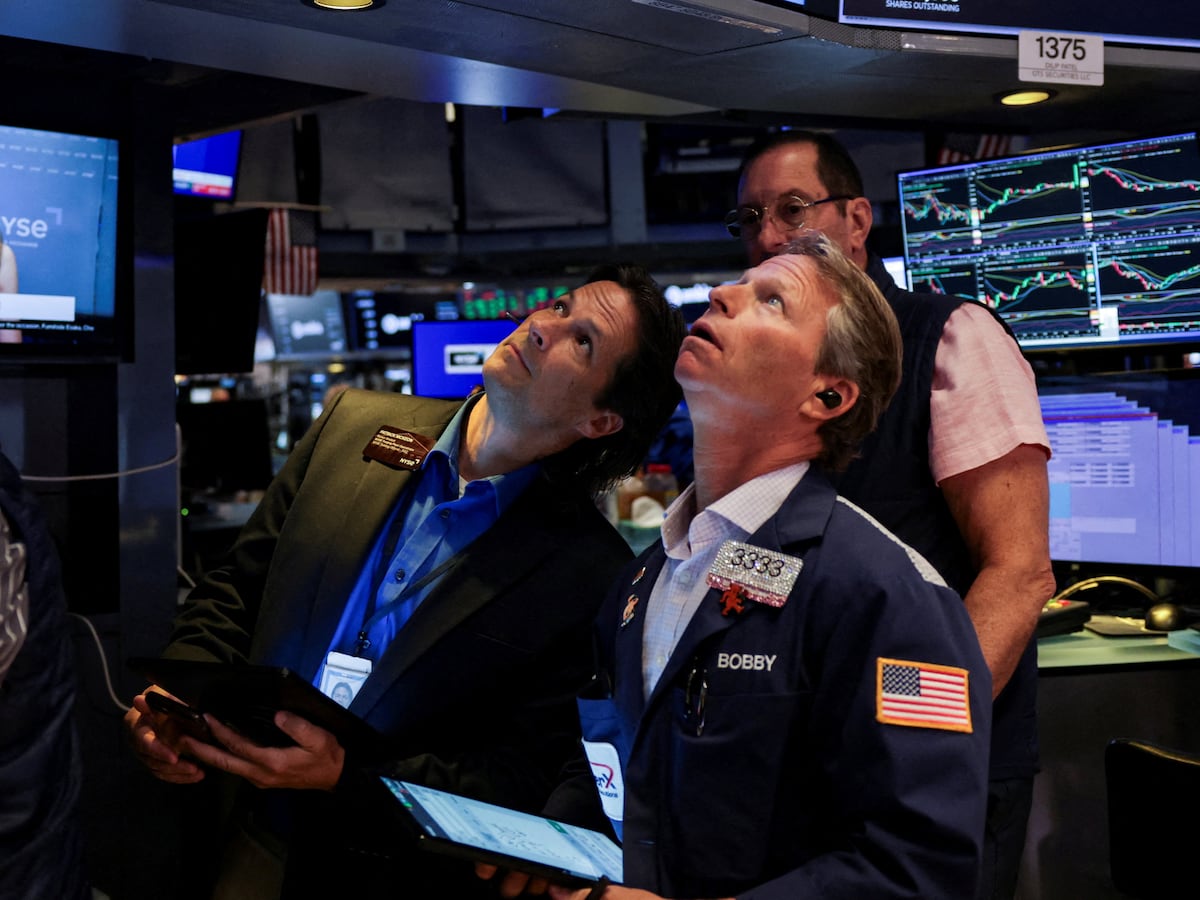
The world isn’t perfect, and neither is the market.
The U.S. and European stock markets are at all-time highs and are expected to continue rising in 2026. However, according to most economic forecasts, the various open geopolitical fronts call for caution.
In the first 10 days of the year, the U.S. has militarily intervened in a country and kidnapped its head of state. Interference in Venezuela has given way to President Donald Trump’s threats against Colombia and Greenland. The possibility of invasion and annexation has generated uncertainty, which is the last thing investors like.
Furthermore, some specters of 2025 are resurfacing. The noise surrounding a possible artificial intelligence bubble is growing louder. And, for the first time, more than half of fund managers believe in it, according to the latest survey conducted by Bank of America.
Another open question is the private lending market. The bankruptcy of U.S. automotive parts manufacturer First Brands late last year triggered the collapse of two of the largest direct lending companies in that sector: Tricolor and PrimaLend. “When you see one cockroach, there are probably more,” warned J.P. Morgan CEO Jamie Dimon.
Trump’s imperialist shift has relegated the trade war to the back burner. But appearances can be deceiving: the U.S. Supreme Court must rule on the legality of the tariffs imposed so far, which have forced an agreement with the European Union and a one-year truce with China. Many analysts point out that the main impacts of the tariffs on the global economy will be felt starting in 2026.
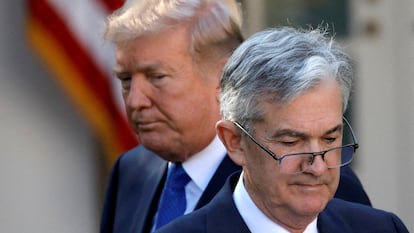 Trump and Powell in 2017, at the time of his appointment as head of the Federal Reserve.
Carlos Barria (REUTERS)The Fed’s independence
The aftermath of the U.S. attack on Venezuela hasn’t been felt adversely in the markets. Defense-related stocks — especially in Europe, where they’re registering their best start to the year seen this century — have been boosted. Beyond the short-term impact, however, analysts from Morgan Stanley emphasize the role that the interventionist wave could play when it comes to the U.S. dollar. “The currency’s reaction to key events has the capacity to generate sustainable price movements. For now, we’re watching to see which way the winds blow,” they note in a report.
The dollar plummeted almost 10% against other major currencies in 2025, a decline it hadn’t experienced in eight years. And, amid doubts about the U.S. labor market (hiring in 2025 is the lowest since the first year of the pandemic), this is a year of changes at the Federal Reserve. In February, all the regional governors — who represent almost half of the votes in the interest rate decisions — will be replaced. The main event will come in May, with the replacement of Jerome Powell as chairman of the central bank, likely by a Trump ally who will comply with his demands for interest rate cuts.
“The most underestimated extreme risk in 2026 is that the Fed will loosen monetary policy more than economic conditions warrant, inadvertently reigniting inflation,” acknowledged Lale Akoner, a global market strategist at eToro. U.S. inflation cooled to 2.7% in December, although it remains far from the 2% target.
Stock market correction (or a bubble)
The consensus of analysts, compiled by Bloomberg, is that the stock market will maintain its upward trend in 2026, albeit at a more moderate pace. However, there are growing concerns about the risks. “We believe that the AI supercycle will continue through 2026, but we expect more volatility,” Citi analysts stated in their outlook for the year.
Just a couple of months ago, the top executives at Goldman Sachs and Morgan Stanley anticipated a stock market correction of more than 10% within two years. “It just means that things run [their course] and then they pull back, so people can reassess,” commented Goldman Sachs CEO David Solomon.
After the initial fervor surrounding all listed companies with exposure to artificial intelligence, the market has become more selective. This is especially true as tech companies have turned to debt in order to finance investments, whose returns remain uncertain. This caution was behind the year-end correction seen in Nvidia, Meta and Oracle, three industry giants. Oracle, in particular, has reason to worry: its largest client, OpenAI, will face its first debt maturities in the second-half of the year, as Citi points out. A potential default or postponement would drag down the cloud provider’s stock price.
 Oracle logo is seen in this illustration taken September 9, 2025. Dado Ruvic (REUTERS)Tensions over private lending persist
The first domino in the private lending market has already fallen with First Brands. Echoing Dimon’s observation about “cockroaches” (a reference to a type of financial problem), Bank of England Governor Andrew Bailey asked: “Are these cases idiosyncratic, or are they what are called ‘the canary in the coal mine?’” Private lending companies have a bad reputation for their opacity: they offer loans like traditional banks, but they aren’t subject to the same transparency requirements regarding their interest rates, nor do they have to demonstrate the same levels of solvency.
Known in financial jargon as “shadow banking,” these entities — which facilitated the 2008 housing market crisis — have once again boosted the lending market in the U.S. “All the risky lending has been done in the shadows,” warned Raphaël Gallardo, chief economist at Carmignac, a French asset management firm. Last November, the European Central Bank (ECB) warned that 10% of banks’ overall assets in the Eurozone are exposed to private credit. This percentage is especially high in Germany, France, the Netherlands and Ireland.
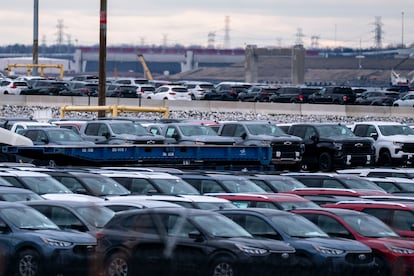 Chevrolet and Ford cars at the Port of Baltimore, United States.Nathan Howard (Bloomberg)
The timing of politics and international trade doesn’t line up. According to the shipping industry, Donald Trump’s tariffs will begin to be felt in ports starting this year. In mid-December, researcher John McCown, from the Center for Maritime Strategy, stated in a report that “[global] container supply chains have already begun to adapt and reconfigure trading patterns.”
Another blow could be imminent, with the U.S. Supreme Court’s ruling on the constitutionality of the tariffs. An overturning of the tariffs would cause a collapse in the U.S. debt market (the government would lose more than $2 trillion in revenue by 2035), just as the announcement of the tariffs sent the stock market plummeting last April. However, it’s expected that, if they’re overturned, they’ll be replaced by others. Some hedge funds are already betting on this, and have been acquiring the rights to potential refunds on tariffs paid by importers to the federal government in 2025.
Upcoming elections
Trump will face midterm elections in November. This event will be a referendum on his return to the White House and will reveal how U.S. citizens are responding to his immigration policy, the tariff war and its impact on prices, as well as the labor market. “If we don’t win the midterms […] they’ll find a reason to impeach me. I’ll be impeached,” Trump said. Donatella Principe, director of Market Strategy for Continental Europe at Fidelity, points out that “if he loses one of the two houses, Trump loses power.”
Outside the United States, the year will be marked by elections in several emerging economies, such as Hungary, Brazil and Colombia. However, analysts are clear: the real wild card will come from somewhere else.
Sign up for our weekly newsletter to get more English-language news coverage from EL PAÍS USA Edition