
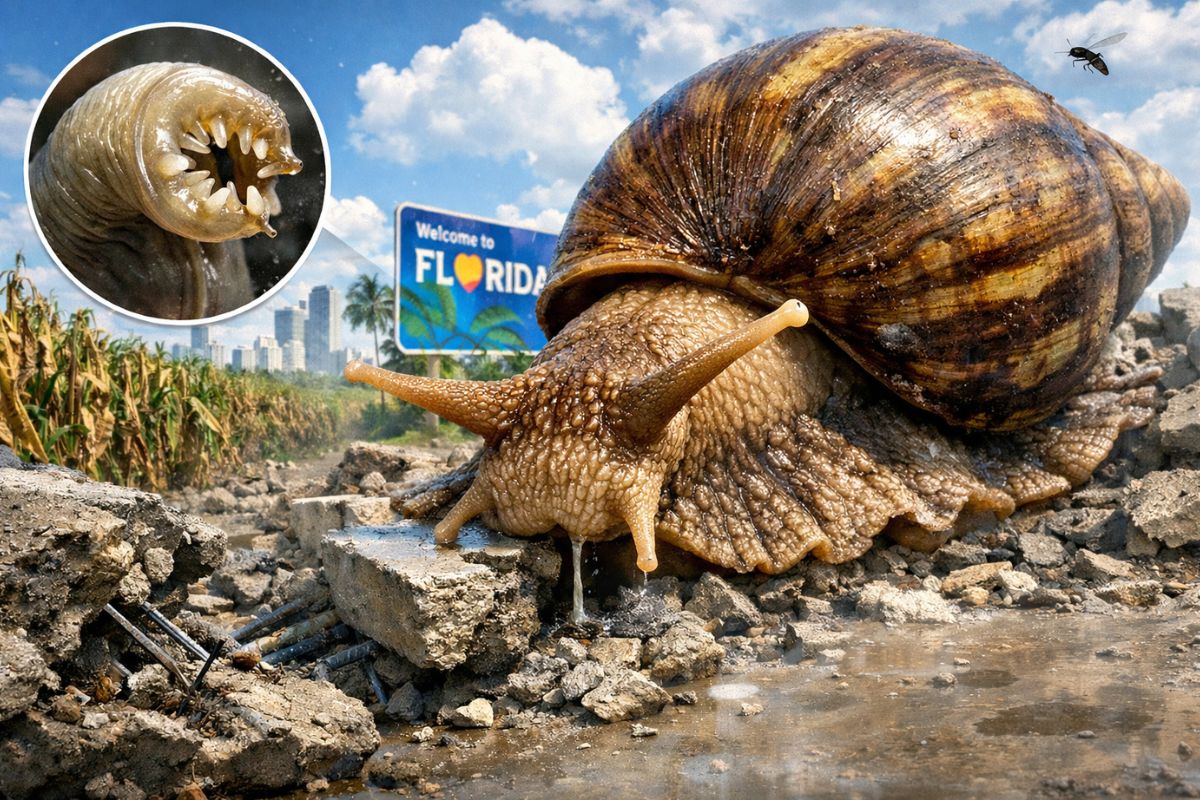
O Giant African snail returns to haunt Florida.After three major outbreaks in just 60 years, this invasive species has already forced authorities to spend more than $40M monthly In eradication campaigns, entire neighborhoods were quarantined, and tons of poison were used. With more than 12 teethCapable of devouring crops, paint, mortar, and even concrete, the snail is also a vector for a parasite that can attack the human brain.
Meanwhile, in other countries it is farmed, eaten, made into cosmetics, and even used to monitor pollution. The same species that causes panic and quarantine in Florida is a source of income in parts of Africa and Asia. At the heart of this story is always the same protagonist: the giant snail, discreet in appearance and devastating in impact.
What is, after all, the giant snail African
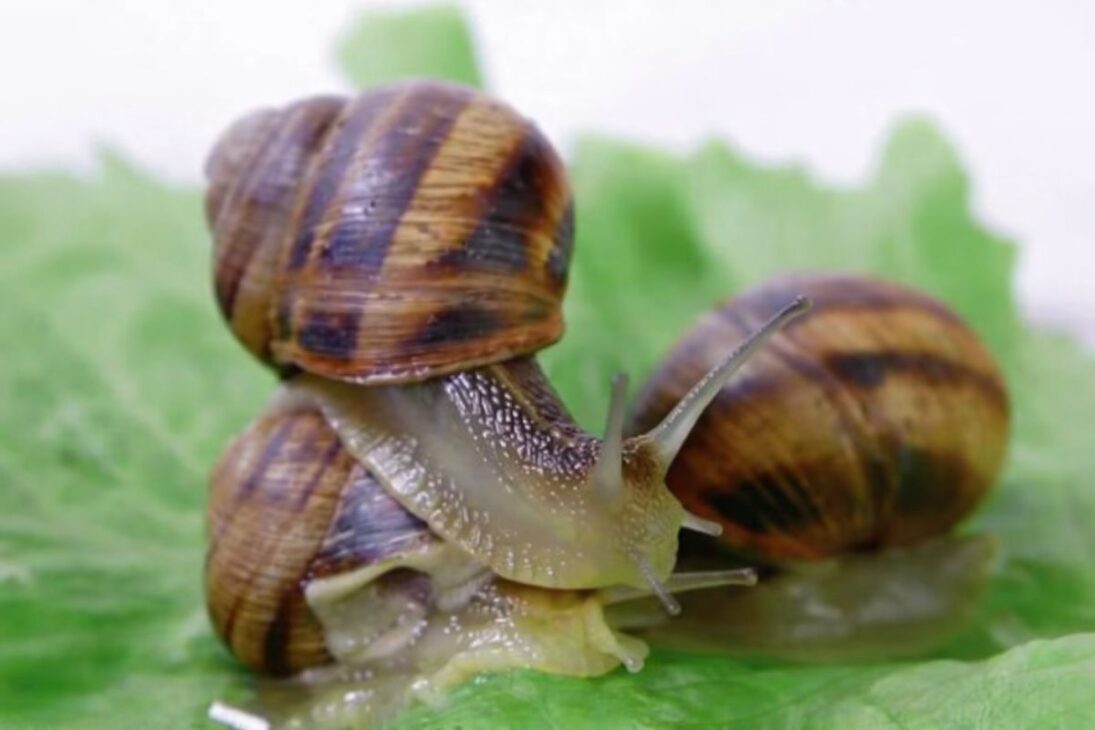
The so-called giant African snail is a terrestrial mollusk that, in its adult stage, can reach the size of a human hand, with 20 to 30 centimeters in length and weighs more than a large apple.
— ARTICLE CONTINUES BELOW —
See also other features
Satellites, drones, marine robots, and artificial intelligence are working together to monitor oceans, track whales, save endangered species, and transform science into a technological race against the extinction of marine life.
Scientists are breeding sunflower starfish in the lab, predators capable of devouring dozens of sea urchins a day, to reverse the collapse of California’s kelp forests, restore the ocean’s balance, and save an ecosystem that once supported millions.
With little food and zero light, the ocean floor creates seemingly impossible “giants”: 40 cm isopods, colossal squid, and 7 m sharks thrive due to efficiency, cold, and insulation, but they may disappear as oceans warm.
A frog thought to be extinct for half a century has reappeared alive in an Israeli reserve, surprising environmental authorities and rekindling hope for this extremely rare species that disappeared from scientific records and is now intriguing researchers about its continued hidden survival in nature.
Its tall, spiraled hull is extremely durable and rich in heavy metals, and some record-breaking individuals reach 40 centimeters and almost 1 kilogram.
The giant snail’s main weapon is inside its mouth: a “sandpaper” with more than 12 microscopic teeth, a number four times greater than that of a shark.
With this structure, it scrapes leaves, bark, wood, paint, and virtually any surface containing organic matter or calcium.
Although it originated in East Africa, the giant snail has already invaded more than 50 countries across four continentsincluding the Amazon rainforest, riverside villages in Asia, the suburbs of Tokyo, and many residential areas of Florida.
Its appearance may resemble that of a common snail, but It is the only known invasive species capable of eating concrete. and to carry a dangerous array of parasites.
How the giant snail arrived in Florida
The story of Florida and the giant snail is a series of human errors. The first outbreak began in the 1960s.When they were children in Miami, they kept three snails as pets.
They reproduced rapidly and ended up being released into the environment. Shortly afterwards, the authorities were facing… 18 snails and enough eggs to cover a basketball court.
It took 10 years and about $ 1 million (something between US$10 and 11 million in current values) to eradicate this first invasion.
After that, the government tightened the rules. The Department of Agriculture began to… completely prohibit the import, breeding, and trade of the giant snail….with fines of up to US$250 and up to five years in prison. It seemed like the problem was over. It wasn’t.
Between 2010 and 2011Florida experienced a second, far worse outbreak. A religious group illegally brought snails from Nigeria for rituals, while others arrived hidden in airplanes and cargo.
In six years of campaigning, the state destroyed 160 snailsalmost nine times more than in the first invasion, at a cost exceeding $26M monthlyAnd, once again, he declared the species eradicated.
Em 2022The giant snail has reappeared, this time in Pasco County. The investigation has pointed to a persistent vector: the black market, with eggs sold online for around US$100 for a pack of 10, and adult pairs reaching US$300–500.
Even with the ban in place since 2014, smugglers continue to bring in the species. Today, experts agree on one point: The giant snail did not disappear.It simply hides in trees, pipes, and underground, waiting for the next rainy season.
How the giant snail devours crops, homes, and infrastructure.
The giant snail is not just a threat to agriculture. It is a complete problem for crops, gardens, homes, and urban infrastructure.
In the farming, the combination of 12 teeth and explosive reproduction It allows a group of a few hundred individuals to destroy an entire plantation in a single night.
They feed on more than 500 plant speciesFrom lettuce, peas, papaya and mango to expensive ornamental plants in residential backyards.
When fresh food is scarce, they enter survival mode and begin eating dead plants, animal remains, and even other native snails, pushing local species to the brink of extinction.
To maintain its strong shell, the giant snail needs calcium. And it finds it in paint, mortar, concrete and bones.
In practice, it climbs walls, reaching heights of 6 or 7 meters, and scrapes facades and windows in search of limestone. There are records of snails covering walls, pipes, and second-story windows in search of any source of calcium.
The slime of the giant snail is also a problem. The mucus contains acids and enzymes that break down materialsclogging agricultural pumps, blocking water pipes, and accelerating metal corrosion.
In some states, snails have already invaded electrical substations and control panels, causing short circuits because their slime is slightly conductive.
When the invasion reaches entire neighborhoods, the measures taken are extreme. In one of the campaigns in Florida, a community was… two years under quarantineIt was forbidden to move soil, plants, garden waste, or fertilizers outside of houses, precisely to prevent eggs and snails from being accidentally carried to other areas.
The parasite that attacks the human brain.
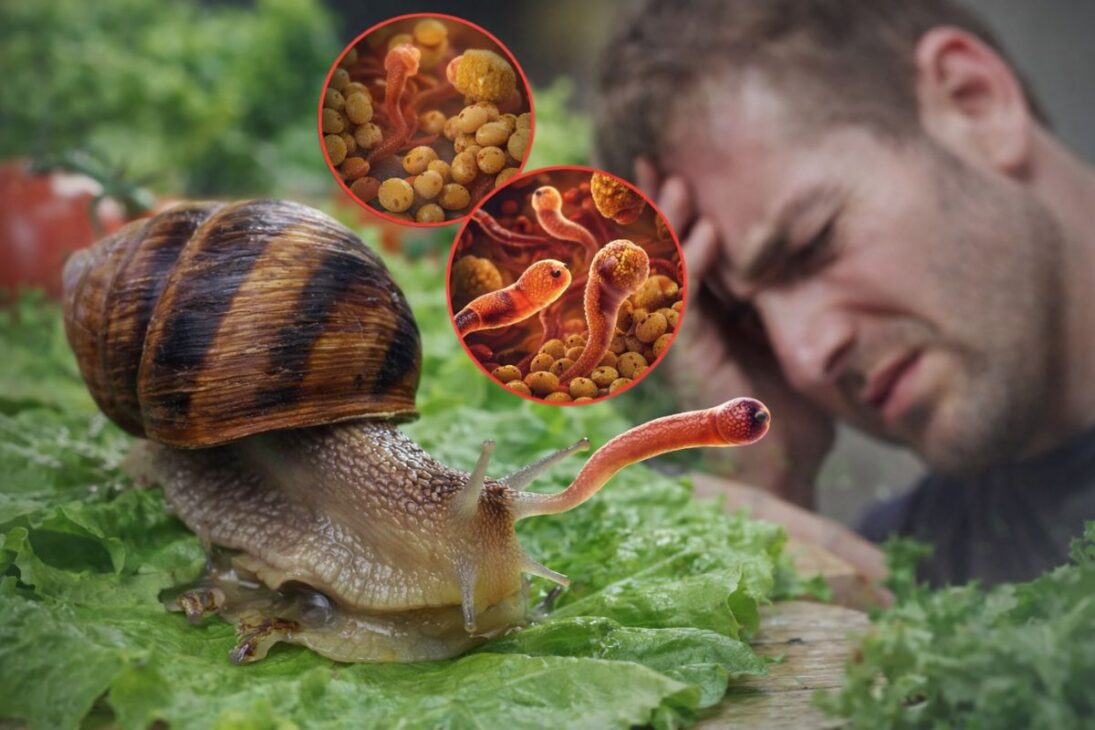
If the destruction of crops and concrete was already cause for concern, the The greatest danger of the giant snail is invisible..
The slime and body of this mollusk can harbor one of the world’s most feared parasites, known as the “brain-eating parasite,” which is associated with a rare and serious type of meningitis called eosinophilic meningitis.
The cycle is cruel: the snails eat rat feces containing the parasite’s eggs. These eggs then settle in the… liver, lungs and lymphatic system of the giant snail.
When a person consumes raw vegetables contaminated with slime, poorly washed fruits, or handles snails and then touches their eyes, nose, or mouth, they can become infected with a minimal amount of the organism.
Symptoms range from severe headaches, neck stiffness, and vomiting …even convulsions, paralysis, loss of sensation in the skin and, in the most severe cases, coma and death.
The World Health Organization describes this disease as capable of causing serious and possibly irreversible damage to the central nervous system.
There is no specific cure: doctors treat the symptoms while the immune system itself tries to eliminate the parasite.
World medical literature has already recorded More than 3 cases in over 30 countries.In just one location in China, there were 125 cases in a single outbreak.
In Hawaii, one of the areas with the highest infection rate in the United States, more than 80 symptomatic cases Cases have been confirmed since 2004, including patients with total paralysis after consuming wild vegetables harvested after the rain.
A 2019 study from the University of Hawaii found the parasite in 58 percent of the wild snails analyzed.
And that’s not the only risk. Analyses of giant snail slime conducted in partnership between the University of Florida and the U.S. Department of Agriculture detected… Salmonella, other pathogenic bacteria, worms, and microorganisms capable of causing intestinal and skin infections..
Even the eggs have mild toxicity and can cause severe skin irritation, which is why it is not recommended to touch them with unprotected hands.
Eradicating the giant snail seems simple on paper: apply poison, collect the animals, destroy the eggs. In practice, It’s almost an impossible mission.
First, because of reproduction. The giant snail is hermaphroditeThat is, each individual has both male and female reproductive organs.
When young, they function like males; as they grow, they become complete hermaphrodites. This means that When two snails meet even once, both can emerge “pregnant.”.
Mating occurs at night, can last up to two hours, and the giant snail is capable of… storing sperm for up to two years.
Even if an individual is captured later, it may still be carrying stored sperm, ready to fertilize eggs later.
A young snail lays about 100 eggs; at maturity, it can lay… 200 to 400 eggs at a time, three to six times a year..
Under ideal conditions, a single animal is capable of producing more than 2 eggs per yearand approximately 90 percent of them hatch within two weeks. The hatchlings are independent from birth: they feed and grow without any parental care.
Furthermore, the giant snail has a kind of “survival mode.” During dry or cold periods, it burrows deep into the soil and forms a… calcium carbonate membrane closing the hull opening, entering a state called estivation.
At this stage, it does not move, does not feed, becomes resistant to pesticides, and can survive for up to eight months relying solely on the water stored in their bodies, they return to activity as soon as the rains return.
The hiding place also works in the species’ favor. Giant snails burrow into pipes, roofs, tree hollows, flowerpots, greenhouses, wall cracks, and any damp corner.
Sprayed the garden? They go down into the drainage system. Treated the soil? They climb onto the roof. With each wave of chemical control, a portion of the population simply hides and waits.
The giant snail as a business in other countries
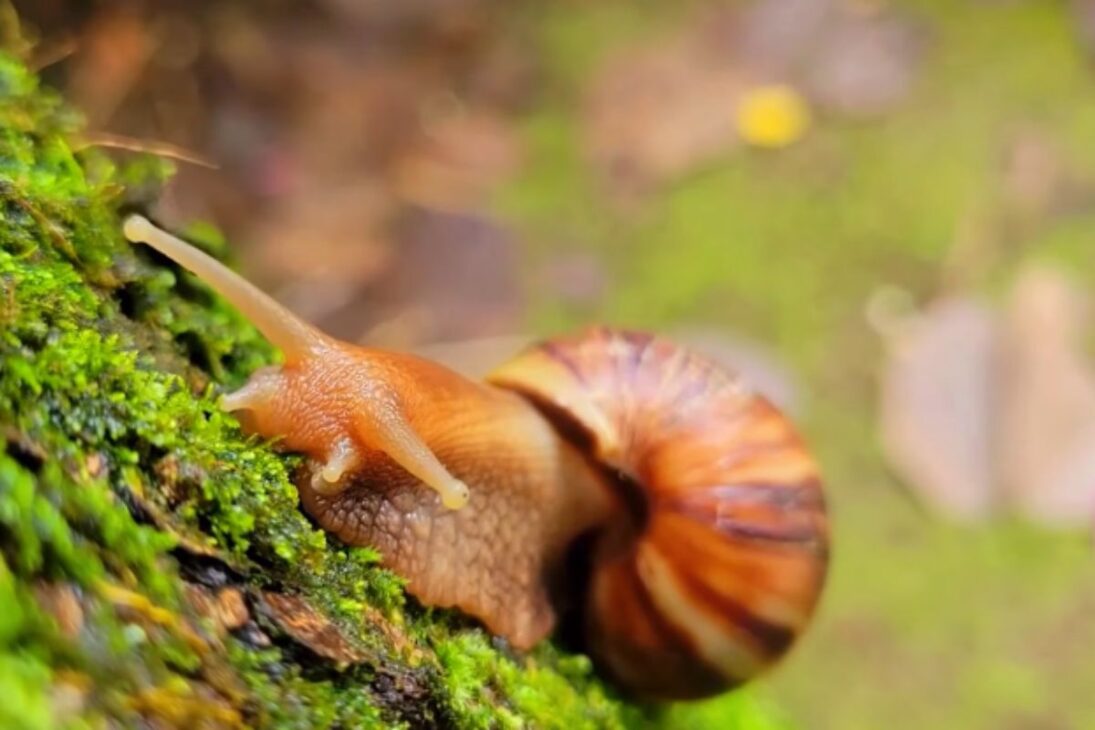
While Florida invests millions to exterminate the giant snail, Some countries see the same species as an economic opportunity..
In Ivory Coast, for example, the giant snail is part of the traditional cuisine and has become the basis of an industry.
With deforestation drastically reducing the number of native snails, producers have started raising the species in approximately 1.500 farms only in the humid south of the country.
Specialized companies transform giant snails into meat, soaps, shower gels and cosmetics Made with saliva, which is rich in glycoproteins and hyaluronic acid.
One kilogram of saliva can reach… US$ 150 to 300, helping small producers to earn around US$20 per year in regions where the monthly minimum wage is around US$125.
In Asia, some governments avoid putting the giant snail on their plates, but use it as a tool. Chinese researchers have shown that the tissues and shells of these animals accumulate heavy metals and contaminants, transforming the giant snail into… “walking biological sensor”.
Apps allow residents to photograph snails, send their location, and specialized teams collect the animals to measure pollution levels and create detailed contamination maps.
In certain cities, One ton of giant snail is processed into calcium-rich material for construction and organic fertilizer., reducing costs by up to 40 percent compared to simple incineration.
Nevertheless, authorities are reinforcing the warnings: do not touch, do not raise at home, and do not consume without strict control, due to the number of parasites the species can carry.
How Florida responds to the giant snail threat
Given this scenario, the United States considers the giant snail a national threatnot an opportunity.
The Department of Agriculture classifies the species as “unconditionally prohibited”This means that it is not permitted to create, sell, transport, or even study it in a common laboratory.
In Florida, at-risk areas receive rotary chemical treatments with products containing metaldehyde and iron phosphate every 7 to 14 days. These compounds do not explode or burn the snail, as some internet jokes suggest.
They destroy the glands that produce mucus.Without it, the animal cannot move, feed, or retain water. In 48 to 72 hours, the snail dehydrates and dies.
To increase efficiency, the state maintains night patrols Between 22 PM and 4 AM, exactly when the snails leave their hiding places.
During a single rainy season, teams managed to collect… 3.500 snails in 12 nights, with some neighborhoods recording more than 300 individuals in a single search shift.
There are also four-legged allies. Trained sniffer dogs, such as Raider and Bear, work in official programs to locate [sniffer dogs]. pockets of eggs buried 10 or 12 centimeters deep.
In just one year, one of these dogs helped find 43 groups of eggs, the equivalent of more than 10 potential new snails.
State laboratories also use the technology of environmental DNAWith just two grams of soil, technicians are able to detect traces of genetic material from the giant snail even when no animal is found in sight.
This allows areas to be isolated before outbreaks explode, reducing reaction time compared to traditional methods.
Despite all these measures, the result so far is clear: Temporary control, not permanent eradication.Whenever the weather, the black market, or human carelessness combine, the giant snail reappears.
What the giant snail reminds us about invasive species.
The story of the giant African snail shows that Not every ecological disaster begins with a large or visibly threatening animal..
Sometimes, it all starts with a small mollusk that someone brought in their suitcase, kept as a pet, or released in their backyard without thinking about the consequences.
In just a few years, this same snail can destroy crops, corrode houses, clog water systems, spread parasites, and cost tens of millions of dollars in emergency cleanups.
At the same time, the same species can be exploited as food, cosmetics, and a pollution sensor in other countries.
At the end, The giant snail is a reminder of how fragile ecosystems are and how seemingly small human decisions can have gigantic effects..
It also highlights how each country needs to balance risk, economics, and public health when dealing with invasive species.
So, after learning about the story of the giant snail in Florida, do you think Brazil and other countries should treat this species only as a threat, or should they try to transform part of the problem into a safe and controlled opportunity?