
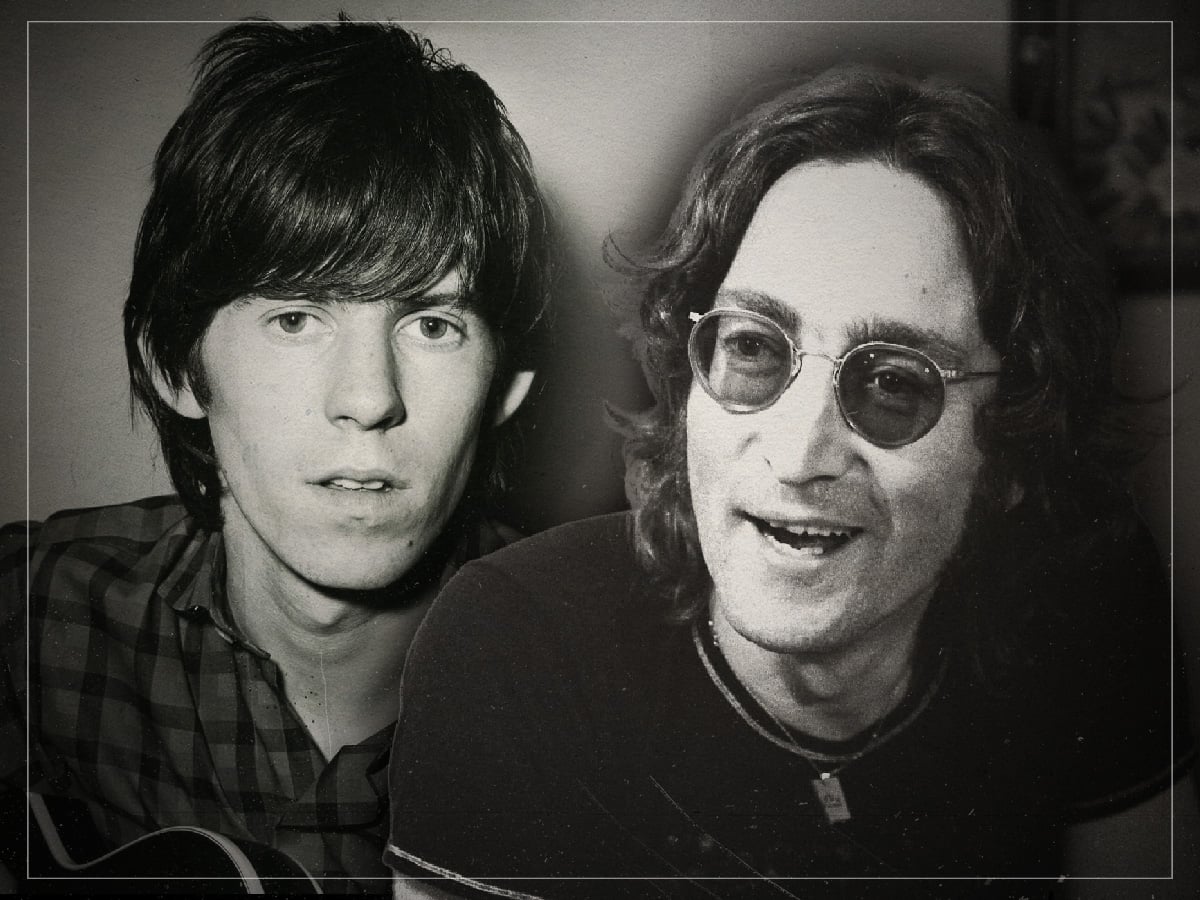
(Credits: Far Out / Alamy / Tony Barnard / Los Angeles Times / UCLA Library)
Mon 26 January 2026 18:30, UK
If the 1960s represented a race towards rock and roll supremacy, then The Beatles and The Rolling Stones were damn-near the only two front-runners.
Both fighting to seize the crown of rock royalty, buoyed by the counterculture appetite of the 1960s, both bands expanded on the blues rock foundations of their predecessors and turned them into something more colourful and goddamn charismatic, which is something critics would quickly label as pop music.
Of course, before their rise to fame, Elvis Presley was quietly carving out the idea of musical stardom. Wading through the sea of screaming fans, he embellished the idea of musical performance one knee shake at a time, allowing for a band like The Beatles to come along soon after and heighten the performance even further.
It’s largely meant that now, in the early parts of the 20th century, we look at the rear view mirror of culture and place The Beatles at the beginning of musical history. The shadow they cast is simply so large that we fail to see beyond it and remember that many greats walked so that they could run. Greats like the previously mentioned Presley, but also the blues greats of old, like Muddy Waters, Little Richard and perhaps most importantly, Chuck Berry.
He’s a musician that John Lennon is keen to divert attention to, reminding rock-hungry music fans that he was, in fact, the true pioneer of these heavy sounds and without him, there would likely be no Beatles entirely.
He explained, “If you had to give rock and roll another name, you might call it Chuck Berry,” adding, “To us, he was a magician making music that was exotic, yet normal, at the same time.”
It was a sentiment Paul McCartney supported when writing on his website following Berry’s death. He said, “We learnt so many things from him which led us into a dream world of rock and roll music.”
The Beatles famously adopted that rock and roll soundscape in their early records, before transforming it into something more experimental come the late 1960s. But The Rolling Stones bought into the lifestyle a whole lot more, paying homage to the blues rock foundations of good old-fashioned rock music wherever their music took them.
Keith Richards’ unrelenting pursuit of rock perfection was similarly driven by a love for Berry, who he professed shaped his guitar playing. “When I started, all I wanted to do was play like Chuck [Berry]. I thought if I could do that, I’d be the happiest man in the world,” he explained.
He continued to explain that Berry’s style was driven by an attitude that epitomised the essence of rock and roll, an essence that is rebellious and antagonistic at its core. He explained, “When I saw Chuck Berry in Jazz on a Summer’s Day as a teenager, what struck me was how he was playing against the grain with a bunch of jazz guys,” concluding, “To me, that’s blues. That’s the attitude and the guts it takes. That’s what I wanted to be.”
Related Topics
The Far Out Beatles Newsletter
All the latest stories about The Beatles from the independent voice of culture.
Straight to your inbox.