
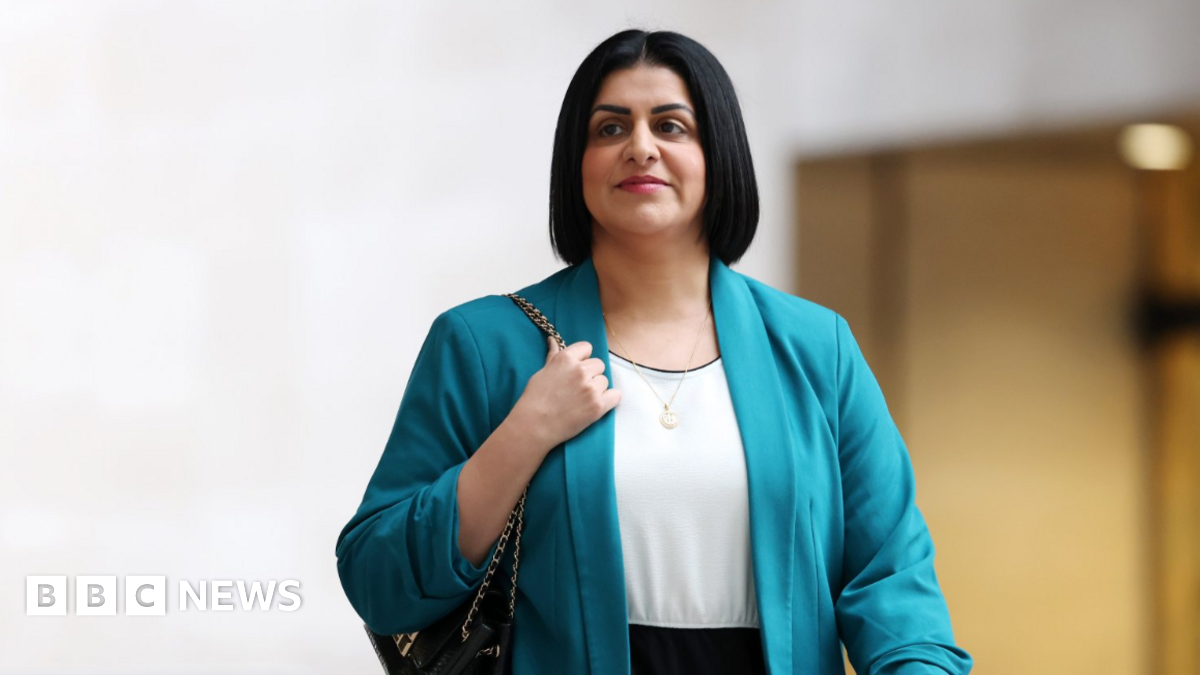
The home secretary told Parliament that Monday’s 106-page white paper represented “the most significant changes to policing in this country in nearly 200 years”.
As part of the changes, Home Office is funding 40 more Live Facial Recognition vans after the technology proved successful in South Wales and London, making them available in all parts of England and Wales.
There are also plans to set up a new National Centre for AI in policing. The idea is to develop new AI tools for police officers to help with things like going through CCTV footage and transcribing and redacting documents.
Mahmood previously unveiled plans in November to get rid of elected Police and Crime Commissioners, and recently spoke of plans to create a National Police Service, referred to as the British FBI, which she said will free up forces to tackle everyday crime – plans which are now confirmed.
The proposed new NPS will bring together the existing National Crime Agency (NCA) and Counter Terrorism Policing, as well as take in some functions currently carried out by the National Police Chiefs’ Council (NPCC), the National Police Air Service (NPAS), and the College of Policing.
It was also confirmed that the power to sack chief constables will return to the home secretary, and that a a licence to practise for police officers – similar to the one for doctors – would be created.
On the merging of police forces, the Home Office said the precise number and nature of each force will be the subject to a review that will report back to Mahmood in the summer.
Labour’s Avon and Somerset Police and Crime Commissioner Clare Moody welcomed the review – but urged caution.
She told the BBC: “There does need to be careful analysis of what this will deliver. Not just for numbers, but how this will this support our neighbourhoods.”
In response, Conservative shadow home secretary Chris Philp said the government’s statement “was striking for what it did not say”, pointing at falling national police numbers since Labour came to power.
He also told the Commons the Tories would oppose the plans to merge forces.
Philp said: “Her plan includes mandating the merger of police forces, and briefings over the weekend suggest a reduction from 43 down to 10 or 12”.
“Such huge forces will be remote from the communities they serve,” he said.
“Resources will be drawn away from villages and towns towards large cities.”
Home Office sources insist that reducing the number of forces will not make policing less local, and its focus is on reducing duplication and the huge disparities in performance between forces.
Scotland merged its eight forces in April 2013 to create Police Scotland. The Police Service of Northern Ireland (PSNI) was established in November 2001. It replaced the Royal Ulster Constabulary (RUC) as part of the Good Friday Agreement reforms.