
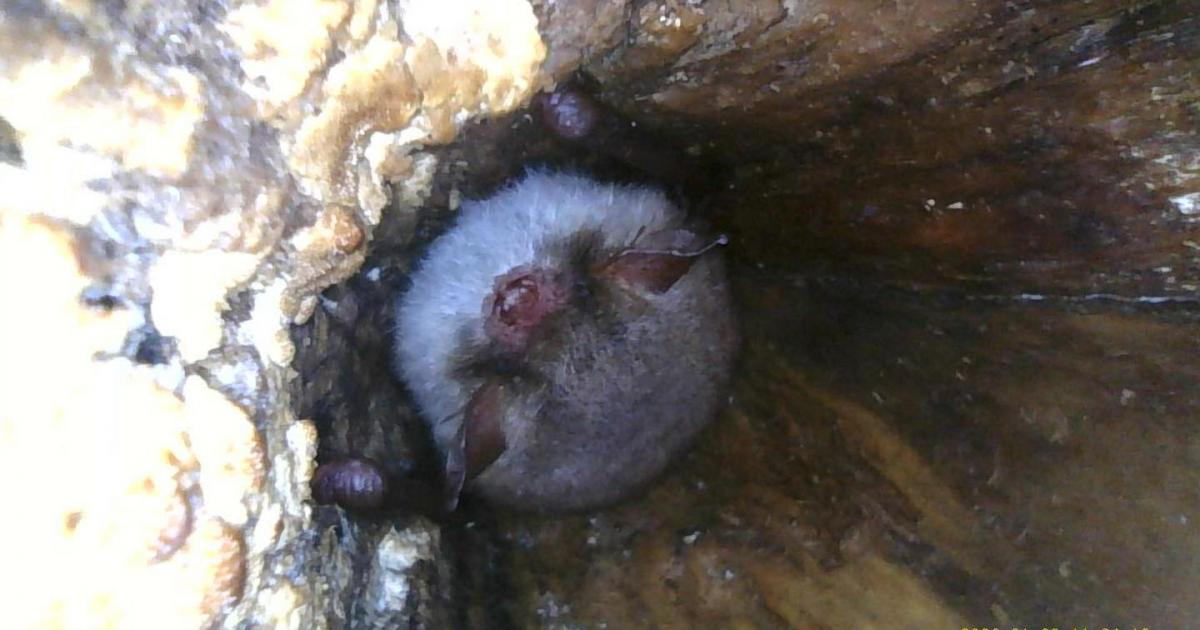
The midge-munching mammals are among the most secretive of the UK’s 19 bat species, often living alone in small cracks, crevices and other cave-like areas.
The discovery has brought unforeseen costs to The Bug Parc, which must now have a full ecology report to check for more nesting bats.
Martin French, expert entomologist and the invertebrate zoo’s founder, said: “We could see that some of the trees in a copse at the far end of the parking area were old, dying and full of holes – ideal nesting holes for bats.
Martin French runs the Bug Parc (Image: Sonya Duncan)
“A tree survey has recommended that the trees be felled, so we commissioned a bat survey to see whether they were in fact occupied.
“The survey was carried out on January 8, and sure enough, using an endoscope to test some of the holes, a Natterer’s bat was discovered in a hole just five foot off the ground.”
Natterer’s bats, also known as red-armed bats, grow to a body length of up to 5cm, can have a 30cm wingspan and weigh between 7 to 12 grams – about the same as two teaspoons of sugar.
Although they are found across most of the country, the Bats.org.uk website calls Natterer’s bats a “scarce and poorly known species”.
A full ecology report will include hiring a specialist 20-metre cherry picker for three days in May to search through the tree canopy.
Mr French has been quoted as much as £1,200 per day for them and has called on help from local companies.
“As a small business, we are looking to find the most cost-effective method to allow the three required surveys to be enabled,” he said.
“Who would have thought helping our bat population would result in such high costs.
“The hope is that, despite the recommendation being to fell the trees, we can keep the oldest stumps, make them a safe height, and strengthen them to allow the bats to continue to use the roosts.”