
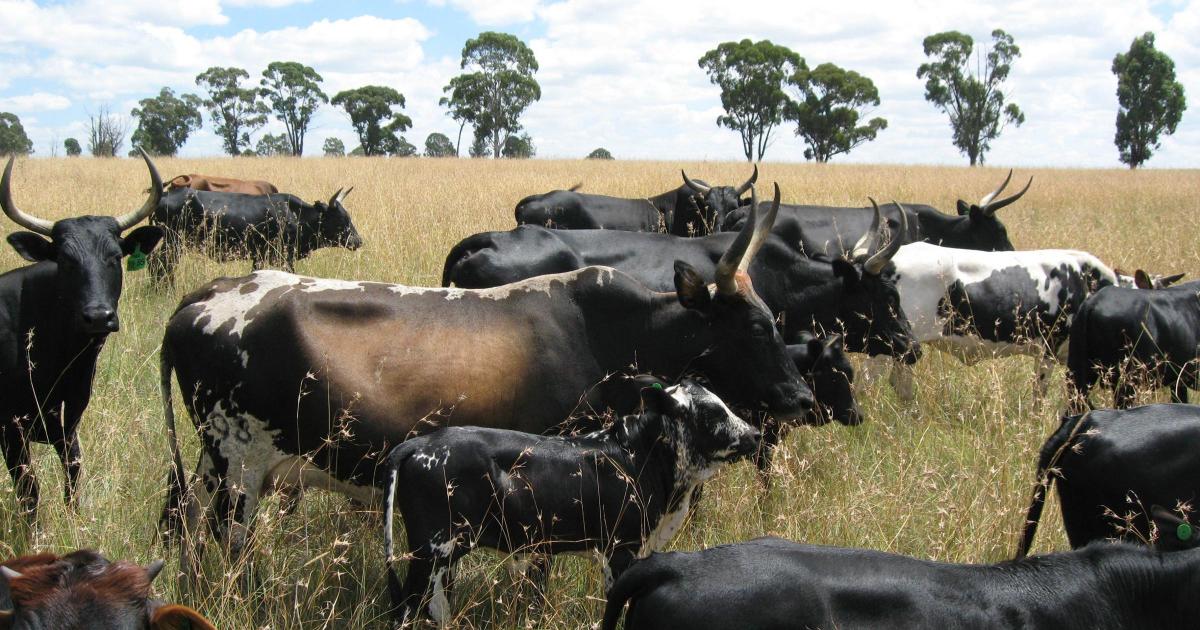
South Africa lost its FMD-free status in 2019, but the current outbreak – which emerged in 2021 – has intensified in recent months and shows little sign of being brought under control. To date, eight of the country’s nine provinces have reported confirmed cases.
The situation has also raised alarm beyond South Africa’s borders. Zimbabwe has reported outbreaks of its own and is struggling to contain the disease, while Botswana – where cattle farming underpins the agricultural economy – has tightened import and export controls in response.
Botswana’s Ministry of Agriculture has issued strict guidance to farmers, including urging cattle to be penned at night to prevent mixing with livestock roaming across the border from Zimbabwe. Concerns have also been raised about the role of wildlife, particularly buffalo, which are known carriers of FMD. Monitoring programmes are currently in place to track animal movements and potential transmission.

Tens of thousands of cattle have already been slaughtered in South Africa as part of disease control measures, including animals confirmed as carriers and others within affected herds.
In June 2025, three of the country’s largest commercial cattle feedlots, operated by Karan Beef, tested positive for FMD. The outbreak placed around 160,000 cattle under immediate movement restrictions and heightened fears across the sector.
In response, the South African government has launched a multi-million-dollar national vaccination programme aimed at containing the disease and stabilising the industry. Plans are in place to vaccinate the entire national herd, starting in the most heavily affected areas.
The government’s targets include vaccinating 100% of dairy and feedlot cattle, 90% of commercial cattle and 80% of communal cattle.
South Africa’s minister of agriculture, John Steenhuisen, said the road back to disease-free status would be long and challenging.
“Since losing our foot-and-mouth disease-free status in 2019, farmers across the country have faced unprecedented challenges,” he said.
“I have received many pleas for help from both commercial and communal farmers who have borne the heavy burden of recent outbreaks.
“I must be frank with the nation. Achieving FMD-free status is a monumental task that will not happen overnight.”
The minister outlined a 10-year phased strategy, beginning with stabilisation and consolidation, before progressing towards the eventual withdrawal of vaccination and formal recognition of national freedom through vaccination by the World Organisation for Animal Health (WOAH).
While vaccination is central to the government’s response, Mr Steenhuisen stressed it is not a standalone solution.
“Vaccination is not a silver bullet. It is one of the tools that can and should be used to combat FMD,” he said.
Around two million cattle have already been vaccinated, with further mass vaccination campaigns planned for the hardest-hit provinces, including KwaZulu-Natal, Gauteng, Free State and North West.
Booster vaccinations will be carried out within three months to protect feedlots, dairy herds and both commercial and communal livestock.
However, vaccine supplies remain under pressure. A further one million doses are expected to arrive in the coming weeks, with an additional five million doses due by March 2026.
Local vaccine production has been ramped up, supplemented by imports from Botswana and Turkey, as authorities race to curb the spread of the disease and restore confidence in the country’s livestock sector.