
(Credit: Alamy)
Wed 28 January 2026 9:43, UK
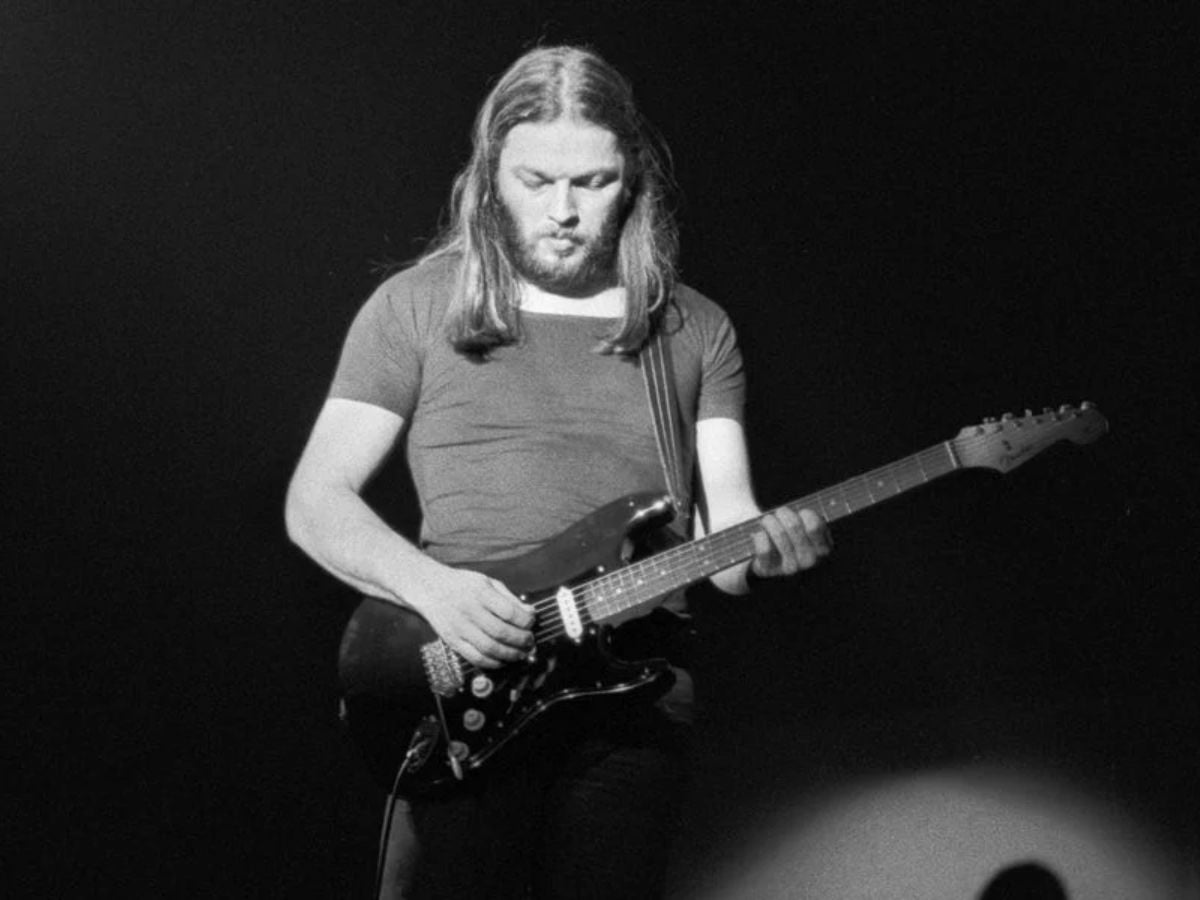
Although his sound might be a defining feature of the band, David Gilmour already had an uphill battle with Pink Floyd before he had even played a note of music with them.
Even though he may have been one of the reigning kings of rock and roll guitar, Gilmour would be filling the shoes of Syd Barrett, who had already cultivated himself as one of the greatest frontmen in the British music scene before losing his sanity in the late 1960s. Barrett was hailed by the likes of David Bowie and Pete Townshend as a “genius”, and when coupled with his noted uniqueness, that was always going to be tricky to match.
Although Gilmour would eventually be behind some of the most celebrated progressive rock songs of all time, he admitted that one of his first tracks contained the most questionable pieces he ever contributed. In some ways, it can be seen as his futile attempt to fill the shoes of Barrett, and that misguided imitation misses the mark to what Gilmour considers to be an embarrassing degree.
Throughout the first few years of Gilmour’s joining, it was never exactly smooth sailing. While the initial approach had been for the band to continue touring as they waited for Barrett to recuperate, it was soon becoming apparent that that was never going to happen, as Barrett proceeded to spiral and struggle to even hold on to his guitar pick in rehearsals.
As the band soldiered their way through their sophomore effort, A Saucerful of Secrets, Gilmour would lend his skills to half of the album while Barrett contributed his last song, ‘Jug Band Blues’. By the time the band had “forgot” to pick up Barrett for a rehearsal one day, Gilmour was enlisted as the band’s permanent guitarist before going into recording the soundtrack for the film More. The rest is, as they say, ancient history.
 David Gilmour in Pink Floyd. (Credit: Far Out / Roger Tillberg / Alamy)
Based on various psychedelic images of the time, Gilmour’s ‘The Nile Song’ would become one of the album’s major highlights, creating a song far heavier than anything on the radio then and profoundly complex. Outside of accidentally inventing heavy metal before the genre had properly begun, the band were already looking to make something even more inventive on their next album, Ummagumma.
However, the group were deeply unsure about whether they had got it right. While the double album would feature a live disc with the epic ‘Careful With That Axe Eugene’, the studio disc would be an experiment to test every member of the band’s skills. Instead of traditional rock and roll songwriting, the goal was to make an avant-garde piece that could fill up roughly ten minutes of the record.
Although Richard Wright would create an enthralling collage with the song ‘Sysyphus’, Gilmour was not so fond of what he made for his experimental piece ‘The Narrow Way’. Not being as familiar with the medium, Gilmour worked through what he could while trying to get the help of his bandmates to get the right sound, to no avail.
Looking back on the song, Gilmour talked about how much he bristled having to revisit it, recalling in the book Pigs Might Fly, “I remember ringing Roger [Waters] to beg him to write me some words, and he just said, ‘Do it yourself’, and put the phone down, which was probably his way of helping me find my feet. It sort of makes me cringe now”.
Devoid of confidence and practice in this department, he fell back on an attempt to muster the old Floyd spirit of quirkiness when, in actual fact, his own voice aligned a little closer to his heroes Leonard Cohen and Bob Dylan. So, the resultant tentative effort turned out to be one that he’d rather forget.
While the band’s experimental side was still working itself out, they would find their calling when putting together the track ‘Echoes’ off Meddle, paving the way for even greater sonic experimentation on masterpieces like Dark Side of the Moon. Gilmour may have been able to pay like a madman at every opportunity, but ‘The Narrow Way’ was the first step in him embarking on music that could transcend typical rock and roll.
Thankfully, there aren’t many things that make him look back and “cringe”, and everyone has to start somewhere. Soon enough, he’d be rattling off timeless gems that showcased his multifaceted talent as a musician.
Related Topics