
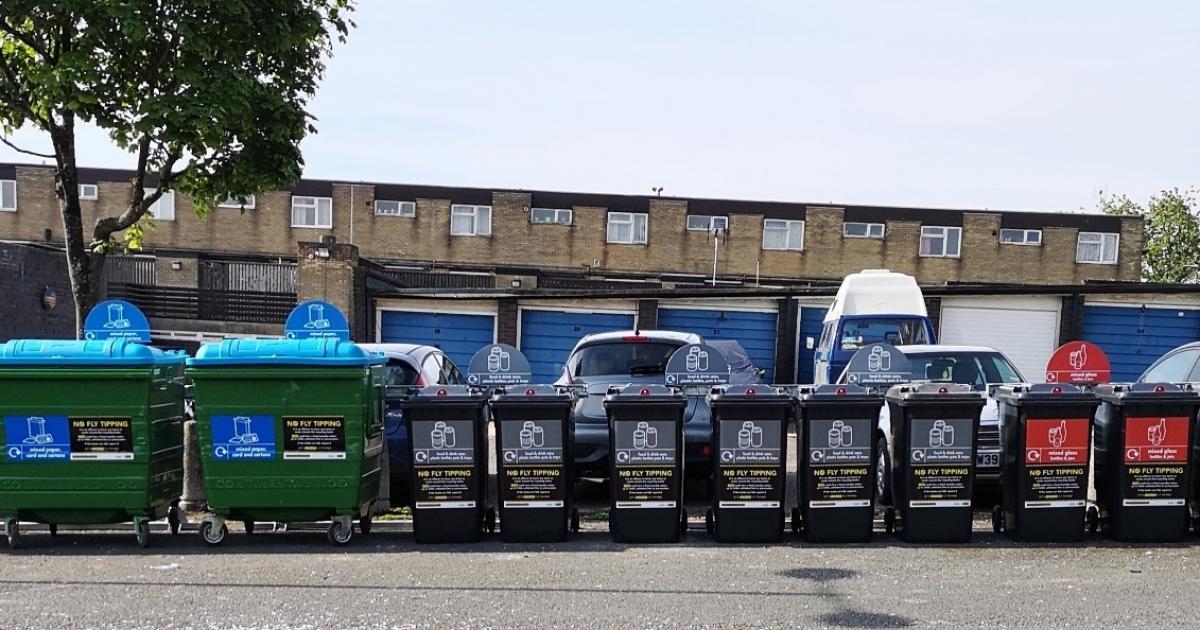
The possibility is one of eight recommendations suggested by Stevenage Borough Council’s environment and economy select committee as part of a review into recycling at flat blocks.
The review found that residents often thought it was “acceptable” to leave items beside overflowing bins at the bring bank sites, where recycling can be brought.
Around 40 per cent of all fly-tips cleared by the council in 2024/25 were made up of rubbish left beside bring bank bins.
Other recommendations to be discussed by the committee at their meeting on Wednesday (January 28) include introducing awards for the areas with the highest recycling rates, placing informational stickers on bins, adding signage and locks to bin stores, and ensuring literature about recycling is available in other languages and in braille.
Committee members will also consider how recycling collections could be improved at flat blocks such as those in Vardon Road that have no recycling bins, and whether a council-designed three-wheeled bin could be rolled out at additional flat blocks after a trial began last year.
Steps like these have made it difficult for flat blocks in Stevenage to recycle. Credit: Stevenage Borough Council. Permission for use for LDRS partners.
Stevenage has the lowest recycling rate in Hertfordshire at 39 per cent, below the national average of 44 per cent. The aim is for the town to achieve a rate of 60 per cent by 2030.
Council officers believe the high proportion of flats in Stevenage – 21 per cent of homes in the borough are flats – is an important reason for the low recycling rate.
When the review of recycling at flat blocks began last year, it was found that 74 blocks had no access to recycling facilities.
The review found that there is often a “lack of space for bins, difficult access and stairs, and higher rates of contamination compared to houses”, with refuse chutes often “abused or blocked”.
Pilot schemes that saw improved bin stores and new signage at certain sites led to recycling increasing by 185 per cent initially, and remaining up by 85 per cent a year after the pilot began.
A second phase of pilot schemes is currently under way at four further sites.
The council has £700,000 from a government grant to spend on improving recycling facilities.
If the committee approves the recommendations at its meeting on Wednesday, it is expected that a final decision on whether to implement the new initiatives will be made by the council’s cabinet.